
Thermal Imaging Leak Detection — Professional, Non‑Invasive Hidden Water Leak Location with Infrared Cameras
Thermal imaging leak detection uses infrared cameras to reveal hidden water by mapping small temperature differences on surfaces. It’s a precise, non‑destructive way to locate moisture without tearing out walls or floors. This page walks you through how thermal cameras spot leaks, why infrared scans are usually faster and less damaging than traditional methods, and which leak types—slab, in‑wall, ceiling, and some shallow underground runs—show up best on a scan. You’ll get practical tips for spotting early signs of a concealed leak, a clear outline of how a thermal inspection is performed and read, and what happens afterward when we plan repairs. Along the way we compare infrared testing to other diagnostic tools and explain how Grosse Pointe homeowners can request a free estimate from Frost & Kretsch Plumbing.
What is Thermal Imaging Leak Detection and How Does It Work?
Thermal imaging leak detection is a diagnostic method that records surface temperature differences with an infrared camera, creating thermograms that point to suspect areas. The basic idea is simple: escaping water changes how materials absorb and release heat, so wet spots often show up as slightly warmer or cooler areas on a surface. Because the inspection is non‑invasive, it narrows the search area, reduces unnecessary demolition, and speeds up a correct diagnosis—saving time and money. Below, the first H3 explains how the cameras and thermogram interpretation work in the field, and the second H3 summarizes the practical benefits of infrared plumbing leak detection.
How Do Thermal Cameras Detect Hidden Water Leaks?
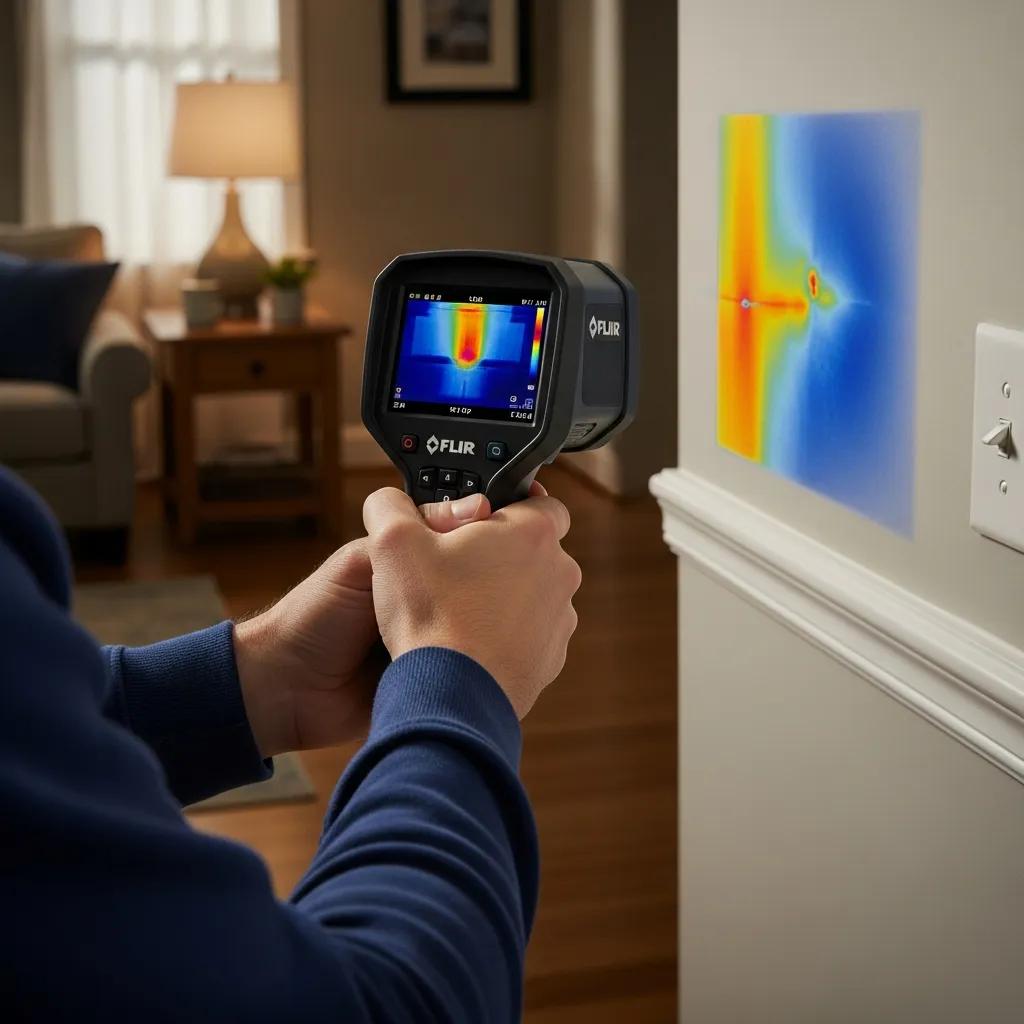
Thermal cameras sense infrared energy and translate it into a temperature map, or thermogram, where moisture‑related anomalies appear as distinct hot or cold patches. Technicians look for patterns—like a vertical cool streak on drywall or a warm line across a concrete slab—to infer a leak’s path. Conditions such as insulation, drafts, sun exposure, and surface material affect what the camera sees, so experienced techs pair thermograms with a visual inspection and site context. When contrast is weak, we confirm with moisture meters or borescopes to avoid false positives; these complementary tools are discussed in the advantages section below.
What Are the Advantages of Infrared Plumbing Leak Detection?
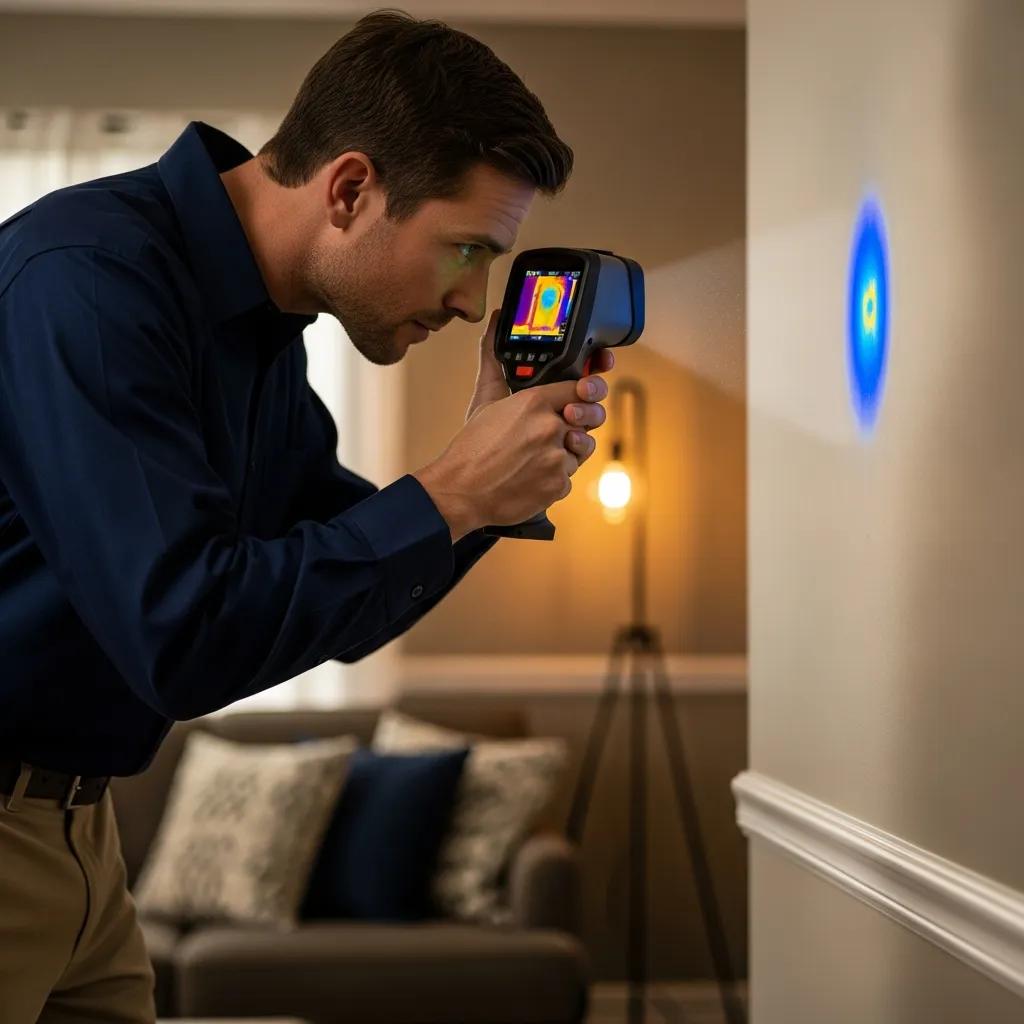
Infrared leak detection offers clear, practical benefits: it’s non‑destructive, speeds up diagnosis, and lets us pinpoint repairs so we cut down on unnecessary work. By visualizing temperature differences across finishes, thermal scans let crews isolate the problem without opening large sections of wall or floor—reducing labor, restoration time, and cost. Early scans also limit secondary damage like mold and rot, protecting indoor air quality and avoiding more expensive remediation later. Below we break these advantages into a short list and compare infrared testing with other diagnostic approaches.
Thermal imaging is even more powerful when used with other diagnostic tools; each method contributes unique, confirmatory information that improves repair planning.
Key benefits of infrared leak detection:
- Non‑invasive diagnosis: Locate suspect areas without demolition so finishes stay intact and disruption is minimal.
- Faster diagnosis: Scans narrow likely leak zones quickly, shortening on‑site investigation time.
- Smaller repair scope: Pinpointing the leak limits the cutting or excavation needed, lowering restoration costs.
- Limits secondary damage: Early discovery reduces the risk of mold and structural deterioration from prolonged moisture.
Together, these benefits help homeowners and building managers get focused repairs and lower overall project costs.
Different diagnostic methods trade off invasiveness, speed, and cost.
| Diagnostic Approach | Typical Time to Diagnose | Typical Damage Reduction | Typical Cost Impact |
|---|---|---|---|
| Infrared thermal scan | Short (hours) | High (pinpoint repairs) | Low‑to‑moderate (saves demolition) |
| Moisture meter + probe | Short‑to‑moderate | Moderate | Moderate |
| Acoustic detection | Moderate | Moderate | Moderate‑to‑high |
| Exploratory demolition | Long | Low (wider damage) | High |
Why Choose Frost & Kretsch Plumbing for Thermal Leak Detection in Grosse Pointe?
When hidden leaks threaten your home, you want a local team that moves fast, explains clearly, and stands behind their work. Frost & Kretsch Plumbing is family‑owned and serves Grosse Pointe with licensed, insured technicians, 24/7 emergency availability, and a 100% satisfaction approach. We use thermal imaging as part of a practical diagnostic toolkit—paired with moisture meters and video inspection when needed—so you get a clear report, repair options, and a plan that minimizes disruption. The next section outlines the qualifications and reliability measures that support our thermal leak inspections.
What Makes Our Thermal Leak Inspection Professional and Reliable?
Professional thermal inspections need trained technicians, calibrated equipment, and consistent reporting so thermograms become actionable repair plans. Our techs perform methodical visual checks, controlled thermal scans, and document findings with thermograms and contextual photos. That documentation supports accurate estimates and gives you options while protecting your property. Our licensing, insurance, and customer‑first approach are built to give you confidence in the diagnosis and the next steps.
How Does Thermal Imaging Minimize Property Damage and Repair Costs?
Thermal imaging reduces property damage by narrowing the search area to a few square feet instead of opening large wall or floor sections. For example, a thermogram that locates a leak behind drywall allows a focused cut‑and‑repair instead of removing entire panels—saving on labor, materials, and restoration time. Faster diagnosis also shortens the time moisture is in your home, cutting down mold risk and the need for larger remediation projects.
What Types of Hidden Water Leaks Can Thermal Cameras Detect?
Thermal cameras are effective for leaks that create a detectable surface temperature difference—slab leaks, in‑wall leaks, ceiling leaks, and some shallow underground runs. Deeply buried or thermally masked leaks may need supporting tools. Technicians interpret thermograms with an understanding of heat flow and material behavior; for slow or nearly isothermal leaks we combine infrared with acoustic sensors, moisture meters, or sewer video cameras to increase confidence. The table below quickly maps common leak types to typical signs and how thermal imaging helps.
| Leak Type | Common Signs | How Thermal Imaging Helps |
|---|---|---|
| Slab leak | Warm or cool floor spots, unexplained dampness | Shows linear or localized thermal anomalies across the slab surface |
| Wall leak | Stains, bubbling paint, cool streaks | Reveals vertical or horizontal thermal bands that trace the moisture path |
| Ceiling leak | Brown stains, sagging drywall | Highlights cooler wet areas or warm discoloration from supply or roof leaks |
| Underground/shallow pipe | Unexplained lawn wetness, soft spots | Detects surface thermal anomalies where heat transfer reaches the ground; may need probing |
This quick map shows thermal imaging gives fast visual cues for many leak types; the following subsections go into slab and in‑wall detection in more detail.
How Are Slab Leaks Identified Using Thermal Imaging?
To find slab leaks we scan the floor surface for linear or localized temperature differences that contrast with surrounding concrete, performing methodical sweeps and, when helpful, repeat scans at different times to confirm patterns. A warm streak on a cooled slab—or vice versa—can indicate flowing water beneath. We factor in ground temperature, sun exposure, and recent HVAC cycles when reading images. Because depth and flow affect the thermal signature, thermal imaging is often the first step followed by targeted methods like acoustic detection or ground probes to determine depth and plan repairs.
Can Thermal Cameras Find Leaks Behind Walls and Ceilings?
Yes—when moisture or temperature differences reach the finish surface, thermal cameras can reveal wet patches through drywall or plaster. Insulation, wall makeup, paint color, and indoor climate all influence visibility, so we may use controlled cooling/heating and moisture meters to confirm. In heavily insulated cavities or where contrast is limited, video borescopes, moisture probes, or small exploratory openings can be used to verify the source. Knowing these limits helps set realistic expectations for non‑invasive detection and any follow‑up testing that may be needed.
What is the Thermal Leak Detection Process at Frost & Kretsch Plumbing?
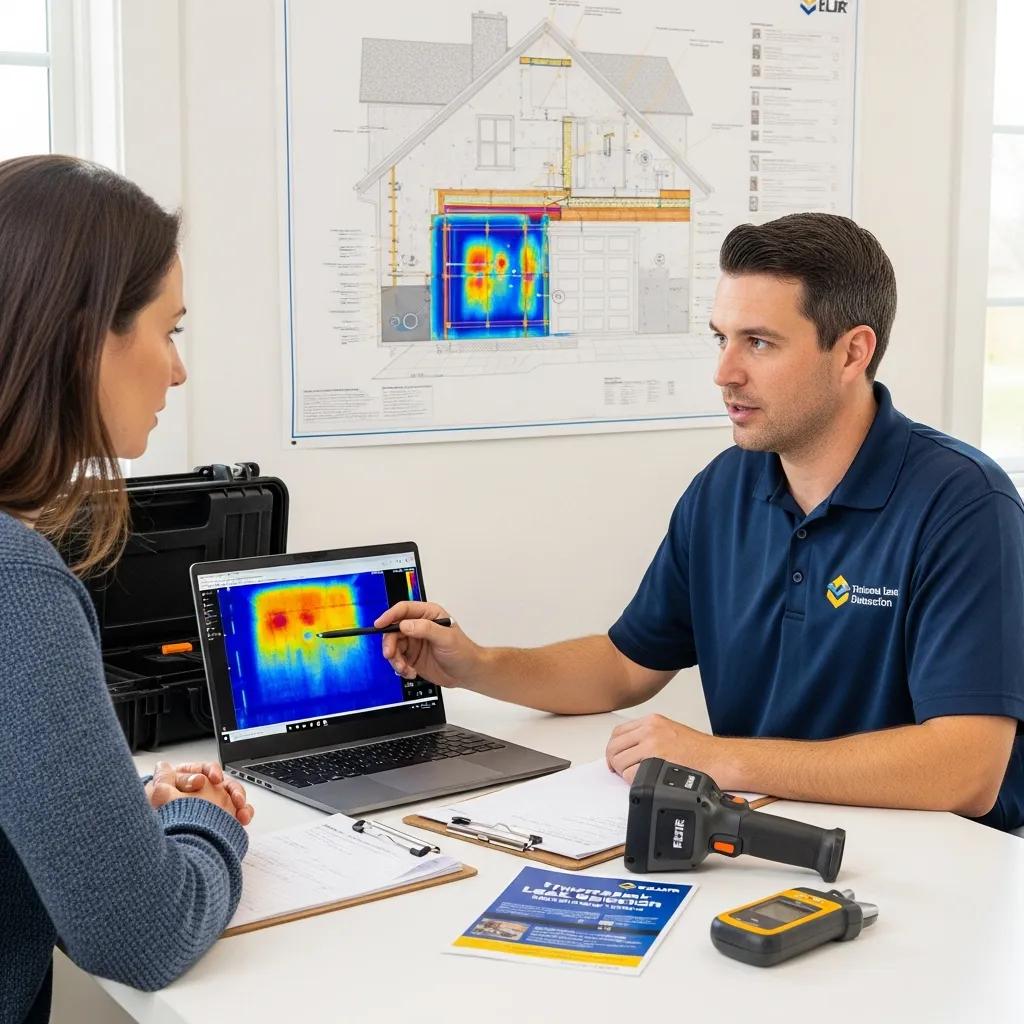
Our workflow starts with intake, moves through a controlled thermal scan and documentation phase, and finishes with a written report and coordinated repair recommendations. We prioritize non‑invasive diagnosis, clear evidence, and transparent options so you can choose the repair path that balances cost and disruption. When needed, our technicians add moisture meters or sewer video inspection to improve location accuracy. The H3 below describes on‑site assessment steps and the table summarizes process phases and deliverables.
How Do We Perform Initial Assessments and Thermal Scans?
We begin with a symptom intake—asking about stains, unusual water use, or recent plumbing work—then perform a visual check to identify likely scan zones and environmental factors. Techs prepare the area, limit confusing thermal inputs when possible, and run systematic thermal sweeps with calibrated infrared cameras while recording thermograms and context photos. We discuss initial findings on site and, if confidence is low, use moisture meters or video inspection to confirm suspected paths before recommending repairs. The next subsection covers reporting, repair options, and verification scans that close the loop.
| Phase | Step | Deliverable |
|---|---|---|
| Intake | Symptom collection & scheduling | Appointment confirmation and symptom log |
| On-site Inspection | Visual check + controlled thermal scan | Thermograms, annotated photos, and preliminary findings |
| Confirmation | Supplementary testing as needed | Moisture readings, video inspection clips, or acoustic data |
| Reporting & Repair | Recommendation and scheduling | Written report with pinpointed locations and repair options |
What Happens After Leak Detection?
After detection we deliver a documented report with thermograms, annotated locations, and clear repair recommendations so you can compare options and schedule remediation with realistic expectations. The report calls out any uncertainty and suggests follow‑up diagnostics when needed to confirm depth or pipe orientation. If you proceed with repairs, we’ll coordinate scheduling and can perform a verification scan after work is complete to confirm the leak is fixed and thermal patterns are restored—reducing surprises and helping with budgeting and restoration planning.
When Should You Call for Professional Thermal Leak Detection?
Call a professional when you see persistent or unexplained moisture signs, when your water bill spikes with no clear cause, or when visible damage suggests a concealed leak that could lead to mold or structural harm. Hidden leaks often cause damage before you notice them, so an early thermal assessment can limit remediation and reduce long‑term costs. If you spot concerning signs, scheduling a thermal scan quickly narrows the problem and informs targeted repairs. The next H3 lists common warning signs to help you decide when to call.
What Are the Common Signs of Hidden Water Leaks?
Watch for unexplained increases in your water bill, persistent damp or cool spots on floors and walls, ceiling stains or bubbling paint, and musty smells that suggest moisture is present. You might also hear running water when fixtures are off or see unexpected meter movement with everything turned off. Property managers can combine these clues with simple checks—like isolating meter readings—to judge urgency before booking a thermal inspection. Spotting these signs early makes containment and repair much easier.
How Does Early Detection Prevent Water Damage and Mold?
Early detection limits how long building materials stay wet, cutting the chance for mold growth and structural damage. Finding and fixing a leak before visible deterioration spreads reduces the scale of repairs and the cost of remediation. Addressing leaks promptly also lowers health risks from mold and avoids long‑term liabilities like rot or compromised finishes, which makes the diagnostic investment cost‑effective.
How Can You Request a Free Estimate for Thermal Leak Detection in Grosse Pointe?
Requesting a free estimate is simple: give us your address, describe the symptoms, and tell us when the issue began so we can recommend the likely inspection scope and timing. Frost & Kretsch Plumbing serves the Grosse Pointe area and offers free estimates—our local presence and Google Business Profile make scheduling straightforward. When you contact us, include which areas are affected and any recent plumbing or seasonal events that might matter. The next H3 lists the scheduling steps and the following H3 explains what to expect during the visit.
What Are the Steps to Schedule Your Thermal Leak Inspection?
To schedule an inspection, have your address, a short symptom summary, and preferred availability ready. Contact us by phone or online to set an appointment; we’ll confirm symptoms, access points, and an arrival window and provide an estimate outline before work begins. On‑site time usually runs under an hour for a focused scan and can take longer if additional diagnostics are required. We’ll let you know any access needs ahead of arrival so the visit is efficient and productive.
What Should You Expect During Your Service Appointment?
When we arrive, the technician will identify themselves, review the symptoms with you, and set up conditions for an accurate scan. We’ll perform a targeted visual inspection, run methodical thermal sweeps, and document thermograms and photos. The tech will explain interim findings, recommend any extra tests for confirmation, and deliver a written report with next steps and repair options after the scan. Clear communication about restoration impact, timing, and verification scans helps you plan repairs with minimal surprises.
- Prepare basic details: Have your address, symptom history, and any recent plumbing work handy.
- Expect transparent reporting: We’ll provide thermograms and a straightforward recommendation.
- Plan for access: Make sure technicians can reach suspected areas; inspections are minimally invasive.
These simple steps help make scheduling and inspections smooth and effective, so hidden leaks get fixed quickly.
Frequently Asked Questions
What is the cost range for thermal leak detection services?
Costs vary by property size, leak complexity, and provider. Most homeowners can expect a range of about $200 to $600 for a comprehensive thermal scan. That typically covers the technician’s time, equipment use, and a detailed findings report. For a precise price, request a free estimate from a local provider.
How long does a thermal leak detection inspection typically take?
Inspections usually take one to three hours, depending on the property size and the number of suspected areas. The process includes an initial assessment, visual check, and thermal scanning. If we need extra diagnostics—like moisture meters or video inspection—that can extend the appointment. Preparing access to relevant areas helps keep the visit efficient.
Are there any limitations to thermal imaging leak detection?
Thermal imaging is a powerful tool, but it works best when moisture creates a clear temperature difference. Insulation, reflective finishes, or very slow leaks can mask thermal signatures. Thermal cameras don’t measure exact leak depth or pipe type, so we often confirm findings with moisture meters, acoustic detection, or video inspection to increase accuracy.
Can thermal imaging detect leaks in all types of building materials?
Thermal imaging can detect leaks in many materials—concrete, drywall, and wood often show temperature differences when wet. However, very reflective surfaces, heavy insulation, or certain finishes can reduce visibility. Technician experience and an understanding of building physics are vital to interpret thermograms correctly; combining methods ensures thorough detection across materials.
What should I do if a leak is detected during the inspection?
If we detect a leak, the technician will give you a detailed report with findings and recommended repair options. It’s important to address leaks promptly to prevent mold and structural issues. Discuss the report with the tech to understand severity and the best repair approach, then schedule repairs as soon as practical to limit further damage.
How often should I schedule thermal leak detection inspections?
Inspection frequency depends on your home’s age, past leak history, and environmental factors. For older homes or properties with prior plumbing issues, an annual check is reasonable. Newer homes may only need checks every few years or after major weather events. Also consider a scan if you notice signs of moisture or a sudden rise in your water bill.
Conclusion
Thermal imaging gives homeowners and property managers a fast, non‑invasive way to find hidden water leaks—saving time, cutting repair costs, and reducing the risk of mold and structural damage. Frost & Kretsch Plumbing brings local experience, clear reporting, and practical repair options so you can resolve leaks with confidence. Schedule a thermal leak detection today to protect your property and get peace of mind.