Stopping and Removing Tree Roots from Sewer Lines: Practical Solutions for Michigan Homes and Businesses
Tree roots in sewer lines are a frequent—and expensive—headache for Michigan homeowners and business owners, especially in Macomb, Oakland, and Wayne counties. This guide explains what root intrusion looks like, why roots target sewer pipes, and how early detection plus targeted fixes protect your property and cut long-term costs. You’ll find clear warning signs to watch for, landscaping and chemical prevention options, and the professional diagnostic and removal services used by plumbers—camera inspection, hydro jetting, trenchless relines, and full replacements. Frost and Kretsch Plumbing offers local, licensed services including sewer and drain cleaning, camera inspections, hydro jetting, trenchless repair, excavation, and 24/7 emergency response. Contact details are listed later. Read on for practical steps you can take now and what to expect when pros diagnose and fix root-related damage.
What Are the Common Signs and Causes of Tree Root Intrusion in Sewer Lines?
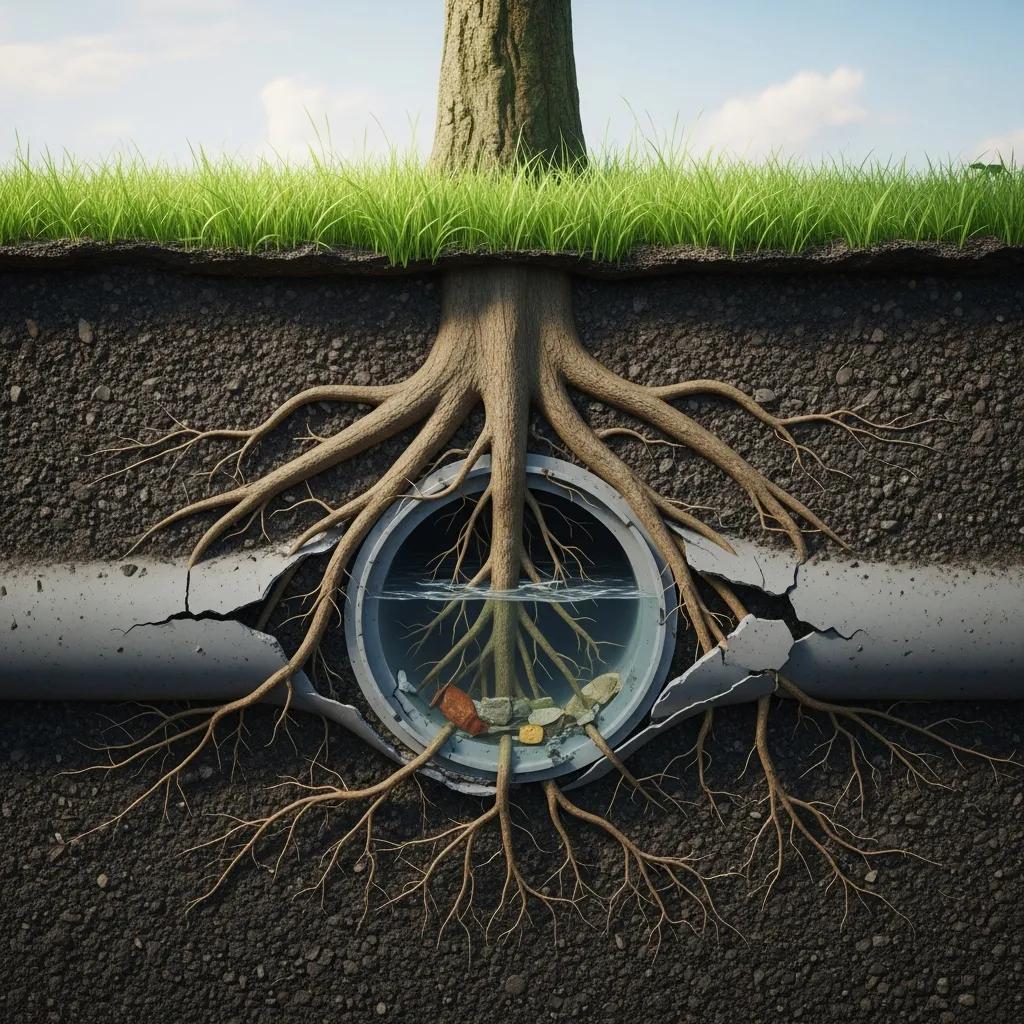
Root intrusion happens when tree roots find moisture, nutrients, or tiny defects in underground sewer pipes and grow into the line, restricting flow and eventually causing backups or structural damage. Catching problems early—before a full collapse—lets you choose less invasive repairs that protect your yard and save money. Below are the most common, easy-to-recognize signs that point to root intrusion so you can schedule an inspection without delay.
Common early warning signs of root intrusion include the following recognizable symptoms:
- Slow drainage in multiple fixtures: When sinks, tubs, or toilets throughout the building drain slowly, the main sewer line is often the issue—not a single trap.
- Gurgling sounds from drains or toilets: Air moving past a partial blockage makes gurgling noises, a classic sign of a downstream obstruction.
- Persistent sewage odors in yard or basement: Smells near cleanouts, drains, or low spots in the yard can mean organic buildup or leaks.
- Recurring clogs despite snaking: If clogs come back quickly after snaking, roots are often regrowing into the pipe.
- Wet spots or sinkholes in the yard: Soft, wet areas or unusually lush patches of grass often mark a leak where roots have breached pipe joints.
Seeing any of these should prompt a professional camera inspection to confirm where and how badly roots have invaded the line, which informs the right next steps.
How Do Tree Roots Enter and Damage Sewer Pipes?
Roots are attracted to moisture and organic nutrients. Small cracks, loose joints, or misaligned pipes let feeder roots access that moisture; once inside, those roots thicken into masses that trap solids, obstruct flow, and accelerate corrosion. Over time roots can shift pipe segments, create offsets, and make leaks worse—the leak then attracts more root growth. Knowing this progression explains why a noninvasive video inspection is a smart first move before choosing a removal or repair method.
Which Tree Species in Michigan Are Most Likely to Cause Sewer Line Problems?
Some common Michigan trees push aggressive, water-seeking roots that can reach sewer lines if planted too close. Willows, silver and red maples, poplars, and certain oaks develop wide lateral roots near the surface and pose higher risk when near laterals or cleanouts. Large, mature trees naturally present a greater threat than small ornamentals, and local soil and moisture patterns influence root behavior. For new plantings, keep trees at least as far from sewer lines as their mature canopy radius to reduce future problems and protect both pipes and trees.
How Can You Prevent Tree Roots from Invading Sewer Pipes?
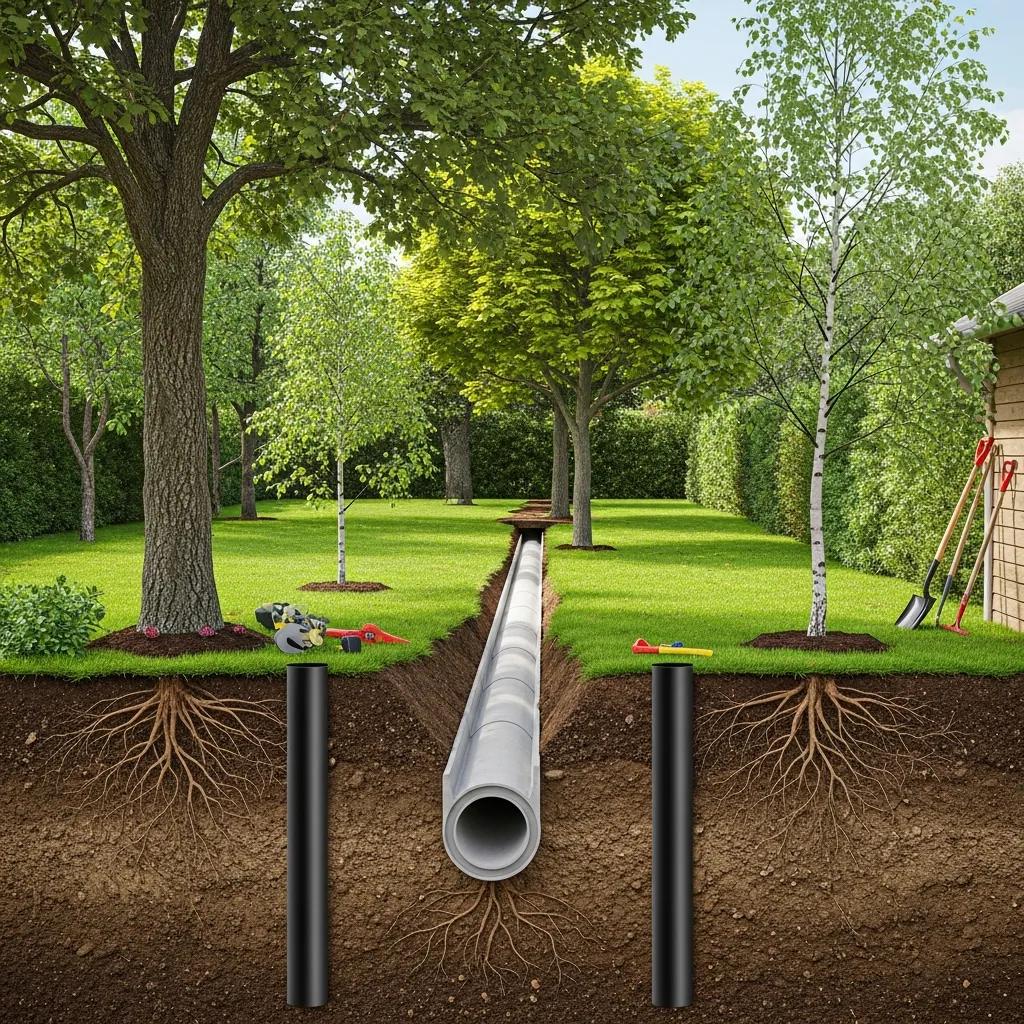
Prevention pairs thoughtful planting, physical barriers, routine inspections, and selective chemical control to lower the chance of root intrusion while keeping your landscape healthy. A layered approach cuts emergency repairs and extends pipe life by removing the conditions roots use to find and enter pipes. Below we compare practical landscaping steps, barrier options, and chemical treatments so you can pick a plan that fits your site and environmental concerns.
Good landscaping and properly installed root barriers protect sewer lines by keeping aggressive species away and physically stopping lateral root growth. Vertical root barriers—rigid polyethylene or composite panels set in a trench between trees and utility lines—steer roots downward when installed deep enough. Trench barriers or deep geotextiles can work around existing trees but require careful installation to avoid harming roots. Choosing non-invasive species and siting trees outside predicted root zones also lowers risk. Talk to landscapers or utility pros about pipe depth and soil conditions so barrier placement protects pipes without harming trees.
The following table compares prevention approaches by recommended use and limitations so you can weigh options for your property.
| Prevention Approach | Recommended Use | Limitations |
|---|---|---|
| Root Barrier (sheet/trench) | Best for high-risk zones near lateral lines; effective when installed during new planting | Requires trenching, professional placement; can stress tree roots if placed too close |
| Strategic Planting | Great for new landscapes and long-term risk reduction | Works only if species and setbacks are chosen correctly |
| Chemical Root Killers (copper sulfate, foaming agents) | Useful for targeted control inside pipes between cleanings | Environmental concerns, requires licensed use, and often needs repeat treatments |
Mixing these approaches—smart planting, barriers, and scheduled inspections—creates a layered defense that lowers the chance of emergency repairs.
What Landscaping and Root Barrier Strategies Help Protect Sewer Lines?
To reduce root pressure on sewer lines, choose species with less aggressive lateral roots, keep large trees well away from sewer alignments, and install root barriers where appropriate. Use small shrubs and turf near lines so you don’t sacrifice cover for safety. When barriers are needed, install them vertically and deep enough to intercept feeder roots while staying far enough from the trunk to avoid harming the tree. Professional installation ensures continuity and prevents roots from finding a bypass path. Combine barrier work with routine camera checks to confirm everything is working as planned.
Which Chemical Root Killers Are Safe and Effective for Sewer Line Prevention?
Chemical root control—commonly copper sulfate crystals or foaming root killers—can reduce regrowth inside pipes without digging, but these treatments have environmental and regulatory limits and should be applied by licensed technicians. Copper sulfate dries out roots at the cleanout; foaming agents coat root masses to slow regrowth. Used with mechanical cleaning, chemicals can extend time between service calls, but they’re typically a temporary measure and require careful dosing and timing to protect soil and local waterways.
What Professional Services Are Available for Removing Tree Roots from Sewer Lines?
Pro services for root removal include camera inspections, hydro jetting, mechanical root cutting, targeted chemical treatments, and either trenchless or excavation repairs for structural damage. Cameras diagnose and locate, hydro jetting and mechanical cutters remove intrusions, chemicals slow regrowth, and repair options restore pipe integrity. Knowing what each service does helps you choose the least disruptive and most cost-effective route. Below we explain camera inspection and hydro jetting and why technicians pick one method over another.
Sewer camera inspection gives a clear visual of the line by running a waterproof camera head through the pipe to record condition, locate root masses, spot cracks or offsets, and measure distance from access points. Technicians use the footage to decide whether cleaning will work or if structural repair is needed; the video also serves as before-and-after proof of the work. Camera inspection removes guessing from diagnostics and drives targeted plans like hydro jetting or trenchless relining so we can recommend the repair that causes the least yard disruption.
Hydro jetting clears roots and buildup by blasting high-pressure water through the pipe with specialized pumps, hoses, and nozzles that scour the interior and cut away root crowns. It’s excellent for cleaning and descaling when the pipe structure is still sound, and it removes the organic residue that encourages regrowth. If camera inspection shows significant structural damage, hydro jetting alone won’t fix the underlying problem. In those cases, mechanical cutters, chemical follow-ups, or a repair/reline will be recommended.
The following comparison table summarizes professional removal methods, suitability, and disruption to help decide on the right service.
| Method | Effectiveness / Suitability | Disruption |
|---|---|---|
| Hydro Jetting | Very effective for heavy clogs and descaling when the pipe is structurally sound | Non-invasive; short on-site time |
| Mechanical Rooter | Good for localized root plugs and quick clearing | Minimal surface impact; fast service |
| Excavation / Replacement | Required when pipes are collapsed or too damaged for trenchless fixes | High disruption; landscape and surface restoration needed |
Accurate camera diagnosis determines whether a noninvasive cleaning will do or whether a repair is necessary, guiding the recommended service and schedule.
How Does Sewer Camera Inspection Diagnose Root Intrusion Accurately?
Camera inspection pinpoints root locations, pipe defects, and blockage severity by running a video probe through the line and watching results in real time. Technicians note root masses, separated joints, offsets, cracks, and corrosion to decide if cleaning or structural repair is required. The recorded footage supports transparent quotes and helps plan the least disruptive fix. Because camera findings determine the method, inspections are usually the first step before hydro jetting, mechanical cutting, chemical application, or repair planning.
Why Is Hydro Jetting the Preferred Method for Tree Root Removal?
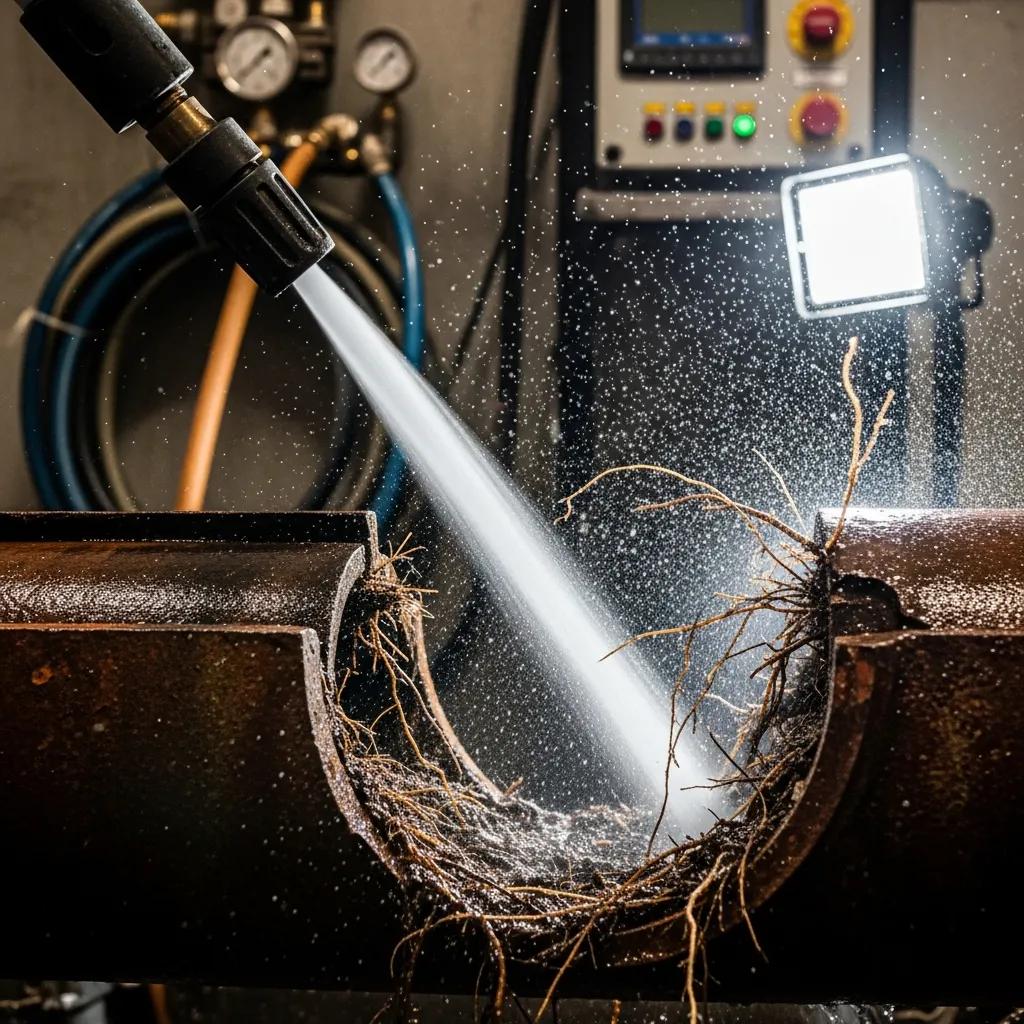
Hydro jetting is often recommended because it combines strong cutting power with thorough cleaning—removing root crowns and organic buildup that lead to quick regrowth while restoring pipe diameter and flow. Proper nozzle selection and pressure let technicians remove roots without corrosive chemicals. That said, hydro jetting requires a prior camera check to confirm the pipe can safely handle pressure. When roots are fused into broken pipe segments, relining or replacement may follow hydro jetting to deliver a lasting fix.
What Repair Options Exist for Sewer Lines Damaged by Tree Roots?
Repair choices include trenchless relining or pipe bursting, traditional excavation and replacement, and partial targeted repairs. Each option balances cost, downtime, and landscape impact. The right choice depends on camera inspection results: alignment, level of collapse, and how lateral connections are arranged. Below we outline trenchless suitability and when excavation is the safer long-term choice, plus a table comparing cost drivers and trade-offs.
Trenchless sewer repair (CIPP relining or pipe bursting) restores flow by installing a new structural lining inside the old pipe or replacing the pipe without long trenches. These approaches work when the line is continuously aligned and not collapsed beyond repair; relining seals cracks and helps prevent new root entry. Benefits include less landscaping work and faster timelines, but trenchless may not be feasible where laterals or severe offsets exist. Camera inspection will confirm if trenchless methods are viable for your situation.
The following table summarizes repair approaches, typical cost drivers, and trade-offs to clarify decision factors.
| Repair Option | Typical Cost Drivers | Trade-offs |
|---|---|---|
| Trenchless Relining | Pipe length, access points, condition of lateral connections | Less landscape impact, faster completion; limited to pipes with acceptable alignment |
| Excavation & Replacement | Depth, soil conditions, landscape restoration, pipe material | Higher disruption and restoration cost, but full replacement and grade correction possible |
| Pipe Relining (CIPP) | Cleaning needs, resin and labor costs, curing method | Durable internal lining; slight reduction in internal diameter possible |
When Is Trenchless Sewer Repair Suitable for Root-Damaged Pipes?
Trenchless repair fits when camera footage shows continuous alignment, no widespread collapse, and accessible entry points. The process typically requires thorough cleaning, then inserting and curing a resin-saturated liner to create a new internal pipe that resists roots. Trenchless minimizes yard disruption and shortens project time—ideal for properties with significant landscaping. If the cameras show severe sags, breaks, or offset laterals, trenchless methods may not correct structural alignment and excavation will be needed.
What Are the Indications for Traditional Excavation and Sewer Line Replacement?
Excavation and replacement are necessary when camera inspection reveals collapsed pipes, severe offsets, or repeated failures that lining cannot safely fix. Digging out the damaged section lets technicians replace the pipe, correct grades, and address adjacent utilities or structures. Excavation requires more restoration and time, but it resolves deep structural issues and removes recurring root entry points. When collapse is severe, weigh the short-term disruption against the long-term reliability of a full replacement.
How Much Does It Cost to Remove Tree Roots and Repair Sewer Lines?
Costs vary widely depending on intrusion severity, pipe material and depth, repair method chosen, and access or landscape restoration requirements. These factors influence estimates far more than a simple hourly rate. Understanding the main cost drivers helps you get accurate quotes and plan a maintenance budget. Below are the primary variables that affect pricing and a comparison table to show how choices change expense and disruption.
Key cost drivers include the following factors that you should review with any contractor:
- Severity and location of the blockage or damage: Deeper or more severe collapses require more labor and equipment.
- Repair method selected: Trenchless relining and excavation have very different material and restoration costs.
- Accessibility and landscape restoration needs: Driveways, patios, or mature gardens increase restoration scope and cost.
- Pipe material and length affected: Older or longer runs require more time and specialized techniques.
- Time of service and emergency response: After-hours or emergency work typically costs more than scheduled service.
Ask contractors for itemized estimates that separate diagnostics, cleaning, repair, and restoration so you can compare quotes and budget accurately.
The following table breaks down how cost drivers map to repair choices and typical trade-offs for clearer planning.
| Repair Choice | Primary Cost Drivers | Expected Trade-offs |
|---|---|---|
| Hydro Jetting + Camera | Equipment time, line length, severity of roots | Lower restoration cost; may require repeat service if roots regrow |
| Trenchless Repair | Pipe length, access, resin and curing method | Moderate to high material cost; minimal landscape impact |
| Excavation & Replacement | Depth, soil/obstruction removal, restoration | Highest total cost; permanent structural fix with full restoration needed |
Regular maintenance and inspections reduce long-term expenses by catching problems while they’re still small, which the next sections explain.
What Factors Influence the Cost of Tree Root Removal Services?
Quotes depend on the extent and location of intrusion, pipe depth and material, required equipment (hydro jetter or excavators), time on site, and whether emergency response is needed. Emergency calls—especially backups into living spaces—often require quick mobilization and higher immediate costs than scheduled service. Accessibility affects mobilization and labor charges: tight yards or blocked cleanouts may require extra work. Providing clear details about symptoms, cleanout locations, and any previous repairs helps contractors give accurate, itemized proposals.
How Can Regular Maintenance Reduce Long-Term Repair Expenses?
Scheduled maintenance—periodic camera inspections and routine hydro jetting or targeted treatments—keeps small root incursions from becoming structural failures. A maintenance cadence based on risk (for example, annual or biennial checks for higher-risk properties) lets technicians remove early root growth before it weakens joints and causes collapse. Regular cleaning protects landscaping by avoiding disruptive excavation and lowers lifetime costs by catching issues when they can be solved with cleaning or small repairs. Planned maintenance also makes budgeting predictable and reduces emergency incidents.
Why Choose Frost and Kretsch Plumbing for Tree Root Removal and Prevention in Michigan?
Frost and Kretsch Plumbing provides licensed, insured technicians for sewer and drain cleaning, camera inspections, hydro jetting, trenchless repairs, and excavation across Macomb, Oakland, and Wayne counties. We focus on clear, upfront pricing, fast response times—often within an hour—and a 100% satisfaction guarantee so homeowners and businesses know what to expect. For urgent problems we offer 24/7 emergency service and on-site camera inspections to recommend the least disruptive, most cost-effective fix. Our local presence and multiple service locations help us respond quickly across the region.
Frost and Kretsch Plumbing lists easy contact options and local addresses for service requests. To schedule service or request emergency response, call the phone numbers below—our technicians are dispatched from nearby locations to diagnose and resolve root blockages. Owner Dave Kretsch oversees operations and the team follows all licensing and insurance standards. Those local credentials and guaranteed response practices help customers get timely, professional fixes that limit property damage and restore sewer function.
The company’s local service locations include the following addresses for regional dispatch and service coordination:
- 47212 Jefferson Avenue, New Baltimore MI 48047
- 33717 Woodward #246 Birmingham MI 48009
- 20315 Mack Ave. Grosse Pointe MI 48236
- 28211 Armada Dr Warren MI 48088
Call Frost and Kretsch Plumbing at (586) 675-0097, (248) 600-0426, or (313) 881-2818 for service requests or emergency dispatch.
What Local Expertise and Service Guarantees Does Frost and Kretsch Offer?
We employ licensed, insured technicians and provide transparent, upfront pricing with no hidden fees plus a 100% satisfaction guarantee so you know the work and outcome before we start. Our crew is experienced in sewer and drain cleaning, hydro jetting, camera inspection, trenchless repairs, excavation, and emergency response across Macomb, Oakland, and Wayne counties. Multiple local addresses let us dispatch crews quickly, and camera-based estimates give clear recommendations so you can decide between cleaning, relining, or full replacement with confidence.
How Does 24/7 Emergency Service Benefit Customers Facing Root Blockages?
Round-the-clock emergency service matters when root blockages produce backups into living spaces or create fast-moving leaks that threaten structure and landscaping. Fast response reduces contamination, limits water damage, and can cut the scope of repairs. Immediate measures—emergency hydro jetting, temporary bypasses, or containment—buy time until a permanent repair is scheduled. For homeowners and businesses, knowing a licensed team can arrive quickly provides peace of mind and often lowers overall cost by preventing progressive damage. If you’re facing an urgent blockage, call one of our numbers for prompt dispatch and on-site assessment.
- Prompt Response: Quick action reduces damage and short-term restoration needs.
- On-site Diagnosis: Camera inspection determines whether cleaning or repair is required.
- Temporary Mitigation: Emergency cleaning limits contamination while a permanent plan is made.
These emergency steps show how timely professional intervention limits damage and long-term expense—making routine inspection and fast response key to effective sewer management.
Frequently Asked Questions
What are the long-term effects of tree root intrusion on sewer lines?
If left unchecked, root intrusion can cause recurring blockages, sewage backups, structural weakening, and eventually pipe collapse. That leads to higher repair bills, possible property damage, and disruptive excavation to restore the line. Regular inspections and timely repairs help avoid those long-term consequences.
How often should I have my sewer lines inspected for root intrusion?
For most homeowners, an annual camera inspection is a good baseline. If your property has older pipes or trees close to sewer lines, consider inspections every six to twelve months. Frequent checks let you catch and remove roots before they cause major damage.
Can I use DIY methods to remove tree roots from my sewer lines?
Some DIY steps—like snaking or store-bought root-killing products—can offer temporary relief, but they rarely solve severe intrusion and can cause environmental harm if used improperly. For lasting, safe results, a professional inspection and targeted removal (hydro jetting, mechanical cutting, or repair) are recommended.
What should I do if I notice signs of root intrusion?
If you notice slow drains, gurgling, or sewage odors, stop using the affected fixtures if possible and call a licensed plumbing service for a camera inspection. Quick action limits backups and gives technicians the information needed to recommend the right fix.
Are there specific times of year when tree roots are more likely to invade sewer lines?
Roots grow most actively in spring and early summer when soil temperatures rise and moisture is available, so those seasons often see more aggressive root activity. Heavy rains can also encourage roots to expand. Scheduling inspections in spring can catch early growth before it becomes a problem.
What are the environmental impacts of chemical root killers?
Chemicals like copper sulfate can harm soil organisms and may leach into waterways if misused. That’s why licensed technicians apply them carefully and only when appropriate, balancing effectiveness with environmental protection and local regulations.
How can I choose the right tree species to plant near sewer lines?
Choose trees and shrubs known for non-invasive root systems and plant them well outside predicted root zones—typically at least as far as the mature canopy radius. Smaller ornamental species and groundcovers are safer near lines. If in doubt, consult a local arborist or landscaper for species recommendations suited to your site.
Conclusion
Tree root intrusion is common but manageable. Knowing the warning signs, using preventive landscaping and barriers, and relying on professional diagnostics and removal techniques help Michigan homeowners and businesses avoid costly repairs. Regular inspections and prompt action preserve both your pipes and your yard. For expert help, reach out to Frost and Kretsch Plumbing—we’ll assess the problem, recommend the least disruptive solution, and get your sewer flowing again.