
Common Traditional Water Heater Repairs — Troubleshooting Tips and Trusted Repair Options
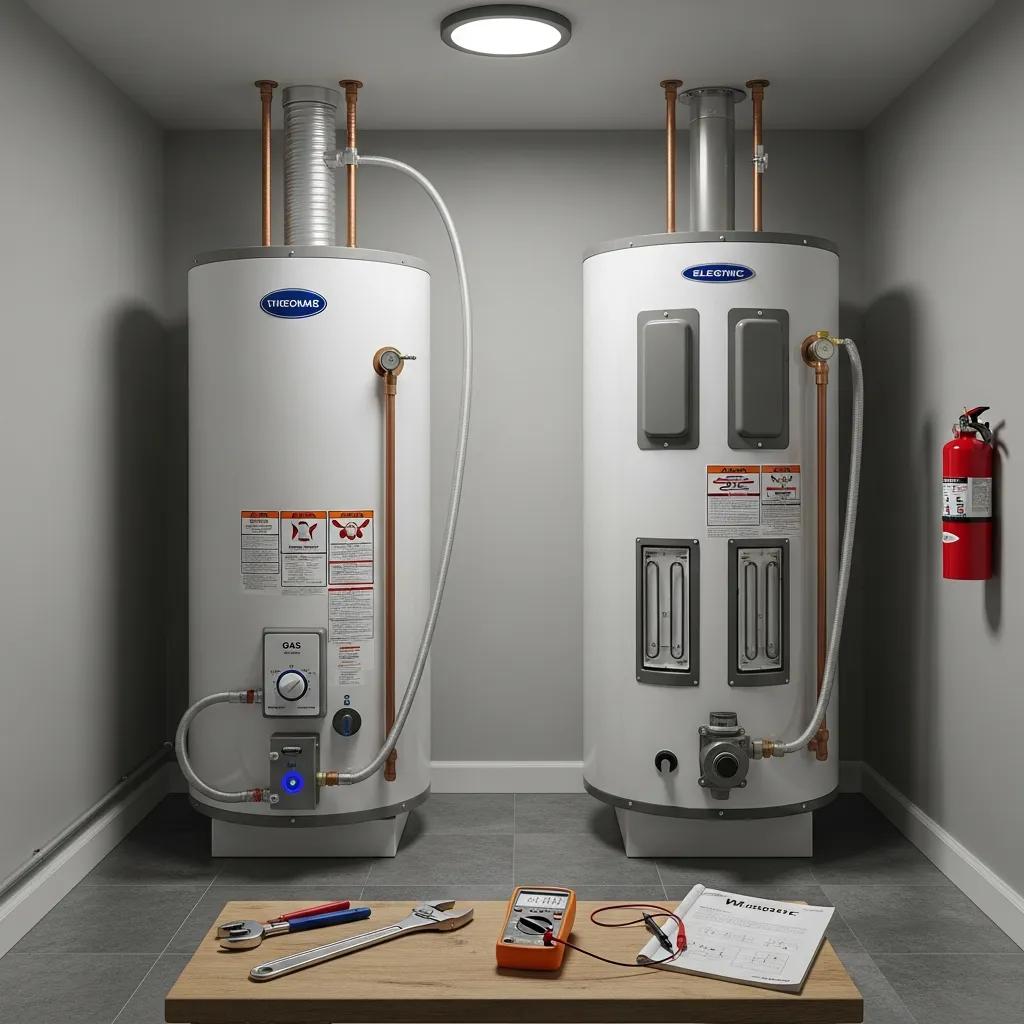
Traditional tank-style water heaters—both gas and electric—store and heat household water using a burner or electric elements and a thermostat. Spotting problems early and addressing them properly keeps your home safe, saves energy, and prevents expensive water damage. This guide walks homeowners through the most common failures, safe DIY checks you can do, and when to call a licensed technician. Frost and Kretsch Plumbing provides local, 24/7 emergency service for urgent hazards; contact us right away if you smell gas or face a major leak. Below you’ll find clear diagnostics for leaks, pilot light problems, element replacement, a repair-versus-replace decision framework, and tips for finding reliable local service in Macomb, Oakland, and Wayne counties. Each section mixes practical troubleshooting, safety-first steps, and the typical professional fixes so you can make confident decisions about maintenance and repairs.
Traditional tanks depend on a small set of parts—tank shell, anode rod, drain valve, pressure relief valve (T&P), burner or heating elements, thermostat, and control valves—that wear over time. Knowing what each part does and how it typically fails removes uncertainty when you’re diagnosing an issue. The sections that follow list the top problem categories, explain safe checks you can perform, and give step-by-step guidance for relighting a pilot or replacing elements. At the end you’ll find a decision table to weigh repair versus replacement and criteria for choosing a local service provider with transparent pricing.
What Are the Most Common Problems in Traditional Water Heaters?
Most traditional water heaters show a predictable set of failures: leaks, no hot water, pilot or ignition problems, noisy tanks from sediment, tripped breakers on electric units, and foul odors from bacterial activity. Each problem has clear symptoms and usual causes that point to the right fix. The first diagnostic step is determining whether the issue is a replaceable part (valve, element, thermostat) or irreversible tank corrosion—this helps decide between repair and replacement. Below is a quick reference mapping symptoms to likely causes and fixes so homeowners can triage issues fast.
This table summarizes the top problem categories so you can match what you’re seeing to likely causes and standard fixes before calling a pro.
| Problem Category | Common Symptom(s) | Typical Cause(s) | Likely Fix (Repair/Replace) |
|---|---|---|---|
| Leaking water heater | Water pooling nearby; steady drip around the tank | Loose fittings, failed drain valve, or corroded tank shell | Tighten or replace fittings/valves; replace unit if the tank shell is corroded |
| No hot water | Cold taps; temperatures fluctuate | Burner/element failure, thermostat issue, pilot/ignition problem, or tripped breaker | Replace element or thermostat, repair pilot/ignition, or troubleshoot electrical supply |
| Pilot light out / weak flame | Pilot won’t stay lit or flame is small | Bad thermocouple, clogged pilot orifice, or gas control valve issue | Clean/replace thermocouple, service pilot assembly, or replace gas control |
| Noisy tank | Popping, rumbling, or banging while heating | Sediment buildup that reduces heat transfer | Flush tank to remove sediment; consider professional descaling |
| Rotten-egg odor | Sulfur smell in hot water only | Bacterial activity reacting with the anode rod | Inspect/replace anode rod, shock chlorinate the tank, or call a pro |
This quick guide shows which issues homeowners can often handle themselves and which require a licensed technician. Knowing the likely fix also helps you get clear, upfront estimates from service providers.
Why Is My Water Heater Leaking and How Can It Be Fixed?
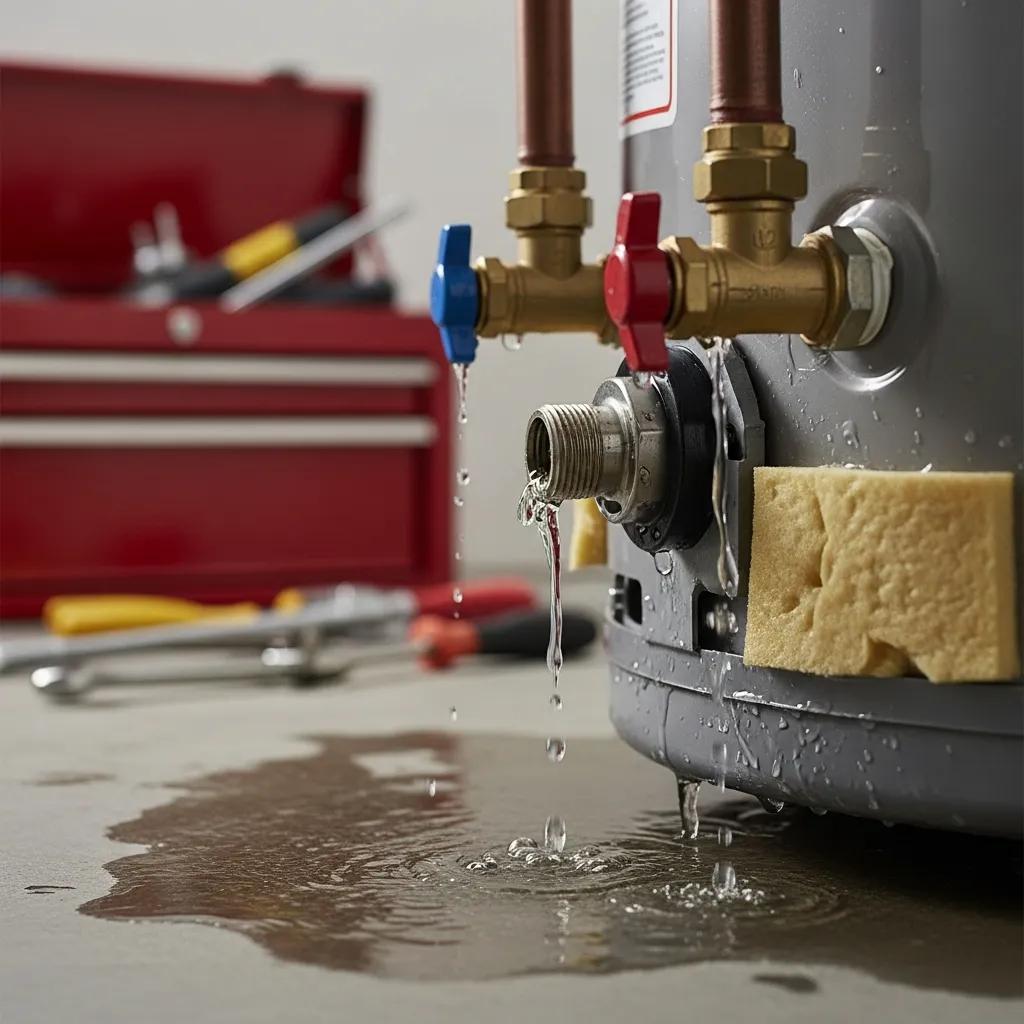
Leaks are the most urgent problem because they can cause immediate damage. Common leak points are loose pipe fittings, the temperature-and-pressure (T&P) relief valve, the drain valve, or, in the worst case, the tank shell itself. As a first safety step, shut off the cold-water supply and isolate power—turn off the breaker for electric heaters or shut the gas supply for gas units—before you look for the leak. Check visible fittings and valves for drips, feel along the tank base to tell steady seepage from condensation, and confirm the T&P discharge pipe is clear and not actively discharging water due to overpressure.
If the leak is at an external fitting, tightening or replacing the fitting and re-sealing threads often fixes it; a leaking drain valve usually needs replacement. If the leak comes from the tank body (rust, a hairline crack, or weeping seams), any patch is only temporary—replacement of the entire heater is the safer, longer-term solution. If you see tank corrosion, extensive water around the unit, or you’re unsure of the source, call a licensed technician for an assessment and safe replacement options—replacing a failing tank prevents repeated service calls and future water damage.
Immediate homeowner leak checks:
- Turn off the cold-water inlet and isolate power to the heater.
- Check the T&P relief valve and its discharge pipe for active flow.
- Inspect the drain valve and external plumbing joints for visible dripping.
What Causes No Hot Water in Gas and Electric Water Heaters?
No hot water can come from different causes depending on whether your heater runs on gas or electricity—identifying the fuel type narrows the troubleshooting quickly. Common gas issues include an out pilot light, a bad thermocouple, a faulty gas control valve, or venting problems. Electric units typically fail because of burned-out heating elements, bad thermostats, or tripped breakers. Sediment buildup affects both types by reducing heat transfer and making recovery slow, which can look like a heating failure even when burners or elements are working. Start by checking basics—thermostat setting and breaker or gas supply—before moving to component tests.
Safe homeowner checks include verifying the pilot or ignition status on gas models and checking the breaker and thermostat settings on electric units. If you smell gas, leave the area and call a licensed professional—do not attempt DIY fixes. If basic checks don’t restore hot water, a licensed technician can test thermocouples and gas controls, measure element continuity with a multimeter, and flush heavy sediment safely. Knowing the likely causes helps you prioritize repairs and avoid unsafe attempts on gas or live electrical systems.
How Do You Repair Gas Water Heater Pilot Light Issues?
The pilot light ignites the main burner on older gas water heaters; without a steady pilot the heater won’t produce hot water. Typical pilot problems are an extinguished pilot, a weak flame, or a pilot that won’t stay lit—often traced to a failing thermocouple, a clogged pilot orifice, or a faulty gas control valve. You can often relight the pilot safely if there’s no gas smell and you follow the manufacturer’s instructions, but recurring problems usually mean the thermocouple or gas control needs professional attention. The section below gives step-by-step diagnostics and a short relight checklist, plus clear signs that you should call a licensed technician.
When the pilot keeps going out, the thermocouple often isn’t sensing the flame and keeps the gas valve closed; replacing it usually fixes the issue. If outages persist or the flame is irregular, the pilot orifice may be clogged or the gas control valve may be failing—both require licensed service. Because gas systems carry risk, call a pro if the pilot won’t relight after safe steps, if you smell gas, or if the control valve looks corroded or damaged.
What Are the Steps to Diagnose and Fix Pilot Light Problems?
Diagnosing pilot issues is sequential: confirm the gas supply, check for any gas odor, inspect the pilot assembly, and test the thermocouple. First, ensure the gas shutoff is open and there’s no gas smell—if you detect odor, leave the home and call emergency service right away. If there’s no odor, follow the manufacturer’s relight steps: set the control to “pilot,” press and hold the knob while you ignite the pilot, and hold until the pilot flame is steady and fully surrounds the thermocouple. If the pilot lights but goes out when you release the knob, the thermocouple likely needs replacing.
Homeowners can relight pilots safely when there’s no gas odor and they follow the unit’s instructions. If the pilot orifice is clogged, the flame is weak, or the gas control is unresponsive, call a professional. Regular maintenance—cleaning the pilot assembly and checking the thermocouple—prevents many pilot issues and cuts down on emergency calls.
Pilot relight checklist:
- Confirm the gas supply is on and you do not smell gas.
- Set the control to “pilot,” press the knob, ignite as instructed, and hold until stable.
- If the pilot goes out when you release the knob, suspect the thermocouple and call a pro.
When Should You Call a Professional for Pilot Light Repairs?
Call a licensed technician immediately for any sign of a gas leak, persistent pilot failure after safe relighting, or evidence of a failing gas control valve. If you smell gas, detect a strong rotten-egg odor, or see corrosion and heavy soot around the burner, evacuate and seek emergency service. Also call a pro if the pilot stays lit but the main burner won’t ignite or if cleaning doesn’t correct an irregular flame—these usually point to failing gas control parts. Professional service guarantees safe handling of gas valves, correct replacement parts, and compliance with local codes.
Frost and Kretsch Plumbing offers 24/7 emergency response for gas hazards and performs licensed repairs for pilot assemblies, thermocouples, and gas controls. Prompt professional diagnosis prevents unsafe conditions and avoids repeated relight attempts that can mask a failing valve. When you’re unsure about combustion components or you smell gas, contact a licensed technician immediately for safe, code-compliant repairs.
How Is Electric Water Heater Element Replacement Performed?
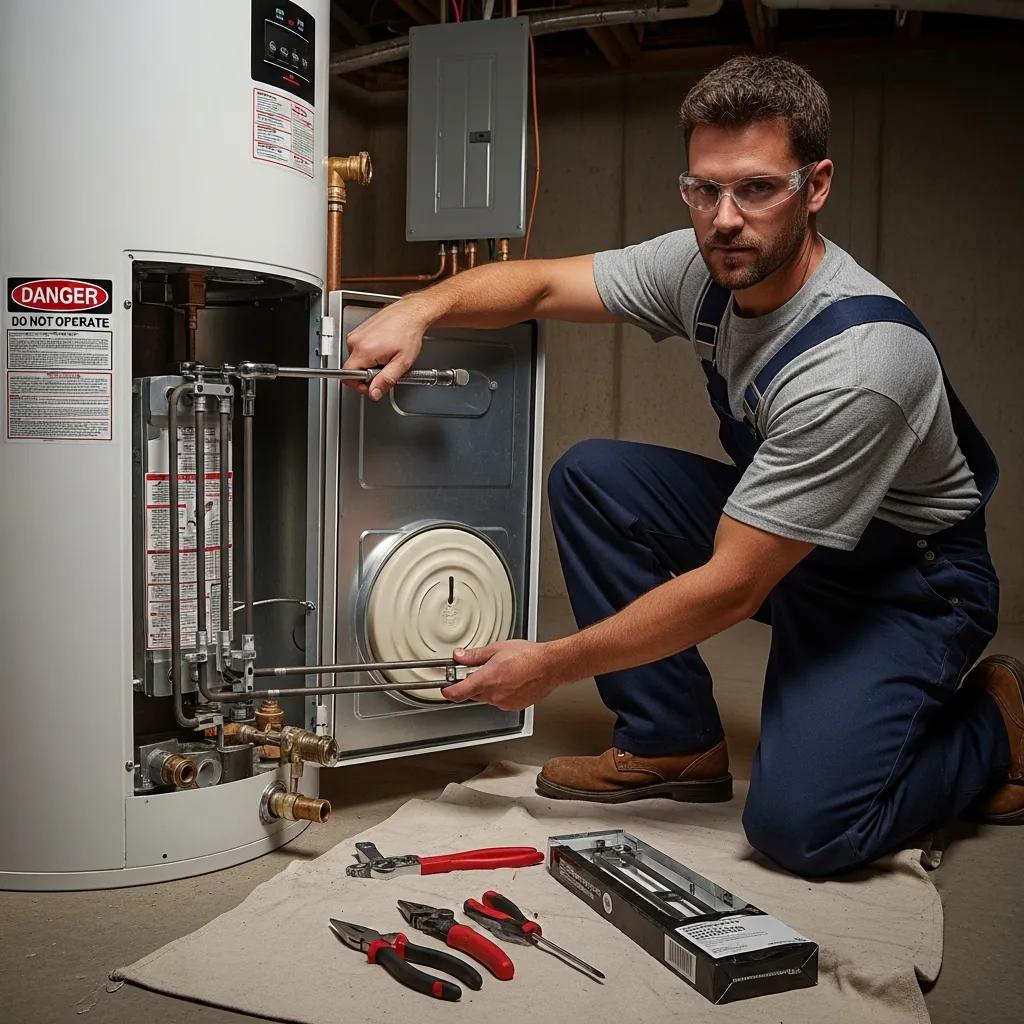
Electric heating elements turn electrical energy into heat inside the tank, and a failed element is a common reason for no hot water or uneven temperatures. Diagnosing an element means isolating power at the breaker, confirming power is off, and testing continuity with a multimeter—no continuity means a failed element. Replacing an element requires draining enough water to expose the element, removing the old element, installing a new one with a proper gasket, refilling the tank, and restoring power while checking for leaks and correct operation. The table below outlines parts, symptoms, diagnostic checks, and typical repair time so you know what to expect.
This technical table links element-related symptoms to checks and gives homeowners realistic repair time estimates.
| Part (Entity) | Symptom when Faulty | Diagnostic Step | Repair Step / Time Estimate |
|---|---|---|---|
| Upper heating element | Little or no hot water; only a warm first draw | Turn off power and test continuity with a multimeter | Replace the element; about 60–90 minutes including a partial drain |
| Lower heating element | Slow reheating; inconsistent hot supply | Isolate power; check continuity and resistance | Replace the element; 60–90 minutes plus refill time |
| Thermostat (electric) | Elements not energized; temperature control issues | Test voltage to elements when thermostat calls for heat | Replace thermostat; 30–60 minutes with power off |
How to Identify a Faulty Heating Element in Electric Water Heaters?
A failed heating element often causes no hot water or only a short burst of warm water before it goes cold. Start by checking that breakers haven’t tripped and the thermostat is set correctly. Then, with power off at the breaker, test each element for continuity with a multimeter—an open (infinite) reading means the element has burned out. Abnormal low or odd ohm readings can point to partial failure or a short to ground. If you remove panels and drain the tank, inspect the element flange for burnt insulation or corrosion.
Replacing a confirmed-bad element is a doable job for a skilled DIYer with electrical experience, but if you’re unsure about safely disconnecting power or wiring the new part, call a professional. Proper replacement restores heat and gives a chance to check thermostats and wiring so both elements will work reliably.
What Are the Safe DIY Steps Before Professional Repair?
Before you call a technician, you can run safe, non-invasive checks to narrow down the problem and speed up repair. Always cut power at the electrical panel for electric units or turn off the gas supply for gas units. Relieve pressure by opening a hot-water tap and check the T&P valve discharge. For electric heaters, check the circuit breaker and reset if tripped; for gas units, confirm pilot or ignition status and listen for burner operation. Flushing a few gallons from the drain valve can reveal heavy sediment that explains noisy operation or poor heating.
These pre-checks help technicians get to the fix faster. Don’t open wiring panels or work on live electrical parts unless you’re qualified—leave electrical and gas work to licensed professionals to avoid hazards and code violations. Providing this initial information to your plumber can speed diagnosis and sometimes resolves simple issues without a full repair visit.
When Should You Repair or Replace Your Traditional Water Heater?
Deciding whether to repair or replace depends on the unit’s age, the failure type and severity, how often it’s needed for repairs, and efficiency concerns. As a rule, isolated component failures (valves, elements, thermostats) on newer tanks are good candidates for repair. Tank shell leaks, heavy corrosion, repeated problems, or units older than about 8–12 years usually justify replacement. Newer high-efficiency models can cut energy bills and reduce future breakdown risk, so factor in long-term savings when you compare options. The table below helps guide the decision based on age, condition, and symptoms.
| Condition | Age / Typical Range | Signs | Recommended Action |
|---|---|---|---|
| Isolated component failure | Single failed element, thermostat, or valve; no visible corrosion | Repair the part; consider warranty and cost | |
| Moderate wear with recurring issues | 8–12 years | Multiple repairs recently; declining performance | Compare replacement vs. repair; weigh long-term cost |
| Tank corrosion or leak | Any, commonly >8 years | Wet tank base, visible rust, persistent leak | Replace the water heater to avoid future failure and damage |
Use these guidelines as a starting point. A licensed technician can inspect your unit, give a repair estimate, and present replacement options when a new heater makes better long-term sense. Regular maintenance—annual flushing and checking the anode rod—helps delay replacement by slowing corrosion and reducing sediment buildup.
What Are the Signs Indicating Repair vs. Replacement?
Signs that favor replacement include visible tank corrosion, a leak from the tank body, multiple component failures in a short time, and an appliance age beyond roughly 8–12 years. Single-component failures on a relatively new tank—like a bad drain valve, heating element, or thermostat—usually mean repair is the more cost-effective choice. Energy efficiency also matters: an old, inefficient tank may be worth replacing even if a repair is possible. A practical rule is to compare repair cost to replacement cost and factor in age—when repair expenses approach a significant portion of replacement cost and the tank is older, replacement often wins.
A licensed plumber can measure corrosion, verify non-replaceable component integrity, and give a transparent recommendation. Frost and Kretsch Plumbing will assess your unit, explain repair estimates clearly, and, if replacement is the best option, provide pricing and options backed by our satisfaction guarantee.
How Does Regular Maintenance Extend Water Heater Lifespan?
Regular maintenance addresses the main causes of failure—sediment, corrosion, and worn components—and can add years to your water heater’s life while improving efficiency. Key tasks include annual flushing to remove sediment, inspecting and replacing the sacrificial anode rod as needed, testing the T&P relief valve, and checking for leaks at fittings and valves. Keeping the thermostat near 120°F reduces thermal stress and keeps energy use reasonable. These steps lower the risk of element failure, reduce noisy operation, and slow tank corrosion.
Scheduled professional inspections can spot anode depletion, hidden leaks, or venting issues on gas units before they become emergencies. Consistent maintenance not only postpones replacement but also keeps your hot water reliable and reduces the chance of surprise breakdowns.
Where to Find Reliable Water Heater Repair Services Near Me?
Pick a repair service by checking licensing, emergency availability, transparent pricing, guarantees, and technician credentials—these factors reduce risk and make outcomes more predictable. Local companies that offer 24/7 emergency service and upfront pricing minimize surprises and get quicker responses for leaks or gas hazards. When comparing providers, confirm they’re licensed, offer clear estimates with no hidden fees, and stand behind their work. Use the checklist below to vet candidates before booking a repair.
Criteria for choosing a repair service:
- Licensed, experienced technicians with local knowledge.
- 24/7 emergency availability for gas leaks or major water damage.
- Transparent pricing with clear, upfront estimates and no hidden fees.
- A workmanship or satisfaction guarantee on repairs and replacements.
Why Choose Frost and Kretsch Plumbing for Water Heater Repairs?
Frost and Kretsch Plumbing serves Macomb, Oakland, and Wayne counties with licensed technicians experienced in residential and commercial water heater repairs, replacements, and emergency response. We focus on transparent pricing—upfront project costs with no surprise fees—and back our work with a 100% satisfaction guarantee. Our team handles gas and electric systems, emergency gas or water hazards, and the plumbing work that often accompanies heater replacement. For urgent or complicated issues, our 24/7 availability means you can get licensed help when you need it.
If you need an inspection, repair estimate, or replacement options, Frost and Kretsch Plumbing will perform an on-site assessment, explain your options clearly, and provide honest pricing so you can choose the best path. Working with a local licensed provider ensures code-compliant repairs and faster, more reliable service.
What Local Areas Do We Serve in Michigan for Water Heater Repairs?
Frost and Kretsch Plumbing serves homeowners and businesses throughout Macomb County, Oakland County, and Wayne County, Michigan. Our local experience includes knowledge of municipal codes, common installation scenarios, and region-specific issues. Hiring a nearby provider reduces response time for emergencies, simplifies permits and inspections, and usually means quicker access to common replacement parts. If you’re unsure whether your address is inside our coverage area, contact us to confirm and schedule an evaluation or emergency dispatch.
Local service benefits include familiarity with municipal code requirements, faster dispatch for urgent leaks or gas problems, and technicians experienced with the brands and setups commonly used here. For safety hazards or persistent failures that need licensed attention, call a local licensed provider for timely, code-compliant repairs.
This guide gave structured troubleshooting, safety-first DIY checks, decision tools for repair versus replacement, and tips for finding a trustworthy local service provider. Use the diagnostic steps and tables to triage issues, perform safe preliminary checks, and then rely on licensed technicians for gas, electrical, or tank-replacement work.
Frequently Asked Questions
What maintenance tasks can I perform to extend the life of my traditional water heater?
Regular maintenance keeps your heater running longer and more efficiently. Key tasks you can do or schedule: flush the tank annually to remove sediment, check and replace the anode rod every few years if needed, and test the T&P relief valve. Also inspect fittings for leaks and keep the thermostat around 120°F. Annual professional inspections, especially for gas units, catch wear before it becomes a problem.
How can I tell if my water heater needs to be replaced instead of repaired?
Replacement is often the better choice when the unit is 8–12 years old, shows tank corrosion or body leaks, or needs frequent repairs. If repair costs approach a large share of replacement cost, or if performance and efficiency are declining, consider replacing. A licensed technician can give a detailed assessment and help you compare repair costs versus long-term savings from a newer, more efficient unit.
What should I do if I smell gas near my water heater?
If you smell gas, act immediately—evacuate the home, do not switch any electrical devices on or off, and avoid open flames. From a safe location, call your gas utility or an emergency service and contact a licensed technician. Do not try to fix gas leaks yourself; they’re dangerous and require professional handling to ensure safety and code compliance.
Are there any signs that indicate my water heater is working inefficiently?
Yes. Signs of inefficiency include fluctuating temperatures, longer waits for hot water, increased energy bills, and noisy operation like rumbling or popping. Discolored or foul-smelling hot water can also signal sediment or bacterial growth. Addressing these symptoms early can restore efficiency and prevent larger issues.
What are the benefits of hiring a licensed technician for water heater repairs?
Licensed technicians have the training to diagnose problems accurately and perform safe, code-compliant repairs. They can handle gas and electrical systems, provide warranties on their work, and reduce the risk of further damage or safety problems. Hiring a pro often saves time and money by preventing repeat calls and ensuring the repair is done right the first time.
How can I find a reliable water heater repair service in my area?
Start with recommendations from friends or neighbors and read online reviews. Confirm the company is licensed and insured, offers clear upfront pricing, and has emergency availability if you need it. Ask about guarantees on workmanship and compare estimates from a few providers to find the best fit for your needs.
Conclusion
Knowing the common problems with traditional water heaters helps you act quickly and protect your home. Follow the safety-first diagnostic steps here, and call a licensed technician when the job goes beyond simple checks—especially for gas or electrical issues. For expert, local service with transparent pricing and 24/7 emergency response, contact Frost and Kretsch Plumbing. We’ll help you choose the safest, most cost-effective solution and get your hot water back reliably.