
Battery Backup Sump Pump Installation & Emergency Repair in Farmington Hills, MI
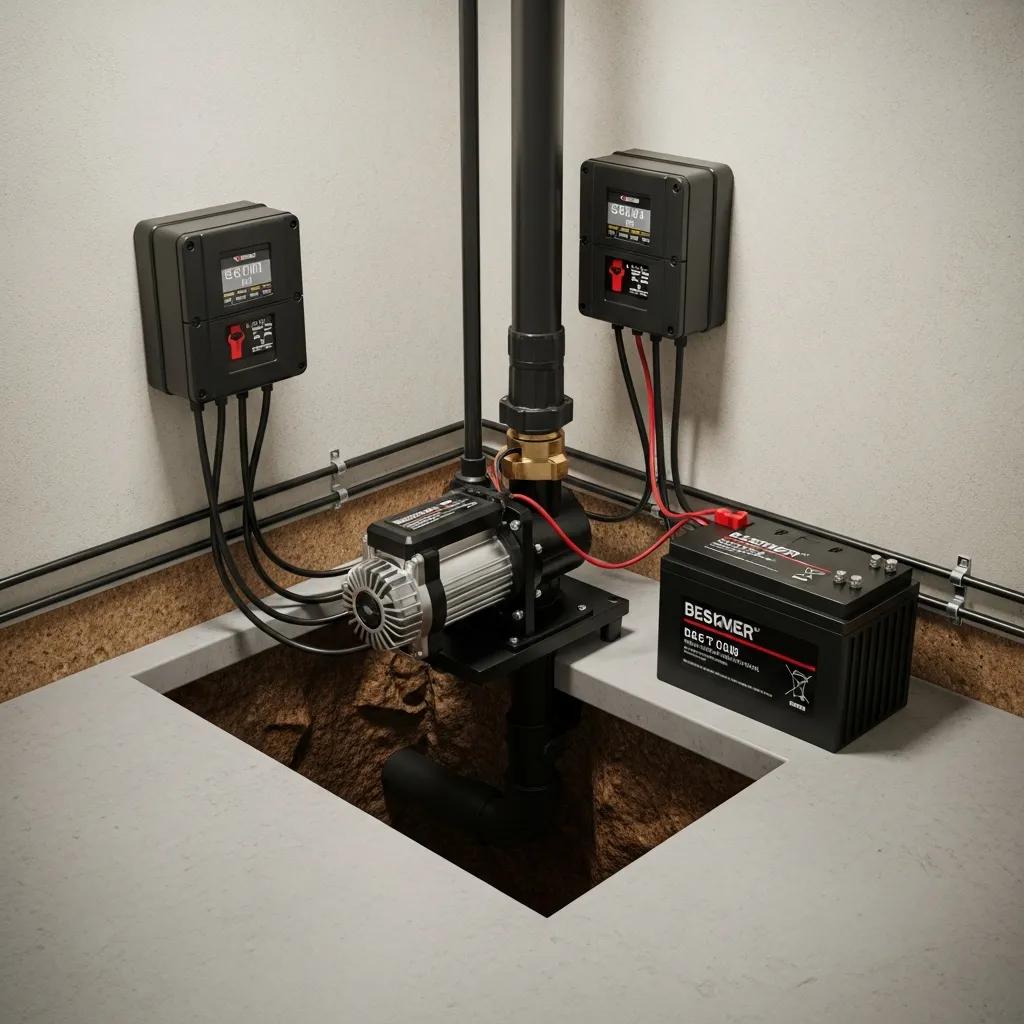
A battery backup sump pump is a secondary pump powered by a dedicated battery. It kicks in when the power goes out so basement water keeps getting pumped out — protecting your home or business from flood damage during storms and outages. This guide explains why a backup matters in Farmington Hills, how the different systems work, what to expect from installation and maintenance, and which factors affect cost and warranties. Southeast Michigan homeowners face heavy spring rains, fast snowmelt, and occasional storm-related outages that can leave a primary pump useless. A backup system keeps protection running and reduces stress. You’ll get straightforward explanations of how the equipment works, the pros and cons of battery versus water-powered systems, what a pro installation usually looks like, and common questions about lifespan and replacement. We also note local service and emergency support options from a nearby plumbing specialist so you can act quickly when needed.
Why Are Battery Backup Sump Pumps Essential for Farmington Hills Homes and Businesses?
Battery backup sump pumps keep water moving when the grid goes down — and that simple function can stop a small leak from becoming a big, expensive problem. When power fails, a controller and float or sensor switch the system over to battery power so water drains until power returns or the battery runs out. Local conditions — heavy spring rains, quick snowmelt, and storm-related outages — raise the risk of basement flooding in Farmington Hills, especially in finished basements, utility rooms, or commercial spaces with sensitive equipment. Many owners find the upfront cost is worth it compared with repair bills and insurance claims after a flood. Frost and Kretsch Plumbing is a family-owned contractor serving Macomb, Oakland, and Wayne Counties. We offer 24/7 emergency service and can help you decide whether a battery backup makes sense for your property. Below we break down the technical options and the benefits in plain terms.
Here are the real homeowner benefits before we get into the mechanics and local risks.
Battery backup sump pumps give homeowners three clear advantages:
- Continuous protection during outages: The backup runs without grid power so water keeps getting discharged.
- Damage reduction and lower repair costs: Early pumping limits water intrusion, mold, and structural harm that drive up restoration bills.
- Stronger property resilience: A backup protects finished basements and reduces long‑term risk — something insurers notice.
Those outcomes make backup systems a practical layer in any basement protection plan. Understanding how they operate shows why they work when outages happen.
How Do Battery Backup Sump Pumps Prevent Basement Flooding During Power Outages?
When the power goes out, the backup controller senses the loss and starts the battery-powered pump using a float switch or electronic sensor. Most systems use a sealed SLA or AGM battery kept charged by a charger until it’s needed. During an outage the controller isolates the battery and powers the backup motor, which pumps water through your discharge piping until the battery hits its low-voltage cutoff or mains power returns. Run time depends on battery size, pump draw, and how often the pump cycles — many systems run for several hours under moderate inflow, and larger batteries extend that time. Battery size, charger performance, and routine maintenance all work together to determine real-world protection. Next we look at local weather and outage patterns that make backups worthwhile in Farmington Hills.
What Local Weather and Power Outage Risks Make Backup Pumps Necessary in Farmington Hills?
Farmington Hills sees seasonal hazards — heavy spring rain, rapid snowmelt, and summer storms — that increase the chance of water entering basements, especially during multi-hour outages when a main pump can’t run. Fallen power lines or transformer issues create windows where standing water can accumulate quickly, particularly in finished basements or buildings with high groundwater. After clusters of storms, insurance claims and restoration work often spike in the area. For homes with frequent outages or valuable basement finishes, a backup pump is a cost-effective risk reducer. The next section compares the different backup types and their trade-offs so you can match a solution to your property.
What Types of Backup Sump Pump Systems Are Available in Farmington Hills?
Backup systems generally fall into four basic groups: battery backup, water-powered backup, combination/hybrid systems, and smart-enabled backups with monitoring. Battery systems use stored electrical energy. Water-powered systems use municipal water pressure to create suction. Hybrids combine both for redundancy. Smart systems add alerts and diagnostics. Picking the right one depends on your site, water pressure, and priorities. The short table below helps match system type to common needs in Farmington Hills homes.
Different types vary in run time and installation needs:
| System Type | Typical Run-time / Capacity | Pros | Cons |
|---|---|---|---|
| Battery Backup | Several hours to 12+ hours (battery size dependent) | Works without municipal water; reliable if battery is maintained | Needs periodic battery replacement and testing |
| Water-Powered Backup | Runs as long as municipal water pressure is available | No batteries to maintain; can run through extended outages | Uses potable water and needs sufficient incoming pressure |
| Combination / Hybrid | Longer protection by using battery + water options | Reduces single-point failures with redundant methods | More complex and more expensive to install |
| Smart-Connected Backup | Varies with the base system | Remote alerts and diagnostics improve upkeep | Requires connectivity and can add cost |
The table shows how key parts — battery pack, charger, float switch, check valve, discharge piping — fit into each system and the trade-offs involved. Below we describe battery and water-powered systems in more detail and note common installation points to consider.
How Do Battery Backup Sump Pumps Work and What Are Their Benefits?
Battery systems include a sealed battery (often SLA or AGM), a charger that keeps the battery ready, and a float switch or sensor to trigger the pump when water rises. While the house has power the charger maintains charge; during an outage the controller sends power from the battery to the backup motor so it pumps out the pit water through your discharge line. Benefits include independence from municipal water pressure, predictable maintenance (replace batteries on schedule), and compatibility with most submersible primary pumps. Regular checks of charger function, battery condition, and float settings help ensure the system will perform when you need it.
Next we cover the water-powered approach and the trade-offs homeowners often weigh.
What Are Water-Powered Backup Sump Pumps and When Are They Ideal?
Water-powered backups use your home’s pressurized water to create a venturi suction that pulls sump pit water out and sends it to the discharge. The upside is effectively unlimited run time while municipal water pressure holds; the downside is higher potable water use and the need for strong incoming pressure. Water-powered units are a good fit where city water pressure is reliable and homeowners want to avoid battery maintenance. Be aware of local code or permit requirements and that older plumbing or low pressure can make this option impractical.
What Battery Backup Sump Pump Installation and Maintenance Services Does Frost and Kretsch Plumbing Offer?
We provide residential and commercial sump pump services — including installations, water-operated backups, and 24/7 emergency response — with clear pricing and a customer satisfaction commitment. Our process starts with a site visit to identify your primary pump type, pit size, discharge routing, and available power and water. That assessment guides whether we recommend battery, water-powered, or hybrid solutions. Below we summarize the typical installation workflow and how we handle emergency repairs and battery replacement.
The steps below are what homeowners can expect during a professional installation.
- Initial inspection and assessment: A technician documents the sump pit, discharge route, electrical and water service to identify constraints and options.
- System selection and recommendation: We recommend battery, water-powered, or hybrid systems based on site findings and your priorities.
- Installation and permits: Work includes mounting the backup, completing wiring or plumbing connections, routing discharge lines, and meeting code requirements.
- Testing and owner orientation: After installation we test under simulated outage conditions and show you how the system works and what maintenance it needs.
These steps help avoid surprises and keep the project on schedule. The next section outlines the installation process in more detail.
What Is the Professional Installation Process for Backup Sump Pumps in Farmington Hills?
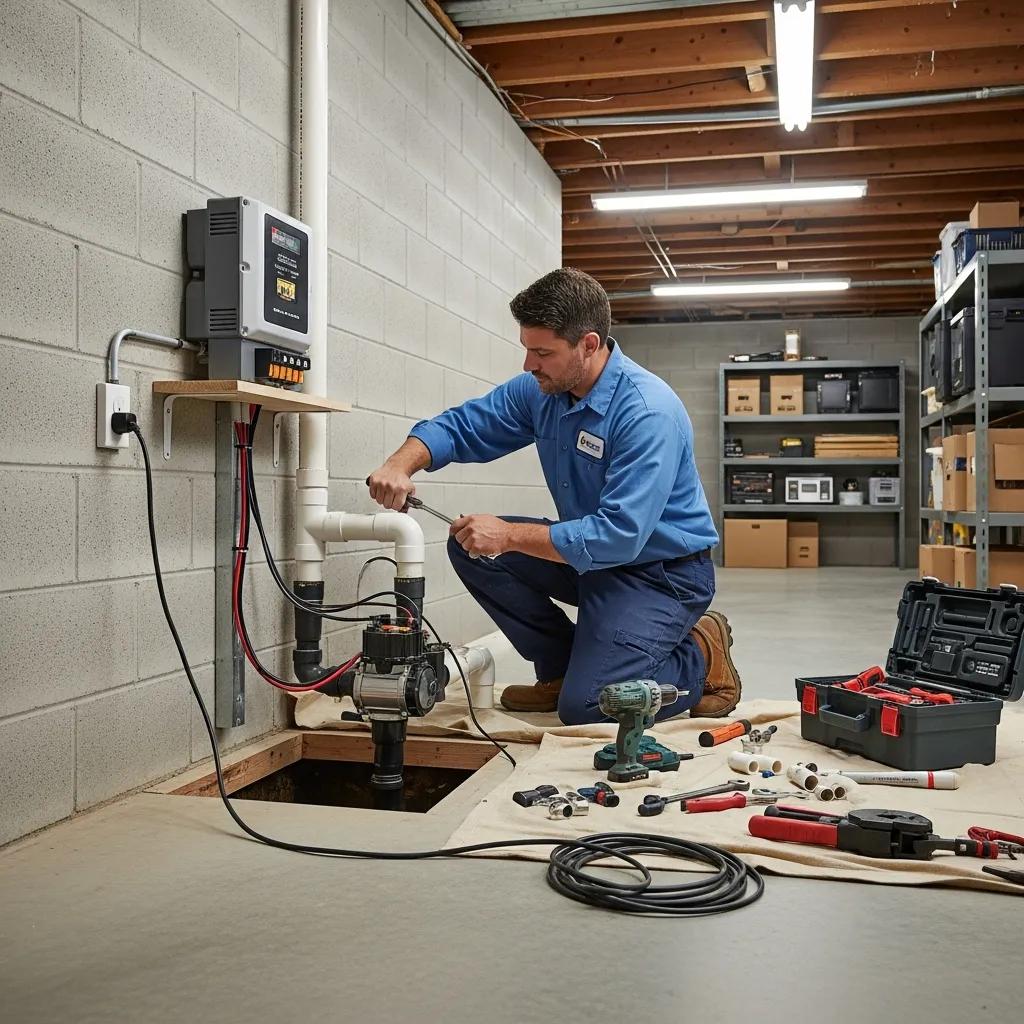
We begin with a full inspection to record sump pit shape, primary pump type (submersible or pedestal), and the available power and water. That determines the system scope and whether permits are needed. We then source compatible components — pump, battery, charger, check valves, and piping — and schedule the work to minimize disruption. Installation can involve modifying existing hardware, mounting the backup unit and battery cabinet, making electrical connections (or plumbing ties for water-powered units), and running multi-condition tests such as float activation and simulated power loss. We finish with a walkthrough that covers maintenance tasks, inspection intervals, battery replacement timing, and alarm responses so you know how to spot problems early.
Next we explain how we handle emergency repairs and battery swaps when time is critical.
How Does Frost and Kretsch Provide Emergency Repair and Battery Replacement Services?
We’re available 24/7 for urgent sump pump failures. On an emergency call our technicians triage the situation, contain active flooding if needed, and perform diagnostics to find whether the primary pump, backup unit, charger, or battery has failed. We can install temporary pumping solutions to stop ongoing damage, then complete permanent repairs. Battery replacements follow safe‑disposal rules and use compatible chemistries for the controller; we test run-time on site and advise on expected replacement intervals. During emergencies we provide clear options and pricing up front so you can make informed decisions before we proceed.
With emergency support covered, the next section looks at typical cost drivers for installations.
How Much Does Battery Backup Sump Pump Installation Cost in Farmington Hills?
Final cost depends on system type, battery capacity, installation complexity, and labor. Rather than listing fixed prices here, it’s more useful to understand the main cost drivers so you can compare quotes realistically. Equipment category (battery vs. water-powered vs. hybrid), battery size and chemistry, pit work, discharge rerouting, and permit fees all influence the price. The short table below organizes key factors so you can scan what typically affects a project in Farmington Hills.
Key cost drivers at a glance:
| Component | Attribute | Typical Range / Influence |
|---|---|---|
| Pump type | Battery vs. water-powered vs. hybrid | Strong effect on equipment cost and installation complexity |
| Battery capacity | Amp-hour rating and chemistry | Moderate to high effect; bigger batteries cost more but run longer |
| Installation complexity | Pit modification, discharge routing, access | High effect on labor and total time |
| Labor & permits | Local labor rates and permit needs | Moderate effect; permits add fixed cost and time |
The table shows that pump type and site complexity usually move the final price most. An on-site assessment is the only reliable way to get an accurate quote.
What Factors Influence the Cost of Backup Sump Pump Systems?
Several variables affect total cost: chosen system type sets baseline equipment cost; battery capacity and chemistry impact both upfront and lifecycle expenses; and site conditions — tight access, need for concrete cutting or pit enlargement, long discharge runs, or complex check-valve setups — can raise labor hours. Permit and inspection rules vary by jurisdiction and may add administrative time and fees. Some homes require electrical work for dedicated circuits or transfer devices, which increases cost. Knowing these factors helps you balance desired run time and redundancy against your budget when comparing proposals.
Next we cover warranties and payment options that homeowners often ask about.
Are There Financing or Warranty Options Available for Backup Sump Pumps?
Warranty and financing options vary by manufacturer and installer, so confirm specifics when you get a quote. Typically, pumps and batteries carry limited manufacturer warranties and professional installation may include a service guarantee. Ask for written warranty details, what’s covered (parts vs. labor), and the duration before you sign. If financing or payment plans are important, request current options from your installer during the estimate. Clear warranty and payment terms help you compare value across proposals.
With installation and cost explained, many homeowners still have practical questions — we answer the most common ones below.
What Are the Most Common Questions About Battery Backup Sump Pumps in Farmington Hills?
Below are quick answers to frequent homeowner questions about lifespan, battery replacement, and whether an existing sump pump needs a backup. These concise responses help you decide next steps or prepare for an on-site inspection. If you need immediate help, call local emergency plumbing support for fast assistance.
How Long Does a Battery Backup Sump Pump Last and When Should Batteries Be Replaced?
The pump and mechanical parts can last many years with proper service. Batteries usually need replacement more often — commonly every 3–5 years — depending on chemistry, how often they cycle, and charger condition. Warning signs include shorter run time under load, visible corrosion or swelling, frequent low-voltage cutoffs, and weak charger indicators. Technicians check voltage under load and run timed tests to evaluate condition. Annual inspections and pre-storm season tests help preserve reliability and extend component life.
These guidelines lead into whether you need a backup for your current pump.
Do I Need a Battery Backup for My Existing Sump Pump?
Whether you need a backup depends on risk factors: past basement flooding, how often local power goes out, whether your basement is finished or occupied, and the value of items stored below grade. If you’ve had flooding before, have finished living space, or face frequent storm-related outages, we recommend adding a backup. For empty storage basements with low water-table risk, other, lower-cost measures might suffice. If you’re unsure, schedule an on-site assessment so we can match expected inflow rates to run-time needs and budget. When in doubt, a professional evaluation clarifies risk and sizing.
If you need emergency help now for a failing pump or flooding, call our local emergency plumbing support, available 24/7. For non-urgent quotes, schedule an on-site assessment for transparent pricing and a written recommendation. Call (586) 675-0097 to reach a local technician for urgent help or to arrange an inspection.
Why Choose Frost and Kretsch Plumbing for Your Battery Backup Sump Pump Needs in Farmington Hills?
Choosing a local, experienced provider matters. We know regional weather patterns, common foundation types, and local code expectations — knowledge that speeds accurate assessment and reliable installation. Frost and Kretsch Plumbing is family-owned and serves Macomb, Oakland, and Wayne Counties. We handle residential and commercial sump pumps, sewage ejection systems, water-operated backups, and offer 24/7 emergency service, transparent pricing, and a customer satisfaction commitment. Those qualities reduce friction in the project and give homeowners clear expectations for outcomes and follow-up service.
Key local benefits include:
- 24/7 Emergency Response: Quick triage and temporary measures minimize water exposure during active flooding.
- Transparent Pricing: Upfront estimates and clear explanations help you compare options without surprises.
- Customer Satisfaction Commitment: We stand behind our work and address follow-up concerns to ensure the system performs as promised.
These trust signals make it easier to move forward when you’re ready to protect your property with a professionally installed backup system.
What Makes Frost and Kretsch’s 24/7 Emergency Service Unique?
Our 24/7 emergency service means you can call any time a sump pump fails or flooding starts. We prioritize safety and immediate containment, then diagnose and recommend permanent repairs. We can set up temporary pumping or other measures to stop further damage, and then clearly explain repair options and next steps. That rapid response shortens time-to-intervention — a key factor in limiting basement water damage.
This emergency capability pairs with transparent pricing and service commitments to help homeowners make informed choices.
How Does Transparent Pricing and Customer Satisfaction Guarantee Benefit Farmington Hills Customers?
Transparent pricing means itemized estimates, plain explanations of parts and labor, and fewer surprise fees during installation or emergency repair. A customer satisfaction commitment reinforces trust by promising follow-up if the installed system doesn’t perform as expected. Confirm specific guarantee terms when you get your estimate, and ask for written details on warranty boundaries and recommended maintenance. Clear pricing and a service commitment simplify decision-making and reduce perceived risk when protecting your basement.
That wraps up the homeowner guidance and leaves you ready to evaluate options, understand costs, and contact local emergency or installation services when needed.
Frequently Asked Questions
1. What maintenance is required for battery backup sump pumps?
Perform an annual inspection at minimum. Check the battery charge, cable connections, and overall condition, and test the pump by simulating a power outage. Keep the sump pit clean and make sure the float switch can move freely. Follow the manufacturer’s battery replacement guidance — typically every 3–5 years — and schedule professional checks after heavy cycling events.
2. Can I install a battery backup sump pump myself?
Some homeowners try DIY installs, but we generally recommend a professional. Proper setup includes electrical connections, plumbing adjustments, and code compliance — elements that can be complex. A pro ensures the system is installed safely, meets local rules, and performs reliably. We also help select the right backup for your site conditions.
3. How do I know if my existing sump pump is compatible with a battery backup system?
Most submersible pumps work with battery backups, but compatibility depends on power needs and discharge setup. Check your pump specs and consult a technician. An on-site assessment will confirm compatibility and recommend the best backup option to meet runtime needs and safety standards.
4. What are the signs that my battery backup sump pump needs repair?
Watch for unusual noises, failure to activate during a power outage, or a noticeable drop in run time. Visible battery corrosion, swelling, or a non-working charger indicator are also red flags. Regular testing and inspections help catch issues early so the system is ready when needed.
5. Are there any local regulations regarding sump pump installations in Farmington Hills?
Yes. Local building codes may require permits, dictate proper discharge routing, and set plumbing standards. Consult local authorities or a licensed plumber to ensure compliance. Working with a pro helps avoid fines and future problems during property transactions.
6. What should I do if my battery backup sump pump fails during a storm?
If the backup fails, first check whether the primary pump is still working. If both are down, call a local emergency plumbing service immediately. If it’s safe, use a manual pump or buckets to remove water and keep electrical equipment away from wet areas. Document the situation for insurance and have a professional assess repairs as soon as possible.
7. How can I improve the efficiency of my battery backup sump pump system?
Keep the pit clean and free of debris for better water flow. Test the pump and battery regularly and consider a larger-capacity battery if run time is routinely short during heavy rainfall. Adding a smart monitoring system gives real-time alerts and diagnostics so you can spot issues before they become emergencies.
Conclusion
A battery backup sump pump is a smart investment for protecting your home from flooding during power outages, especially in weather-prone areas like Farmington Hills. These systems provide ongoing protection, lower potential repair costs, and offer peace of mind. Working with a reliable local company like Frost and Kretsch Plumbing ensures professional installation and ongoing support tailored to your needs. Ready to protect your basement? Contact us today to schedule a consultation.