Why Commercial Backflow Testing Matters for Michigan Businesses — Safety, Compliance, and Peace of Mind
Backflow happens when non-potable water reverses into a building’s drinking supply — a direct threat to health and a compliance risk. This guide explains why commercial backflow testing is essential for Michigan businesses, how backflow occurs, which devices stop it, and why annual testing is required in Macomb, Oakland, and Wayne counties. You’ll get clear, practical steps testers use, a rundown of common device types found in commercial properties, and the main cost drivers that affect inspection and repair pricing. We balance straightforward technical detail with actionable advice so facilities managers and property owners can prioritize prevention, stay compliant, and reduce liability. Read on for easy-to-understand explanations of back-siphonage and back-pressure, the testing steps certified professionals follow, recommended maintenance schedules, and when to call licensed commercial plumbers for ongoing compliance or emergency help.
What is Commercial Backflow and Why Does it Threaten Water Safety?
Commercial backflow is when water flows the wrong way and lets contaminants get into the potable supply. That can introduce biological, chemical, or particle hazards into drinking water. Two main causes are back-siphonage — when a pressure drop pulls contaminants back into the system — and back-pressure — when higher downstream pressure pushes contaminated water upstream. In commercial buildings, common contamination sources include chemical feed lines, boiler returns, irrigation systems, and wastewater cross-connections. Preventing backflow protects employees, customers, and the public, preserves the municipal supply, and reduces regulatory exposure. Knowing how contamination travels makes it clear why the right backflow preventer and regular testing are core parts of a business’s risk-management plan.
How Does Backflow Occur in Commercial Plumbing Systems?
Backflow shows up during normal operations and unexpected events when pressure relationships shift and contaminants move toward the potable line. For example, an irrigation system tied to the building supply can siphon fertilizers or pesticides into potable piping after a main break or sudden pressure dip. Boiler or pump systems can create back-pressure that pushes rusty or chemically treated water back toward drinking water. Restaurants and labs are higher risk because hoses, sinks, or chemical lines may cross-connect with potable sources if not properly isolated. Mapping these scenarios helps facility managers spot likely cross-connections and choose device types and placements that block probable backflow paths.
What Are the Health Risks of Water Contamination from Backflow?
Contaminated drinking water can bring bacteria, harmful chemicals, or organic waste into a building’s supply, causing illnesses ranging from stomach bugs to severe toxic exposures depending on the contaminant and level of exposure. Beyond immediate health impacts, contamination events can lead to shutdowns, regulatory investigations, and costly liability claims that interrupt operations and harm reputation. Regularly tested and maintained backflow devices, plus prompt remediation when issues arise, protect public health and help keep businesses operating smoothly.
What Are Michigan's Commercial Backflow Prevention Regulations?
Michigan requires commercial properties to protect potable water with appropriate backflow prevention devices and periodic testing in line with state safe drinking water standards and local water authority rules. Many municipalities in Macomb, Oakland, and Wayne counties require annual testing by certified testers and submission of results to the local water authority; missing those filings can trigger enforcement. Testing frequency, filing steps, and device selection often follow state guidance and municipal ordinances that classify connections as high or low hazard. Businesses should confirm county and local requirements and keep up-to-date records; proactive testing helps avoid enforcement and service interruptions.
Which Laws Mandate Annual Backflow Testing in Macomb, Oakland, and Wayne Counties?
Local ordinances and water utility rules in Macomb, Oakland, and Wayne counties typically mirror state safe drinking water policies and call for annual certification of commercial backflow preventers, especially on high-hazard connections. Each county or water authority sets its own filing procedures and may specify which sectors — industrial sites, medical facilities, multi-tenant buildings — need certain devices or more frequent inspections. Confirm testing schedules, approved tester credentials, and report formats with your local water authority. Staying current with these rules lowers your risk of noncompliance and keeps testing cycles aligned with municipal records and emergency-response protocols.
What Are the Consequences of Non-Compliance with Backflow Regulations?
Failing to follow backflow rules can lead to fines, required repairs, water service suspension, and legal exposure if contamination occurs. Utilities may shut off service to protect the wider system if a facility doesn’t install, maintain, or test required devices — which can cause immediate operational loss. In addition to fines, businesses can face cleanup costs, lawsuits, and damage to reputation. Scheduling regular testing and addressing repairs promptly is the best way to reduce these risks and keep operations running.
The most common municipal and operational consequences for non-compliance include:
- Fines and administrative penalties: Local authorities may assess monetary penalties for missed tests or unfiled reports.
- Service interruption: Utilities can mandate repairs or disconnect water service to protect the system.
- Liability and cleanup costs: Contamination can trigger expensive remediation and legal claims.
These outcomes show why timely testing and recordkeeping are essential. Acting early keeps issues from escalating and protects business continuity.
After confirming regulatory obligations and potential penalties, businesses should schedule annual testing with qualified technicians to maintain compliance and reduce operational risk.
With regulatory duties handled and filing steps understood, the next step is to look at the concrete benefits regular testing brings to public health and business resilience.
What Are the Benefits of Regular Commercial Backflow Testing?
Regular testing confirms devices are working, protects public health, keeps you compliant, and extends equipment life. Routine inspections catch worn seals, failing check valves, or misadjusted parts before they fail — lowering the chance of contamination and expensive emergency repairs. A well-maintained preventer also shows auditors and customers you take safety seriously. On top of that, scheduled testing helps with predictable maintenance budgeting and reduces downtime by allowing repairs to be planned during off hours instead of in an emergency.
How Does Testing Protect Public Health and Ensure Compliance?
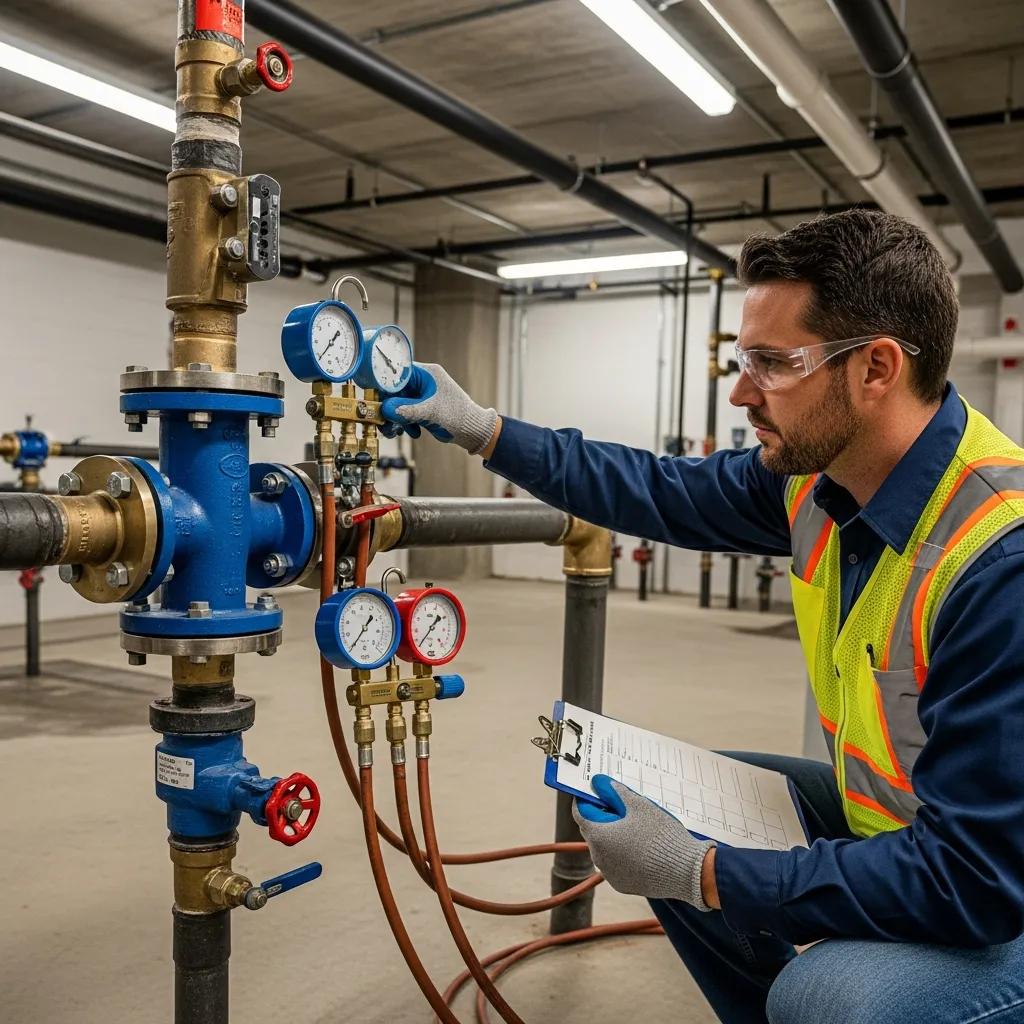
Testing checks device performance with calibrated gauges and functional tests to confirm valves hold and relief features operate as designed, preventing contaminated water from entering the potable system. Certified testers record pass/fail results, log gauge readings, and note maintenance needs, creating an auditable trail that meets municipal reporting requirements. Keeping current test records both protects public health and demonstrates due diligence to regulators.
In What Ways Does Testing Prevent Costly Repairs and Downtime?
Finding small issues early — minor leaks, worn diaphragms, or calibration drift — lets you schedule repairs before a failure forces an emergency replacement. Planned part swaps and preventive maintenance avoid unscheduled shutdowns that can stop production or interrupt customer service. Over time, predictable maintenance lowers capital costs by extending a device’s useful life. When testing is part of a preventive plan, businesses turn potential surprises into manageable maintenance tasks.
Regular testing delivers operational and financial advantages:
- Reduced emergency repairs: Early detection decreases sudden device failures and urgent interventions.
- Minimized downtime: Maintenance can be scheduled for low-impact times.
- Longer device life: Routine servicing preserves components and delays full replacement.
These advantages make testing a cost-effective part of facility management by reducing unexpected expenses and supporting continuous operations.
What Types of Commercial Backflow Prevention Devices Are Used?
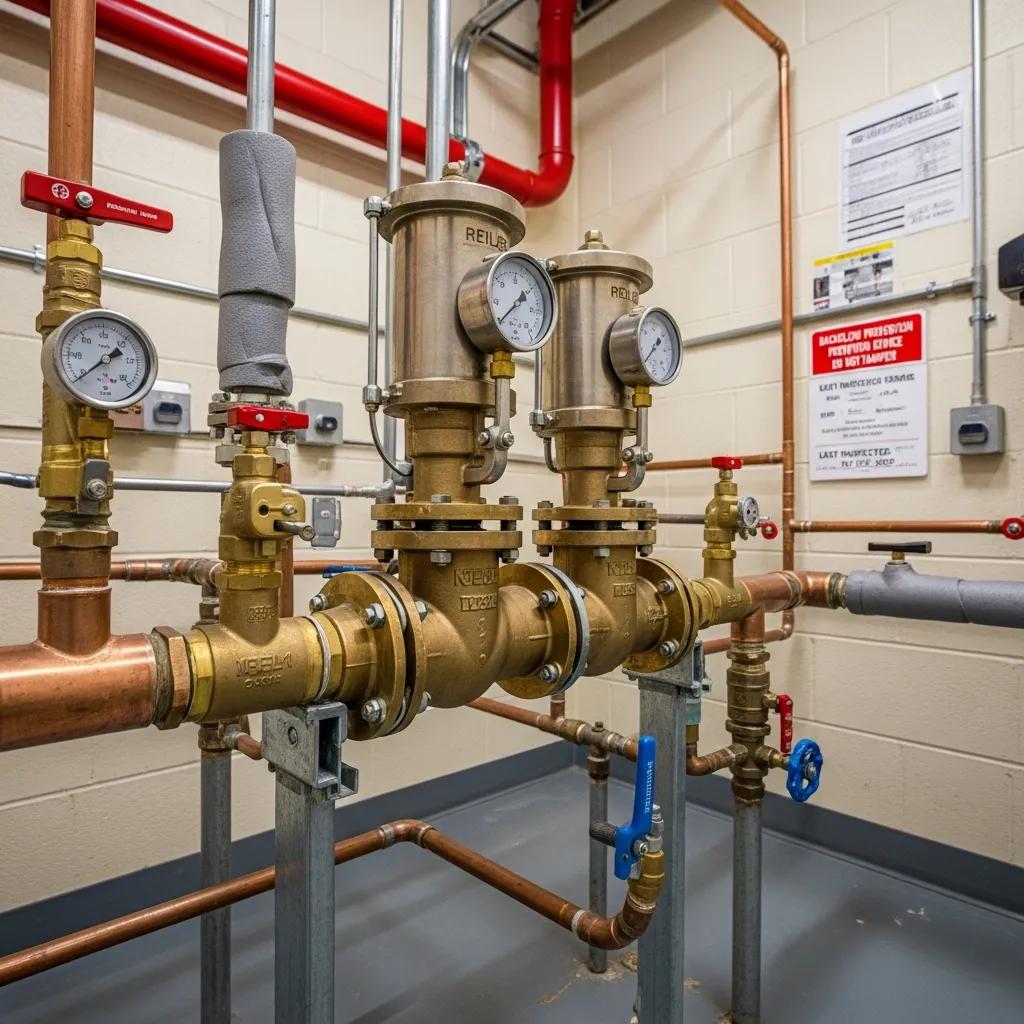
Commercial sites use different devices based on hazard level and hydraulic conditions. Common options include Reduced Pressure Zone (RPZ) assemblies for high-hazard locations, Double Check Valve Assemblies (DCVA) for general commercial services, and Pressure Vacuum Breakers (PVB) or Atmospheric Vacuum Breakers (AVB) for irrigation and other low-risk branches. Choosing the right device depends on identified cross-connections, expected contaminants, and local water authority rules. Proper installation, easy access for testing, and following manufacturer and municipal maintenance guidance all affect long-term performance and compliance.
| Device Type | Key Attributes | Recommended Commercial Use |
|---|---|---|
| Reduced Pressure Zone (RPZ) Assembly | Two check valves plus a relief valve for strong protection against back-pressure and back-siphonage; requires annual testing | High-hazard lines such as chemical feed, labs, and boiler returns |
| Double Check Valve Assembly (DCVA) | Two check valves in series without a relief port; reliable for moderate hazards and simpler maintenance | General commercial services like retail, offices, and low-hazard industrial lines |
| Pressure Vacuum Breaker (PVB) / Atmospheric Vacuum Breaker (AVB) | One check with an atmospheric vent; prevents back-siphonage on irrigation and similar lines | Irrigation and other low-risk external connections where back-pressure isn’t expected |
This side-by-side view helps facility managers match device capability to hazard level and choose the right testing schedule.
With device types clear, the next step is how certified technicians test and document results to meet regulations and keep potable water safe.
What Are Reduced Pressure Zone Assemblies and Their Uses?
RPZ assemblies provide the highest protection against back-pressure and back-siphonage. They include two shutoff valves, two check valves, and a relief valve between them. If a check valve leaks or back-pressure occurs, the relief valve discharges to atmosphere so contaminants can’t enter the potable line and the failure is apparent. RPZs are used where downstream contents are a high health hazard — chemical feeds, boilers, labs, and certain industrial processes — and because of their role they require annual testing and careful maintenance.