
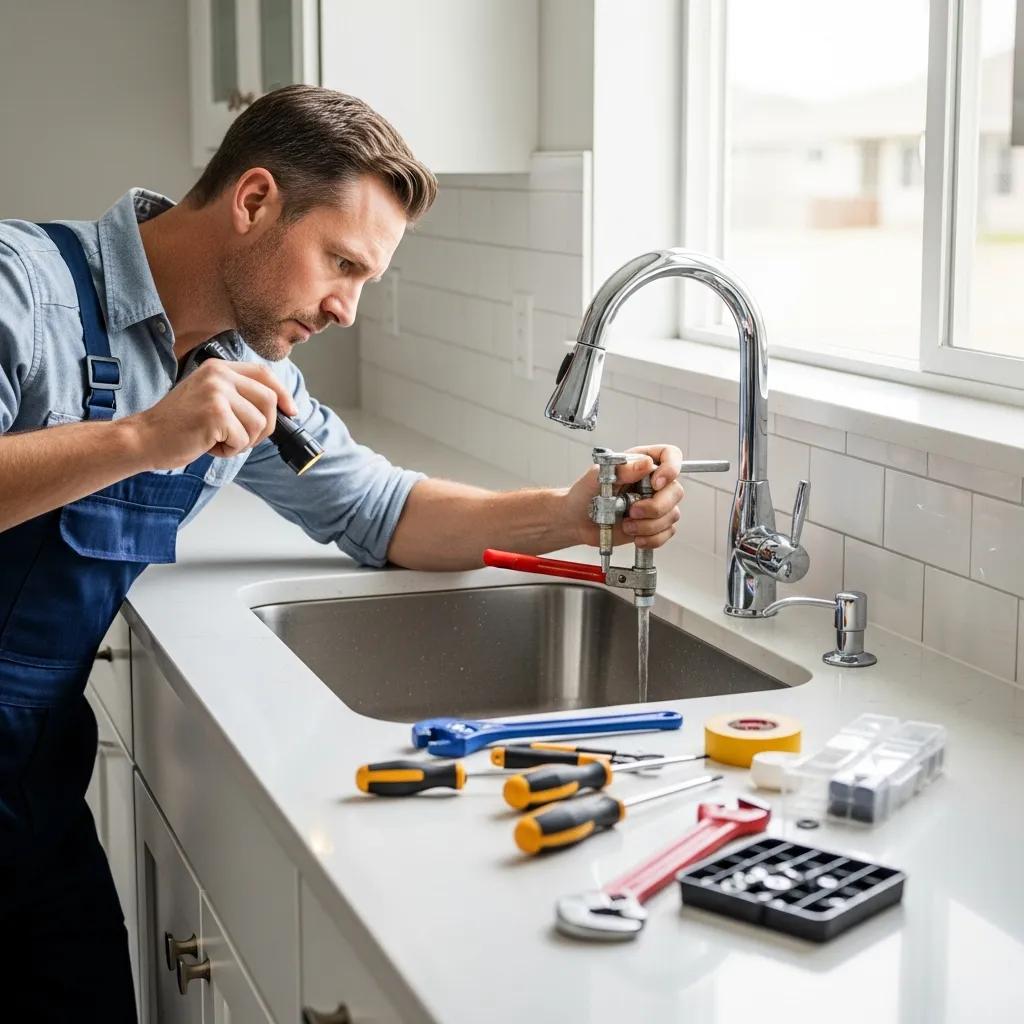
Leaky Faucet Repair You Can Trust — From Small Drips to Full Cartridge Replacement
A dripping faucet is more than an annoyance — it wastes water, raises your utility bill, and can be the first sign of a larger plumbing problem. This guide walks through professional repair options for dripping faucets and faucet cartridge replacement so you can make smart choices: how to spot common causes, which faucet types need specific parts, and the step-by-step repair workflow technicians follow. We focus on practical fixes for kitchen and bathroom faucets, cartridge and washer failures, and why prompt repairs stop water damage and save resources. Each H2 and H3 below breaks the topic into clear diagnostics, repair methods, and cost considerations, plus what to watch for in emergencies and what licensed technicians will do. Keywords covered include dripping faucet, faucet cartridge replacement, leaky faucet repair Michigan, and emergency faucet repair 24/7 — information tailored for homeowners and businesses in Macomb, Oakland, and Wayne counties.
Why Is Expert Faucet Leak Repair Essential for Your Home?
Fixing a faucet leak properly stops continuous water loss and lowers the chance of structural damage or mold by addressing the mechanical cause instead of patching symptoms. A steady drip runs all day and can erode valve seats, stain fixtures, and hide leaks behind cabinets. Fast, professional service also helps preserve water quality by preventing corrosion and failed seals that can create contamination paths. Knowing when to repair parts and when to replace them saves money over time and restores reliable operation in kitchens and bathrooms — protecting your home’s plumbing system.
Most faucet leaks come from small parts that are inexpensive to replace compared with the cost of water damage, so early detection is key to avoiding more invasive repairs. The next section spells out the environmental and cost impacts to show why acting quickly matters.
What Are the Environmental and Cost Impacts of a Leaky Faucet?
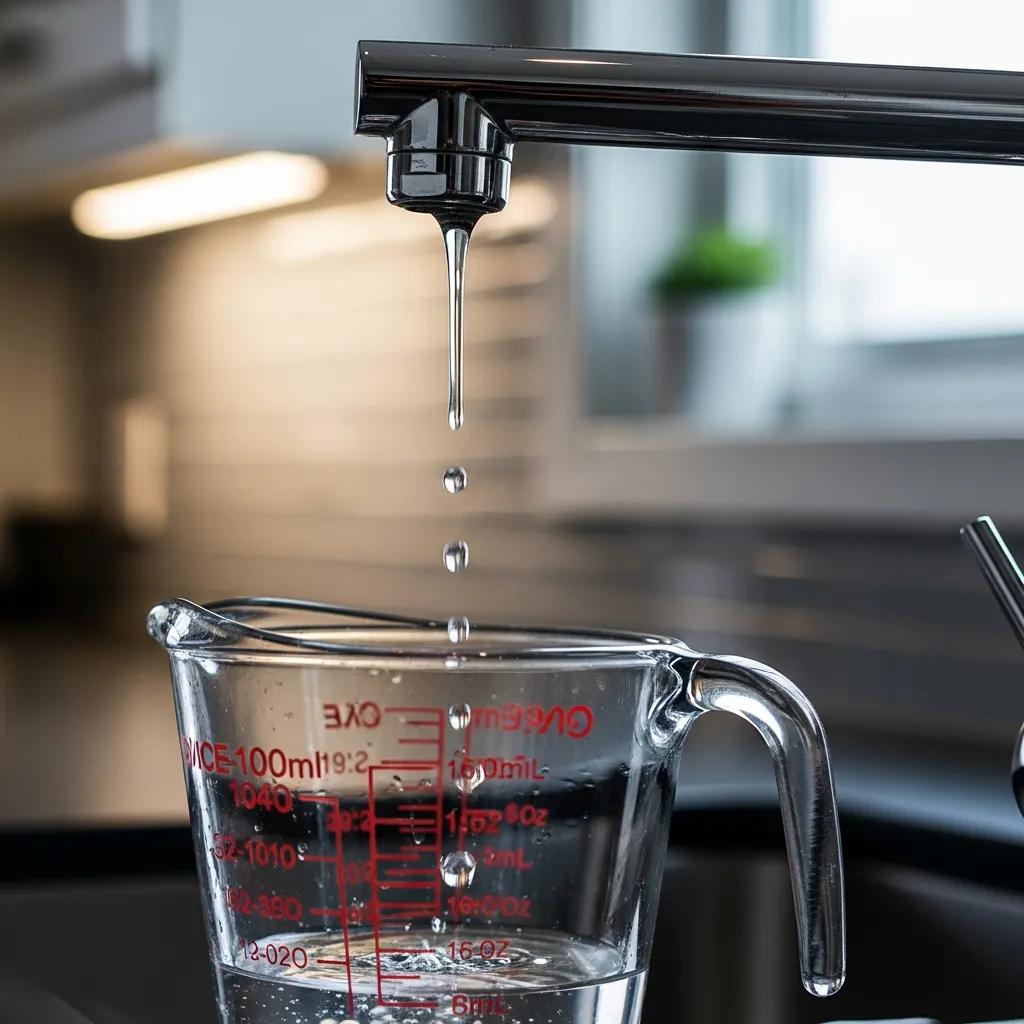
One constant drip can waste thousands of gallons a year. According to the EPA, a single leaking faucet can exceed 3,000 gallons annually — roughly the water for many showers or several weeks of household use. That waste raises monthly water bills and adds strain to local water systems, while treatment and heating of that water increase energy use. Small leaks also lead to slow structural damage: repeated dampness causes stains, soft cabinet material, and mold that requires remediation. Putting numbers to the problem makes it clear: repairing leaks is both a cost-saving and environmentally responsible step.
Fixing leaks promptly prevents escalation and supports resource conservation — which also protects your home’s structure and indoor air quality.
How Does Timely Repair Prevent Water Damage and Conserve Resources?
Timely repairs stop a minor drip from turning into ongoing damage by removing the constant moisture that causes staining, wood rot, and mold over weeks or months. Replacing worn washers, O-rings, or cartridges restores the seals that stop slow leaks and protects finishes and underlying materials. Professional repairs conserve water and energy by eliminating wasted hot water and preventing the need to re-treat or reheat leaked water. Acting quickly saves on repair costs, reduces environmental impact, and helps keep indoor air healthier for your family.
Preventive work also reduces the need for emergency calls and larger plumbing projects later. Next, we’ll cover common causes and symptoms so you can spot trouble early.
What Are the Common Causes and Symptoms of Leaky Faucets?
Knowing the usual mechanical failures helps you decide whether a simple DIY fix is reasonable or a licensed plumber is needed. Common causes include worn washers and O-rings, corroded valve seats, failing cartridges, and loose handle assemblies — each produces recognizable symptoms like steady dripping, leaks at the base, or stiff handles. Spotting those patterns gives you useful information for a technician and can often mean a straightforward part swap instead of replacing the whole fixture. The table below pairs common causes with symptoms and recommended action (DIY vs. professional).
Intro table: This table summarizes common causes of faucet leaks, the symptoms to look for, and whether a homeowner can attempt a DIY fix or should call a professional.
| Cause | Symptom | Professional vs DIY (recommended action) |
|---|---|---|
| Worn washer | Intermittent drip from the spout | DIY if you’re comfortable with compression faucets; call a pro if you’re unsure |
| Faulty O-ring | Leak at the handle or base | Often a DIY swap for a single O-ring; call a pro for widespread corrosion or multiple leaks |
| Corroded valve seat | Persistent drip, lower flow | Professional service recommended for seat repair or replacement |
| Cracked or failed cartridge | Continuous flow or stiff/erratic handle | Pro replacement advised to ensure correct parts and alignment |
This quick guide helps you tell which problems are commonly DIY-capable and which usually need licensed tools and experience. Next we’ll explain the faucet components that most often fail and why.
Which Faucet Components Typically Cause Leaks?
Most leaks start in the small seal components: washers, O-rings, cartridges, and valve seats. In compression faucets a washer compresses against a seat and will eventually flatten and let water past. O-rings seal stems and bases and can shrink, crack, or break down from age or chemicals. Cartridges combine several seals and need precise replacement when worn — a failing cartridge often causes constant flow or trouble regulating temperature. Inspecting these parts for corrosion, flattening, or mineral buildup helps decide the right repair approach.
Knowing each part’s role makes it easier to describe symptoms to a technician and to safely perform basic checks, which we cover next.
How to Identify Signs of a Dripping or Leaky Faucet?
A quick, structured check gives the most useful information for diagnosis: look for water on counters, wet cabinet surfaces, or mineral deposits around spouts and handles; listen for steady drips or ticking noises that indicate slow leaks. Compare recent water bills or meter readings to spot unexplained increases, and note when the leak happens (constant, only at night, or after specific use) to help pinpoint the source. Take photos of visible corrosion, the handle position during a leak, and the area from base to spout to share with a technician — that speeds diagnosis and reduces guesswork when a licensed plumber arrives.
These observations prepare you to understand different faucet types and how repairs vary by mechanism.
Which Types of Faucets Do We Repair and How?
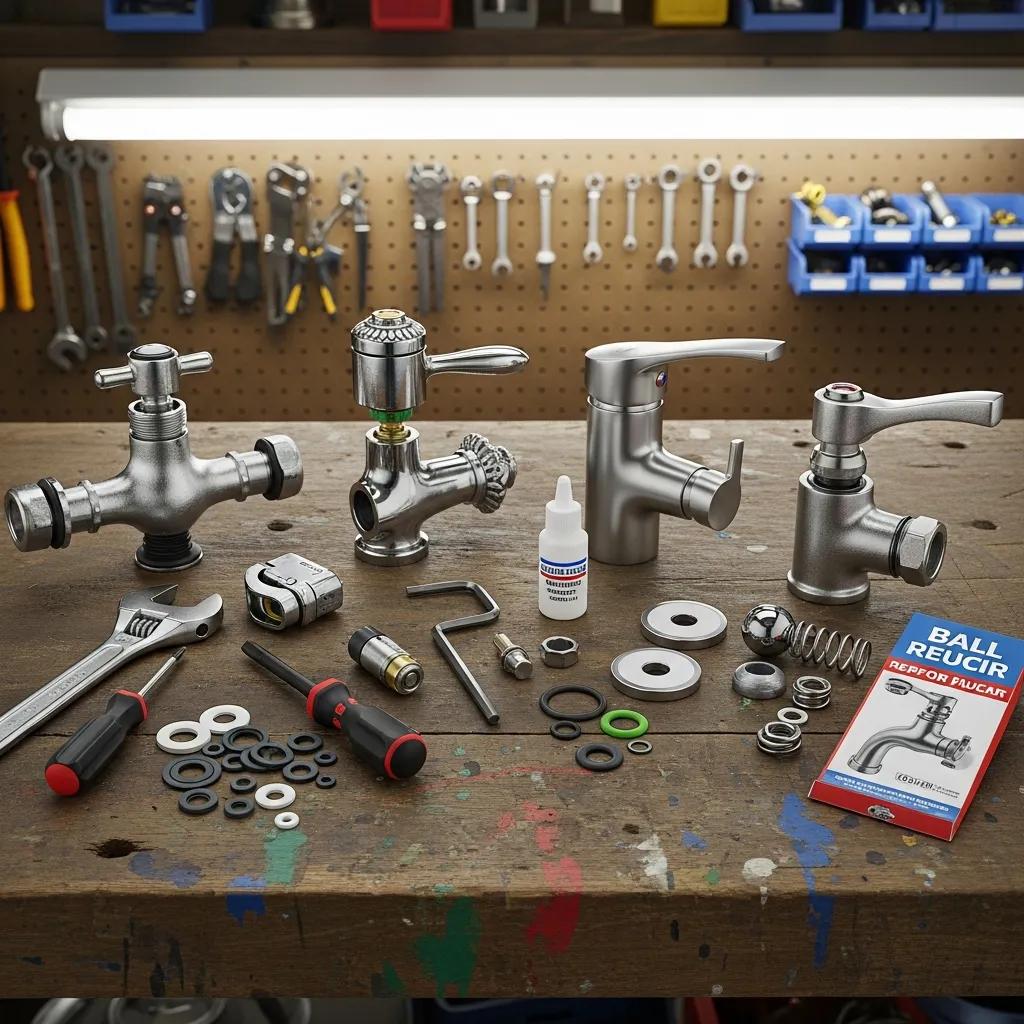
Faucets use different internal mechanisms — compression, cartridge, ceramic disc, and ball — and each needs a tailored repair approach. Compression faucets rely on washers and seats; cartridge faucets use replaceable cartridges; ceramic disc faucets depend on precise disc alignment and seals; and ball faucets contain a ball assembly with seals and springs. Identifying your faucet type helps decide whether a simple part replacement will fix it or a full cartridge/assembly swap is the better long-term choice. The table below helps you match faucet types to common failures and typical repairs.
Intro table: Use this comparison to identify your faucet type, likely trouble spots, and the usual repair or part replacement recommended.
| Faucet Type | Common Failure Points | Typical Repair / Part Replacement |
|---|---|---|
| Compression | Worn washer, corroded valve seat | Replace washers and lap or replace the valve seat |
| Cartridge | Damaged cartridge, seal wear | Replace the cartridge with an OEM-equivalent part |
| Ceramic disc | Seal/seat wear, disc misalignment | Replace seals or the disc cartridge assembly |
| Ball | Worn O-rings, springs in the ball assembly | Install a ball repair kit and new internal seals |
This quick reference helps set expectations for repair time and parts. The next section defines each faucet type in plain language so you can identify yours at a glance.
What Are the Differences Between Compression, Cartridge, Ceramic Disc, and Ball Faucets?
Compression faucets have separate hot and cold handles that press washers against seats — when washers wear you’ll often see an intermittent drip. Cartridge faucets use a single or dual cartridge that controls flow and temperature; failure happens when seals erode or the cartridge cracks. Ceramic disc faucets rely on two hard discs that slide past each other to open and close flow; they’re durable but need proper disc seating. Ball faucets have a rounded ball inside a housing with multiple seals and springs and can leak at the base as seals age. Identifying your faucet by handle behavior and spout design points to the likely faulty parts.
Understanding these differences prepares you for the repair approaches outlined next.
How Are Repairs Tailored to Each Faucet Type?
Repairs follow a straightforward workflow: find the leak source, remove the handle or spout as needed, replace the worn seal or cartridge, then test under pressure and restore the finish. Compression faucet fixes often mean swapping a washer and lapping the seat — a doable job for experienced DIYers. Cartridge and ceramic disc repairs usually require an exact cartridge replacement to avoid performance issues. Ball faucet work involves installing a ball kit and new seals with careful alignment. Professional technicians bring the right tools and testing procedures to ensure parts seat correctly and leaks don’t return.
Technicians also know when replacing the whole fixture is more cost-effective than repeated repairs — leading us to the professional repair process.
What Is the Step-by-Step Process for Professional Leaky Faucet Repair?
A professional repair follows a clear sequence: inspection and diagnosis, parts sourcing, careful disassembly, targeted replacement or repair, pressure testing, and final cleanup with customer verification. This method addresses the root cause and lowers the chance of callbacks or secondary damage. Technicians document the issue and the work performed so you understand what was done and why. Knowing the process helps you set realistic expectations for time and results.
Below is a numbered overview of the technician workflow for clear, practical expectations.
- Initial inspection and diagnosis: The technician evaluates visible symptoms, runs pressure checks, and isolates the leaking component to define the repair scope.
- Parts sourcing and preparation: We identify the correct replacement parts for your faucet model to ensure proper fit and function.
- Controlled disassembly and repair: The fixture is carefully taken apart, damaged parts are replaced, and seals are installed with approved lubricants.
- Testing and verification: The repair is pressure-tested, cycled through hot and cold, and observed for leaks before reassembly and cleanup.
That sequence explains the typical steps; the next section outlines how licensed Frost and Kretsch technicians perform those diagnostics and repairs.
How Do Our Licensed Plumbers Diagnose and Fix Faucet Leaks?
Frost and Kretsch technicians begin with a systematic inspection: visual checks, handle operation assessment, and pressure or flow testing to find the leak source. They disassemble only as needed, inspect key parts like the cartridge, washer, O-ring, and valve seat for wear or corrosion, and recommend either a targeted part replacement or a full cartridge swap. Technicians use manufacturer-equivalent parts and test each repair under normal and slightly elevated pressure to confirm the seal. Their licensed training minimizes misdiagnosis and unseen damage, which reduces callbacks and extends fixture life.
This operational clarity leads into the testing standards and guarantees that back our work.
What Guarantees and Testing Ensure Quality Repairs?
After each repair, technicians perform functional and pressure tests, run the faucet through hot and cold cycles, and inspect supply connections and seals to confirm everything holds. Frost and Kretsch stands behind its work with a 100 percent satisfaction guarantee and provides transparent pricing — we give an upfront cost estimate and won’t exceed the quoted price without your approval. If a problem recurs, our documentation and guarantee create a clear path for follow-up service. That combination of testing and customer assurance builds trust and reduces unresolved issues.
Knowing what to expect from professional repairs helps you decide when to call a pro versus attempting a DIY fix.
When Should You Call a Professional Plumber for Faucet Leak Issues?
Call a professional when leaks are persistent, affect multiple fixtures, show corrosion or hidden water damage, or involve supply lines and shutoff valves — these often require licensed tools and experience. Small problems like a loose handle or an obvious external O-ring can be DIY-friendly, but any sign of structural damage, mold, or water tracking behind walls calls for immediate professional assessment. Emergency situations — uncontrolled flow, rapid cabinet flooding, or failed shutoffs — need immediate attention to avoid fast escalation. The checklist below helps you triage and choose the right response.
This checklist helps you quickly decide whether to try a safe DIY step or contact a licensed plumber.
- Uncontrolled continuous flow: Water runs non-stop from a faucet despite handle position.
- Major leak under sink: Rapid pooling under cabinets or water soaking floors and baseboards.
- Structural or mold signs: Discoloration, soft cabinet materials, or visible mold near fixtures.
- Shutoff failure: You can’t stop water using the local shutoff valve.
If none of these emergencies are present, routine maintenance or a simple part swap may be enough; the next section explains DIY limits and safe steps.
Which Faucet Leaks Can You Fix Yourself and When Is Professional Help Needed?
Simple fixes include replacing an external O-ring, tightening a packing nut, or swapping a compression washer if you can identify the part and access it. Those tasks require basic hand tools and shutting off the water supply first. Stop and call a licensed plumber if leaks persist after parts are changed, corrosion prevents safe disassembly, multiple fixtures leak at once, or the leak is inside a wall or on a supply line. Attempting complex repairs without the right tools can make things worse or void warranties, so know when to escalate. When in doubt, take photos and document symptoms to speed the technician’s diagnosis and keep costs down.
If you see emergency signs, act immediately — the next section describes emergency steps and our response.
What Are Emergency Signs That Require 24/7 Plumbing Service?
Emergency signs that need immediate professional response include sudden, high-volume leaks, flooding that threatens structural elements, continuous full-flow that can’t be shut off, and any situation where water contacts electrical fixtures. In those cases, shut off the nearest shutoff valve, turn off power to affected areas if it’s safe, and open faucets to relieve pressure while you wait for help. Frost and Kretsch offers 24/7 emergency service to stabilize urgent leaks and limit damage until permanent repairs can be made. Calling a licensed emergency service reduces the risk of severe structural damage, mold, and costly restorations.
Next up: cost — a common concern for homeowners and businesses in Michigan.
How Much Does Expert Leaky Faucet Repair Cost in Michigan?
Repair cost varies with several factors rather than a single flat price: faucet type, parts needed (washer versus cartridge), labor time affected by accessibility, and whether the call is after-hours or emergency. We provide transparent, upfront estimates that reflect these variables so you won’t see surprise charges. Rather than a fixed price list, it helps to understand the cost drivers so you can compare estimates and choose the most cost-effective path. The table below outlines common cost factors and their typical influence on price.
Intro table: This table clarifies the main drivers of faucet repair cost and how each factor typically affects the final estimate.
| Factor | Typical Impact on Price | Example (range or note) |
|---|---|---|
| Faucet type | Moderate to high | Cartridge or ceramic-disc replacements usually cost more than simple washer swaps |
| Parts required | Variable | Washers are inexpensive; OEM cartridges cost more |
| Labor and accessibility | Moderate | Difficult-to-reach valves increase time and labor charges |
| Emergency / after-hours | High | After-hours response carries a premium for urgent dispatch |
Knowing these drivers helps you prepare for an accurate estimate and compare options before authorizing work. The following section explains those factors in more detail.
What Factors Influence the Price of Faucet Leak Repairs?
Price depends on the repair’s complexity (washer swap vs. cartridge replacement), availability of the correct replacement parts, the time needed to access and service the fixture, and whether the job is an emergency or after-hours call. Other considerations include brand-specific finishes or parts that may need ordering and add time. Transparent estimates list these elements so homeowners can weigh repair versus replacement with full information. Understanding the cost factors helps you ask the right questions when scheduling service.
How Does Frost and Kretsch Plumbing Ensure Transparent Pricing and Free Estimates?
Frost and Kretsch provides transparent pricing with clear, upfront estimates and a promise not to exceed the quoted price without your approval. We offer free estimates to assess the repair scope and explain which parts and labor are included. Our licensed technicians give a straightforward breakdown of recommended actions during the evaluation. Customers in Macomb, Oakland, and Wayne counties can expect local, experienced technicians and a 100 percent satisfaction guarantee that supports follow-up if issues persist. Requesting an upfront estimate helps you compare options and choose the best repair path.
This closing section reinforces clear costing and how transparent estimates support confident repair decisions.
Frequently Asked Questions
1. What should I do if my faucet is leaking but I can't identify the cause?
If you can’t find the cause, call a professional plumber. A technician has the tools and experience to inspect thoroughly, pinpoint the leak, and recommend the right repair. Meanwhile, shut off the faucet’s water supply to reduce waste and, if possible, document what you see (photos, when it leaks) to speed diagnosis.
2. How can I prevent future leaks in my faucets?
Preventive maintenance is the best defense: check and replace worn washers and O-rings, avoid over-tightening handles, and watch for corrosion or mineral buildup. If you have hard water, consider a water softener to reduce deposits. Regular checks and prompt fixes for minor issues go a long way toward longer faucet life.
3. Are there any DIY methods to temporarily fix a leaky faucet?
Yes — tightening loose handles or packing nuts can stop minor leaks, and replacing a worn washer or O-ring can work if you have the right tools and identify the part correctly. These can be temporary fixes, so follow up with a professional repair if the problem returns or if you’re unsure about the repair.
4. How do I know if my faucet needs a complete replacement instead of a repair?
Consider replacement if repairs fail repeatedly, the fixture shows significant corrosion, or it’s old and inefficient. If repair costs approach the price of a new faucet, replacement may be more economical. A plumber can assess condition and recommend repair or replacement based on longevity and cost.
5. What are the benefits of hiring a professional plumber for faucet repairs?
Professional plumbers diagnose issues accurately, use the right tools and parts, and perform repairs that reduce the chance of future problems. They provide warranties and documentation, helping protect your investment. A licensed plumber can also spot related issues before they become costly repairs.
6. How can I find a reliable plumbing service for faucet repairs in my area?
Ask friends and neighbors for recommendations, read local reviews on Google or Yelp, and look for licensed, insured plumbers with faucet-repair experience. Get multiple estimates, ask about warranties, and choose a provider that explains work clearly and provides an upfront price.
7. What should I expect during a professional faucet repair service?
Expect an initial inspection to diagnose the issue, a clear explanation of findings and an estimate, and work performed after your approval. The technician will replace parts or recondition seals, test the faucet under pressure and temperature cycles, and clean up the area. You’ll receive documentation of the work and warranty details.
Conclusion
Addressing leaky faucets quickly saves water, protects your home from structural damage, and avoids larger repair bills down the road. Understanding common causes and repair options helps you decide when to DIY and when to call a licensed plumber. Working with experienced professionals like Frost and Kretsch ensures repairs are done right — giving you long-term reliability and peace of mind. If you need help with a faucet issue, contact our team today for a clear estimate and dependable service.