
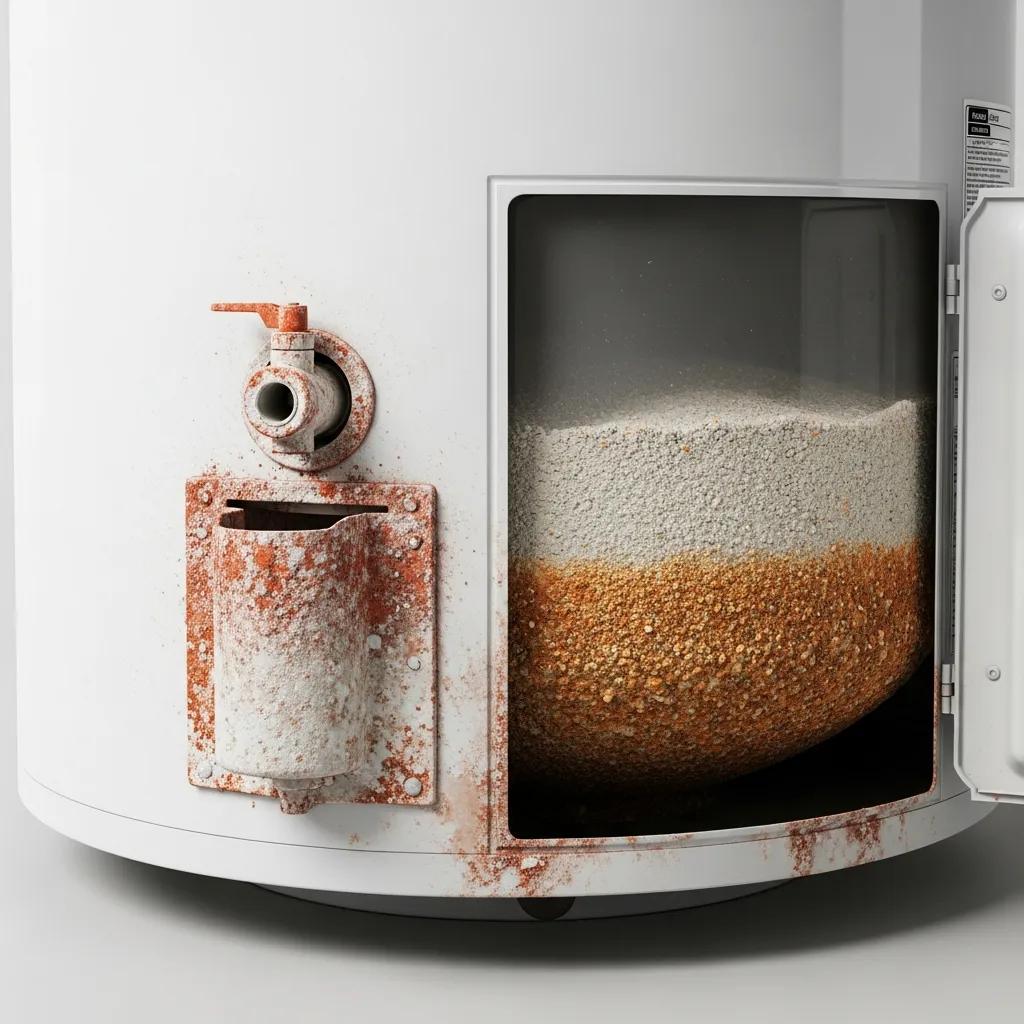
Water heater sediment: causes, signs, and professional removal for dependable hot water
Sediment in a water heater is the build-up of mineral scale and particles—mostly calcium carbonate and magnesium—that settles in tanks and heat exchangers. Left unchecked, these deposits lower efficiency and shorten the life of your equipment. This guide helps homeowners and building managers spot early warning signs, weigh the risk, and pick the right fix—whether that’s a routine flush or professional descaling. You’ll learn why sediment forms, how it reduces performance, and what to do for gas, electric, and tankless systems. We cover the chemistry (hard water and heat), part wear (anode rods and dip tubes), symptom mapping (noise, less hot water, element failure), and practical DIY versus pro decision points. We also outline the professional flushing and descaling steps, when to call a licensed tech, and sensible maintenance like anode checks and water softening. Keywords such as flush water heater, sediment removal, water heater flushing, and water heater descaling are used here to guide practical next steps.
What causes sediment buildup in water heaters?
Sediment forms when dissolved minerals and tiny particles come out of heated water and settle on the tank bottom or inside heat exchangers. These layers act as insulation, trap water, and reduce heat transfer. The main chemical driver is that calcium and magnesium become less soluble at higher temperatures and form solid carbonates. Corrosion bits from internal parts and dirt from the supply can add to the problem. Knowing that both water chemistry and equipment condition play a role makes it clear why prevention involves both testing water and keeping parts in good shape.
Common sediment sources and attributes:
| Source | Characteristic | Typical Impact |
|---|---|---|
| Hard water | Main minerals: calcium & magnesium | Forms calcium carbonate scale that settles |
| Corroding anode rod | State: corroded or intact | Produces rust particles and accelerates deposits |
| Municipal changes | Events: pipe work or flushing | Introduces sand/silt that settles in tank |
This table shows how different sources produce different deposits, which affects how you remove them and what preventive steps work best.
How does hard water contribute to mineral deposits?
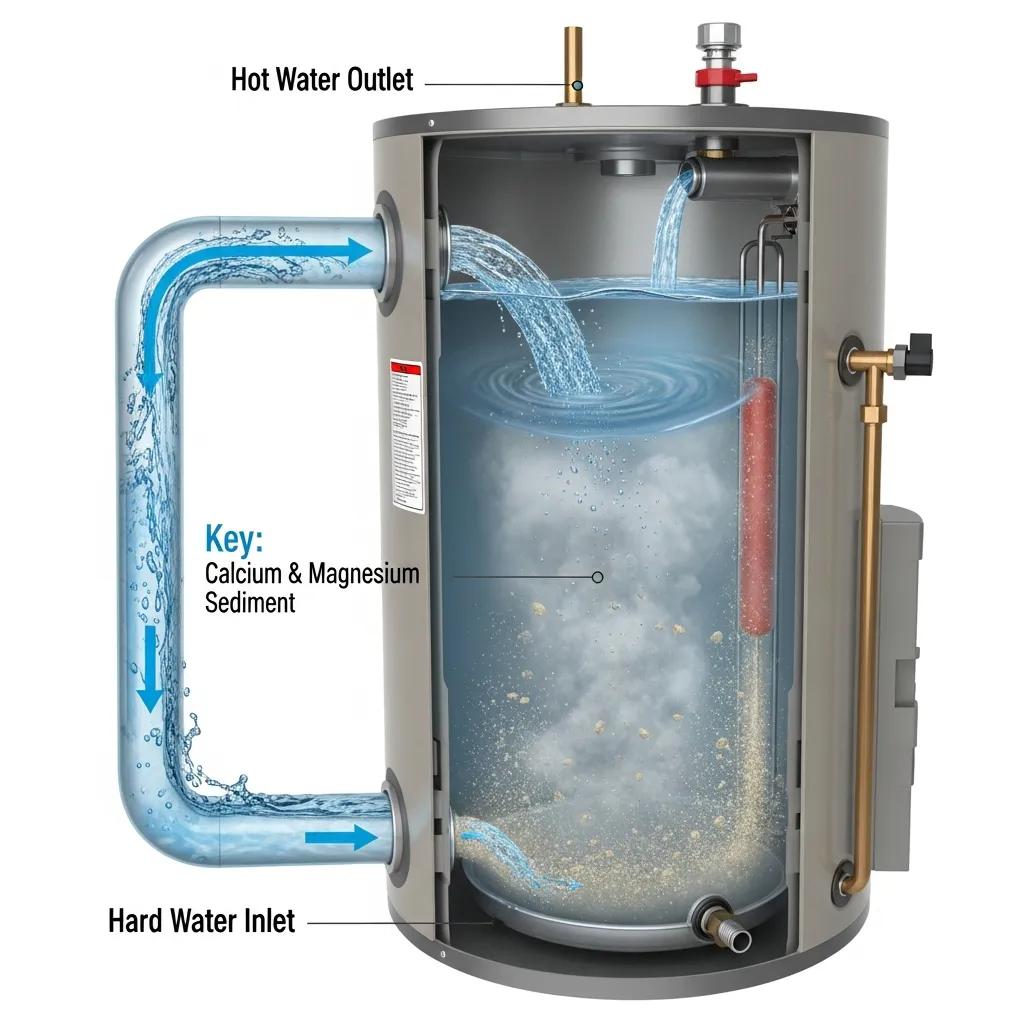
Hard water speeds up deposit build-up because higher levels of calcium and magnesium drop out of solution when the water is heated, forming insoluble carbonates that settle on the tank floor and heating surfaces. Each heat cycle concentrates more solids and thickens those layers—so homes with harder water need to flush more often. You might notice scale on fixtures, shorter element life, or the need for more frequent maintenance. Local water quality data often show higher element failure and efficiency loss where water is moderately to very hard, so use that information to set your maintenance schedule. Simple fixes include regular flushing or adding a water softener to reduce mineral load.
What role does anode rod degradation play in sediment formation?
The anode rod is a sacrificial part that corrodes to protect the tank’s steel shell. When it degrades, corrosion particles add to tank sediment. A good anode rod slows metal leaching and delays tank corrosion; a worn rod leaves behind rust and metallic particles that mix with mineral scale, increasing insulation and abrasive wear. Inspect and replace the rod on schedule—signs to watch for include heavy pitting, a noticeably thinner rod, or foul‑smelling hot water. Regular anode care reduces corrosion-derived sediment and helps avoid follow-on problems.
What are the common symptoms and effects of sediment buildup?
Sediment shows up as popping or rumbling noises, less available hot water, higher energy bills, and faster component wear. Deposits trap water against heat sources, encourage localized boiling, and form crusts that block heat transfer—these mechanisms lead to the symptoms homeowners notice.
Below is a quick symptom-to-mechanism table to help you match what you hear or see with likely causes and decide whether to flush or call a pro.
Symptoms mapped to mechanisms:
| Symptom | Mechanism | Resulting Issue |
|---|---|---|
| Rumbling or popping | Boiling of trapped water under sediment | Audible noise and potential tank stress |
| Reduced hot water supply | Sediment reduces effective tank volume | Perceived lower capacity and shorter hot cycles |
| Element failure / high energy | Insulating layer increases heat time | Higher energy use and burned-out elements |
This table links what you observe to the underlying problem and why acting early prevents bigger damage and waste.
How does sediment cause noisy water heater operation?
Noise happens because sediment on the bottom traps pockets of water that heat to boiling and then release steam in bursts, producing rumbling or popping. Left long enough, those pressure changes can stress the tank and fittings. If the sounds persist or grow louder they usually point to moderate or severe buildup and often come before element failures or leaks. Listen during a heating cycle—if noise doesn’t ease after a basic flush, you likely need deeper descaling or a professional inspection. Treating noise as an early warning saves time and money.
What impact does sediment have on hot water supply and efficiency?
Sediment acts like an insulating blanket, reducing heat transfer from burners or elements to the water. The system runs longer to reach temperature, which raises energy use and reduces available hot water for back‑to‑back uses. Deposits also take up usable tank volume and create cold pockets, so a tank that once worked fine may suddenly fall short. Over time, increased cycling and overheating wear out elements, burners, and thermostats. Manufacturer guidance and studies show heavy sediment can cut efficiency noticeably—professional descaling often restores much of that lost performance.
How can professional water heater flushing and descaling services help?
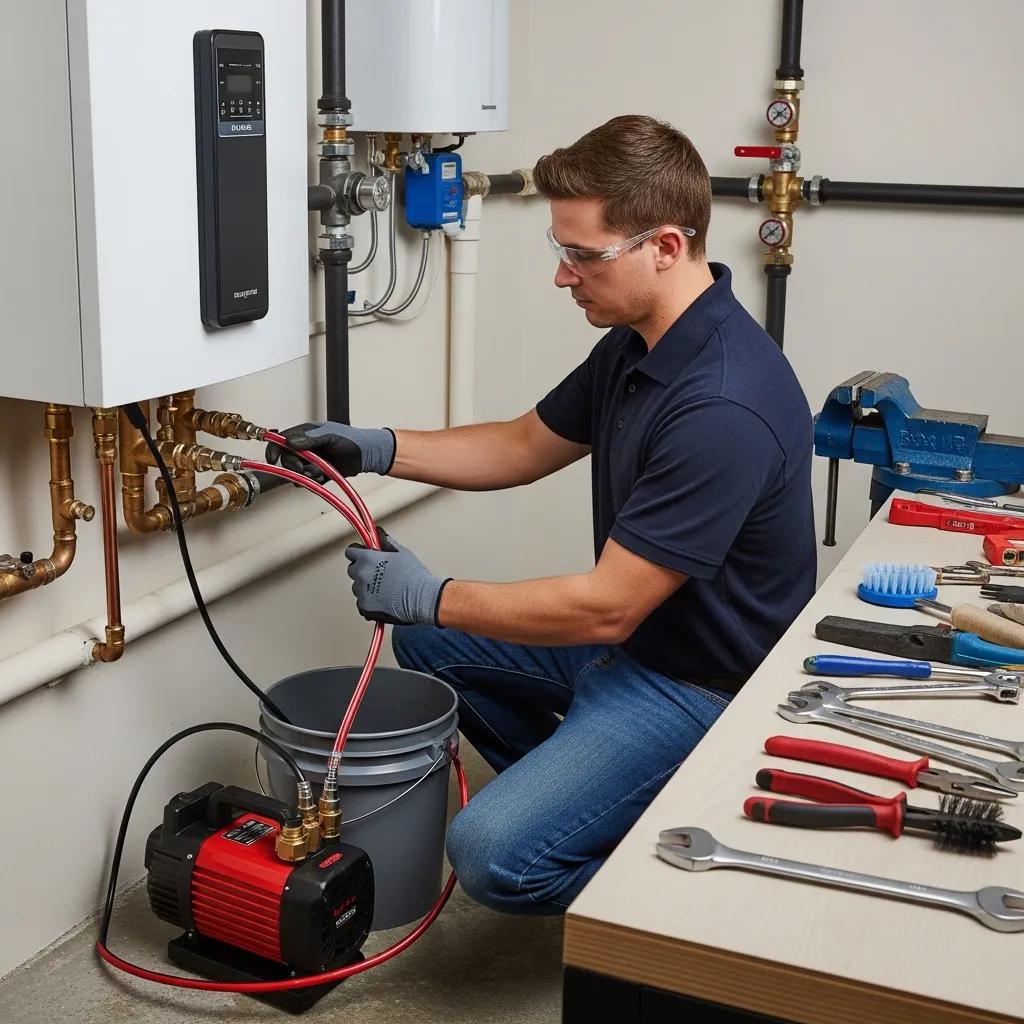
Professional flushing and descaling remove settled minerals and corrosion by‑products using tools and techniques beyond a standard homeowner drain-and-flush. That work restores heat transfer, quiets noisy units, and extends service life. Pros follow safety checks, isolate gas or power, perform controlled draining, use mechanical agitation or high-flow rinsing, and apply chemical descalers when needed for tankless or confined heat exchangers. The result: better efficiency, restored hot water capacity, a component inspection, and a lower risk of premature failure when combined with anode checks and necessary repairs.
Professional service benefits:
- Efficiency restoration: Removes insulating scale so your heater runs less and costs you less.
- Lifespan extension: Clears deposits that stress elements and tank metal, delaying replacement.
- Safety and diagnostics: Licensed technicians spot hidden issues and safely descale complex systems.
What is the process of professional water heater flushing?
A professional flush follows a clear, safety-first sequence: prepare and isolate the unit, drain the tank, agitate and rinse to dislodge settled material, inspect parts, refill while checking for issues, and test operation to confirm performance is restored. Technicians start by turning off power or gas, checking the pressure-relief and drain valves, and protecting the work area to reduce scald and cleanup risk. Draining is followed by agitation—manual, pneumatic, or pressurized rinsing—or, for tankless systems, a circulated chemical descaler through the heat exchanger. Final steps include checking the anode rod, heating elements, and fittings, slowly refilling while venting air, and running tests to ensure steady, leak-free operation.
- Preparation and isolation: Confirm power/gas is off and secure the work area.
- Controlled draining: Attach hoses and safely drain to a proper discharge point.
- Agitation/flush or chemical descaling: Use mechanical or approved chemical methods as needed.
- Inspection and reassembly: Check anode, elements, valves, then refill and test.
This step-by-step approach explains why professional service reduces risk and achieves more complete sediment removal than a simple homeowner flush.
Why choose Frost & Kretsch Plumbing for sediment removal in Grosse Pointe?
Frost & Kretsch Plumbing combines local knowledge with service guarantees and quick response, making us a practical choice when sediment affects your hot water. Our licensed, insured technicians work on gas, electric, and tankless systems and service trusted brands like Lochinvar and Bradford White—so we follow manufacturer guidance and protect warranties. We offer clear, upfront pricing, a 100% satisfaction promise, and emergency availability so you can make confident decisions when issues are urgent or complex. Prefer a professional assessment? We provide free estimates and flexible scheduling for flushing, descaling, or part replacement.
- Licensed and insured technicians with brand experience
- Transparent pricing, 24/7 emergency availability, and satisfaction guarantee
- Prompt arrival and careful cleanup after service
When should you consider DIY sediment removal vs. calling a professional?
Choosing DIY or pro depends on tank type, your comfort with tools, safety risks, and whether deeper problems are present. Simple electric tanks with light buildup are often fine for a homeowner flush; gas-fired, tankless, heavily scaled, or corroded systems are usually best left to a pro.
Decision table for DIY vs. professional:
| Scenario | Condition | Recommended Action |
|---|---|---|
| Newer electric tank, light sediment | No corrosion, accessible drain | Homeowner flush per instructions |
| Gas tank or tankless unit | Gas line present / complex heat exchanger | Hire licensed professional |
| Heavy scale, recurring noise | Persistent rumbling or element failures | Professional descaling and inspection |
If you start a DIY flush and run into unexpected corrosion, odd odors, continued noise, or trouble isolating power/gas, stop and call a pro—those are clear signs the job needs a licensed technician.
What are safe DIY flushing techniques and precautions?
Safe DIY flushing starts with turning off power or gas and letting the tank cool. Attach a hose to the drain valve, open hot-water faucets to relieve pressure, and wear gloves and eye protection. Stick to basic drain-and-rinse cycles—use short refill-and-drain bursts to loosen deposits—and avoid chemical descalers or forcing parts beyond their design. Watch for corrosion, stuck valves, or sediment that keeps flowing after several flushes—if you see those, stop and call a professional. If you’re unsure about isolating gas controls, thermostats, or the pressure relief valve, get a pro involved rather than risking injury or damage.
- Required tools: adjustable wrench, garden hose, gloves, bucket
- Safety gear: gloves, eye protection, protective clothing
- Stop points: visible corrosion, inability to isolate gas/power, stubborn scale
These steps reduce common DIY mistakes and give clear criteria for when to hand the job to licensed technicians.
What are the risks of DIY sediment removal and when to seek expert help?
DIY sediment removal risks include scalding, accidental damage to controls or elements, voiding warranties with improper methods, and incomplete cleaning that lets deposits redeposit quickly. Gas systems add hazards like gas leaks and combustion problems if pilots, valves, or vents are disturbed—so gas work belongs to trained professionals. Call an expert when you see visible corrosion, frequent element failures, leaks, persistent odors, or if previous flushes haven’t fixed the issue. Hiring a licensed service keeps you safe, preserves warranties, and addresses both the symptom and the root cause.
What preventative maintenance practices reduce sediment buildup?
Good prevention reduces mineral load, keeps sacrificial parts monitored, and follows a regular flushing schedule so sediment never reaches damaging levels. Together these steps preserve efficiency and extend equipment life.
- Annual flush: Drain and flush the tank at least once a year in moderate-hardness areas.
- Anode rod inspection: Check every 1–3 years and replace if heavily corroded.
- Water quality mitigation: Consider a water softener when local tests show high hardness.
Doing these tasks on schedule slows deposit build-up and keeps your system running reliably, avoiding emergency repairs.
How often should you flush your water heater to prevent sediment?
Flush frequency depends on water hardness, household demand, and unit type. In soft-water areas an annual flush usually suffices; in hard-water homes or high-use situations, consider flushing twice a year or more. Tankless units don’t hold bulk water but do need periodic descaling by a pro—often yearly in hard-water areas—to prevent heat-exchanger fouling.
Keep a simple log of flush dates and any symptoms so you can spot trends and adjust intervals. A water hardness test from a pro will help set the best schedule for your home.
What role do water softeners and anode rod inspections play in prevention?
Water softeners cut calcium and magnesium levels, which greatly slows scale formation in tanks and heat exchangers and reduces how often you need to flush or descale. Anode rods are sacrificial protection—regular checks and timely replacement stop rust particles from adding to mineral sediment and protect tank metal.
When local water is hard, combining a softener with scheduled anode checks is the most effective long-term plan to limit sediment and corrosion. Many homeowners find that adding these measures to an annual maintenance plan pays off with lower energy bills and longer equipment life.
If you’d rather have a pro handle it, Frost & Kretsch Plumbing offers maintenance plans and inspections tailored to local water hardness, including anode checks and softener recommendations—schedule a free estimate or appointment with our licensed technicians to set up the right preventive care.
Frost & Kretsch Plumbing is ready to help Grosse Pointe and nearby communities with expert flushing, descaling, and maintenance planning. Our licensed techs, transparent pricing, and satisfaction guarantee mean you’ll get reliable service and clear recommendations. If you’re dealing with persistent noise, reduced hot water, or visible sediment, request a free estimate or book an appointment so we can evaluate your system, suggest targeted repairs or softening options, and restore dependable hot water.
Frequently Asked Questions
1. How can I tell if my water heater has sediment buildup?
Common signs include rumbling or popping noises, shorter hot-water runs, and higher energy bills. If your heater takes longer to heat or the hot water runs out faster than it used to, sediment could be the cause. Visible particles or discolored hot water are strong indicators that you should inspect and possibly flush the tank.
2. What are the long-term effects of sediment buildup on my water heater?
Over time, sediment reduces efficiency, raises energy costs, and can cause early failure of heating elements. It insulates heating surfaces so the system works harder, which can lead to overheating, leaks, and ultimately costly repairs or a full replacement. Regular maintenance helps avoid these long-term problems.
3. Can sediment buildup affect the quality of my hot water?
Yes. Sediment can cause discoloration, unpleasant smells, and even gritty or rusty particles in your hot water. Corrosion particles make these issues worse. If you notice changes in taste, smell, or appearance, it’s time to address sediment with a flush or professional descaling.
4. What are the benefits of using a water softener in relation to sediment buildup?
A water softener lowers calcium and magnesium levels, which reduces scale formation in your heater. That means fewer sediment problems, longer equipment life, better efficiency, and fewer maintenance interventions—so a softener can be a cost-effective preventive step in hard-water areas.
5. How can I maintain my water heater to prevent sediment buildup?
Maintain your heater by flushing it regularly (at least yearly for moderate hardness), checking the anode rod every 1–3 years, and considering a water softener if tests show high hardness. Keeping a maintenance log helps you track service dates and symptoms so you can act before problems escalate.
6. What should I do if I notice persistent noise from my water heater?
Start with a simple flush to remove loose sediment. If the noise continues after flushing, the problem may be heavier scale or worn components—contact a professional for a full inspection and possible descaling.
7. Are there any risks associated with DIY sediment removal?
Yes. Risks include scalding, damaging parts, voiding warranties, and not fully removing deposits. Gas systems pose extra hazards like gas leaks and combustion issues—these require trained technicians. If you’re unsure at any step, call a licensed pro.
Conclusion
Knowing what causes sediment in water heaters and how it shows up lets homeowners protect efficiency and lengthen equipment life. Regular flushing, anode inspections, and water‑quality measures can prevent costly repairs. If you want professional help, Frost & Kretsch Plumbing offers tailored service and maintenance plans. Schedule a free estimate today to keep your hot water running reliably.