
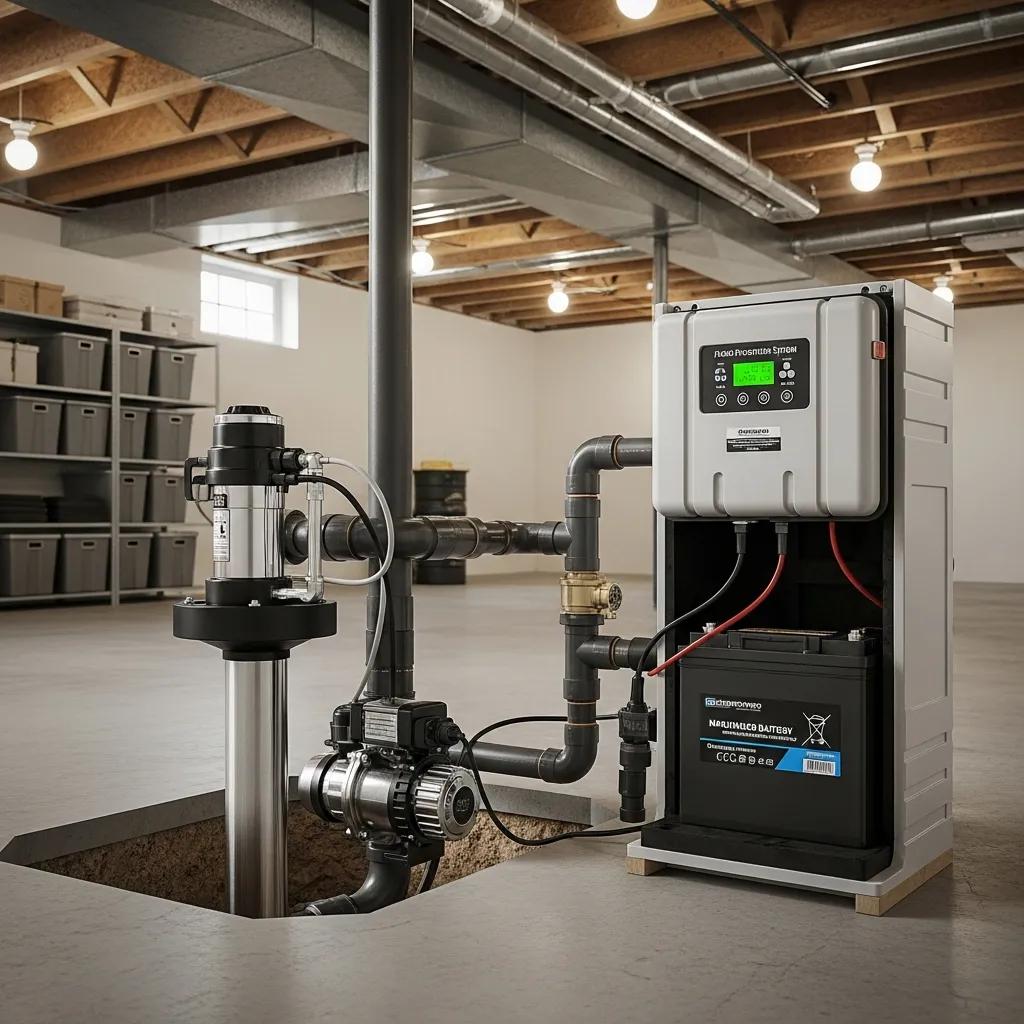
Dependable Battery-Backup Sump Pump Systems — Installation, Upkeep, and Emergency Response
A battery-backup sump pump keeps a secondary pump powered when the grid goes down, so basements stay dry during storms and outages. This guide walks Michigan homeowners through how those backup systems work, why they matter here, and how professional installation plus regular maintenance keeps them reliable and preserves your home’s value. You’ll find clear information on system types, how to choose the right unit, what to expect during installation, routine testing and troubleshooting, and the emergency services available to limit water damage. Key terms like battery backup sump pump, power outage sump pump, water-powered sump pump, and sump pump maintenance appear throughout to help you compare options and plan dependable flood protection.
Why battery-backup sump pumps matter for Michigan homes
Michigan’s heavy spring rains, freeze–thaw cycles and occasional power outages increase basement flood risk — and a backup sump pump keeps water moving when the primary pump or home power fails. A well-sized backup reduces the chance of water intrusion, mold and costly repairs by kicking in automatically if the main pump stops. Homeowners get redundancy, alarms that warn you early, and extra runtime during long outages so finished basements and stored items stay protected. Knowing local drainage, pit size and likely outage duration helps you pick the right system for your property.
How battery backup pumps guard basements during power outages
When grid power drops or the main pump fails, a battery backup switches the load to a stored battery and runs a secondary pump once a float or level sensor hits its trigger. A float switch or electronic sensor tells the backup control to start the pump and route discharge through the existing piping to a safe outlet. How long it runs depends on the battery’s amp-hour (AH) rating and the pump’s draw, so size batteries to expected storm conditions. Regular testing and an alarm panel let you know the backup has engaged so you can act before water reaches critical levels.
Key benefits of adding a battery backup sump pump
Installing a battery backup gives homeowners concrete protection that lowers long-term risk and repair bills. Backups add redundancy, extend runtime during extended outages, provide audible and visual alerts, and can limit insurance claims by reducing water damage. In short: fewer repairs, less cleanup and more peace of mind when storms hit. For Michigan properties, the combination of backup power and proactive alerts is a practical defense against short outages and multi-day storms.
Main advantages at a glance:
- Redundancy: A second pump prevents a single failure from flooding your basement.
- Extended runtime: Batteries let the pump run for hours when the power is out.
- Early warning: Alarms alert you before water reaches a critical level.
- Damage reduction: Less exposure means lower structural, electrical and personal property loss.
These benefits are a cost-effective addition to an overall flood-prevention plan and point to the next question: which system type fits your home?
What types of battery backup sump pump systems are available?
Backup systems come in several configurations: standalone battery-powered units, water-powered backups that use municipal pressure, integrated dual-pump setups that combine a primary pump with a dedicated backup, and smart systems with remote alerts and diagnostics. Each balances runtime, reliance on utilities, maintenance and installation complexity. The right choice depends on water pressure, expected outage length, sump pit size and whether you want remote monitoring. The table below compares the common types so you can weigh runtime, pros and cons and upkeep needs.
Backup pump options differ by power source, runtime and maintenance:
| System Type | Power / Runtime | Typical Pros and Cons |
|---|---|---|
| Battery-powered backup | Battery (lead-acid/AGM); runtime varies by AH rating | Pros: works without municipal water; predictable during outages. Cons: limited runtime and requires battery upkeep. |
| Water-powered backup | Uses municipal water pressure; runs while water pressure holds | Pros: effectively unlimited runtime while water is available. Cons: needs steady municipal pressure and can use a lot of potable water. |
| Integrated dual-pump system | Primary electric pump plus dedicated battery backup pump | Pros: smooth failover and shared discharge plumbing. Cons: higher upfront cost and professional installation required. |
| Smart/monitored systems | Battery or integrated power with sensors and alerts | Pros: remote notifications and diagnostics. Cons: extra cost and possible subscription for advanced features. |
This comparison highlights trade-offs so you can match features to local conditions and your tolerance for maintenance. Next, we look closer at battery- vs. water-powered options.
Battery-powered vs. water-powered backups — how they compare
Battery backups operate independently of municipal water and are usually the more predictable option when outages are common; their downside is limited runtime and periodic battery replacement or testing. Water-powered backups run as long as municipal pressure holds and don’t rely on stored electricity, but they need adequate water pressure, may not be allowed everywhere, and can waste potable water during long events. Maintenance differs: battery systems need battery health checks and charger inspections, while water-powered units need valve and connection checks. In many Michigan neighborhoods, homeowners favor battery backups for predictable operation; water-powered units are an option when uninterrupted runtime is a priority and local rules allow them.
Selection considerations:
- How long and how often power goes out
- Reliability of your municipal water pressure
- Sump pit volume and discharge routing
Often a battery system with monitoring strikes the best balance of independence and protection for local storms and outages.
Which brands make the best battery backup sump pump systems?
When comparing brands, look at pump capacity (GPM), the battery amp-hour (AH) requirement, warranty terms and local parts/service availability rather than marketing claims. Solid brands specify discharge rates, reliable float designs and clear battery sizing so installers can match runtime to your needs. More important than the brand name is proper installation — a licensed local technician ensures compatibility and supports warranties. For Michigan homeowners, working with a local pro helps with parts availability and service down the road.
Brand/model comparison — what to check:
| Brand / Model (Example) | Key Specs to Compare | Best For |
|---|---|---|
| Example Battery Models | Pump GPM, required battery AH, alarm integration | Homes that need predictable runtime and alarm notification |
| Example Water-powered Units | Required municipal pressure, discharge setup | Properties prioritizing continuous runtime while water is available |
| Integrated Dual-Pump Packages | Combined capacity and dedicated backup pump specs | Finished basements that need seamless failover |
Knowing these specs helps you and your installer pick a system sized for local risks and performance expectations.
How professional battery-backup sump pump installation works
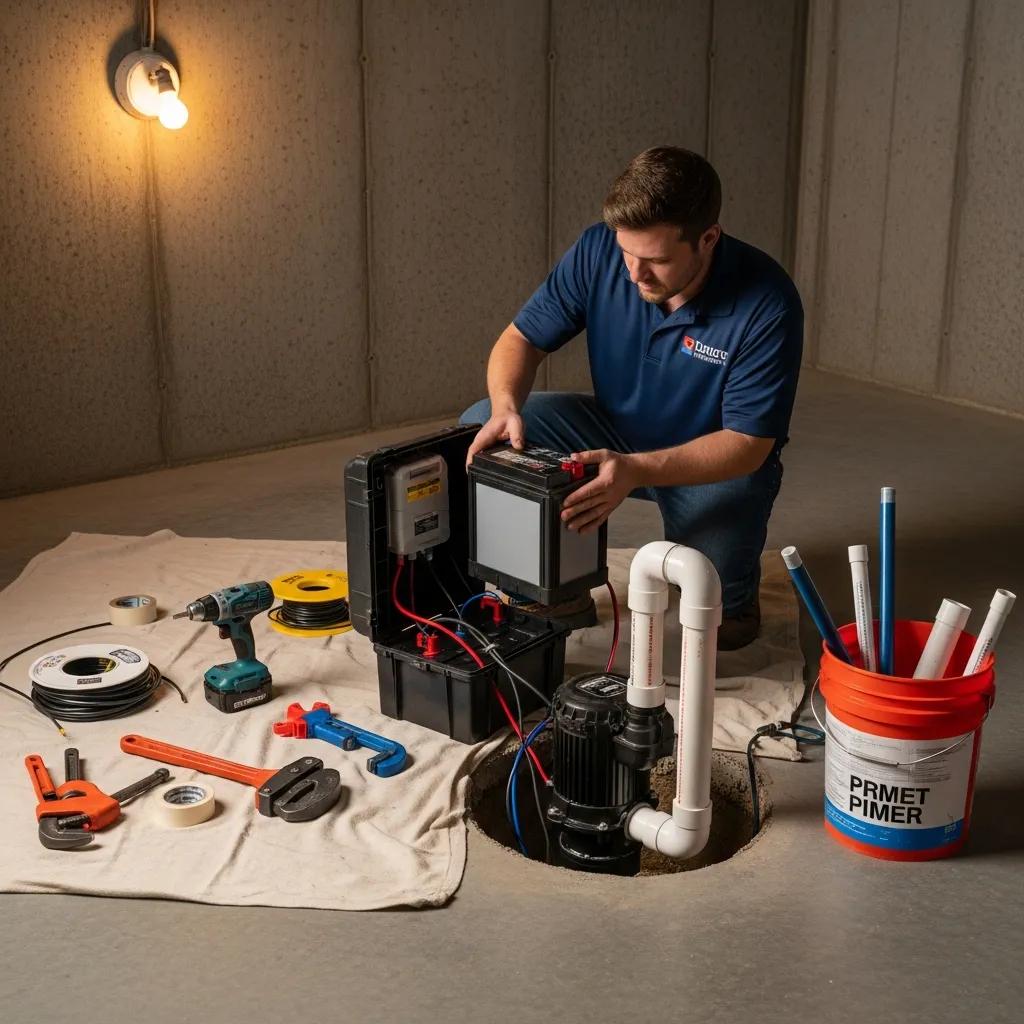
A professional install starts with a site visit to measure the pit, evaluate drainage and discharge routing, and check electrical access. The installer sizes the pump and battery for the expected head and runtime, places the battery safely with the correct charging setup, integrates float switches or sensors for automatic failover, and tests the system under load. Final steps include commissioning the alarm, documenting settings and showing you a simple monthly test routine so you know the system will work when needed. Proper installation prevents wiring errors, poor discharge routing or unsafe battery placement that could limit backup performance.
Typical installation steps you can expect:
- Site assessment and pump sizing: Measure pit, evaluate discharge path and head height.
- Battery and charger installation: Install battery on a stable, ventilated surface with correct charger setup.
- System integration and testing: Verify automatic failover, alarm function and runtime under load.
These steps ensure the system meets safety and performance standards and gives you a clear maintenance path.
What Frost and Kretsch Plumbing includes with installation
Frost and Kretsch Plumbing serves Macomb, Oakland and Wayne counties with licensed technicians who do full site evaluations, pump and battery sizing, secure charger installation and complete system testing with a homeowner walkthrough. We focus on transparent pricing and back our work with a 100 percent satisfaction guarantee. Our installers handle wiring, float calibration and document test results for your records. We commission the alarm panel and show you monthly checks so you’re comfortable with how the backup operates. If you want verification first, we offer inspection and estimates to confirm the right system for your home.
This local, hands-on approach helps ensure a durable installation and leads into the permit and code issues that commonly apply.
Permit and code requirements in Michigan
Common permit and code items in Michigan relate to electrical safety for permanent wiring, correct routing of discharge piping to avoid nuisance overflows, and local rules for modified drainage systems. Some jurisdictions require permits for new circuits or structural changes, and inspectors may check that discharge doesn’t create public hazards or violate municipal rules. Professional installers typically submit permits and ensure code compliance so the work passes inspection. Talk with your local building department and use a licensed installer to clarify permit needs and documentation.
Key compliance checkpoints:
- Properly rated wiring and GFCI protection where required
- Correct discharge routing and check valves to prevent backflow
- Permit filing when new electrical circuits or structural changes are involved
Following these rules protects homeowners and keeps your installation in line with local standards.
How to maintain and troubleshoot your battery-backup sump pump
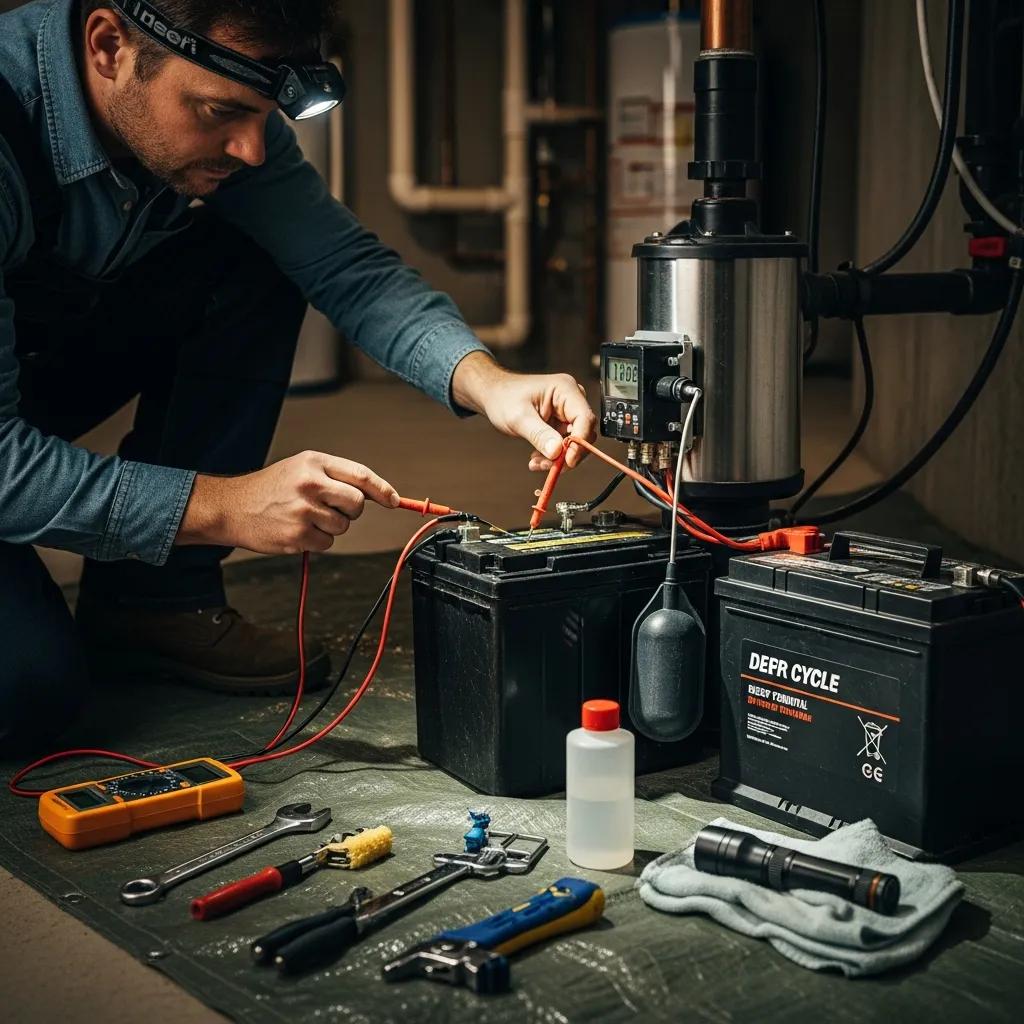
Routine maintenance keeps backup capacity where it should be and ensures the system starts when you need it. A practical schedule combines monthly homeowner checks with an annual professional inspection for load testing and deeper diagnostics. Monthly tasks usually include a manual operational test, a quick visual battery check, confirming the float moves freely and verifying alarms. Annual service covers battery load testing, charger inspection, intake and impeller checks, and sump pit cleaning to remove sediment. Troubleshooting tips help you spot stuck floats, blocked intakes or low battery voltage and decide when to call a pro.
Use the checklist below to turn these tasks into simple actions for homeowners and service teams.
| Component | Test / Check | Recommended Frequency |
|---|---|---|
| Battery (AGM/lead-acid) | Visual inspection, voltage check and load test | Monthly visual checks; annual load test |
| Float switch | Confirm free movement and no obstructions | Monthly |
| Alarm panel | Verify audible and visual alerts during test | Monthly |
| Sump pit | Remove debris and confirm discharge path is clear | Annually or as needed |
| Charger / float charger | Confirm charging and indicator lights | Monthly visual checks; annual inspection |
Best practices for battery testing and pit cleaning
Good battery practice includes monthly visual checks for corrosion or swelling, confirming charger lights are normal, and doing an annual load test that simulates pump operation to measure real runtime. Follow manufacturer safety guidance and keep batteries on a stable, protected surface away from combustibles. For the pit, clear sediment and debris, make sure intake screens are clean, and confirm the float moves freely without snagging on cords or the liner. Homeowner checks combined with an annual licensed inspection balance routine prevention and professional diagnostics.
Simple routine recommendation:
- Monthly: Visual battery check, ensure float moves freely, test alarms.
- Annually: Professional load test, pit cleaning and charger inspection.
Sticking to this routine lowers the risk of surprise failures and helps maintain designed runtime during outages.
Spotting and fixing common sump pump problems
Most sump pump failures come from a few repeatable causes: stuck floats, clogged intakes, burned motors, or weak backup batteries. Many issues start with safe, simple homeowner checks — verify power and charger lights, manually move the float to ensure it’s free, and remove debris from the pit. If the backup won’t start during a test or a battery shows low voltage despite charging, schedule a professional load test and motor inspection. Calling a licensed technician sooner rather than later prevents relying on a compromised backup during severe weather.
Call a pro when:
- The battery fails a load test or shows persistent low voltage
- The pump hums but doesn’t move water
- Wiring or electrical components look damaged
Timely professional repairs restore protection and limit the chance of escalating damage.
Emergency sump pump services from Frost and Kretsch Plumbing
Frost and Kretsch Plumbing provides 24/7 emergency response, temporary pumping and on-site repair or expedited replacement, plus homeowner guidance during active flooding. When you call, our technicians focus on stopping water intrusion quickly with temporary pumps or hose routing while we determine whether a repair or replacement is needed. Serving Macomb, Oakland and Wayne counties lets us dispatch licensed techs fast to mitigate damage, document conditions and recommend durable backup solutions. We share transparent pricing and stand behind our work so you understand options and costs before we proceed.
What happens on an emergency call:
- Technicians assess the situation, deploy temporary pumps or containment, and recommend next steps.
- Emergency measures may include temporary power, portable pumps and secure discharge routing.
- After stabilizing the scene, technicians outline a clear plan for permanent repair or replacement and provide timeline expectations.
These services limit immediate damage and set the stage for a reliable long-term solution.
How 24/7 emergency service protects your home
Round-the-clock response shortens the time water touches finished surfaces, electrical systems and personal items — and that directly reduces repair costs. Quick technician arrival typically includes temporary pumping to lower water levels, containment measures and an initial diagnosis to determine repair or replacement needs. Prioritizing emergency dispatch gives properties with active flooding immediate mitigation before permanent remediation starts. We also help document events for insurance and explain next steps to restore dependable sump pump protection.
Immediate benefits of emergency responsiveness:
- Reduces exposure time for vulnerable materials
- Limits secondary damage like mold and electrical hazards
- Provides documented remediation steps for repair and replacement
That rapid, organized approach is a practical layer of flood-risk reduction.
What to do during a sump pump outage or failure
If your pump stops during an outage or failure, put safety first: avoid standing water if electrical hazards may be present and only shut breakers off if it’s safe. Then take quick mitigation steps to slow water entry. Use sandbags or temporary barriers to divert water, move valuables away from the pit, and run a portable pump if you have one and it’s safe. After initial mitigation, call a licensed emergency plumber for fast pumping and repairs. Photograph damage for insurance and keep service notes — organized action reduces damage until a permanent fix is in place.
Immediate action checklist:
- Safety first: Avoid electrical contact with standing water and turn off power only if it’s safe to do so.
- Mitigate: Use sandbags or temporary rerouting to divert incoming water.
- Call for emergency service: Request a licensed technician for temporary pumping and repair.
Following these steps protects people and property while you wait for a permanent repair.
Frequently Asked Questions
What factors should I consider when choosing a battery backup sump pump system?
Think about how long and how often your power goes out, the size of your sump pit, and whether local water pressure is reliable. Compare pump capacity (GPM), battery amp-hour (AH) rating and whether you want a standalone unit or an integrated system. Consider maintenance needs and whether you want remote monitoring or alarms. A professional inspection helps match a system to your home and expected runtime.
How often should I perform maintenance on my battery backup sump pump?
Do a quick monthly check — test the backup, inspect the battery for corrosion, and make sure the float moves freely. Schedule an annual professional inspection for a load test, charger check and sump pit cleaning. That mix of monthly attention and yearly professional service keeps the system ready for storms.
Can I install a battery backup sump pump system myself?
Some homeowners handle parts of the work, but we generally recommend a licensed professional. Proper installation requires correct pump sizing, safe electrical connections and plumbing integration, plus adherence to local codes. A pro ensures the system is installed safely and that warranties and permits are handled correctly.
What should I do if my battery backup sump pump fails during a storm?
Prioritize safety: avoid standing water and turn off power only if it’s safe. Use sandbags or temporary barriers to divert water and move valuables away from the pit. If you have a portable pump, use it safely. Then call a licensed emergency plumbing service. Document damage with photos for insurance and keep records of the service you receive.
How can I improve the efficiency of my battery backup sump pump system?
Keep the system maintained with monthly checks and annual professional inspections. Keep the pit clean and clear of debris. If you’re frequently short on runtime, consider a higher-capacity battery or a more efficient pump. Adding smart monitoring can alert you to issues before they become emergencies.
What are the signs that my battery backup sump pump needs replacement?
Watch for reduced runtime during tests, visible battery corrosion or swelling, and persistent low voltage despite normal charging. If the pump fails to engage in tests or makes unusual noises or vibrations, those are signs to act. Regular testing and annual inspections help you replace components before a storm reveals a problem.
How long do battery backup sump pumps and batteries last?
Pump motors and hardware can last many years with proper service, but backup batteries (lead-acid or AGM) typically need replacement every 3–5 years depending on use and charging. Replace a battery sooner if load tests show reduced runtime, if you see corrosion or swelling, or if voltage stays low despite charging. Monthly visual checks plus an annual load test give the best picture of remaining battery life so you can replace it before storm season.
How do you test a battery backup sump pump to make sure it will work?
Each month simulate activation by lifting the float or temporarily unplugging the primary pump (only if it’s safe) and confirm the backup starts and alarms sound. Note runtime during the test and check charger indicators and battery voltage before and after. Schedule an annual professional load test to measure real runtime under load. Keep a maintenance log with dates and test results so you can spot trends and address declining battery performance early.
- Monthly: Simulate activation and verify backup engagement and alarms.
- Annually: Professional load test and pit cleaning for full verification.
- Recordkeeping: Log tests, battery changes and professional service dates.
These routines give practical assurance that the backup will perform when storms strike.
Conclusion
For Michigan homeowners, a battery-backup sump pump is a smart investment — it keeps basements protected during heavy rain and power outages and reduces the risk of costly water damage and mold. Understanding system types and maintenance needs lets you pick a solution that fits your home and gives reliable protection. Contact our installation and maintenance team to discuss options and schedule an inspection so your home is ready before the next storm.