Drip Irrigation Systems: Smart, Efficient Garden Watering and Realistic Cost Guidance
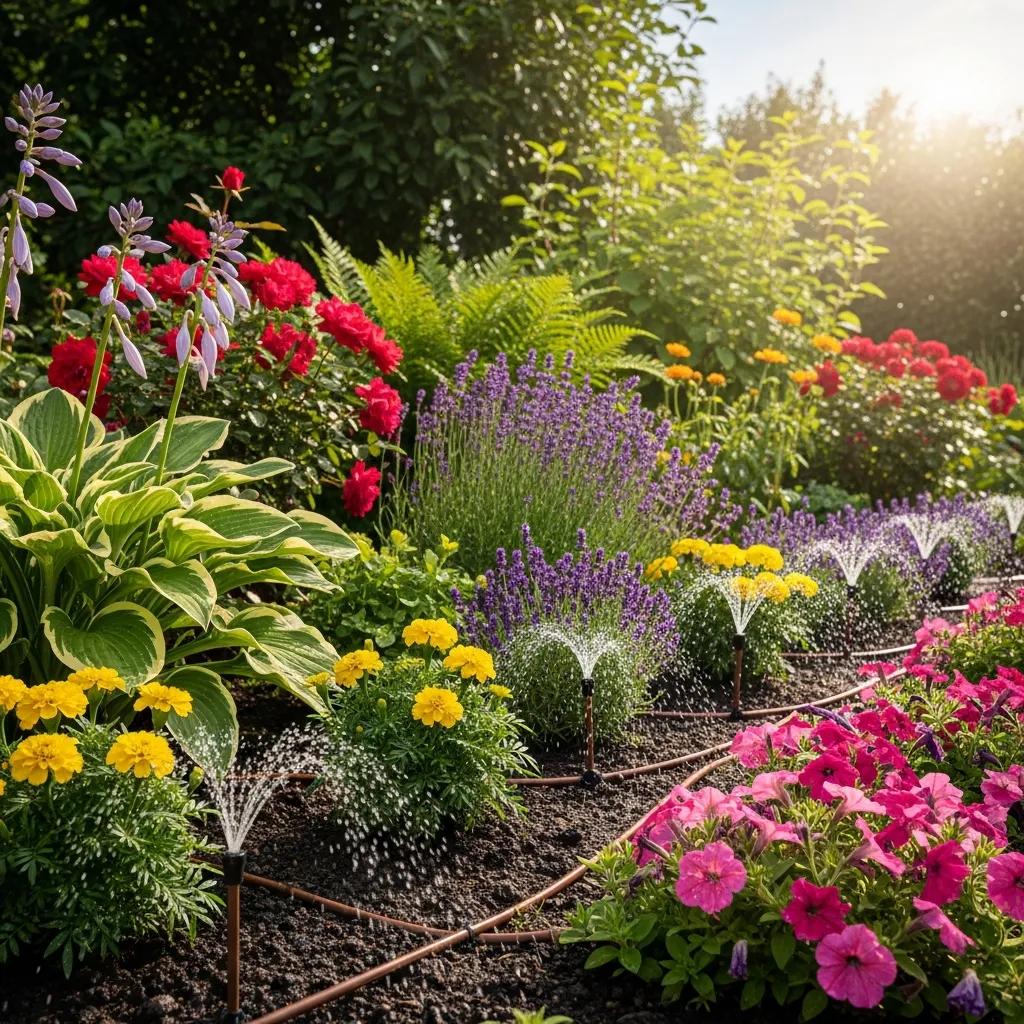
Drip irrigation sends small, steady amounts of water straight to the plant root zone using low‑flow emitters, tubing, and pressure controls. That targeted delivery cuts evaporation and runoff. This guide walks homeowners and landscape managers through how residential and commercial drip systems save water, support plant health, and what to expect for installation and upkeep — including practical cost ranges and step‑by‑step advice. If you’ve battled uneven watering, surprise spikes on your water bill, or stressed plants from over- or under-watering, drip systems are designed to solve those problems by matching water to root needs. Below we outline benefits and trade‑offs, typical residential costs and what affects price, commercial options for larger sites, how to pick the most water‑efficient approach, and clear installation and maintenance steps. We also compare drip with sprinklers and soaker hoses and point out when a professional assessment or a free estimate is worth considering. Read on to see how correct emitter placement, good filtration, pressure control, and smart scheduling work together to water smarter.
What Are the Key Benefits and Drawbacks of Drip Irrigation Systems?
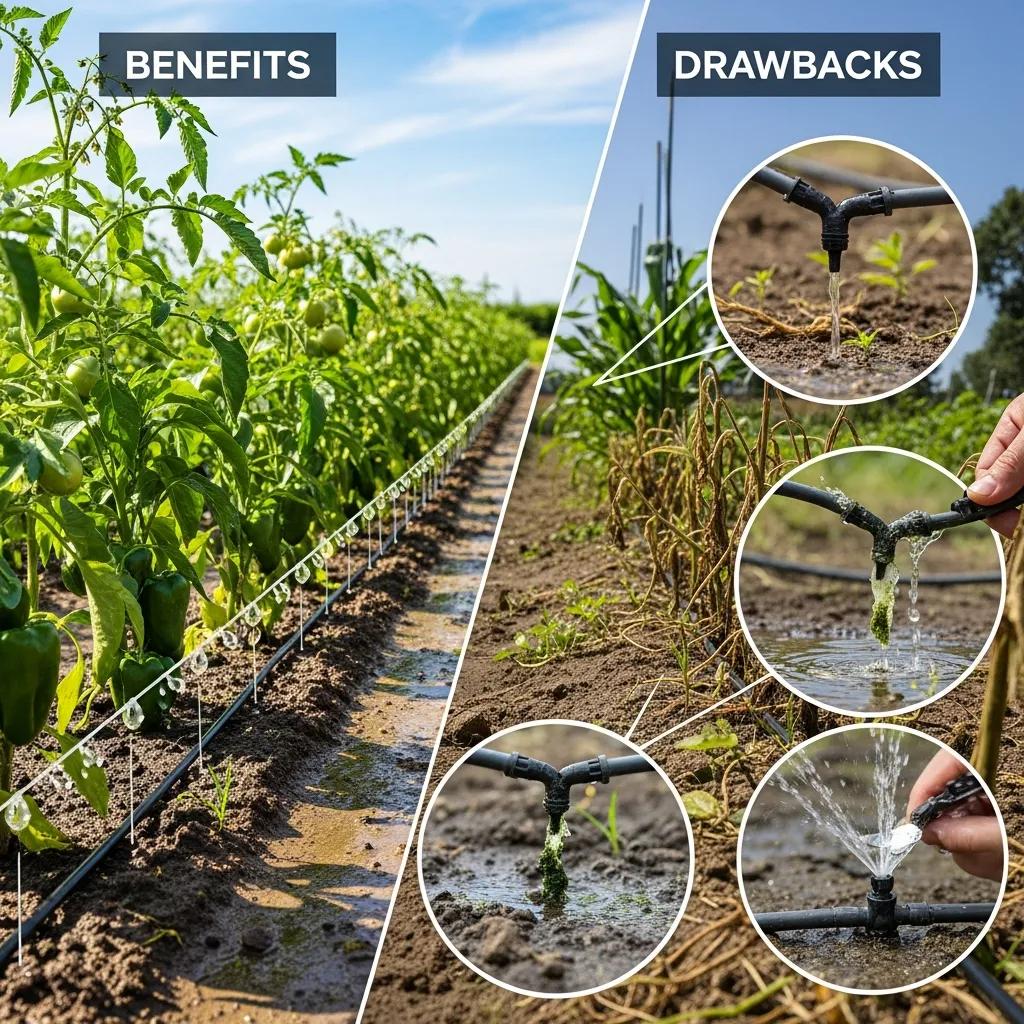
Drip irrigation cuts water use by delivering water slowly and directly to roots, which boosts uptake and reduces evaporation. Emitters or dripline meter flow at low rates while filters and pressure regulators help keep distribution even — that usually means healthier root systems and more vigorous landscapes. The strongest benefits are measurable water savings, less wet foliage (so fewer leaf diseases), and precise nutrient delivery when you use fertigation. On the downside, small emitter openings can clog, there’s some upfront design and material cost, and systems need routine checks and occasional repairs.
That quick overview shows the main wins and trade‑offs. Below we dive into how drip saves water and what limitations to watch for.
Operational benefits at a glance:
- Targeted watering: Sends water only where roots need it, reducing waste and improving uptake.
- Water savings: Cuts evaporation and runoff — often 30–50% less water than typical sprinklers.
- Healthier plants: Keeps soil moisture steady while keeping leaves dry to lower disease risk.
When to consider professional design: as you read the next section on weaknesses, you’ll see when a pro’s layout can pay off.
Common drawbacks to plan for:
- Clogging risk: Small emitter ports can block if filtration and maintenance are missed.
- Upfront complexity: Proper layout, zoning, and pressure control take planning and time to install.
- Physical damage & upkeep: Tubing and emitters can be nicked by tools, pets, or weather and need regular inspection.
The table below compares typical components so you can decide if drip or another option fits your landscape.
Different irrigation methods trade cost, ease, and efficiency in different ways.
| Component | Characteristic | Typical Impact |
|---|---|---|
| Emitters (point) | Very precise, low flow | Top water efficiency; greater clogging potential |
| Dripline (integral emitters) | Continuous linear delivery | Even coverage for beds; simpler install, midrange cost |
| Soaker hose | Porous tubing, easy setup | Low cost, fair efficiency; less uniform coverage |
| Sprinkler system | Overhead coverage, higher flow | Good for lawns; more evaporation and runoff |
That comparison explains why drip is commonly chosen for beds and planted areas where root‑zone control and efficiency matter most. Next, we look at how drip produces measurable water savings.
How Does Drip Irrigation Improve Water Efficiency in Gardens?
Drip irrigation improves efficiency by applying low flow directly at the root zone, which cuts evaporation and limits deep percolation. The system relies on emitters, pressure regulation, and thoughtful scheduling that matches plant evapotranspiration. Correct emitter spacing concentrates moisture where roots take it up, so you use less water per plant while keeping soil at the right level. For example, converting a flower bed from sprinkler to drip commonly reduces applied water by 30–50%, depending on climate and mulch use; that estimate comes from calculating emitter flow rates (gph) and adjusting run times to hit soil moisture targets. Proper filters and regulators keep emitters working to spec across the whole system so efficiency stays consistent over time.
Practical best practices include mulching, grouping plants by water need, and adding soil moisture sensors or weather‑based controllers to optimize runtime and save even more water. Next we’ll cover common operational issues to help you avoid efficiency losses.
What Are Common Limitations and Challenges of Drip Irrigation?
Typical failure modes include emitter clogging from sediment or biofilm, pressure imbalances on long runs, and root intrusion at emitters. Prevent these with good filtration, scheduled flushing, and sensible zone lengths. Routing tubing under mulch and marking lines in high‑traffic areas reduces accidental damage; seasonal inspections help catch leaks, rodent damage, or collapsed tubing early. For complex landscapes, splitting the system into multiple zones with individual pressure control improves uniformity and makes maintenance easier. If problems continue, bring in a professional to analyze hydraulic patterns and recommend filtration or pressure‑compensating upgrades.
Understanding these limits helps you plan installations and maintenance that keep a system efficient long term.
How Much Does Drip Irrigation Installation Cost for Residential Gardens?
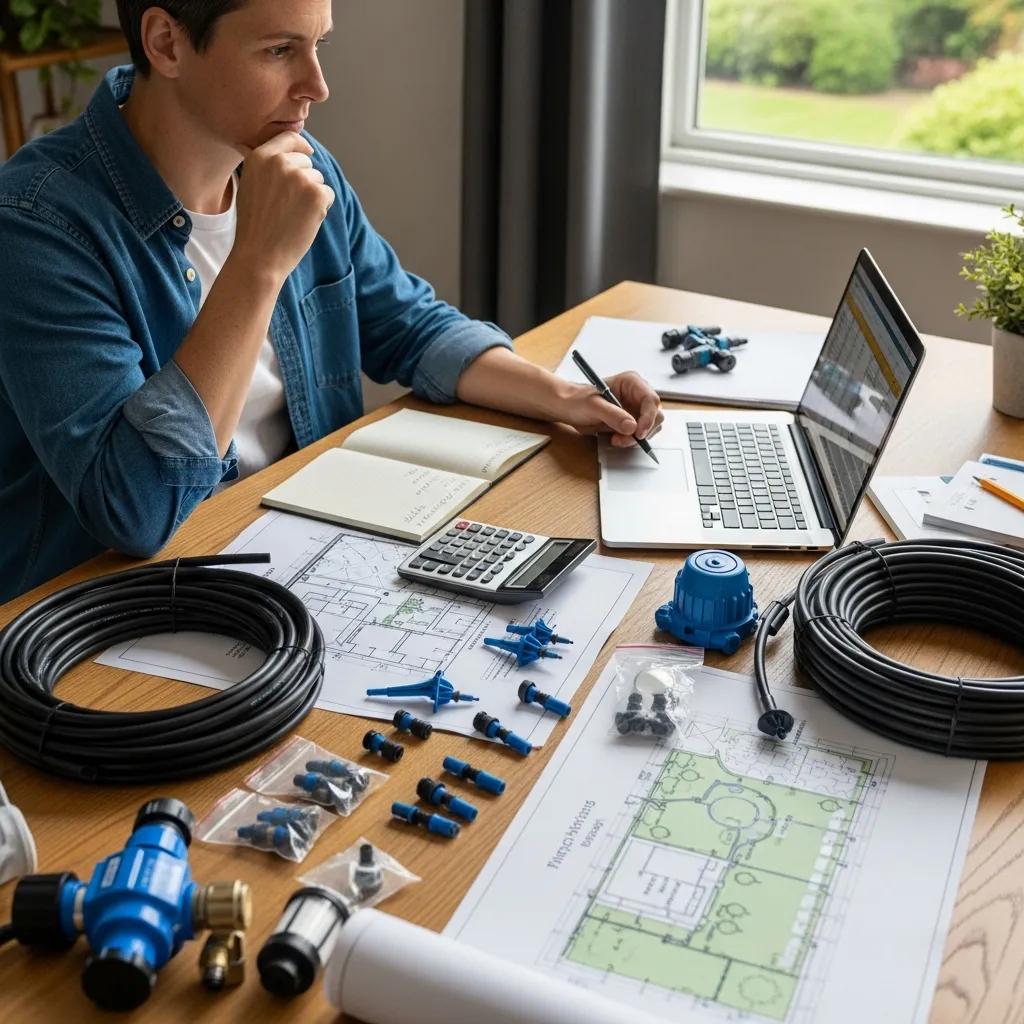
Residential installation costs vary widely with system complexity, materials, and labor. As a rule of thumb: small DIY kits for beds and containers run a few hundred dollars, while professionally designed multi‑zone yard systems with controllers and filters commonly reach into the low thousands. Biggest cost drivers are parts quality (dripline vs individual emitters), labor for trenching or burying lines, controller and sensor options, and any backflow prevention or permit work. Below we break those factors down and point to budget‑friendly approaches for homeowners.
Here’s a concise list of key cost drivers and how they affect a quote so you can get a realistic estimate before requesting an on‑site visit.
- Garden area & layout: Bigger or oddly shaped beds need more tubing and fittings.
- Emitter type & density: More emitters or premium dripline raise material costs.
- Automation & controls: Timers, controllers, and sensors add hardware and programming time.
- Labor & excavation: Professional zoning, trenching, and testing are major parts of the final price.
The EAV table below shows how each element typically moves a quote up or down.
Cost elements affect quotes and the final installed price in different ways.
| Cost Factor | What It Affects | Typical Influence on Total |
|---|---|---|
| Materials (tubing, emitters) | Direct parts expense | Moderate to high |
| Labor (installation, trenching) | Time and expertise | High |
| Controller & sensors | Automation and convenience | Moderate |
| Filtration & pressure regulation | System longevity and uniformity | Moderate |
Seeing where costs concentrate helps you decide which investments deliver the best reliability and efficiency. Next we cover specific factors that influence residential pricing.
What Factors Influence the Installation Cost of Residential Drip Systems?
Costs are driven mainly by garden size, number of zones, emitter density, and how much automation or monitoring you want. These determine tubing length, number of emitters, and controller features, and they set labor time. For example, a single small raised bed with one zone and basic emitters needs little tubing and a simple timer, while a layered landscape with shrubs, flower beds, and vegetables may require several zones, manifolds, and a programmable controller with sensors. Soil type (rocky vs loamy) and proximity to a water source also affect labor for trenching. To get a reliable quote, sketch your site showing plant groups and sun exposure before the on‑site assessment.
An on‑site evaluation is the best way to size emitters and plan pressure regulation for durable performance.
Are There Affordable Options for Home Garden Drip Irrigation?
Yes. Affordable paths include starter kits for small beds, phased installs that focus first on high‑priority areas, and DIY retrofits using existing hose bibs and simple timers. Starter kits usually include tubing, a few emitters, and a basic timer — perfect for a small vegetable patch or a cluster of containers. Phased installs let you start with your most important zones (vegetable garden, key flower beds) and expand later, spreading cost while immediately improving watering precision. Many homeowners combine dripline in beds with soaker hoses in lower‑priority borders to balance cost and performance. If long‑term reliability matters, investing in pro installation for core pieces like filters and backflow protection often pays off.
Your choice depends on whether you prioritize precision and low maintenance (professional install) or low upfront cost (DIY kit and phased upgrades).
What Commercial Drip Irrigation Solutions Are Available for Large-Scale Gardens?
Commercial options include heavy‑duty driplines, economical drip tape for seasonal row crops, and micro‑sprinkler networks for tree and shrub coverage — each built for scale, automation, and easier maintenance. Commercial systems use more durable materials, larger mains, and advanced controllers that support fertigation, telemetry, and many large zones. Designers focus on flow uniformity, straightforward maintenance, and pump/pressure management for long runs. Crop type, row spacing, soil infiltration, and automation needs determine whether dripline, drip tape, or micro‑sprinklers best balance yield and water efficiency.
The EAV table below highlights trade‑offs and maintenance expectations for large sites.
| System Type | Flow & Coverage | Maintenance Frequency |
|---|---|---|
| Dripline (integral emitters) | Moderate flow, even along rows | Moderate; periodic flushing |
| Drip tape | Low cost, dense emitter spacing | Higher; often replaced seasonally |
| Micro-sprinkler | Wider wetting pattern, adjustable | Moderate; nozzle care and winterizing |
Pick the commercial approach based on crop value, labor availability, and willingness to replace seasonal parts. Guidance on selection follows.
How Do Commercial Systems Differ from Residential Drip Watering?
Commercial systems differ in scale, component sizing, and automation. They’re built for longer runs and higher throughput, use pressure‑compensating emitters for uniformity across large distances, and often integrate with pumps, fertigation, and remote monitoring. Maintenance is more systematic — scheduled flushing, filter backwashing, and seasonal pump checks. These features make commercial systems suited to orchards, nurseries, and large landscapes where precise water and nutrient delivery directly affect yield and operating costs.
Because commercial sites run at scale, they also use more frequent performance checks and sometimes contract out maintenance to keep systems running smoothly.
What Are the Benefits of Using Drip Irrigation in Commercial Agriculture?
In commercial agriculture, drip irrigation improves water‑use efficiency, enables precise fertigation, and lowers disease pressure by keeping foliage dry — often increasing yield and produce quality. Measurable benefits include less water used per area, more uniform plant growth, and labor savings from reduced hand‑watering. Fertigation through drip places nutrients where roots can access them efficiently, reducing fertilizer waste. Over time those gains improve resource economics and stabilize crop performance under changing weather.
For growers focused on sustainability, yield, and input efficiency, drip irrigation is a core tool.
How to Choose the Best Water Efficient Garden Systems Including Drip Irrigation?
Choosing the right water‑efficient system starts with assessing plant groupings, source pressure and water quality, budget, and desired automation. Key selection points are emitter type and spacing, controller features, filtration quality, and pressure regulation — all affect long‑term uniformity and upkeep. Compare dripline, soaker hoses, and sprinklers for efficiency, installation complexity, and maintenance to pick the best fit for each garden zone. If you prefer expert help, a professional evaluation and tailored estimate can clarify the best system for your site without guesswork.
Use the checklist below to focus on the most important features when evaluating systems.
Essential features to look for in efficient garden watering systems:
- Programmable controller: Lets you run multiple zones and set schedules that match plant needs.
- Quality filtration: Keeps emitters clear and maintains uniform flow.
- Pressure regulation: Ensures emitters perform correctly across slopes and long runs.
- Durable emitters/dripline: Choose pressure‑compensating or UV‑resistant materials for exposed areas.
These criteria help narrow choices between drip, soaker hose, and sprinkler approaches. The side‑by‑side table below makes those trade‑offs clearer.
| Feature / System | Drip Irrigation | Soaker Hose | Sprinkler System |
|---|---|---|---|
| Water Efficiency | High | Moderate | Low to moderate |
| Installation Complexity | Moderate | Low | Moderate to high |
| Maintenance Needs | Moderate | Low | Moderate |
| Best Use Case | Beds, rows, containers | Informal borders | Lawns, broad coverage |
Use that comparison to match method to each part of your yard — drip for beds, sprinklers for turf, and soaker hoses where budget or uniformity is less critical.
What Features Should You Look for in Efficient Garden Watering Systems?
Prioritize a programmable controller that accepts sensor inputs, a filter sized to your water quality, zone‑level pressure regulation, and emitters or dripline selected for your plant spacing and soil type. Controllers that accept soil moisture sensors or use weather‑based scheduling cut wasted water by adjusting runtimes to real conditions. Filters sized to remove local suspended solids and a pressure regulator matched to your emitter type keep clogging and uneven delivery in check. Pick durable materials — UV‑stabilized dripline and secure fittings — to reduce leaks and ease winterizing. Choosing compatible components reduces lifecycle cost and keeps plant performance steady through changing weather.
When parts work together, the system lasts longer and needs fewer fixes.
How Does Drip Irrigation Compare to Other Watering Methods?
Drip irrigation beats soaker hoses and sprinklers on precision and water efficiency but needs more design and maintenance planning. Drip systems deliver root‑zone water precisely, soaker hoses are cheaper and simpler for informal strips, and sprinklers work well where even overhead coverage is needed, like lawns. Maintenance differs: drip needs filters and occasional emitter checks, soaker hoses have fewer parts but give less uniform watering, and sprinklers require nozzle upkeep and generally use more water. The best approach is a mix — match the method to each zone for the best balance of water savings and convenience.
With these comparisons you can pick the method or combination that fits your goals and upkeep tolerance.
How to Install and Maintain a Residential Drip Irrigation System?
Installing and keeping a residential drip system working involves mapping the layout, preparing the water source with filtration and pressure regulation, laying mainline or dripline, placing emitters, flushing and pressure testing, and programming controllers for the right run times. Start by grouping plants by water need, measuring tubing runs, and choosing emitters or dripline to match spacing and soil. After installation, routine care includes cleaning filters, flushing lines at season start, checking emitters for blockages, and winterizing in freeze areas. Regular controller checks and occasional pressure tests help the system keep uniform flow and preserve water efficiency.
Below are straightforward installation steps and a short maintenance checklist for DIYers, plus notes on when to call a pro.
- Plan and map zones: Measure beds and group plants with similar water needs before selecting emitters.
- Install filter and pressure regulator: Protect emitters and set correct pressure at the supply point.
- Lay tubing and place emitters: Route lines under mulch, secure fittings, and position emitters to match root spread.
- Flush, test, and program controller: Clear debris, check uniform output, and set schedules to match plant water use.
After install, follow this compact maintenance routine to keep things running well.
- Spring start‑up: Flush lines, clean filters, and test emitters for even output.
- Summer checks: Watch soil moisture, tweak schedules, and swap out failed emitters.
- Fall winterization: Drain or blow out lines in freezing zones and store removable parts.
These simple steps protect system efficiency and reduce the chance of major repairs. If layout or clogging issues persist, a professional tune‑up can save time and money.
What Are the Basic Steps for Installing Drip Irrigation at Home?
Start with a layout plan that groups plants by water need, then fit a filter and pressure regulator at the water source to protect emitters and ensure even flow. Bury or surface‑lay tubing under mulch to prevent damage and hide lines; secure connectors and test for leaks as you go. Position emitters to suit root spread — wider plants may need two emitters — then flush each zone to remove installation debris before hooking up the controller and testing runtimes against soil moisture. For multi‑zone systems or mains that require backflow prevention, hire a pro to ensure code compliance and correct pressure management.
If the system behaves unevenly or clogging keeps happening, a professional assessment can identify needed filtration, layout, or pressure‑compensation changes.
How Do You Maintain and Troubleshoot Drip Irrigation Systems?
Maintenance and troubleshooting focus on regular filter cleaning, scheduled flushing, emitter checks, and pressure verification to catch declines in uniformity. Start each season by flushing mains, servicing or replacing filters, and visually inspecting emitters for blockages or damage. Mid‑season, adjust schedules for plant demand and replace worn parts. If a zone has low output, run a quick diagnostic: check the filter, confirm the pressure regulator setting, and isolate the zone to narrow the issue. For stubborn or system‑wide problems, a professional diagnostic can test hydraulic layout, check for root intrusion, and recommend upgrades like finer filtration or pressure‑compensating driplines.
Regular, simple maintenance keeps the system efficient and avoids larger repairs later.
Frequently Asked Questions
1. What types of plants benefit most from drip irrigation systems?
Drip systems work well for vegetables, fruiting plants, perennials, and most flowering beds — any plants that do best with steady root‑zone moisture. They’re also great for raised beds and drought‑tolerant species when you want precise control. In short, if a plant needs consistent watering or benefits from dry foliage, drip helps.
2. How can I prevent clogging in my drip irrigation system?
Use a properly sized filter, flush the system regularly, and choose emitters suited to your water quality. Pressure regulators help maintain even flow, and using larger‑port or pressure‑compensating emitters reduces clog risk. Inspecting the system periodically catches trouble early before a few blocked emitters become a bigger problem.
3. Can drip irrigation be used in conjunction with other watering methods?
Yes. Many yards use a hybrid approach: drip for beds and plantings, sprinklers for turf, and soaker hoses for informal borders. That way each zone gets the most appropriate method and you save water where precision matters most.
4. What is the best time of day to run a drip irrigation system?
Early morning is ideal — cooler air means less evaporation and plants can use moisture through the day. Evening works too, but be mindful of damp foliage in humid climates. The key is to adjust schedules seasonally and match run times to soil moisture rather than a fixed clock.
5. How long should I run my drip irrigation system?
Run time depends on plant type, soil texture, emitter flow, and weather. Typical cycles range from 30 minutes to a couple of hours, but using soil moisture checks or sensors is the best way to dial in run times and avoid overwatering. Start conservatively, then adjust based on how the soil feels and plant response.
6. Are there any specific maintenance tasks I should perform seasonally?
Yes. In spring flush lines and clean filters, check emitters, and test pressure. During the growing season monitor soil moisture and tweak schedules. In fall, winterize by draining or blowing out lines where freezes occur and store small removable parts. Regular seasonal care prevents most common failures.
7. What are the environmental benefits of using drip irrigation?
Drip irrigation conserves water by targeting roots, reduces runoff and erosion, and cuts nutrient leaching by placing fertilizer directly where roots can use it. Keeping foliage dry also reduces disease pressure and the need for chemical controls. Overall, drip supports more sustainable, resource‑efficient gardening.
Conclusion
Drip irrigation is one of the most effective ways to water intentionally — saving water, supporting healthier plants, and reducing routine watering chores. Whether you choose a simple DIY kit or a professionally designed multi‑zone system, the right layout, good filtration, pressure control, and sensible scheduling pay dividends in performance and reliability. If you’re ready to improve your garden’s watering, start with a plan for your priority zones and consider a professional estimate for larger installs. Take the next step toward a smarter, more efficient garden today.