
Protecting Your Home’s Drinking Water: Clear Testing, Treatment, and Plumbing Solutions
Safe drinking water means water free of contaminants at levels that can harm health. Keeping water safe at home requires three things: accurate testing, the right treatment, and good plumbing care. This guide walks homeowners through professional water-quality testing, how to choose filtration and purification systems, and simple plumbing upgrades to reduce risks like lead, bacteria, and emerging chemicals such as PFAS. You’ll learn which tests matter, how common technologies work (activated carbon, reverse osmosis, UV), and the practical steps for installation and upkeep for both municipal and well supplies. Along the way you’ll find checklists and clear next steps to help you read results and decide when to call local pros for remediation and follow-up testing.
How Can Professional Home Water Quality Testing Protect Your Family in Grosse Pointe?
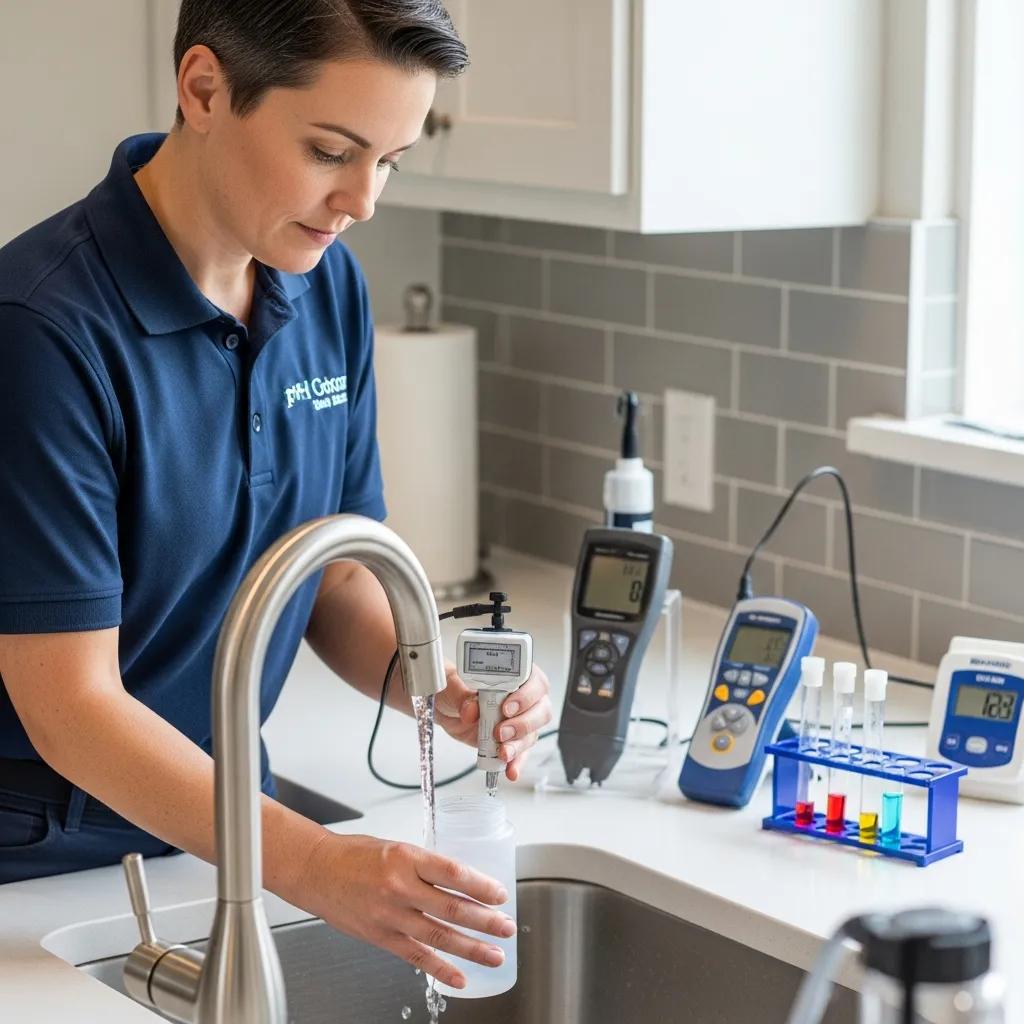
Professional testing finds contaminants, measures how serious they are, and points to the most effective fixes so families don’t have to guess. Certified labs measure chemical and biological markers—lead, coliform/E. coli, nitrates, PFAS—with methods that give reliable numbers and detection limits. Good testing turns lab results into plain-language guidance and clear action steps, which is especially important for households with children, pregnant people, or immunocompromised members. Below is a concise summary homeowners can use, followed by a contaminants table and the typical next steps when you order a professional test.
Professional testing usually follows three straightforward steps homeowners can expect:
- Sample collection: A licensed technician gathers representative samples from drinking taps or well outlets using chain-of-custody procedures to preserve accuracy.
- Laboratory analysis: Samples go to accredited labs and are analyzed with methods matched to the contaminants of concern, producing measurable results and detection limits.
- Interpretation and remediation: A technician explains the numbers in plain terms and recommends remediation—options can include point-of-use filters, whole-house systems, or plumbing repairs.
That step-by-step workflow leads directly to the question of which contaminants show up most often and what their health impacts are. The table below summarizes those common targets and how they’re detected.
Different contaminants need different tests and responses. The table below outlines common residential targets, typical sources, health risks, and the standard detection methods used in a professional water-quality panel.
| Contaminant | Common Source | Health Risk | Typical Detection Method |
|---|---|---|---|
| Lead | Corroding service lines or older plumbing fixtures | Harmful to child neurodevelopment; increased cardiovascular risks for adults | ICP‑MS or atomic absorption after acid digestion |
| Coliform / E. coli | Failing well caps, cross-connections, or biofilm growth | Gastrointestinal illness; sign of fecal contamination | Membrane filtration or Colilert culture/ID |
| Nitrate/Nitrite | Agricultural runoff or septic system leachate | Risk of methemoglobinemia in infants; long-term exposure concerns | Ion chromatography or colorimetric analysis |
| PFAS (per- and polyfluoroalkyl substances) | Industrial runoff, legacy contamination, consumer products | Potential effects on endocrine, immune, and developmental systems | LC‑MS/MS with low ppt reporting limits |
What Contaminants Are Commonly Tested in Residential Water Supplies?
Home testing panels usually cover metals, bacterial indicators, nutrients like nitrate, and emerging contaminants such as PFAS because each group carries different risks and needs distinct treatment. Lead is a top priority when older pipes or fixtures are present since even low exposure affects children. Bacterial contamination calls for immediate action because it can cause acute illness. PFAS and similar synthetic chemicals are tested more often now because they persist in the environment and may require specialized filters. Knowing which contaminants are in your water helps determine whether you need a point-of-use cartridge, a whole-house system, or plumbing replacement.
How Does Frost & Kretsch Plumbing Conduct Accurate Water Testing?
When you schedule testing, Frost & Kretsch Plumbing coordinates sampling, follows chain-of-custody protocols, and works with accredited labs so you get defensible results and clear recommendations. The process includes scheduling a visit, choosing representative sampling points, collecting samples under standard conditions, and submitting them to certified labs using EPA-referenced methods. After results come back, a technician reviews the numbers with you, explains any health implications in everyday language, and suggests practical remediation—ranging from targeted point-of-use filters to whole-house systems or necessary plumbing repairs. If you install treatment, we can arrange verification testing to confirm the system is performing as promised.
If you have questions about testing or need help interpreting results, call Frost & Kretsch Plumbing to discuss options and schedule a professional water test with follow-up planning.
What Are the Benefits of Whole House Water Filter Installation for Safe Drinking Water?
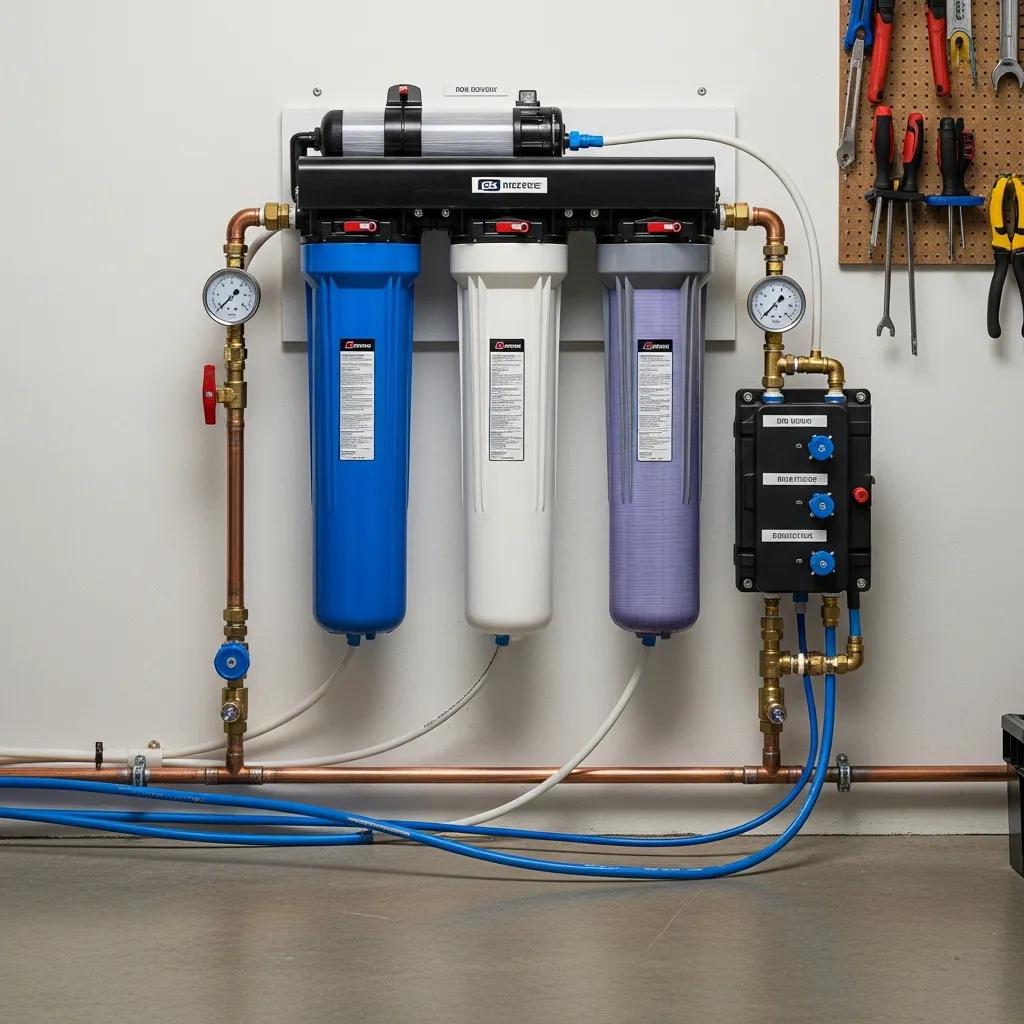
A whole-house filter treats water at the point where it enters your home, protecting every faucet, shower, and appliance—not just the drinking tap. These systems reduce sediment and chlorine taste/odor, remove particulates that can damage fixtures, and, when fitted with the right media, reduce specific chemicals and scale. Whole-house filtration can extend appliance life, improve bathing and cooking water quality, and serve as one layer in a multi-barrier approach to safe water. The table below compares common filter families so you can match a system to test results and household priorities.
| Filter Type | Removes / Reduces | Typical Effectiveness / Use Case |
|---|---|---|
| Activated Carbon | Chlorine, many organic compounds, taste & odor | Very effective for chlorine and organics; a common choice for municipal water with taste or odor issues |
| Sediment Pre-filter | Sand, rust, silt and other particulates | Protects downstream media and appliances; essential before carbon or UV units |
| UV Disinfection | Bacteria and viruses (inactivates pathogens) | Good where microbiological contamination is documented; requires low turbidity |
| Reverse Osmosis (POU) | Dissolved solids, some PFAS, and heavy metals at the tap | Best for point-of-use drinking water; whole-house RO is usually impractical due to waste and flow limits |
Which Types of Whole House Water Filtration Systems Are Most Effective?
For municipal supplies, activated carbon at the point of entry is often the first-line whole-house option because it removes chlorine and many organics that affect taste and odor while protecting plumbing and water heaters. Sediment filters are essential pre-filters to keep particulates from fouling carbon beds or UV lamps. UV units work well when tests show biological contamination, but they need clear water to be effective. Reverse osmosis is best used at a single drinking tap where dissolved solids, lead, or PFAS are confirmed—whole-house RO usually isn’t practical because of wastewater and flow constraints. Matching the technology to your test results and daily needs produces the most reliable, cost-effective protection.
How Does Professional Installation Ensure Optimal Water Purification?
Professional installation makes sure your whole-house system is sized and plumbed correctly, with proper bypasses and pressure considerations. Technicians factor in peak flow, household pressure, and local water chemistry when selecting media volumes and cartridge ratings so you get target contaminant reductions without excessive pressure drop or frequent servicing. After installation, pros often perform post-install verification testing and set up maintenance schedules to keep the system working as intended. If you want expert installation and routine service, Frost & Kretsch Plumbing offers clear pricing and satisfaction guarantees to help keep your whole house reliably filtered.
If you’d like professional installation or a maintenance plan, call Frost & Kretsch Plumbing to review whole-house options and service agreements.
How Do Drinking Water Purification Systems Improve Home Water Safety?
Purification systems use different mechanisms—adsorption, membrane filtration, and UV inactivation—each suited to particular contaminant classes. Activated carbon adsorbs organic molecules and chlorine; reverse osmosis membranes physically separate dissolved solids and many inorganic contaminants; UV light inactivates bacteria and viruses by disrupting DNA. Arranging technologies in stages (sediment pre-filter → carbon → RO or UV) builds multilayer protection tailored to your test results and household vulnerabilities. The table below summarizes maintenance needs, expected lifespans, and practical trade-offs so homeowners can compare long-term costs and verification steps.
| System | Maintenance Needs / Lifespan / Pros & Cons | Typical Frequency / Notes |
|---|---|---|
| Activated Carbon (Whole-House) | Cartridge replacement or media exchange; durable with proper pre-filtration | Replace cartridges every 6–12 months depending on load; effective for taste and odor |
| Reverse Osmosis (POU) | Pre-filter and membrane replacements; requires a drain connection | Pre-filters changed every 6–12 months; membrane every 2–5 years; produces some wastewater |
| UV Disinfection | Annual lamp replacement and sleeve cleaning; no chemical residuals | Replace lamp yearly; requires low turbidity and upstream filtration |
What Are the Differences Between Reverse Osmosis, UV Purification, and Activated Carbon Filters?
Reverse osmosis uses a semi-permeable membrane to remove dissolved solids, many heavy metals, and some PFAS when properly pre-filtered—making it ideal for a drinking-water tap. UV purification inactivates bacteria and viruses but doesn’t remove particulates or chemicals, so it’s best used when microbiological contamination is shown and water is clear. Activated carbon adsorbs chlorine and many volatile organics and improves taste and odor, making it versatile for whole‑house or point‑of‑entry setups. Each technology requires routine maintenance—RO needs filter and membrane changes and produces wastewater, UV needs annual lamp maintenance, and carbon requires cartridge or media replacement—so combining methods often gives the most reliable protection.
When Should Homeowners Consider Upgrading Their Water Treatment Systems?
Consider an upgrade when testing shows contaminants above action levels, when household members are especially vulnerable (infants, elderly, immunocompromised), or when persistent taste, odor, or scale problems indicate your current system isn’t keeping up. Other triggers include buying a home without recent water testing, adding appliances sensitive to water quality, or local advisories about contaminants like PFAS.
Use this simple checklist to prioritize next steps:
- Confirm that test results exceed health-based guidelines or actionable levels.
- Assess household vulnerability and how you use water (drinking, cooking, medical needs).
- Compare treatment options for effectiveness, cost, and maintenance before committing to an upgrade.
Reviewing these points with a professional helps ensure upgrades are targeted and cost-effective rather than unnecessary and expensive.
Why Is Residential Water Treatment Essential for Maintaining Safe Drinking Water?
Residential treatment provides a final protective layer to make up for aging infrastructure, intermittent contamination events, or gaps between municipal treatment and your tap. Even when city treatment meets standards, the distribution system and in-home plumbing can introduce problems like lead or biofilms. Household-level solutions, paired with routine plumbing maintenance—leak detection, water heater care, and pipe repairs—reduce exposure risks and keep systems performing over time. The following sections explain how infrastructure affects water and how regular plumbing service supports safe drinking water.
How Does Plumbing Infrastructure Impact Water Quality in Homes?
Materials, corrosion, stagnant sections, and internal biofilms can change water chemistry after it leaves a treatment plant. Older service lines and fixtures that contain lead or other metals can leach contaminants under corrosive conditions, while dead legs and low-flow sections promote stagnation and microbial growth. Cross-connections or failing seals can allow backflow that brings external contaminants into the system, and sediment build-up in heaters or lines can worsen taste and harbor bacteria. Knowing these mechanisms helps homeowners focus testing on likely problem spots instead of relying only on municipal reports.
Understanding infrastructure impacts highlights the importance of routine maintenance services like leak detection and water heater care, covered next.
What Role Does Leak Detection and Water Heater Maintenance Play in Water Safety?
Early leak detection prevents pressure drops that can allow contaminated water to enter supply lines during negative-pressure events. Both visible and hidden leaks create paths for soil and microbes to intrude where seals or fittings are compromised, so prompt repair reduces contamination risk. Regular water heater maintenance—flushing to remove sediment—prevents scale that can harbor bacteria and affect taste, while keeping hot-water chemistry stable. Scheduling plumbing inspections and maintenance alongside water-quality testing closes the loop between treatment and infrastructure, giving you more reliable protection.
If testing shows infrastructure-related issues, Frost & Kretsch Plumbing offers leak detection, water-main coordination, and water-heater maintenance to reduce contamination pathways and confirm system integrity.
How Does Plumbing For Safe Drinking Water Address Local Water Quality Challenges in Grosse Pointe?
Grosse Pointe faces local factors—aging service lines, legacy plumbing materials, and treatment residuals—that create specific risks and call for local testing and tailored remediation. Consumer confidence reports and recent local sampling should guide whether you need point-of-entry or point-of-use solutions. Local plumbers use those reports when recommending systems. Practical options include targeted filtration for specific contaminants, replacing confirmed lead service lines, or installing integrated systems that combine pre-filtration with carbon or RO where appropriate. The next sections explain lead remediation pathways and how local partners align services with regional standards.
What Are the Health Risks of Lead Pipes and How Are They Remediated?
Lead exposure mainly harms children’s neurological development and raises cardiovascular and kidney risks in adults, so any detectable lead in drinking water calls for prompt action. Typical steps are: confirm a positive test, take interim measures (run and flush cold water before use, use certified point-of-use filters rated for lead or bottled water), then plan long-term solutions (replace service lines or internal plumbing, or install certified lead-reducing filtration at the tap). Short-term fixes cut exposure immediately while you plan permanent removal or verified filtration. Your choice should be based on measured concentrations, household vulnerability, and a cost-benefit look at replacement versus filtration.
That remediation flow naturally leads to how local plumbing pros fold standards and verification testing into their work, which the next section covers.
How Does Frost & Kretsch Plumbing Integrate Local Water Quality Standards Into Their Services?
Frost & Kretsch Plumbing uses local consumer reports and state guidelines to shape remediation plans. Test results are mapped to verified technologies—like certified lead-reducing cartridges or combination systems for mixed contaminants—and post-installation verification sampling is scheduled to document performance. Local experience helps choose equipment sizes, media types, and plumbing methods that work with municipal residuals and distribution characteristics. Homeowners who want a local partner for testing, filtration, pipe replacement, or verification can call Frost & Kretsch Plumbing to set up a consultation with clear next steps and transparent pricing.
- Service Reminder and Contact: For testing, filtration, or infrastructure services tailored to Grosse Pointe water quality, contact Frost & Kretsch Plumbing at (313) 881-2818 to discuss inspection, testing, and remediation options.
- What to Expect: You’ll receive clear recommendations based on test data, straightforward pricing, and follow-up verification testing to confirm that the chosen solution delivers safe drinking water.
This final service note gives homeowners a direct path to turn testing and recommendations into documented, long-term protection for their drinking water.
FAQ — Water Quality & Treatment
What are the signs that my home water quality may be compromised?
Look for odd tastes or smells, discoloration, or visible sediment. Frequent plumbing problems like corrosion or leaks can also point to water-quality issues. If people in your home have unexplained stomach or skin problems, that’s another sign to test. Regular testing is the only way to know for sure what’s in your water.
How often should I test my water quality?
Test at least once a year, especially if you have a private well or know of local contamination issues. Test sooner if you notice changes in taste, smell, or appearance, after major weather events, or when a vulnerable person (infant, elderly, immune-compromised) moves into the home.
What should I do if my water test reveals contaminants?
First, understand which contaminants were detected and their health implications. Immediate steps may include using bottled water or certified point-of-use filters. Long-term solutions range from installing whole-house or point-of-use systems to replacing plumbing fixtures. A water-quality professional can recommend the most appropriate, cost-effective path.
Are there any DIY methods for improving water quality?
Some DIY options help—for example, activated carbon pitchers or under-sink filters can improve taste and remove chlorine. Boiling kills many pathogens but won’t remove metals or chemical pollutants. DIY measures are useful short-term, but professional testing and targeted treatment are best for comprehensive protection.
How can I maintain my water treatment system effectively?
Follow manufacturer guidelines and replace filters on schedule. Activated carbon cartridges generally need changing every 6–12 months; RO pre-filters and membranes follow their own timelines. Regular professional checkups catch problems early and keep systems performing reliably.
What are the costs associated with water quality testing and treatment?
Costs vary by test complexity and treatment type. Basic testing can run from about $50–$200; comprehensive panels cost more. Treatment systems range from a few hundred dollars for simple point-of-use units to several thousand for whole-house systems and installation. Get local quotes to understand the price for your specific needs.
How do I choose the right water treatment system for my home?
Base the decision on your test results, household size, and water use. Consider which contaminants were found and which technologies remove them effectively—activated carbon, RO, or UV. Factor in maintenance, up-front cost, and long-term sustainability. Consulting a water-quality professional helps match the right system to your home.
Conclusion
Protecting your family starts with knowing what’s in your water and using the right combination of testing, treatment, and plumbing care. Professional testing gives you clear results; targeted treatment reduces exposure; and routine plumbing maintenance preserves those gains. Call Frost & Kretsch Plumbing to schedule a water-quality assessment and get a practical plan that fits your home and budget. Together we’ll keep your water safe and reliable for years to come.