
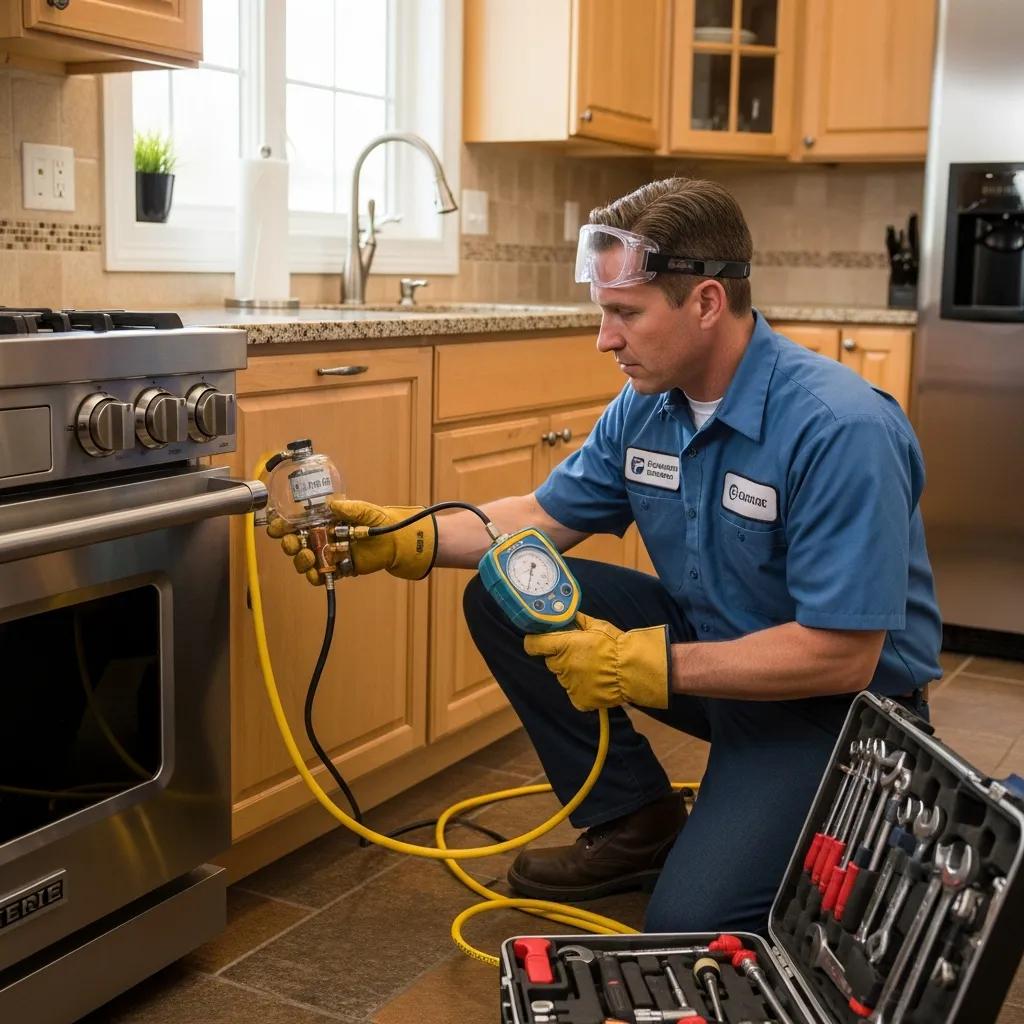
Gas Line Repair & Installation — Trusted Service in Wayne County, MI
We handle the full range of gas line services to keep natural gas and propane systems safe, code-compliant, and working reliably for homes and businesses across Wayne County. This guide explains what gas line work involves, why timely repairs and correct installations prevent hazards, and how professional detection and repair steps reduce risk while restoring service. You’ll learn how to spot a gas leak, what to do first in an emergency, which materials and methods technicians commonly use, and how local permits and inspections affect every project. We also cover cost drivers and maintenance tips to help property owners make informed choices and prioritize safety. Throughout, we reference local service realities and the benefits of working with licensed pros in Wayne County, and we include practical checklists, comparison tables, and clear next steps if you suspect a leak.
Why Choose Frost and Kretsch Plumbing for Gas Line Services in Wayne County?
Gas line work demands technical skill, strict adherence to local codes, and a fast response when safety is at stake. Hiring a qualified contractor reduces risk, ensures code compliance, and gets service restored faster. Our licensed, insured master plumbers use industry-standard materials and testing—like pressure tests and electronic leak detection—to confirm system integrity after any repair or installation. That protects occupants and helps satisfy insurance and inspection requirements. We communicate scope and permitting clearly to avoid surprises, and we document tests so homeowners and inspectors have proof of compliance. Below are the key trust signals and practical benefits to consider when choosing a contractor for gas line work.
- Licensed, insured master plumbers who perform code-compliant work and protect homeowners from liability.
- 24/7 emergency response to limit exposure and mobilize technicians quickly when leaks are suspected.
- Upfront, transparent pricing and documented testing so you understand scope and avoid hidden fees.
- Local experience that reflects Wayne County inspection practices and common site conditions.
These factors reduce homeowner liability, improve safety outcomes, and speed repairs. Choosing a contractor who pairs rapid response with regulatory know-how leads into the technical services typically offered for gas piping systems.
What Are the Benefits of Licensed and Insured Gas Line Experts?
Licensed gas-line technicians bring verified training and competency to permit-driven work, ensuring installations meet Michigan’s plumbing and fuel gas requirements and local inspection standards. Licensing is tied to specific training and testing, so licensed techs follow approved welding, joining, and leak-testing methods that lower the chance of post-installation failures. Insurance protects property owners by covering accidental damage or on-site injuries that might otherwise become out-of-pocket costs during excavations or repairs. Together, licensing and insurance deliver both technical quality and financial safeguards essential for modifying or replacing pressurized gas piping.
Those protections also smooth the permit and inspection process, reducing delays and the chance of corrective orders. Understanding how licensed professionals streamline compliance naturally raises the importance of emergency availability when a leak is suspected.
How Does 24/7 Emergency Service Ensure Your Safety?
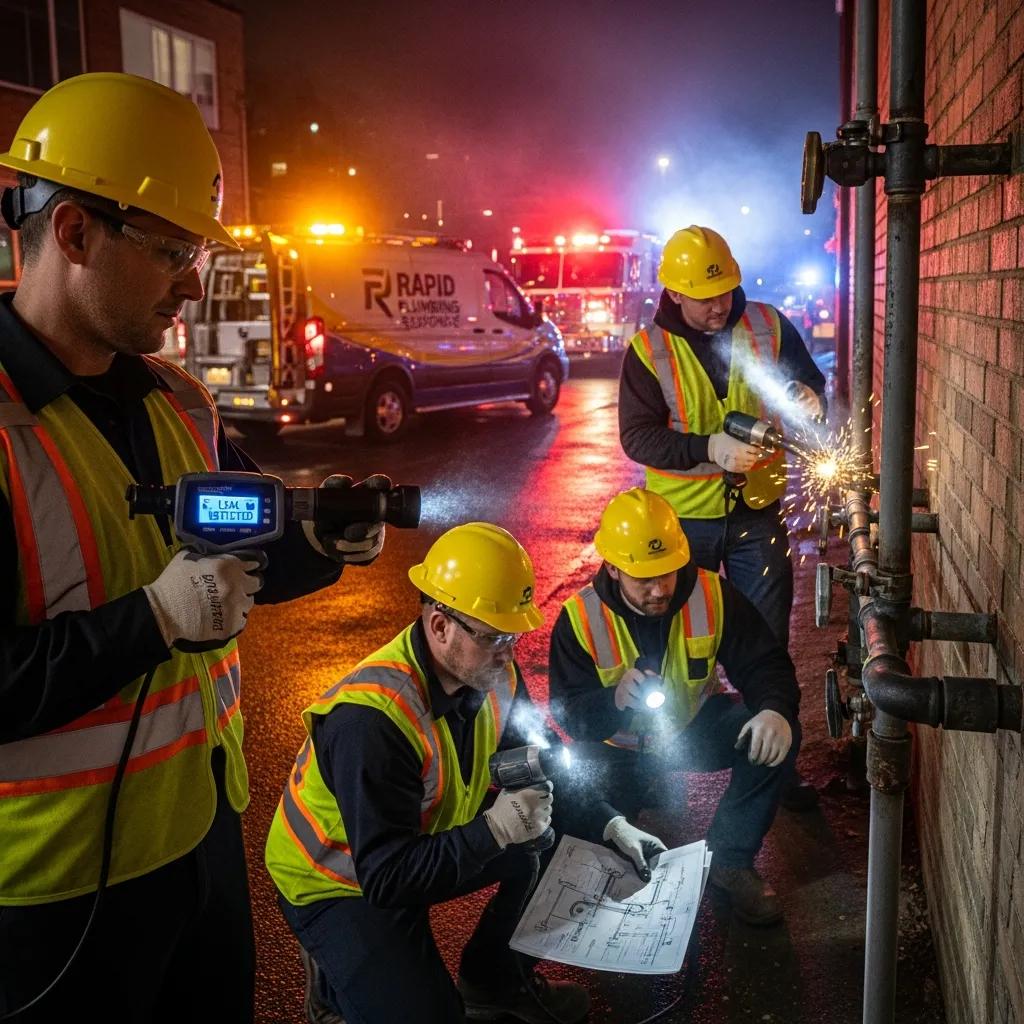
Gas leaks and ruptures can escalate quickly, so around-the-clock emergency service matters. A fast triage limits exposure for occupants and reduces the chance of a larger incident. Emergency response usually begins with remote or on-site triage—confirming the report, advising evacuation, and coordinating with the local gas utility to isolate supply when needed—then moves to visual inspection, electronic sniffing, and pressure testing once the area is secure.
Immediate containment and temporary shutoff stop further gas migration while a repair plan is developed. On-site technicians prioritize ventilation and removal of ignition sources before any work begins. Quick containment and repair initiation reduce health risks and property damage while preparing for permanent remediation.
Prompt action also helps with inspections and insurance claims: timely documentation of actions and tests shows hazards were handled professionally. After containment and planning, the work continues into the full suite of repair and installation services described next.
What Comprehensive Gas Line Services Are Available in Wayne County?
Comprehensive gas line services include diagnosis, repair, replacement, new installations, appliance hookups, and preventative maintenance for residential and commercial systems. Technicians assess pressure profiles, inspect fittings and pipe condition, and use electronic and pressure-based leak detection before recommending repairs or re-piping. Services also cover underground line locating and excavation, appliance connections for stoves, dryers, furnaces, and water heaters, and final pressure testing and inspection sign-off to confirm safe operation. Below is a practical list of common offerings for Wayne County properties.
- Leak detection and targeted sealing to stop active leaks and stabilize systems.
- Partial or full re-piping when corrosion or multiple failures make repairs uneconomical.
- New gas line installs for appliances and outdoor features, including underground routing.
- Appliance hookups and conversions with final pressure testing and inspection documentation.
A short comparison of pipe materials helps clarify when each is appropriate and how material choice affects longevity and cost.
| Material | Durability / Typical Use | Pros / Cons |
|---|---|---|
| CSST | Flexible tubing for indoor runs and retrofit jobs | Pros: flexible and easier to route. Cons: must be properly bonded/grounded and protected from damage. |
| Black iron pipe | Rigid pipe for main services and many commercial uses | Pros: durable and time-tested. Cons: heavier, requires threaded or welded joints. |
| Copper gas pipe | Rigid or semi-rigid runs for some indoor applications | Pros: corrosion-resistant in certain settings. Cons: more costly and uncommon for buried lines. |
No single material fits every job—technicians weigh site conditions, code requirements, and accessibility when recommending a material. That sets the stage for common repair scenarios and installation steps described next.
Which Gas Line Repair Services Do We Provide?
Typical repair scenarios include sealing accessible small leaks, replacing damaged fittings, partial re-piping of deteriorated sections, and excavating for underground repairs when corrosion or external damage is found. Techs start with leak localization using electronic sniffers and pressure decay tests, then decide whether a targeted repair or a larger re-pipe is the safer, more cost-effective solution.
Repairs follow approved joining methods—mechanical fittings, threaded or welded connections for black iron, and correctly installed CSST with required bonding—followed by a full pressure test and visual inspection. Workflows always include documenting test results and coordinating with inspectors for final acceptance.
Accurate detection and verified testing reduce repeat callouts and help ensure long-term integrity, increasing safety and homeowner confidence. Once repairs are complete, installers perform final checks and prepare the system for permanent activation.
What Does New Gas Line Installation Include?
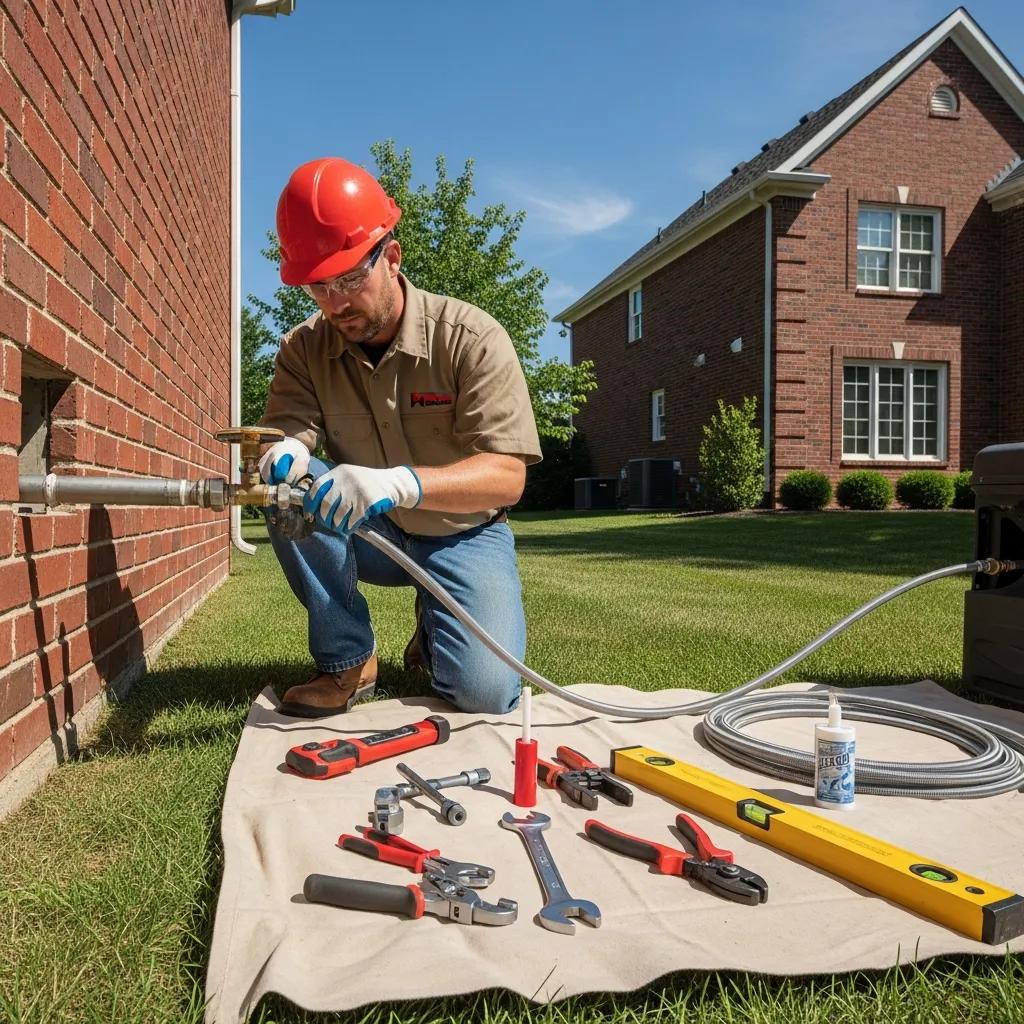
New gas installations start with a site assessment: load calculations for appliances, routing options, trenching needs for buried lines, and permit requirements. The process proceeds through permit submission, excavation or interior routing, installation of the chosen piping material, anchoring and protection where required, and careful joining and sealing of all fittings.
After the mechanical work, technicians perform pressure testing and leak checks, coordinate inspections with local authorities, and provide documentation of test results and final sign-off to confirm the system is safe for activation. Post-installation steps include appliance hookups, regulator adjustment, and homeowner guidance on operation and maintenance.
This structured approach ensures installations meet code and work reliably from day one, reducing the chance of future leaks by emphasizing correct sizing, materials, and testing.
How Do We Detect and Respond to Gas Leaks in Wayne County?
Detecting and responding to gas leaks combines occupant observations, electronic detection tools, and a clear emergency workflow that puts safety first. Initial signs—smell, sound, or environmental changes—trigger evacuation and notification steps. Trained technicians then confirm or rule out a leak using handheld electronic sniffers, infrared imaging, and pressure testing. Once a leak is found, the affected section is isolated, temporary containment measures are put in place if needed, and permanent repairs are completed followed by verification testing. The list below summarizes immediate homeowner actions and the professional response sequence designed to minimize risk and restore safe operation.
- Evacuate immediately and move to a safe location away from the building.
- From a safe distance, call emergency services or the local gas utility to report the suspected leak.
- Do not operate switches, appliances, or phones inside the building to avoid ignition sources.
- After utility isolation, contact a licensed gas-line professional for diagnostic testing and repair.
Below is a concise comparison of common detection methods and when technicians use them.
| Detection Method | When Used | Accuracy / Time to Result |
|---|---|---|
| Electronic sniffer | Quick field checks around appliances and fittings | High sensitivity; immediate reading |
| Infrared imaging | Locating subsurface leaks or visualizing gas plumes | Useful for outdoor or large-area leaks; moderate speed |
| Pressure testing | Verifying system integrity after repair or for concealed lines | Highly accurate; requires setup and 10–30 minutes |
Technicians choose tools based on leak location and accessibility to improve detection speed and accuracy. After containment, repairs follow the detection workflow and include the practical emergency steps described below.
What Are the Common Signs of a Gas Leak?
Spotting a gas leak early can save lives. Common signs include sensory, auditory, and environmental clues. The most obvious is the smell of rotten eggs or sulfur—an odorant added to natural gas. Hearing a hissing or whistling sound near pipe joints or appliances is another immediate warning. Environmental signs include unexplained dead or dying vegetation over buried lines and bubbling in wet areas where a line may be leaking. Health symptoms like dizziness, nausea, or headaches in enclosed spaces can indicate dangerous exposure. Carbon monoxide detectors are a useful complement where appliance combustion is involved.
These signs prompt evacuation and notification and help technicians focus inspections when they arrive on site.
What Steps Should You Take During a Gas Leak Emergency?
Take immediate, prioritized actions to protect life and property: evacuate everyone, avoid ignition sources, notify emergency responders, and have the gas supply isolated by the utility if possible. From a safe outdoor location, call emergency services and the gas utility—do not use phones or switches inside the building. If safe from outside, contact a licensed gas-line pro to arrange emergency response and coordinated repair once authorities secure the site. On arrival, the technician will confirm isolation, perform electronic sniffing and pressure testing, then apply temporary containment or permanent repairs before re-testing and documenting the system for inspection.
Following these steps reduces the chance of escalation and ensures repairs start from a safe, documented position.
What Are the Safety Regulations and Permit Requirements for Gas Lines in Wayne County?
Permits and inspections are essential because they enforce code-compliant installation and documented testing, which protect occupants and future owners. Typical requirements include permits for new installations, relocations, and significant repairs, with inspections at key stages—rough-in, pressure testing, and final sign-off—so authorities can confirm work meets Michigan’s plumbing and fuel gas code and local amendments. Licensed plumbers usually handle permit applications and schedule inspections for homeowners, helping avoid failed inspections and ensuring work is recorded for compliance and insurance. Below is a homeowner-focused permit checklist clarifying common steps for typical projects.
- Permit required for new gas services: Yes — typically required for new lines and major modifications.
- Inspection required after pressure testing: Yes — inspectors verify test results before activation.
- Contractor-required documentation: Yes — licensed professionals commonly submit plans and test records.
Knowing these requirements reduces project delays and supports safe, compliant installations that pass final inspection and enter reliable service. Next we outline the codes that apply and why licensed professionals streamline permits and inspections.
Which Local Codes Govern Gas Line Repair and Installation?
Gas line work in Wayne County follows state plumbing and fuel gas provisions plus county or municipal amendments that affect permitting and inspections. These rules specify acceptable materials, joining methods, required pressure testing, bonding and grounding for certain piping types, and inspector checkpoints for new installs and repairs. Homeowners should rely on licensed professionals familiar with applicable code sections and typical local inspection expectations to ensure work meets technical and administrative requirements. Because codes change over time, verifying current requirements with the local authority having jurisdiction is a good step before starting work.
Understanding the governing codes prevents unsafe installations and reduces the chance of corrective orders that delay final approval and safe activation of gas service.
How Does Frost and Kretsch Plumbing Handle Permits and Inspections?
Licensed contractors typically manage the administrative side of gas-line projects: preparing permit applications, submitting necessary documentation, and scheduling inspections with the local authority. Frost and Kretsch Plumbing follows that same approach—we submit permit paperwork, schedule required inspections, and provide documented test results for final sign-off, helping homeowners avoid permitting errors and inspection delays. Managing permits and inspections on the customer’s behalf simplifies the project and ensures installations are recorded and compliant. This single point of accountability also helps address any inspector comments quickly so the system can be activated without unnecessary hold-ups.
Having one team responsible for both the technical work and the permitting process reduces friction and shortens the timeline from assessment to safe service activation.
How Much Does Gas Line Repair and Installation Cost in Wayne County, MI?
Cost estimates for gas line work depend on scope, materials, accessibility, and permit needs. A transparent estimate starts with an on-site evaluation followed by a written proposal. Prices vary widely depending on whether the job is a small visible leak, a partial re-pipe, or a buried line needing excavation. The table below shows representative categories and example scenarios to clarify how factors influence price.
| Repair / Installation Type | Typical Range | Example / Notes |
|---|---|---|
| Minor visible leak repair | $150–$600 | Localized sealing and fitting replacement without excavation |
| Underground repair with excavation | $1,000–$5,000+ | Includes locating, trenching, pipe replacement, backfill, and restoration |
| New appliance hookup (interior) | $150–$500 | Includes shutoff, flexible connector, and pressure test |
Accessibility and excavation are primary cost drivers; material choice and permit fees also affect final pricing. We emphasize transparent, upfront pricing and documented estimates so property owners understand the variables that influence cost before work begins.
What Factors Influence Gas Line Repair Costs?
Several variables shape repair costs: leak location (exposed vs. buried), pipe material and condition (isolated fitting vs. corroded run), excavation needs, permit and inspection fees, and whether emergency response is required. After-hours or emergency work usually increases rates due to urgent mobilization. Hidden conditions discovered during excavation—such as multiple compromised sections—can expand scope and cost. Labor intensity, traffic control or specialized equipment, and restoration of landscaping or hardscapes also affect pricing. Knowing these factors helps homeowners compare estimates and choose solutions—targeted repair versus re-pipe—that balance safety and long-term value.
Considering cost drivers during the initial assessment guides selection of durable materials and installation methods that reduce future repair frequency and lifecycle cost.
How Are Installation Prices Determined?
Installation pricing starts with a site evaluation to determine load requirements, routing complexity, and whether trenching or protected interior runs are needed. Estimators then list material costs (pipe type, fittings, regulators), labor for excavation or interior work, permit and inspection fees, and required testing to obtain final sign-off. Clear, itemized quotes show where costs come from and let homeowners consider alternatives—such as CSST for easier interior routing or black iron for a long-term rigid main. Final prices include the cost of pressure testing and documentation inspectors require for approval.
Providing detailed, itemized estimates before work begins reduces surprises and supports informed decisions. Contractors who offer this transparency follow best practices for consumer protection and project clarity.
How Can You Maintain Gas Line Safety and Efficiency in Wayne County?
Keeping gas lines safe starts with routine inspections, homeowner vigilance for early signs of trouble, and periodic professional maintenance to address wear, corrosion, or ground changes that affect buried lines. A sensible inspection cadence—annual visual checks for indoor connections and professional inspections every few years or after significant ground disturbance—catches issues early and prevents emergencies. Keep vents and appliance areas clear, avoid landscaping that could damage buried lines, and install carbon monoxide detectors near sleeping areas as an added safety measure for combustion appliances. The checklist below highlights practical maintenance tasks to keep systems safe and efficient.
- Schedule professional inspections and pressure tests at regular intervals or after major property work.
- Keep appliance areas clear and ensure flexible connectors and fittings are visible for periodic checks.
- Manage vegetation and avoid deep planting over buried lines to reduce mechanical damage risk.
Regular maintenance improves safety and extends system life by preventing small issues from turning into major failures. Knowing why inspections matter helps homeowners prioritize maintenance and call a professional when needed.
Why Are Regular Gas Line Inspections Important?
Regular inspections catch small leaks, corrosion, and improper joints before they become safety hazards or expensive repairs. Inspections include visual checks, electronic leak scanning, and pressure testing when warranted—methods that find problems occupants might miss. Proactive inspections also ensure compliance with changing code requirements and preserve documentation insurers or future buyers may request. By catching deterioration early, inspections cut emergency callouts and preserve long-term reliability.
Routine inspection schedules and documented results create a safety record that benefits homeowners, future owners, and insurers, and they help prioritize maintenance.
What Are Best Practices for Gas Line Maintenance?
Best practices combine routine homeowner checks with scheduled professional service: maintain appliance clearances, watch for strange smells or sounds, avoid mechanical damage to exposed lines, and protect buried lines during landscaping or construction. Technicians recommend documenting inspections and test results and running pressure tests after major system changes or ground disturbance. Always use licensed professionals for maintenance and repairs so approved joining and bonding methods are followed and work can be inspected and signed off per local rules. These practices keep systems efficient and safe while minimizing unexpected repairs.
Following this maintenance approach helps gas systems remain safe, efficient, and code-compliant, reducing long-term cost and protecting occupants.
Frequently Asked Questions
What should I do if I suspect a gas leak in my home?
If you suspect a gas leak, get everyone out of the building immediately. Do not use electrical switches, appliances, or phones inside—sparks can ignite gas. From a safe distance, call emergency services or your gas utility to report the leak. After contacting them, call a licensed gas-line professional to inspect and repair the system. Fast, calm action is crucial to keep people safe and limit property damage.
How often should I have my gas lines inspected?
Have your gas lines professionally inspected every few years, or sooner if you notice signs of wear or after major ground work or renovations. Routine inspections help catch small leaks and corrosion before they become big problems and ensure your system stays code-compliant.
What are the risks of ignoring gas line maintenance?
Neglecting gas line maintenance can lead to gas leaks, fires or explosions, and carbon monoxide hazards. Over time, pipes can corrode and fittings can fail, raising the risk of dangerous incidents and costly repairs. Skipping maintenance may also create legal or insurance issues. Regular inspections and upkeep protect your property and the people who use it.
Can I perform my own gas line repairs?
No—unless you are a licensed professional, you should not attempt gas line repairs. Gas work requires specialized tools, training, and permits. Improper repairs can cause leaks, fires, or explosions. Hire a licensed gas-line technician to ensure work is safe and meets code.
What types of materials are commonly used for gas line installations?
Common materials include CSST (corrugated stainless steel tubing), black iron pipe, and copper gas pipe. CSST is flexible and helpful for indoor routing; black iron is robust and common for main runs; copper is corrosion-resistant in certain settings but less common for buried lines. The best choice depends on site conditions, code, and the application—your licensed technician will recommend the right material.
How can I ensure my gas appliances are safe to use?
Schedule regular inspections and maintenance by a licensed technician. Watch for rust, loose connections, or odd smells, and keep the area around appliances clear. Install carbon monoxide detectors near sleeping areas and ensure proper ventilation. Following these steps helps keep appliances safe and efficient.
What are the typical costs associated with gas line repairs?
Costs vary based on repair type, leak location, and whether excavation is needed. Minor repairs typically run $150–$600, while underground repairs with excavation can range from $1,000 to $5,000 or more. New interior appliance hookups usually cost $150–$500. Always request a written, itemized estimate so you understand what’s included.
Conclusion
Keeping your gas lines safe and efficient protects your home and the people in it. Choosing licensed professionals for installation and maintenance gives you technical expertise, code compliance, and peace of mind. Regular inspections and prompt repairs prevent emergencies and extend the life of your system. Contact Frost and Kretsch Plumbing to schedule gas line service and make sure your property stays safe and compliant.