
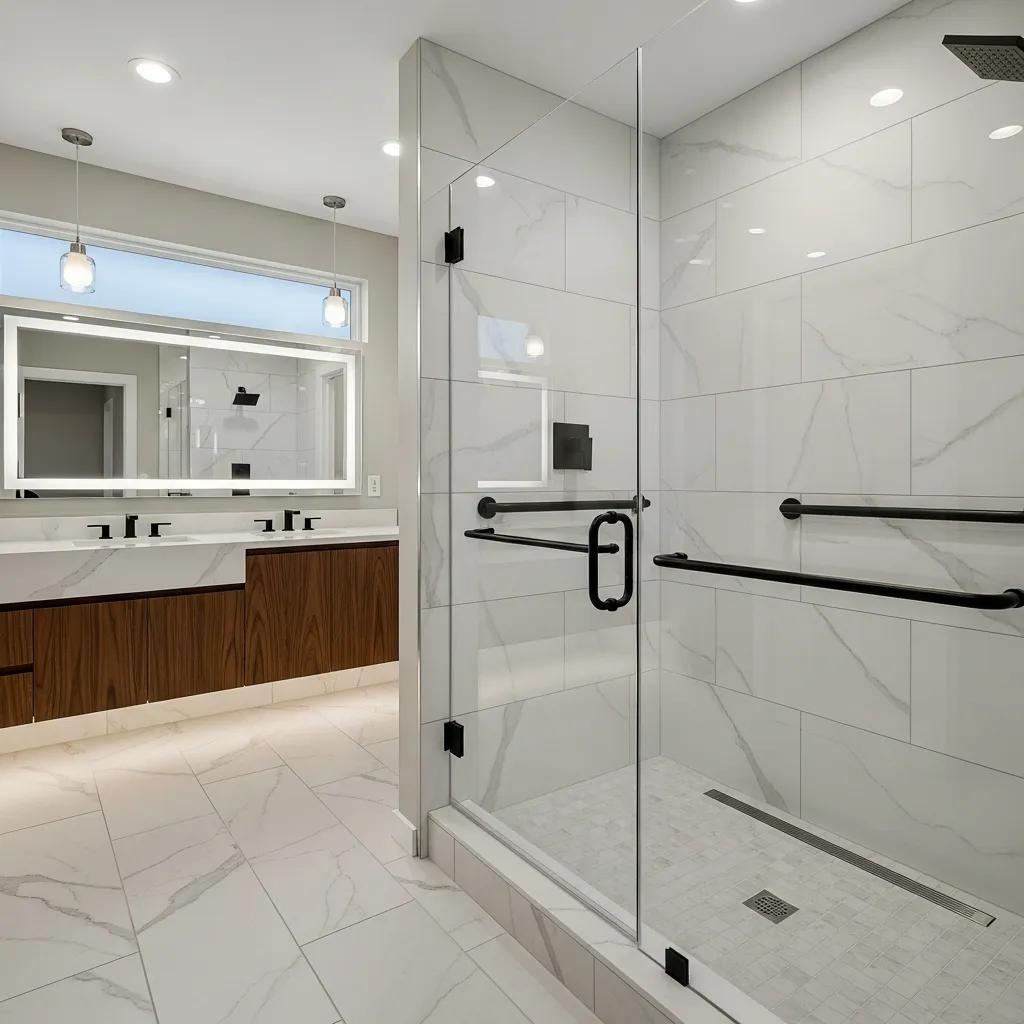
Walk-in Shower Benefits: Accessibility, Style, and Space for Grosse Pointe Homeowners
Walk-in showers remove the usual barriers to bathing—making entry easier, improving safety, and creating a cleaner, more modern look while using less floor space. This guide shows how curbless and walk-in designs improve safety for seniors and people with limited mobility, highlights current glass and tile trends, and explains why these layouts are a practical choice for Grosse Pointe homes. Many families and homeowners planning to age in place want solutions that blend universal-design features with a high-end finish. Walk-in showers do just that: they pair grab bars, seating, and non-slip surfaces with frameless glass and simple hardware. Below we walk through the installation steps, local cost factors, design options, and layout tips so you can decide whether a walk-in shower fits your home and budget. Keep reading for safety features, design ideas, small-bathroom strategies, an installation roadmap, and answers to common questions about value and fit.
How do walk-in showers enhance accessibility and safety?
By removing raised thresholds and creating a continuous floor plane, walk-in showers cut down on trip hazards and make transfers easier for people using walkers or wheelchairs. The barrier-free layout pairs well with safety fixtures—grab bars, built-in seating, handheld showerheads, and textured floors—to lower fall risk and help users bathe with more independence and dignity. Curbless installs depend on exact floor slopes and good drains (linear drains are a common choice) so water drains properly without a curb. These upgrades tie into aging-in-place planning and ADA-informed design, giving you a safer bathroom that still looks modern. The sections that follow break down specific features, construction notes, and real-world examples to help homeowners weigh options for safety and comfort.
Different accessibility elements provide distinct safety advantages and installation trade-offs.
- Curbless threshold: Eliminates a tripping edge and allows roll-in access for wheelchairs.
- Grab bars: Give stable handholds for standing, sitting, and transfers.
- Built-in seating: Lets users rest safely and reduces fatigue-related falls.
- Non-slip flooring: Improves traction on wet surfaces to prevent slips.
Used together, these features create a more complete accessibility upgrade than any single change on its own—details that inform the feature choices discussed next.
| Feature | Purpose | Safety Benefit |
|---|---|---|
| Curbless threshold | Barrier-free entry | Reduces tripping, allows roll-in access |
| Grab bars | Support during transfers | Increases stability and confidence |
| Non-slip flooring | Traction under wet conditions | Lowers slip-and-fall risk |
| Bench or fold-down seat | Seating during showering | Reduces falls from fatigue |
This side-by-side view shows how combining features produces a safer, more usable shower environment—information that leads into the specific options for seniors and those with mobility needs.
What features make walk-in showers senior- and mobility-friendly?
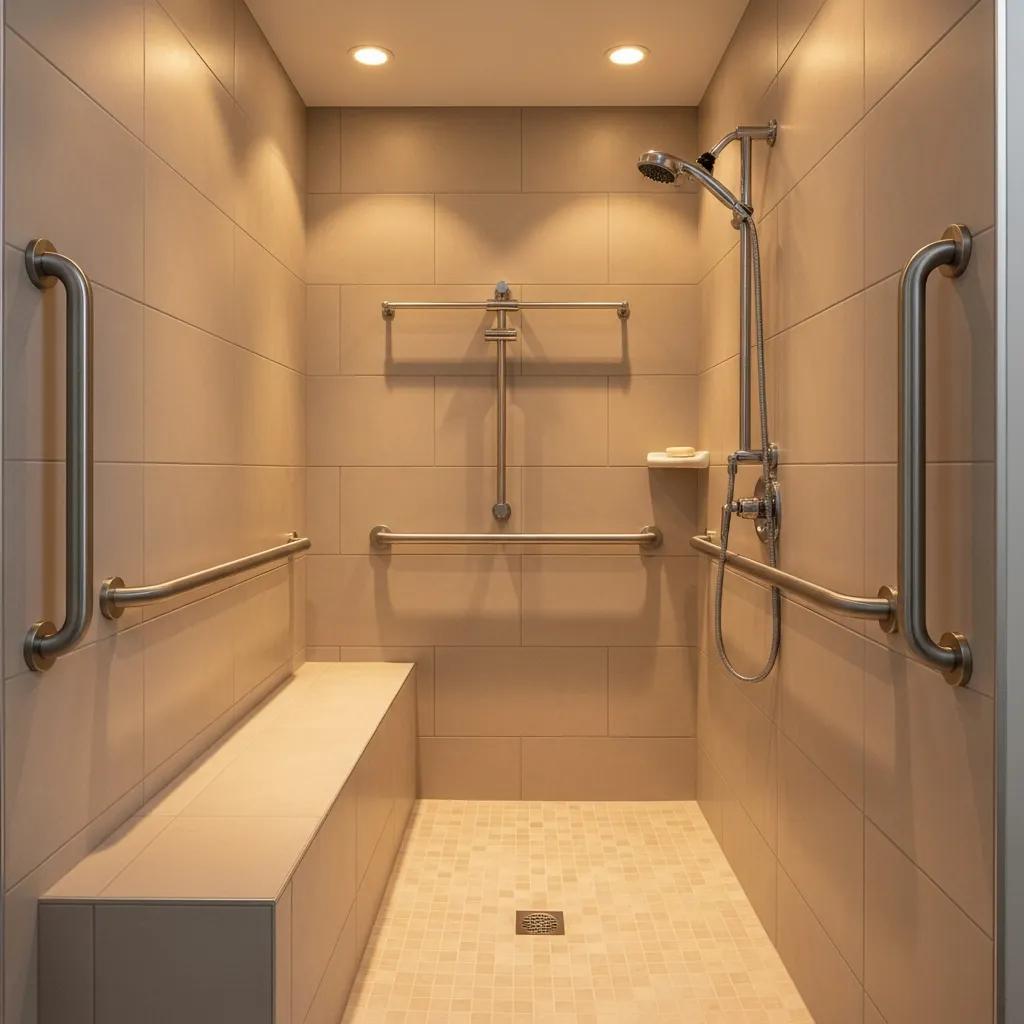
Senior- and mobility-friendly walk-in showers focus on three areas: stable fixtures, easy-to-use hardware, and slip-resistant finishes. Supportive fixtures include well-placed grab bars—horizontal near seats and angled where transfers occur—and benches that can be built-in, cantilevered, or fold-down to save space. Adaptive hardware means thermostatic or pressure-balanced valves and handheld showerheads on adjustable slides so a seated user can reach controls easily and avoid scalding. Slip-resistant options include textured tiles, pebble pans, or treated surfaces paired with linear drains to keep water moving without needing a raised curb. For example, a fold-down seat beside a low-profile linear drain and a vertical grab bar simplifies transfers from a wheelchair to a seated shower position and supports independent hygiene for an aging household member.
How does barrier-free, curbless design improve access?
Removing the raised curb creates a continuous floor that accommodates walkers and wheelchairs and reduces trips for people who are steady on their feet. Achieving a reliable curbless shower means waterproofing the entire wet area and building the floor to slope—typically 1/4″ per foot (about 2%)—toward a properly sized drain. Linear drains are often used because they allow a single-direction slope and make tile transitions flatter. In retrofit work, curbless conversions can require substrate work or preformed slope systems to ensure drainage without major demolition; full remodels let you integrate drains and waterproof membranes from the framing stage. These structural choices affect cost and timeline, but the finished result expands usable floor area and delivers the seamless look that pairs accessibility with modern design—covered next in design trends.
What are the modern design trends in walk-in shower styles?
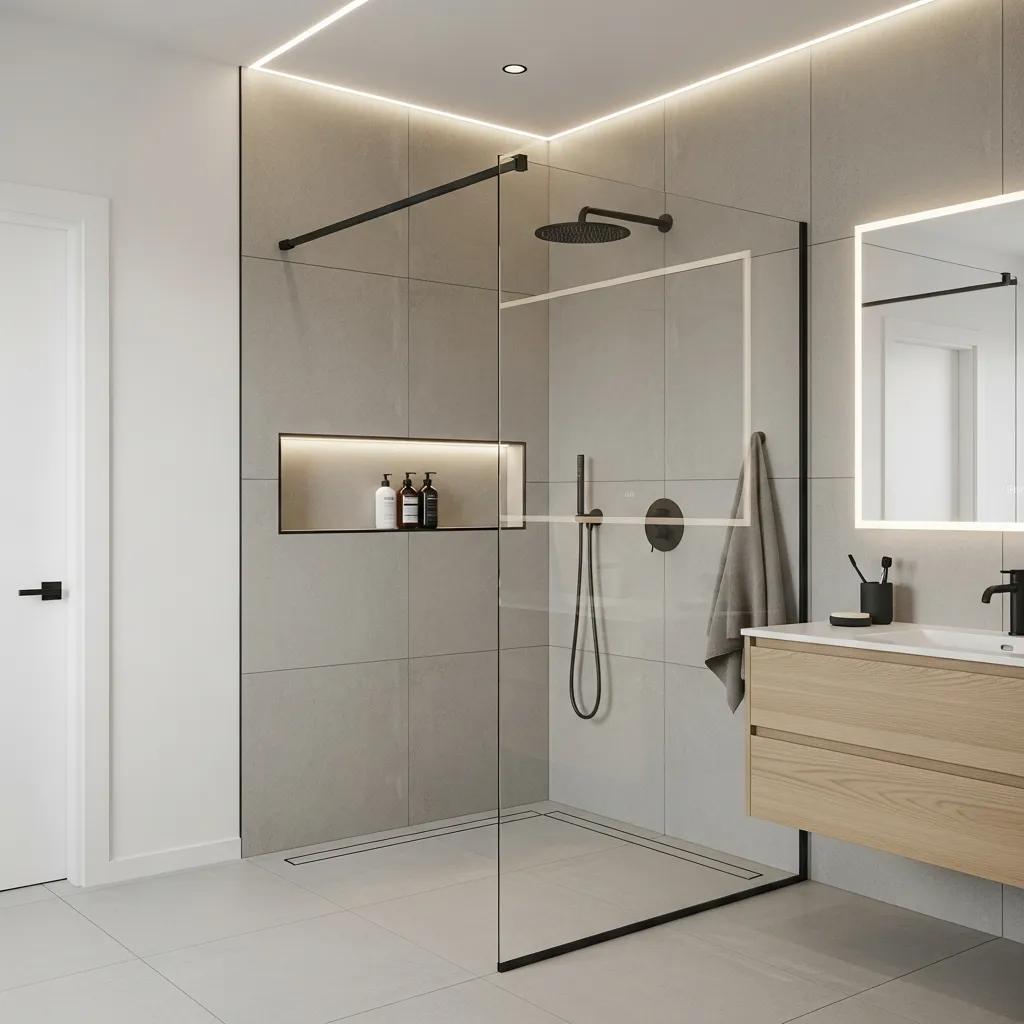
Today’s walk-in showers emphasize openness, clean lines, and material continuity to create a spa-like, low-clutter bathroom. Frameless glass panels or partial screens keep sightlines clear, while large-format tiles, neutral tones, and linear drains deliver a sleek, low-maintenance look. Designers often combine recessed niches and integrated benches with discreet hardware in matte black, brushed nickel, or warm brass for subtle contrast. Lighting matters too: layered lighting—recessed downlights, LED niches, and soft ambient sources—adds depth and helps small showers feel larger. The sections below dig into glass and tile choices and explain why minimalist design remains popular for walk-in showers.
Material and layout choices affect both the appearance and the upkeep of a shower, so pick finishes that match your lifestyle and cleaning tolerance.
| Design Element | Characteristic | Practical Impact |
|---|---|---|
| Frameless glass | Minimal hardware, clear sightlines | Expands visual space, requires regular glass care |
| Large-format tile | Fewer grout lines | Easier cleaning, modern look |
| Linear drain | Discreet water channel | Cleaner profile, allows single-direction slope |
| Integrated bench | Continuous material use | Cohesive design, functional seating |
That table highlights trade-offs between visual continuity and maintenance needs, helping you select materials that fit your routine.
How do glass enclosures and tile options elevate bathroom aesthetics?
Glass enclosures—from full frameless panels to half-height screens—open sightlines and blur the boundary between shower and room, making the whole bathroom feel bigger. Clear glass maximizes the sense of space; frosted or textured glass adds privacy while still letting light through. Choose concealed hinges and minimal clips for a streamlined finish. Tile choices shape the overall feel: large-format porcelain or rectified-edge tiles reduce grout lines and pair well with in-floor heat and low thresholds. Keep maintenance in mind—light grout colors show dirt more, while rectified tiles and epoxy grout reduce upkeep. Pair your glass type and tile finish thoughtfully to balance beauty and the level of care you’re willing to give.
What are the benefits of minimalist, contemporary shower designs?
Minimalist showers reduce visual clutter by favoring uninterrupted planes, hidden storage, and simple fixture palettes, which makes bathrooms feel calmer and larger. Frameless glass, recessed niches, and flush curbless entries create clean lines that also improve accessibility by removing obstacles. Subtle finishes—matte chrome or brushed metals—coordinate with accessible plumbing trim and keep the look timeless. Minimal design also makes it easier to add aging-in-place features: integrated benches and discreet grab bars can be included without compromising the overall style, preserving resale appeal while improving daily function. In short, minimalism and universal-access elements reinforce each other and add long-term value.
How can walk-in showers optimize space in small bathrooms?
Walk-in showers reclaim space in small bathrooms by replacing bulky tubs with compact, efficient footprints that still deliver a full bathing experience. Corner, neo-angle, and wet-room layouts conserve circulation space while transparent glass, continuous tile, and strategic lighting erase visual boundaries. Practical tips: place the shower to avoid door swing conflicts, use a partial glass screen to limit splash while preserving openness, and choose compact drains and wall-hung fixtures to free floor area. Below we look at several space-saving options and how curbless and corner designs affect planning and drainage.
- Corner/neo-angle showers: Save floor area while offering comfortable showering space.
- Wet-room conversion: Removes the enclosure and waterproofs the whole room for a seamless feel.
- Partial glass panels: Cut splash while keeping the open sightline.
- Wall-hung fixtures: Free floor space and simplify cleaning.
These approaches combine layout thinking with finish choices to make small bathrooms feel more open—details and dimensions follow in the next sections.
| Layout Option | Space Requirement | Visual Effect |
|---|---|---|
| Neo-angle shower | Compact corner footprint | Maximizes open floor area |
| Curbless alcove | Standard shower width | Seamless floor transition |
| Wet-room | Whole-room waterproofing | Largest perceived space |
| Corner glass panel | Minimal swing/obstruction | Maintains openness |
This comparison shows how each approach balances actual footprint with visual continuity so you can choose what fits your floor plan.
What are space-saving walk-in shower solutions for compact areas?
Neo-angle and corner walk-in showers are great for tight layouts: they carve usable showering space out of awkward corners and clear circulation for other fixtures. Neo-angle plans usually take less room while giving enough floor area to shower comfortably; pairing them with partial glass and a fold-down seat stretches the functionality. Wet-room designs remove the enclosure entirely when full waterproofing is practical, but they require careful drainage design. Minimum clearances depend on fixture placement and local codes, but the practical goal is to keep safe approach and turning space while meeting any mobility needs.
How do curbless and corner shower designs maximize bathroom layout?
Curbless and corner installations open both visual and functional floor area by removing thresholds and concentrating the wet zone into an efficient footprint. Placing the shower in a corner frees up sightlines for vanities and toilets; curbless entries remove barriers that interrupt movement and segment the room. Proper drain placement and slope are critical so the remaining floor stays dry—linear drains near a wall often simplify slopes in corner setups. Extending the same tile across the room strengthens visual continuity and makes the space read larger, bringing together ergonomics and style for compact baths.
What is the walk-in shower installation process and cost in Grosse Pointe?
Installing a walk-in shower generally follows this sequence: initial consultation, site evaluation, demo (if needed), rough plumbing and waterproofing, substrate and tile or pan installation, fixture installation, and final sealing and inspection. Local conditions—existing plumbing, structural issues, and permit rules—shape the timeline and complexity. Curbless drains and membrane systems require careful coordination to ensure long-term performance. Major cost drivers include material choices (tile versus a preformed pan, glass options), drain type (linear drains add complexity), labor for waterproofing and tiling, and any plumbing moves or structural work. Below is a step-by-step summary and a cost-factor table to help Grosse Pointe homeowners plan for a project.
- Consultation and site visit: We evaluate the space, discuss your needs, and note constraints.
- Estimate and scope agreement: We outline materials, timeline, and transparent pricing.
- Demo and prep: Remove old fixtures and prepare the substrate for waterproofing.
- Plumbing and waterproofing: Install drains, slope the floor, and apply membrane systems.
- Finish installation: Set tile or pan, install glass and fixtures, and finalize caulking and trim.
These steps map the workflow and lead into a look at the main cost factors below.
| Cost Factor | What It Covers | Installation Impact |
|---|---|---|
| Materials | Tile, glass, drain, benches | Directly affects aesthetics and durability |
| Labor | Tiling, plumbing, waterproofing | Major portion of timeline and cost |
| Drain/Plumbing Complexity | Linear drains, relocations | Adds time and specialized work |
| Permits/Inspections | Local compliance | Can affect project duration |
That table helps homeowners see how different choices affect both budget and schedule so conversations with contractors are more productive.
Which factors affect walk-in shower installation pricing?
Price depends heavily on materials—premium large-format tiles and frameless glass raise costs and can lengthen install time because they require careful workmanship. Drain systems and plumbing work are big factors: linear drains need precise substrate prep and special parts, and moving an existing drain increases labor. A large portion of expense is labor for waterproofing, tile setting, and finishing, especially for curbless systems that require exact slopes and membranes to avoid leaks. Permits or structural changes add time and cost; homeowners should budget for inspections and the chance of surprises found during demo. Knowing these drivers helps you prioritize upgrades that give the best balance of safety, style, and value.
How can Frost & Kretsch Plumbing ensure quality and transparent service?
Frost & Kretsch Plumbing serves Grosse Pointe with licensed, insured technicians who offer upfront pricing and a 100% satisfaction guarantee. We start with a site visit to review your plumbing layout and accessibility goals, then provide a written estimate that spells out materials and scope so you can compare options. Licensed installers handle the rough plumbing and waterproofing steps, and we offer same-day or 24-hour emergency service if issues arise during a remodel. To schedule a free estimate or a site evaluation, call (313) 881-2818 or visit our office at 20315 Mack Ave. Grosse Pointe MI 48236.
Choosing the right contractor and keeping communication clear reduces project risk and helps homeowners make confident decisions about walk-in shower projects.
What are common questions about walk-in showers?
Homeowners often want to know whether walk-in showers work in every bathroom, how they affect resale value, and whether they increase slip risk. Walk-ins are versatile but won’t always replace a tub when a household needs one for baths or children. Retrofit feasibility depends on your subfloor and existing drain locations. In general, a well-executed, modern, accessible bath appeals to many buyers and supports aging-in-place—but quality installation is key. Below are short answers to common questions and guidance to help you move from idea to action.
Direct answers to typical homeowner concerns follow.
- Are walk-in showers suitable for all bathroom sizes? They adapt to many sizes using corner, neo-angle, or wet-room plans, but very narrow baths or homes that need a tub for family use may be better served by a tub-shower combo.
- Do walk-in showers increase slip risk? With proper non-slip finishes, correct slope, and grab bars, walk-in showers generally reduce slip risk compared with old or damaged tubs.
- Do walk-in showers add value to your home? A well-built, attractive, accessible bathroom can boost buyer appeal and support aging-in-place markets. Quality of workmanship and materials will determine how much value is perceived.
These quick answers point you to the detailed sections above for planning and installation information.
Are walk-in showers suitable for all bathroom sizes and users?
Walk-in showers fit many homes but aren’t always the best choice when a bathtub is required for children or specific household needs, or when budget or structural limits prevent proper waterproofing. Small bathrooms can often use corner or neo-angle walk-in designs to save footprint, while full remodels can adopt wet-room plans for a very open feel. Retrofit projects may need substrate work or preformed pans to avoid major reconstruction, so feasibility depends on your existing floor and plumbing layout. For households prioritizing accessibility, walk-in showers typically offer the best mix of safety, independence, and contemporary style.
Do walk-in showers add value to your home?
They can increase resale appeal when finished with durable materials and installed by professionals. Accessible, modern bathrooms attract buyers who value convenience and aging-in-place features, and thoughtful finishes that follow current trends in glass, tile, and fixtures help the space feel updated. That said, value gains depend on local market tastes and the quality of the renovation—poor waterproofing or low-quality finishes can hurt resale. Investing in licensed professional installation and neutral, durable finishes is the best way to preserve value.
Frequently Asked Questions
What are the maintenance requirements for walk-in showers?
Regular cleaning keeps a walk-in shower in good shape—wipe down glass with a squeegee after use to limit water spots and soap scum, clean grout lines to prevent mold, and inspect caulk periodically to stop leaks. For non-slip floors, occasional deep cleaning with suitable products maintains traction. Overall, walk-in showers can be easier to keep clean than older enclosed tubs, but they still need routine care to stay looking and performing their best.
Can walk-in showers be customized for specific needs?
Absolutely. Walk-in showers are highly customizable: adjustable showerheads, built-in benches, strategically placed grab bars, and a range of tile and glass options let you tailor the shower to your household’s needs and style. Layout choices—corner or curbless configurations—help maximize space and accessibility. Talk with a professional to match features to your specific requirements for safety, comfort, and looks.
What is the average cost range for installing a walk-in shower?
Costs vary widely based on materials, labor, and project complexity. As a general range, homeowners should expect anywhere from about $5,000 to $15,000 for a full installation. High-end materials like large-format tile and frameless glass push costs higher, while simpler designs are more budget-friendly. Plumbing changes or structural work for curbless installs add cost. We recommend getting multiple quotes from licensed contractors to understand likely costs for your project.
How long does the installation process typically take?
Most walk-in shower projects take roughly one to two weeks from demolition through finish work, depending on complexity and whether structural or plumbing changes are needed. Timelines extend if there are major plumbing relocations or unforeseen issues during demo. Discuss the expected schedule with your contractor during the estimate so you can plan for any disruption.
Are there any specific building codes for walk-in showers?
Yes. Local building codes and accessibility standards can influence shower design, including requirements for drainage, waterproofing, slip-resistant surfaces, and sometimes grab bars or clearances for accessibility. Codes vary by jurisdiction, so work with a licensed contractor who knows Grosse Pointe rules to ensure your shower meets inspections and avoids costly rework.
What are the best materials for walk-in shower construction?
Choose materials for durability, water resistance, and ease of maintenance. Porcelain or ceramic tile is a popular, reliable choice for walls and floors; large-format tiles reduce grout lines and streamline cleaning. Frameless glass keeps the space feeling open. For safety, select non-slip or textured floor tiles and high-quality grout and sealants to prevent water infiltration. Matching materials to your lifestyle will help ensure the shower performs well for years.
Conclusion
Walk-in showers give Grosse Pointe homeowners a practical mix of accessibility, contemporary style, and smarter use of space. Features like curbless entries, grab bars, and non-slip flooring make daily routines safer for seniors and anyone with mobility challenges, while frameless glass and cohesive tile choices keep the look fresh and modern. A well-planned installation adds comfort and long-term usability—and when done right, it can also strengthen resale appeal. If you’re ready to explore options, contact Frost & Kretsch Plumbing for a free estimate and a site evaluation to start planning your accessible, beautiful bathroom upgrade.