
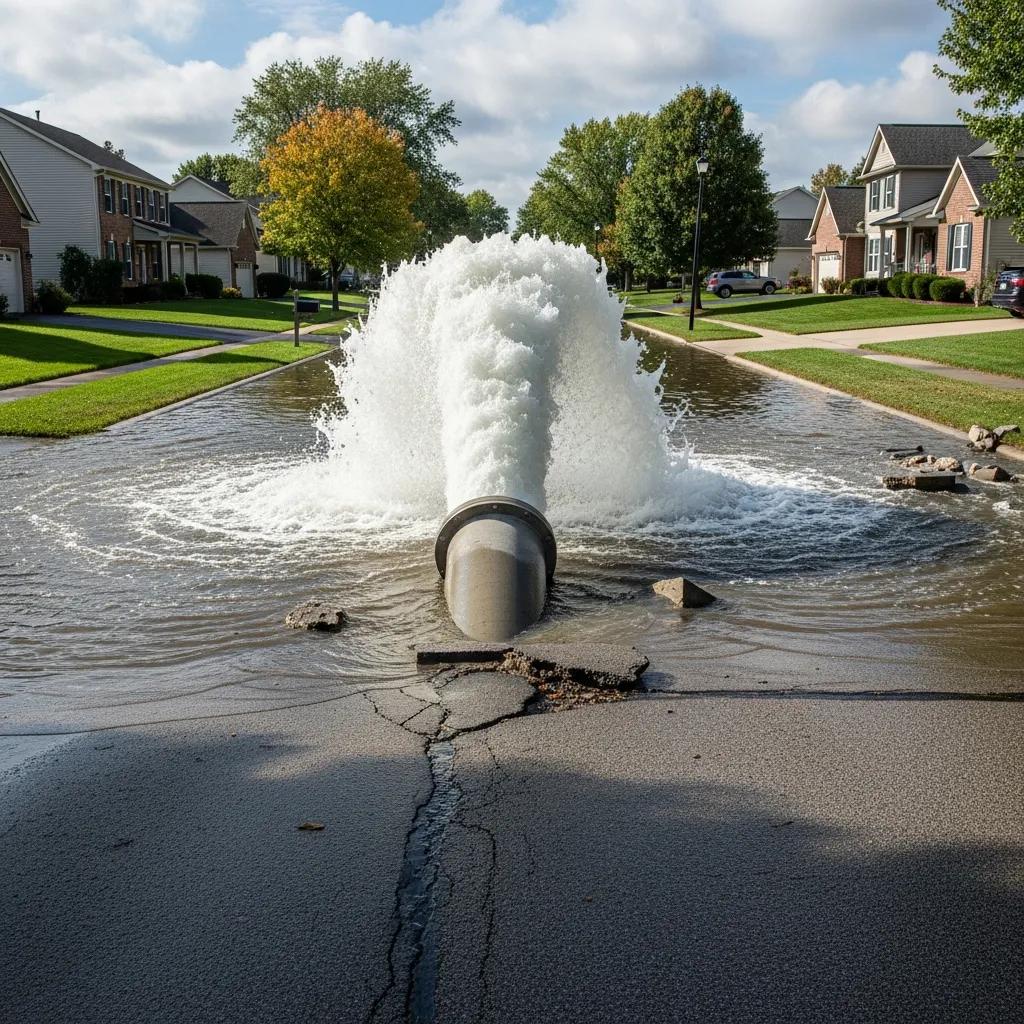
Emergency Steps for a Water Main Break — Immediate Actions for Michigan Homeowners & Businesses
A water main break is a sudden failure of a primary water pipe that can release large amounts of water, damage property, and interrupt service. Acting quickly limits damage and speeds recovery. This guide walks you through what to watch for, how to isolate the problem, which safety steps to take, and the repair options available to Michigan homeowners and businesses. You’ll learn how to spot low pressure and discolored water, where to find and how to safely operate indoor and outdoor shut-off valves, and a clear checklist of mitigation steps to protect people and property. We also cover common repair paths — emergency stabilization, excavation and replacement, and trenchless fixes — plus regional cost ranges and what insurers typically look for. For fast local help, Frost and Kretsch Plumbing provides 24/7 emergency service for water main breaks across Macomb, Oakland, and Wayne counties. We respond quickly, send experienced technicians, show transparent pricing (no hidden fees), and stand behind our work with a 100% satisfaction guarantee. Read on for step-by-step actions and simple tables to help you decide what you can handle and when to call a professional.
What Are the Common Signs of a Water Main Break?
Water main breaks usually announce themselves with several obvious signs of underground pipe failure and rapid water loss. Look for low or fluctuating pressure, muddy or discolored water, visible flooding or new depressions in the yard, odd plumbing noises, and an unexpected jump in your water bill. Seeing more than one of these together makes it more likely the problem is in the public main rather than a single fixture. Check nearby properties and your water meter to help narrow the cause. Spotting a break early gives you more options — whether that’s shutting off indoor valves, calling your utility, or calling an emergency plumber to contain the damage.
The most helpful next step is to confirm whether the issue is inside the building or outside in the yard or street — that determines whether to alert the utility or hire a contractor. After you identify the location, take photos and record meter readings to support repair planning and any insurance claim.
Common signs to watch for include:
- Low or fluctuating water pressure: Sudden drops across multiple fixtures usually point to the main.
- Discolored or muddy water: Brown or reddish water means sediment or rust has been disturbed.
- Visible yard flooding or sinkholes: Saturated soil, standing water, or new depressions suggest an underground leak.
- Unusual plumbing noises: Gurgling, hammering, or continuous running sounds often show there’s a breach.
- Sudden spike in water bill: A meter that keeps running with no known use is a strong leak indicator.
These clues help you prioritize safety and decide whether to contact the water utility, an emergency plumber, or both depending on where the break is located.
How to Detect Low Water Pressure and Discolored Water

Low pressure and discoloration are useful diagnostic clues that point to the break’s location and severity. Test pressure by running cold taps on different floors and a hose bib — if multiple fixtures show reduced flow, the problem is likely upstream at the main or service lateral. Brown or reddish water usually means rust and sediment were disturbed; cloudy water can come from air in the lines after a pressure event. Take photos of samples, note which fixtures are affected, and record the meter reading to document the issue for the utility or your insurer.
If discoloration doesn’t clear after a short flush, stop using the water for drinking and follow any local boil-water guidance until testing or remediation is complete. From here, check exterior signs like yard saturation and how the meter behaves.
Identifying Yard Flooding, Unusual Noises, and High Water Bills
Exterior signs and meter behavior are strong evidence of an underground main break and help distinguish it from irrigation or surface drainage problems. Walk your property line looking for saturated soil, soggy patches, or sinkholes along the service line path. Check whether neighbors have the same issue — that usually points to a public main failure. Listen near the street or curb box for continuous flow or gurgling sounds, and watch the water meter for movement when no indoor fixtures are running. Compare recent bills to earlier ones — a sudden spike without extra use is a red flag.
Photograph and timestamp these clues before you call the utility or an emergency plumber; good documentation helps establish responsibility and speeds repairs.
How Do You Shut Off Your Main Water Valve During an Emergency?
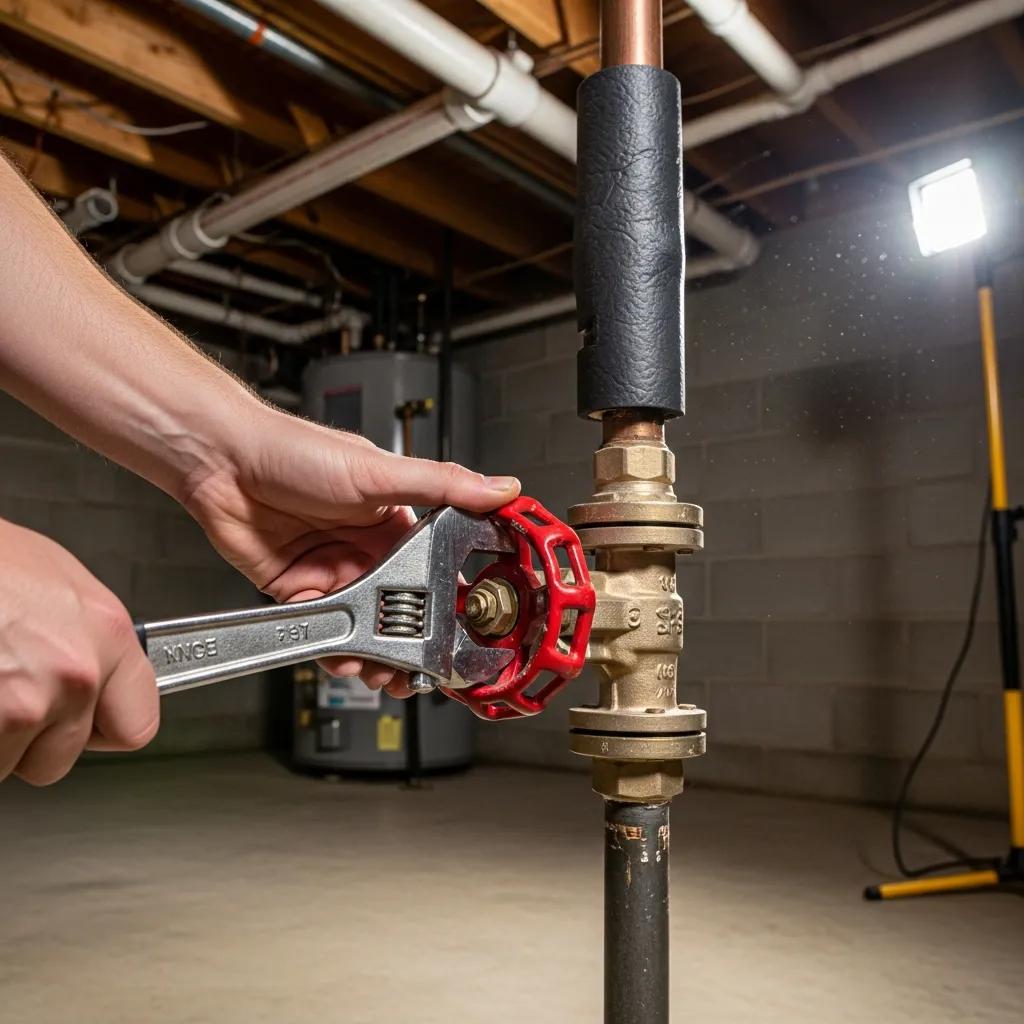
Turning off the main valve isolates your property from incoming water and prevents further interior flooding. Finding and operating the right valve safely is key. Indoor main shut-offs are usually where the service enters the building — basement walls, utility rooms, or crawlspaces — while outdoor shut-offs sit inside a curb box near the property line or next to the meter. Gate valves take multiple full turns (left/counterclockwise) to close; ball valves close with a quick quarter turn. Use the proper tools like a water meter key or adjustable wrench, apply steady pressure, and stop if a valve is stuck — forcing a corroded or frozen valve can cause more damage and will need professional replacement.
After shutting the main, check fixtures to make sure flow stopped, then move on to safety steps such as turning off breakers for flooded areas — but only if it’s safe to access the panel. The table below shows common valve locations and the tools that help operate them safely.
| Valve Location | Valve Type | Tools Needed | Quick Steps |
|---|---|---|---|
| Indoor (basement/utility room) | Gate or ball valve | Adjustable wrench, flashlight | Find where the service enters, turn gate valve fully or rotate ball valve a quarter turn to close |
| Outdoor (curb box/property line) | Curb stop/gate valve | Water meter key, long handle | Remove curb box lid, use meter key to rotate until flow stops |
| Near water meter | Service stop valve | Water meter key or wrench | Confirm ownership, shut off only if accessible and safe |
Where to Locate Indoor and Outdoor Main Shut-Off Valves
Indoor shut-off valves are usually at the foundation wall where the main enters — in utility closets, basements, crawlspaces, or near the water heater or laundry. Outdoor shut-offs are commonly in a covered curb box at the property line, by the street or sidewalk, or in a protected box near the meter. Ownership matters: utilities often own the main past the meter and sometimes the curb stop, while homeowners typically own the service lateral to the house. Know who is responsible before turning outdoor valves. Mark your valve location and keep a water meter key handy to save time in an emergency.
Once you locate the valves, you can tell if the shut-off is homeowner-accessible or if you need to contact the utility — which helps you decide who to call.
What Tools and Valve Types Are Needed for Emergency Shut-Off?
Essential tools include a water meter key for curb boxes, an adjustable wrench for indoor stop valves, and a flashlight for low-light inspection. Gate valves close with multiple turns and provide fine control; ball valves close quickly with a quarter-turn and are easier in an emergency. If a valve is stuck or frozen, don’t force it — call a professional to replace it to avoid damaging the pipe or valve stem. Keeping a small kit with a meter key and wrench near your utility area or labeled in your emergency supplies can save precious minutes during an active break.
Using the right tools and recognizing valve types reduces the chance of added damage and lets you move quickly to safety and mitigation.
What Immediate Actions Should You Take After a Water Main Break?
Immediate steps focus on safety, containment, and documentation to limit damage and support repairs and insurance claims. First, shut off your main water supply if it’s safe, and stop all water-using appliances. Next, isolate electrical power to flooded circuits — but only after confirming panels are dry and safe to access. Move furniture and electronics to dry areas, and use pumps or wet-vacs if available and safe; ensure any sump pump has power and is operating. Photograph all damage, record meter readings, and keep receipts for emergency purchases or services to support insurance and contractor work.
Whether you call the utility or a plumber depends on whether the break is on the public main or the private service lateral. The next section explains how to evaluate that and includes how to contact professional help quickly.
- Shut off water supply: Close the main valve to stop incoming flow and limit interior flooding.
- Address electrical hazards: Turn off breakers only if the panel is dry and you can do so safely.
- Protect belongings: Move furniture and electronics to higher ground and begin removing standing water.
- Document and notify: Photograph damage, record meter readings, and contact the right responders.
These steps stabilize the situation and prepare you to coordinate repairs and communicate with authorities or contractors.
How to Ensure Electrical Safety and Protect Your Property
Water and electricity are a dangerous combination. Avoid contact with standing water near outlets and appliances, and shut off breakers to affected areas only when it’s safe to access the electrical panel. If the panel is wet or unreachable, call an electrician or emergency responder — don’t attempt a DIY shut-off where live circuits may be present. Elevate or remove valuables, disconnect unaffected major appliances, and use sandbags or temporary barriers to divert water if possible. Use pumps and wet-vacs to reduce standing water, and follow safe setup practices for any generators (proper ventilation and grounding).
After stabilizing electrical and property risks, gather documentation and determine whether the issue is public or private so you know who to contact next for repairs.
Who Should You Contact: Local Water Utility or Emergency Plumber?
Responsibility depends on where the break is located. If the break is at or beyond the curb box, contact your local water utility; leaks between the meter and your building are usually the homeowner’s responsibility and require a licensed plumber. We at Frost and Kretsch Plumbing provide 24/7 emergency service for water main breaks across Macomb, Oakland, and Wayne counties. We respond fast, send experienced technicians, offer transparent pricing with no hidden fees, and back our work with a 100% satisfaction guarantee. Before you call, have your address, meter readings, photos, and a description of what you’re seeing to speed diagnosis and response.
The utility may inspect and shut off the public main, while a plumber can stabilize or temporarily patch the private service, or excavate and replace the damaged section. Clear documentation helps determine who is financially responsible and supports any insurance claim.
What Are the Water Main Repair Services Available in Michigan?
Repair options range from emergency stabilization to full replacement and site restoration. Emergency teams locate the failure, stop active flow, and install temporary clamps or bypasses. Permanent replacement usually requires excavation, removal of the damaged section, installing compatible pipe, backfill, and surface restoration. Trenchless methods like relining or slip-lining can reduce surface disruption for some service laterals, but they aren’t suitable for every failure. Expect permit checks, inspections, and variable response times depending on emergency status and local workloads.
| Service | Typical Response Time | Common Steps / Deliverables |
|---|---|---|
| Emergency repair (temporary patch) | Within hours for emergencies | Locate break, stop flow, install temporary clamp or bypass, advise on next steps |
| Full excavation and replacement | 24–72 hours depending on permit | Excavate to pipe depth, remove damaged pipe, install new section, backfill and restore surface |
| Trenchless repair / relining | 1–3 days scheduling | Inspect with camera, prepare pipe, insert liner, cure liner, test and restore service |
If you need help right now, Frost and Kretsch Plumbing offers 24/7 emergency plumbing for water main breaks throughout Macomb, Oakland, and Wayne counties. We prioritize fast response, experienced crews, clear pricing, and a 100% satisfaction guarantee. After you review service types, the next section explains what immediate emergency repair looks like and typical timelines.
What Does Emergency Water Main Repair Include?
Emergency repair focuses on stopping water loss quickly and reducing hazards. Technicians begin with location diagnostics, then may install a temporary shut-off, clamp, sleeve, or bypass to control flow until a permanent fix can be scheduled. We’ll advise you about water quality risks and any boil-water recommendations. Temporary repairs often restore service within 24–48 hours while plans and permits for permanent replacement are arranged. Expect clear communication about permits, estimated timelines, and any surface repairs that will be needed later.
Immediate stabilization curbs ongoing damage and gives you time to plan permanent repairs safely.
How Do Excavation and Pipe Replacement Services Work?
Excavation starts with locating the failure using utility locates and mapping, then excavating a trench to expose the damaged pipe with proper safety and shoring. The bad section is removed and replaced with an approved material — commonly PVC, HDPE, or similar — followed by pressure testing, backfilling, compaction, and surface restoration of landscaping or paving. Permits and inspections are typical steps; contractors coordinate with local authorities for approvals and final sign-off. Expect clear restoration plans and communication about timeline and costs from your contractor.
Knowing the excavation workflow helps you anticipate disruption and restoration needs during a full replacement.
How Much Does Water Main Repair Cost in Michigan and What Are Insurance Considerations?
Repair costs in Michigan vary based on whether the work is emergency stabilization, a local excavation repair, or a full replacement, plus depth, materials, and surface restoration. Temporary emergency fixes are usually less expensive than full replacements. Excavation, driveway or landscaping restoration, and permit fees can raise the total cost. Homeowner insurance often covers damage caused by sudden breaks on private service lines, while public main failures are generally the utility’s responsibility. Document the incident with photos and invoices — that’s essential for claims. The table below gives a quick cost map to compare typical ranges and what each covers.
| Service Type | Typical Cost Range (Detroit/Region) | What It Covers |
|---|---|---|
| Temporary emergency repair | $300–$1,500 | Diagnostics, clamps or couplings, labor to stop flow |
| Local repair / small excavation | $1,000–$4,000 | Excavation, pipe replacement, backfill, basic surface repair |
| Full replacement with major restoration | $3,000–$15,000+ | Deep excavation, new service line, driveway/landscaping restoration, permits |
What Are the Average Repair and Replacement Costs in Detroit and Surrounding Counties?
Regional averages reflect differences in urban density, labor rates, and permit requirements. Small emergency fixes typically fall between $300 and $1,500, while more extensive replacements — including excavation and surface restoration — commonly range from $1,000 up to $15,000 or more depending on scope. Excavation labor, heavy equipment, and paved surface restoration drive higher costs. Get multiple estimates, confirm permit needs, and ask for itemized bids to compare offers and prepare insurance paperwork.
Knowing typical cost bands helps you avoid surprises and decide whether to use emergency stabilization or move straight to replacement.
How Does Homeowner Insurance and Permit Requirements Affect Repair Costs?
Insurance coverage usually depends on whether the damage starts on private property or the public main. Private service failures and resulting interior damage are often covered by homeowners’ policies, subject to deductibles and policy limits; public main failures are typically the utility’s responsibility. Permit fees and inspection costs add to invoices and can affect project timing. To speed claims, document the scene thoroughly, keep estimates and invoices, and get contractor reports that detail cause and needed work. Contact your insurer and a licensed contractor promptly to clarify financial responsibility and reduce delays from permits or coverage questions.
Clear documentation and quick communication with insurers and authorities reduce disputes and improve your chances of recovering repair and restoration costs.
What Post-Repair Steps and Prevention Measures Should You Follow?
After repairs, flushing, sanitation, and preventive maintenance restore safe service and lower the risk of future breaks. Whole-house flushing clears sediment and debris introduced during repairs — follow local guidance on fixture order and run times. If a boil-water advisory was in effect, follow the advisory timeline and testing before drinking from the tap again. Regular inspections, winterizing exposed pipes, and proactive leak detection help catch service lateral problems early.
If you need inspection or maintenance after a break, Frost and Kretsch Plumbing offers 24/7 emergency plumbing and follow-up services across Macomb, Oakland, and Wayne counties. We prioritize quick response, experienced technicians, transparent pricing (no hidden fees), and a 100% satisfaction guarantee. To schedule an evaluation, call our team at (586) 675-0097.
Post-repair maintenance and prevention checklist:
- Flush lines following repair: Run cold fixtures in the recommended sequence to clear debris.
- Follow boil-water advisories: Use boiled or bottled water until authorities lift advisories and testing confirms safety.
- Schedule regular inspections: Annual camera inspections and leak detection catch early deterioration.
These steps help restore safe service, reduce recurrence risk, and create documentation that protects your property in the long term.
How to Flush Water Lines and Follow Boil Water Advisories
Start whole-house flushing at the lowest fixture and work up to the highest, running cold water for several minutes at each outlet until it clears. Use outdoor hose bibs and laundry faucets to move sediment out quickly. If a boil-water advisory is in effect, boil water for the recommended time or use bottled water for drinking and cooking until authorities confirm it’s safe. After flushing, run water-using appliances — ice makers, water heaters, dishwashers — through a cycle to clear residual debris. If discoloration or odor persists, contact a professional for testing and further remediation. Keep records of flushing steps and any ongoing issues.
Following these steps helps you restore potable water safely and comply with public health guidance when advisories occur.
What Regular Maintenance and Inspection Practices Prevent Future Breaks?
Preventive measures include seasonal checks for exposed service lines, watching for soil movement or root intrusion, insulating or relocating vulnerable pipes, and winterizing exterior valves and meter boxes to prevent freeze damage. Schedule professional camera inspections and leak detection periodically — especially for older services or properties with shifting soils — to find weaknesses before they fail. Keep a clear record of valve locations, service agreements, and maintenance work, and fix small leaks quickly to avoid bigger problems. A mix of DIY vigilance and scheduled professional checks gives you the best protection against future main issues.
Consistent maintenance and timely professional intervention extend pipe life and cut the chance of emergency failures that cause major damage.
Frequently Asked Questions
What should I do if I suspect a water main break?
If you suspect a water main break, confirm signs like low pressure, discolored water, or visible flooding. Shut off your main water valve to limit damage and avoid using appliances that use water. Photograph the scene and record meter readings, then contact your local water utility or an emergency plumber depending on whether the issue is on the public main or your private service line. Acting quickly reduces damage and speeds repairs.
How can I prevent future water main breaks?
Prevent future breaks with regular maintenance and inspections. Schedule seasonal checks for exposed pipes, watch for soil movement, and insulate vulnerable areas. Consider professional camera inspections and leak detection for older lines. Address small leaks promptly and keep maintenance records. Combining homeowner vigilance with professional oversight lowers the risk of costly failures.
What are the risks of ignoring a water main break?
Ignoring a water main break can cause serious problems: extensive property damage, mold growth, structural issues, electrical hazards, and higher repair costs. Long-term leaks can also affect local water service and public health. Address any signs of a break immediately to protect your property and occupants.
How do I know if my insurance covers water main break repairs?
Insurance coverage depends on where the damage originated. Homeowner policies often cover sudden breaks on private service lines but not public mains. Review your policy and talk to your insurance agent to clarify coverage limits, deductibles, and claim requirements. Thorough documentation (photos, invoices, contractor reports) strengthens your claim.
What are the environmental impacts of a water main break?
Water main breaks can cause soil erosion, wash away vegetation, and potentially contaminate local water sources. Flooding can harm local habitats and, if contaminants enter the supply, pose risks to people and wildlife. Prompt repair and proper containment minimize environmental harm.
What should I include in my emergency plumbing kit?
Keep a simple emergency plumbing kit with a water meter key, adjustable wrench, flashlight, duct tape, and a bucket. Add gloves, a first aid kit, and a list of emergency contacts (local plumbers, utility numbers). Having these items ready helps you respond faster in an emergency.
How can I ensure my plumbing system is winter-ready?
Prepare for winter by insulating exposed pipes in unheated areas, draining and disconnecting outdoor hoses, and shutting off exterior faucets. Consider heat tape for vulnerable pipes and keep your home heated during cold snaps. Schedule a professional inspection if your plumbing is older or has a history of problems. These steps cut the risk of freeze-related emergencies.
Conclusion
Quick, safe action during a water main break is vital to minimize damage and protect people and property. Know the signs, learn where your main shut-off is, document the situation, and call for professional help when needed. Frost and Kretsch Plumbing is available 24/7 to handle emergency water main repairs across Macomb, Oakland, and Wayne counties — we respond quickly, provide experienced technicians, clear pricing, and stand behind our work with a 100% satisfaction guarantee. If you need immediate help, call us right away to protect your property and restore your water service.