
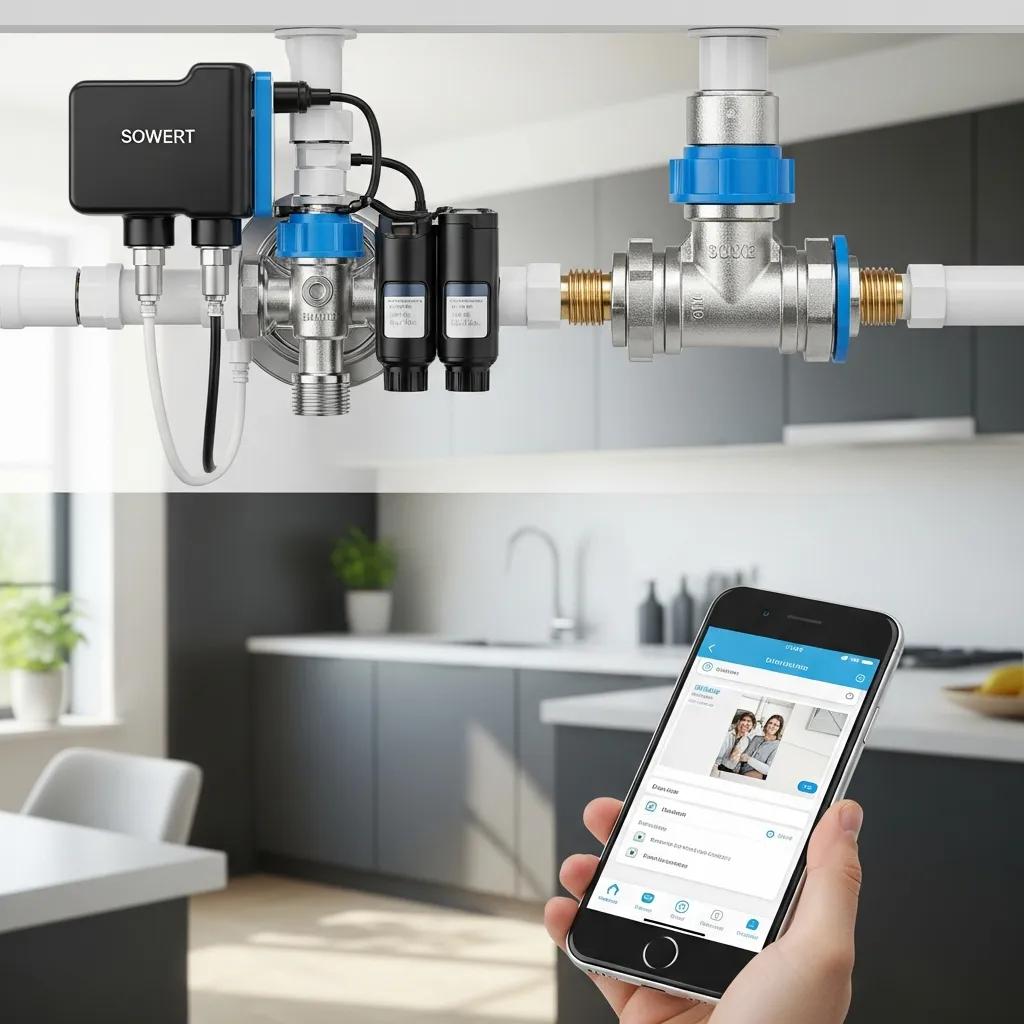
Smart Water Shut-Off Valve Installation — Automated Protection for Homes and Businesses
Smart water shut-off valves are automated plumbing devices that spot abnormal flow or leaks and close a main or branch supply to prevent major water damage. They pair flow meters, wireless leak sensors, an actuator on the valve, and a control hub or mobile app so the system can detect issues, send alerts, and act within seconds to minutes. A whole-home or targeted shutoff installation lowers repair costs, reduces insurance claims, and gives property owners remote control and real-time visibility. This guide walks through how smart shutoff valves work, the parts of a whole-home system, measurable benefits (including possible insurance incentives), professional installation steps, recommended products, and maintenance tips. You’ll also find clear answers to common questions about cost, DIY feasibility, and optimal valve placement, plus when to call a local pro for a site-specific assessment.
What Are Smart Water Shut-Off Valves and How Do They Work?
A smart water shut-off valve is a safety device that automatically stops water flow when sensors detect leaks, unusual flow rates, or system faults, and it reports status to a user interface for alerts and control. The system pairs a valve body or actuator on the main or branch line with flow sensors that track baseline and surge behavior, and a control hub or app that runs the logic to decide when to close the valve. The result: far less water released during a failure, which means less structural damage and lower repair bills. Next we’ll look at the detection methods these systems use and how sensors work together to trigger a shutoff.
Reliable systems use multiple sensor types to confirm an event before they shut off water—this reduces false alarms and keeps normal use uninterrupted.
How Do Smart Water Shut-Off Valves Provide Automated Leak Detection?
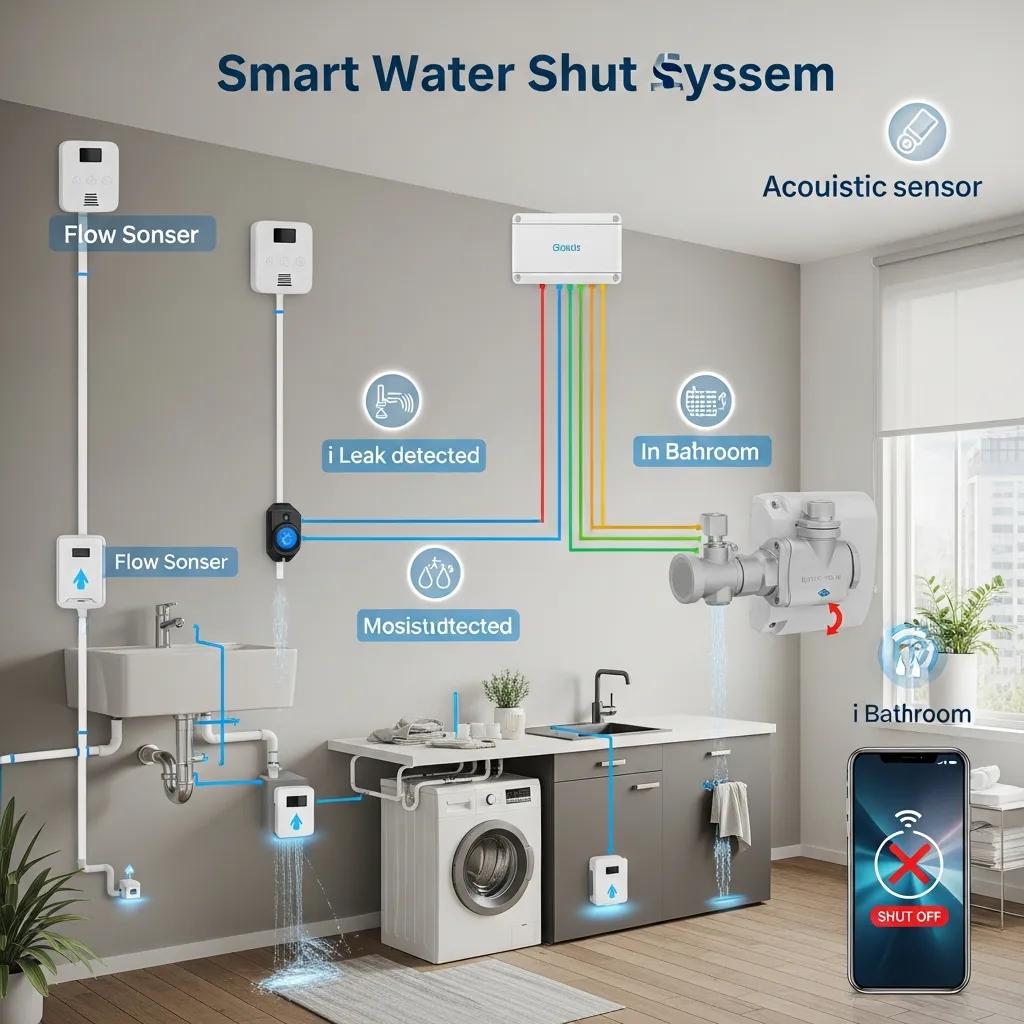
Smart shutoff systems combine flow, acoustic, and moisture sensors to find leaks quickly and accurately. Flow sensors learn a property’s normal usage and flag sustained abnormal patterns—think continuous flow overnight—acoustic sensors pick up sounds from a ruptured pipe, and moisture sensors detect water where it shouldn’t be, like under a water heater. When configured thresholds are met, the control hub sends an alert and, depending on settings and fail-safes, tells the actuator to close the valve. Most systems include manual overrides and scheduled tests so you can verify the automated sequence is working. That multi-sensor validation is why professionals prefer layered detection for dependable leak protection.
What Components Make Up a Whole Home Water Shut Off System?
A whole-home shutoff system is built from parts that handle detection, decision-making, and action: the valve body and actuator, flow and leak sensors, a control hub or bridge, and a user interface such as a mobile app. Typical components include:
- Valve body and shutoff actuator: the mechanical assembly that stops water flow.
- Flow sensor: measures volume and rate on the main or branch line.
- Wireless leak/moisture sensors: placed near appliances and low points to confirm actual water presence.
- Control hub/app: runs the logic, sends alerts, and allows remote operation.
- Power and backup: mains power with battery backup or local fail-safe to keep the actuator functional.
Each part must be sized and located for your plumbing layout—those choices lead directly into the professional installation steps used to place valves and sensors for the best protection.
What Are the Benefits of Installing Smart Water Shut-Off Valves?
Smart shut-off valves limit how much water enters a building after a failure, so you get fewer and less costly repairs and less business disruption. They also offer practical advantages like remote shutoff, automatic self-tests, diagnostics, and flow history that help spot chronic issues early. For many owners, these systems deliver peace of mind and better resilience against common failures—burst pipes, water heater leaks, and unattended appliance breaks. The next section maps benefits to measurable outcomes so you can better judge return on investment.
Below is a simple mapping of benefits to likely outcomes and insurance or peace-of-mind value.
| Benefit | Outcome | Value |
|---|---|---|
| Water Damage Prevention | Shortens leak-to-shutoff time, limiting water volume | Reduces repair size and remediation cost |
| Remote Control & Alerts | Immediate notification and remote intervention | Faster response; less downtime for businesses |
| Diagnostics & Logs | Early detection of abnormal patterns | Prevents future failures; helps plan maintenance |
| Insurance & Risk Reduction | Potential for fewer claims | Possible premium discounts and reduced surcharges |
This benefit-to-outcome view helps you see why smart water protection is often a sensible investment and how local pros make deployment straightforward.
Frost and Kretsch Plumbing serves Macomb, Oakland, and Wayne counties in Michigan with 24/7 emergency response, licensed and insured technicians, clear pricing with no hidden fees, and a 100% satisfaction guarantee—services that pair well with smart shutoff systems. If you’re in our service area, request an on-site assessment so we can match system design to your plumbing layout and insurance requirements. Using a licensed local provider ensures correct sizing, code compliance, and a transparent written estimate.
How Do Smart Valves Prevent Costly Water Damage?
Smart valves cut water damage mainly by reducing the time between a leak starting and the water being shut off, which limits the total water that reaches finishes and framing. In many cases, shutting off water within minutes after a pipe failure greatly reduces repair scope compared with leaks that go hours undetected. Adding wireless detectors near high-risk appliances speeds detection, and flow-based logic catches slow, continuous losses that could otherwise be missed. The outcome: fewer big remediation jobs, lower mold risk, and better asset protection. Those prevention mechanics also explain why insurers ask for specific documentation when offering incentives.
What Insurance Discounts Are Available for Smart Water Protection?
Insurers are increasingly willing to reward active leak protection with premium reductions or mitigation credits when a documented smart shutoff system is in place. Common insurer requests include proof of professional installation, equipment make and serial numbers, and a maintenance plan showing ongoing readiness. Because discounts vary by carrier and region, check with your insurer before purchase to confirm what qualifies. Keeping installation records and manufacturer paperwork makes it easy to provide proof for underwriting or claims. These requirements are another reason many owners choose licensed installers who can deliver the needed documentation.
How Is Smart Water Shut-Off Valve Installation Performed by Professionals?
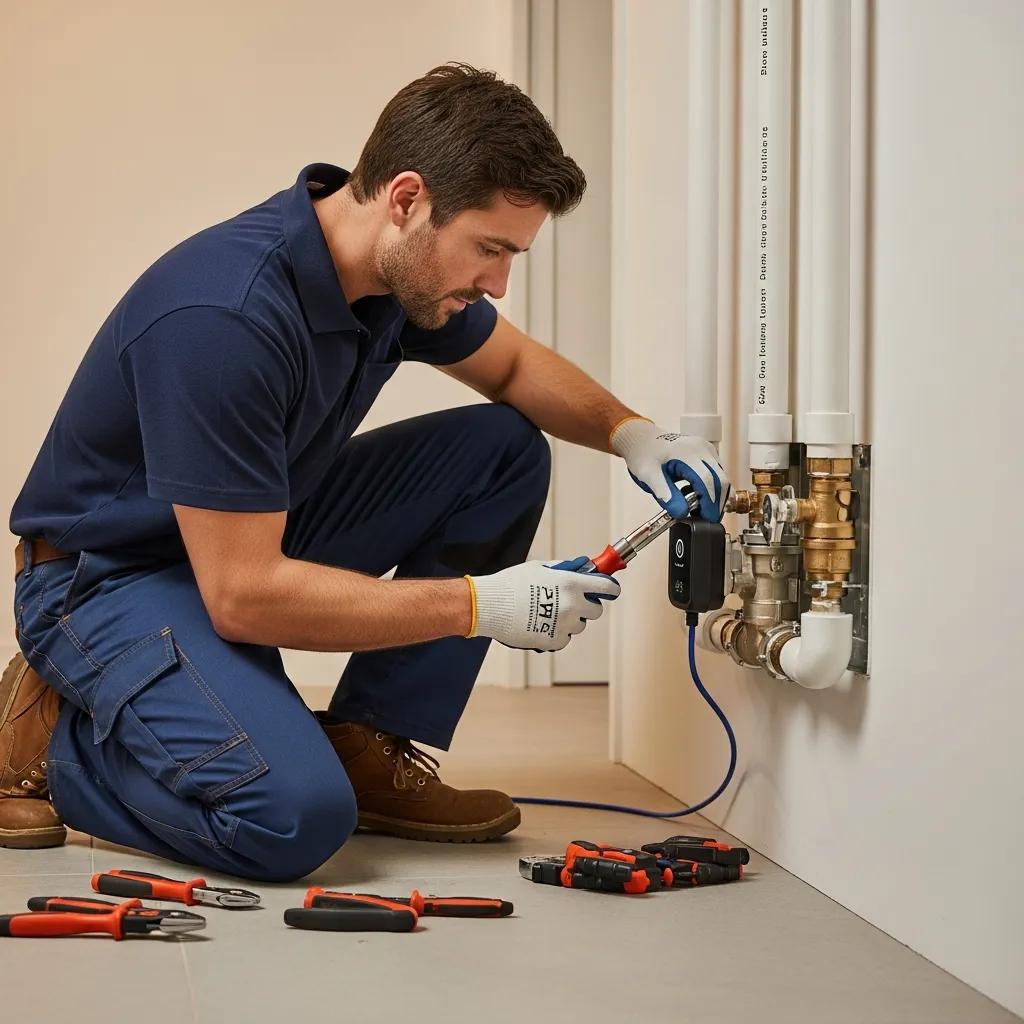
Professional installation starts with a site assessment to map the main water entry, measure pressure, check access, and identify optimal valve and sensor locations. Technicians isolate the supply, remove or retrofit the existing shutoff, mount the valve and actuator, install flow and leak sensors, integrate the control hub with the property’s network, and run full functional tests. After installation they pair the app, train the owner, and hand over documentation for insurance and maintenance. This structured approach reduces installation errors, preserves warranties, and tunes the system to the building’s hydraulic profile. The table below compares typical residential installation scenarios so you know what to expect.
| Property Type | Installation Steps | Typical Timeline / Complexity |
|---|---|---|
| Single-family home | Site survey, main valve retrofit, sensor placement, app commissioning | 2–4 hours; low–medium complexity |
| Multi-unit residential | Main isolation strategy, branch shutoffs, multiple sensors, network planning | 4–8+ hours; medium complexity |
| Small commercial | Flow-calibrated valve, redundancy, integration with building management | 1+ day; medium–high complexity |
This comparison shows how scope and plumbing complexity affect timing and when extra work—like excavation or pressure adjustments—may be needed. If you want professional installation, licensed local technicians provide site surveys, transparent estimates, and on-site commissioning.
Frost and Kretsch Plumbing offers licensed installers experienced with modern plumbing technology, 24/7 emergency support, and clear pricing across Macomb, Oakland, and Wayne counties. Request an on-site assessment and a written estimate to pick the right valve and installation scope for your home or business.
What Is the Step-by-Step Installation Process for Homes and Businesses?
Professional installs follow a checklist to ensure safety, code compliance, and reliable operation. Typical steps:
- Perform a plumbing site survey and locate the main shutoff and pressure characteristics.
- Isolate the water supply and drain lines to create a safe work area.
- Remove or modify the existing shutoff hardware and install the new valve body and actuator.
- Fit flow sensors and wireless leak detectors at strategic points and pair them to the control hub.
- Commission the system with functional tests, calibrate flow thresholds, and walk the owner through the mobile app and manual override.
After commissioning, technicians provide documentation and maintenance guidance to support warranties and insurance requirements. That process is why trained installers are recommended for main-line retrofits and complex commercial systems.
Why Choose Licensed Technicians for Smart Valve Installation?
Licensed technicians bring code knowledge, leak-free connection skills, and the documentation insurers often require to validate risk-reducing work. Pros size valves for your flow and pressure, place sensors for best coverage, and run pressure and backflow checks a DIY job might miss. Professional installation preserves manufacturer warranties and ensures work meets local codes and inspection standards where required. Those factors lower long-term risk and help the system perform reliably when routine maintenance and monitoring are in place.
Which Smart Water Shut-Off Valve Products Are Recommended for Residential and Commercial Use?
Choosing the right product depends on trigger methods, integration options, installation complexity, and whether the use is residential or commercial. Below is a compact comparison of three commonly discussed options—Moen Flo, YoLink Bulldog, and Grus.io—focused on shutoff trigger, integration, installation complexity, suitability, and warranty considerations to help with your decision.
| Product | Key Attribute | Value |
|---|---|---|
| Moen Flo smart shutoff | Shutoff trigger | Flow analytics + leak sensors |
| YoLink Bulldog smart valve | Integration | Long-range wireless + local control options |
| Grus.io smart valve | Installation complexity | Modular; built for scalable commercial installs |
This quick comparison highlights trade-offs like subscription features, cloud dependence, and local-control options. The next section sums up core brand differences and practical pairing advice for detectors and hubs.
What Are the Features of Popular Brands Like Moen Flo and YoLink Bulldog?
Brands vary by analytics, cloud services, and installation model. Some emphasize advanced flow analytics that learn household patterns; others prioritize long-range wireless control and local failover. When choosing, evaluate shutoff response speed, whether detection relies on flow-only or multi-sensor confirmation, subscription needs for cloud analytics, and availability of commercial-grade actuators. Systems that support local decision-making without mandatory cloud access can be more reliable during outages, while analytics subscriptions may add predictive maintenance value. Those feature differences guide how you pair wireless detectors with the primary shutoff valve.
How Do Wireless Water Leak Detectors Integrate with Shutoff Valves?
Wireless detectors talk to a control hub using Wi‑Fi, Zigbee, Z‑Wave, or proprietary long-range protocols. The hub receives alerts and, based on configured logic, issues shutoff commands. Typical steps: place detectors near high‑risk appliances and low points, enroll sensors to the hub, and define trigger rules that combine sensor inputs and flow anomalies. When planning the network, consider failover: systems that allow local decision-making at the hub will shut off without cloud access, while cloud-dependent setups may be limited in an outage. Proper pairing and placement reduce false triggers and ensure a fast, reliable automated response.
How Can Homeowners and Businesses Maintain and Monitor Their Smart Water Protection Systems?
Regular maintenance keeps the system reliable: run functional tests, check batteries and firmware, clean or replace sensors as needed, and schedule annual inspections. Remote monitoring delivers instant alerts and lets a maintenance provider respond quickly to trouble. Establishing a quarterly or annual maintenance rhythm and keeping installation records supports warranty and insurance requirements. The checklist below lists practical recurring tasks to keep systems working.
- Quarterly: run a manual shutoff test, confirm app connectivity, and inspect wireless sensors.
- Semi-annual: test or replace sensor batteries and check for firmware updates.
- Annual: professional inspection of valve seals, pressure testing, and flow calibration.
This schedule balances owner-level checks with professional service and leads into best practices for routine upkeep.
What Are Best Practices for Ongoing System Maintenance?
Best practices include scheduled shutoff tests, reviewing flow logs for unusual patterns, keeping sensor batteries fresh, applying firmware updates promptly, and keeping a central maintenance file for warranty and insurance records. Perform visual checks at sensor locations and keep the control hub on backed-up power when possible. If a leak is repaired, have a technician recheck sensor placement and recalibrate flow thresholds if the plumbing changed. Following these steps keeps the system ready and lowers the chance of missed failures.
How Does Remote Monitoring Enhance Water Leak Detection?
Remote monitoring cuts response time by instantly notifying owners and designated contacts when a leak or abnormal flow is detected, allowing immediate human action or an automatic shutoff. Monitoring services can escalate alerts, offer geolocation for multi-site managers, and provide audit logs that simplify insurance claims. For businesses, continuous monitoring reduces downtime by speeding remediation and informing preventative maintenance. Pairing automated shutoff with remote monitoring creates a layered defense that narrows the window for water exposure.
What Are Common Questions About Smart Water Shut-Off Valves?
This FAQ-style section answers the top questions clearly and points owners to professional assessment when site-specific details matter. These short answers help you decide if DIY is reasonable or if a licensed installer is the safer route for code, warranty, or complexity reasons. After this Q&A you’ll know how to get a transparent, on-site estimate.
How Much Does Smart Water Shut-Off Valve Installation Cost?
Costs vary with valve model, plumbing accessibility, and system scale. Key factors include whether the main line needs a retrofit, how many sensors are required, and any network or power backup work. Because these variables change scope and price, an accurate estimate needs an on-site assessment to check pipe size and access. Frost and Kretsch Plumbing provides transparent, written estimates with no hidden fees and can perform an on-site evaluation for properties in Macomb, Oakland, and Wayne counties to determine the right solution and price.
Can I Install a Smart Water Shut-Off Valve Myself?
Some consumer-focused models and localized shutoffs are DIY-friendly for experienced homeowners, but whole-home main-line valves and systems tied into building management usually need licensed installation to guarantee leak-free connections, code compliance, and valid warranties. DIY installs risk improper sealing, incorrect sizing, and missed safety checks. For main-line retrofits and commercial systems, hiring licensed technicians protects warranties and insurance documentation and reduces the chance of system failure or property damage. A site assessment from a licensed installer will tell you whether a DIY approach is appropriate.
Where Should Smart Water Shut-Off Valves Be Installed for Maximum Protection?
For whole-property protection, place the primary smart shutoff at the main water entry to isolate the incoming supply quickly. Consider secondary shutoffs on critical branch lines (water heaters, boilers, multi-tenant risers) and put wireless leak detectors near high-risk appliances, sump pits, and low points. Multi-unit and commercial properties benefit from staged or zoned shutoff strategies that isolate only affected areas. Start at the main entry for broad protection, then add branch-level valves and detectors where you need targeted coverage to minimize service disruption.
- Main entry shutoff: Whole-property isolation for the biggest damage reduction.
- Branch shutoffs: Targeted isolation for high‑risk systems to preserve partial operation.
- Sensor placement: Near appliances, under sinks, at basin drains, and at low points for early detection.
Placement depends on building layout and operational needs, so a professional site assessment is recommended.
Frost and Kretsch Plumbing can perform placement analysis and provide a transparent estimate for installation and sensor coverage across Macomb, Oakland, and Wayne counties. Our licensed technicians make sure installations meet local codes and provide the documentation you need for insurance and maintenance.
Frequently Asked Questions
What maintenance is required for smart water shut-off valves?
Regular maintenance keeps your system reliable. Quarterly: run a manual shutoff test, check app connectivity, and inspect wireless sensors. Semi-annually: test or replace sensor batteries and check for firmware updates. Annually: have a pro inspect valve seals, run pressure checks, and verify flow calibration. Keep a maintenance log for warranty and insurance records so you can prove ongoing care.
How do I choose the right smart water shut-off valve for my property?
Choose based on property type (residential or commercial), plumbing complexity, and required features. Look for reliable shutoff triggers, integration options, and straightforward installation. Consider warranty and manufacturer support. Consulting a licensed technician helps match products to your needs and plumbing layout.
Can smart water shut-off valves be integrated with home automation systems?
Yes—many valves integrate with home automation platforms. Look for support for Wi‑Fi, Zigbee, Z‑Wave, or other common protocols to connect with your hub. Integration simplifies monitoring and control and can enable added features like automated responses to detected leaks.
What should I do if my smart water shut-off valve detects a leak?
If you get a leak alert, check the app to confirm the location. If the system has shut off the water, assess whether immediate repairs are needed. Small leaks may be fixable yourself, but major failures should be handled by a licensed plumber. Document the incident for insurance if necessary.
Are there any insurance benefits for installing smart water shut-off valves?
Yes—many insurers offer discounts or mitigation credits for active leak protection. To qualify, you may need proof of professional installation, system details, and maintenance records. Check with your insurer to learn their requirements and potential savings.
How do I ensure my smart water shut-off valve system is functioning correctly?
Follow the manufacturer’s maintenance schedule: test manual shutoff, verify app connectivity, inspect sensors, and schedule annual professional checks for seals, pressure, and flow calibration. Keep firmware updated and log all maintenance to ensure reliable performance.
Conclusion
Smart water shut-off valves are a practical way to cut water damage risk, lower repair costs, and give homeowners and businesses greater control and peace of mind. Professional installation maximizes those benefits and helps ensure code compliance and valid warranties. Contact Frost and Kretsch Plumbing today to schedule an on-site assessment and secure your property’s water safety.