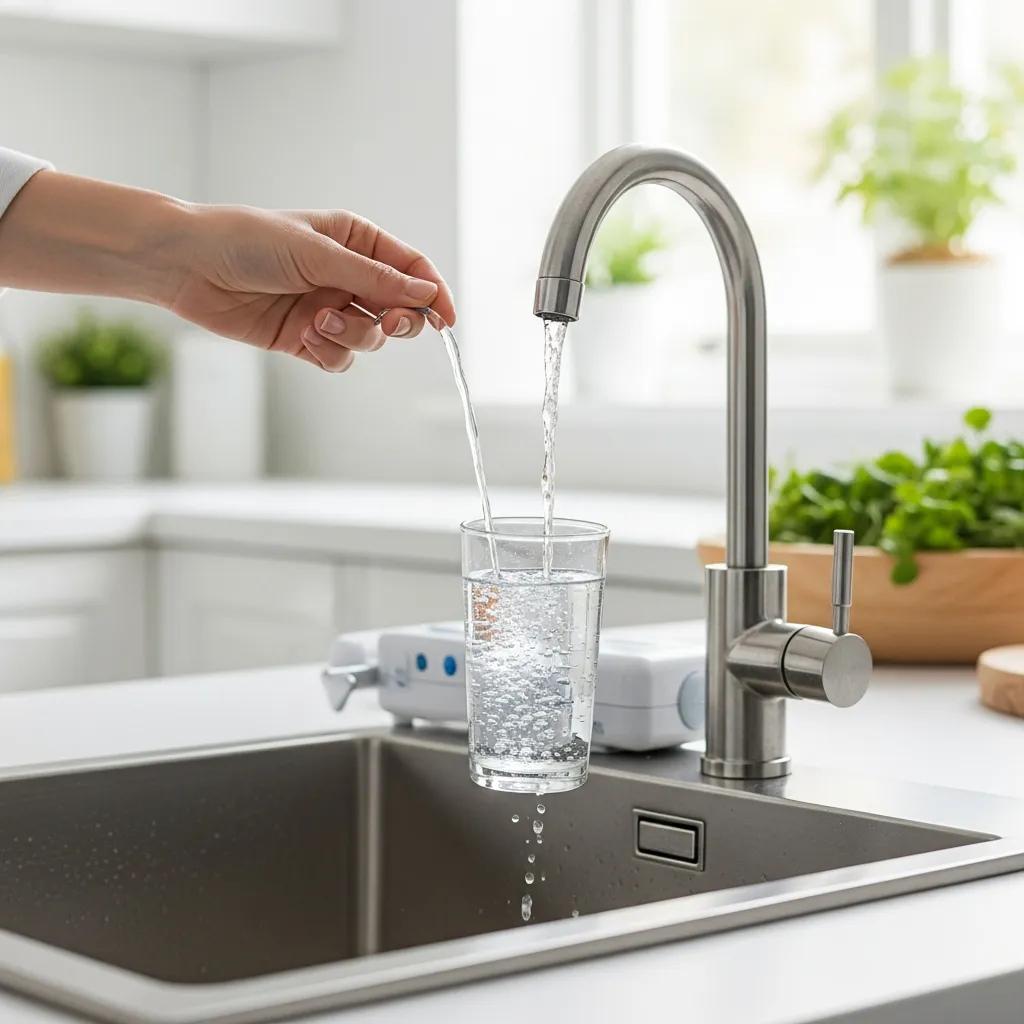
Point-of-Use Water Filters: How They Work, What They Cost, and Installation Options in Michigan
Point-of-use water filters treat water at a single faucet so you get cleaner, better-tasting water right where you fill cups and pots. This guide walks you through how those filters work, the common technologies—activated carbon, ultrafiltration (UF), and reverse osmosis (RO)—and how Michigan homeowners can weigh performance, price, and upkeep. Many people worry about chlorine taste, lead in older pipes, and emerging contaminants such as PFAS. A single-tap filter focuses on what you drink without the cost and complexity of whole-house systems. Below you’ll find plain-language definitions, side-by-side comparisons, a benefits breakdown tied to removal methods, the types of point-of-use systems we install, an installation overview with cost drivers, maintenance and troubleshooting tips, and local guidance for Macomb, Oakland, and Wayne Counties. Keywords like faucet filter, under sink filter, reverse osmosis system Michigan, and water quality testing Macomb County are included to help you find the right drinking water filter for your home.
Optimized Point-of-Use Water Filters for Michigan Homes
A point-of-use water filter is a compact treatment device installed at one outlet—usually your kitchen sink or a dedicated drinking faucet—to remove contaminants and improve taste and smell where you drink and cook. These systems move water through media such as activated carbon blocks, UF membranes, or RO membranes. Each method targets different contaminants, reducing dissolved solids, chlorine, lead, PFAS, and even microplastics. For homeowners who care most about drinking and cooking water, point-of-use filters often deliver excellent contaminant reduction with lower upfront cost and simpler maintenance than whole-house systems. Knowing how each filter works helps you match a faucet filter or under sink filter to your local water profile before you commit to an under sink water filter installation or a reverse osmosis system.
At Frost and Kretsch Plumbing, we can evaluate which point-of-use option fits your sink layout and daily habits, and we offer on-site water testing to pinpoint the best filter technology. Our local plumbing experience makes choosing and installing a drinking water filter easy while keeping plumbing changes to a minimum.
H3: Definition and Types of Point-of-Use Water Filters
Point-of-use filters come as under-sink systems, faucet-mounted filters, and countertop units. Technologies include activated carbon, ultrafiltration (UF), and reverse osmosis (RO). Under-sink systems hide the hardware under your sink and often use multiple stages—sediment pre-filters, carbon blocks, and RO or UF membranes—for strong contaminant removal; these usually need professional under sink water filter installation for a reliable job. Faucet-mounted filters clip to the existing spout and are convenient for quick taste improvements, though they cover a narrower range of contaminants. Countertop units are portable and renter-friendly, trading permanence for easy setup and occasional refilling.
H3: Comparison Between Point-of-Use and Whole-House Filtration Systems
Point-of-use filters treat just one outlet, which is cost-effective when your main goal is better drinking water—removing things like lead and PFAS at the tap without treating showers or laundry. Whole-house systems treat all incoming water, protecting appliances from scale and treating every fixture, but they cost more to install and maintain. Pick a point-of-use system when you want targeted, affordable drinking-water protection; choose whole-house filtration when you need home-wide hardness control or contaminant reduction at every tap.
- Decide based on the contaminants you need to remove, your budget, how much plumbing change you’ll accept, and which fixtures you want covered.
- For many Michigan homes, a point-of-use drinking water filter is the most practical mix of performance and cost for everyday potable water.
What Are the Benefits of Installing Point-of-Use Water Filters?

Point-of-use filters improve taste and odor and reduce specific contaminants right at the tap. By cutting chlorine, lead, PFAS, and microplastics where you fill your glass or cook, these filters lower exposure risks, shrink your reliance on bottled water, and save money over time versus constantly buying bottled water. Matching the right mechanism to the problem—carbon for chlorine, RO for dissolved solids and many PFAS—helps you pick the most effective drinking water filter for your home. Below is a quick map tying common benefits to the technology and homeowner value.
Different filtration technologies deliver distinct benefits that translate to real value at home.
| Benefit | Mechanism | Value |
|---|---|---|
| Improved Taste & Odor | Activated carbon adsorption | Better-tasting water that makes tap water a go-to and reduces bottled-water use |
| Lead Reduction | Certified carbon block / RO membrane | Cuts exposure from older plumbing and fixtures—important for older homes |
| PFAS and Dissolved Solids Reduction | Reverse osmosis membrane | Removes many emerging contaminants and lowers total dissolved solids |
| Microplastic & Bacteria Reduction | Ultrafiltration membrane | Physical barrier against particles and some microbiological concerns |
This table shows how the right technology produces practical improvements for drinking water and why choosing the correct mechanism matters for long-term satisfaction.
Point-of-use systems also help the environment and everyday convenience. They reduce single-use plastic by making tap water more appealing, and because they only treat the water you use for drinking and cooking, they avoid the energy and maintenance of whole-house systems. Recent monitoring and studies support targeted filtration plus testing as an effective response to local contamination concerns.
H3: Contaminant Removal: Lead, Chlorine, PFAS, and Microplastics
Each filter type performs best against certain contaminants: activated carbon removes chlorine and many volatile organic compounds (VOCs), improving taste and smell; reverse osmosis targets dissolved solids and many PFAS compounds; ultrafiltration blocks larger particles like microplastics and can reduce some bacteria where certified. Lead is well controlled by certified carbon block filters and RO membranes. PFAS is often best addressed with RO or specialized adsorption media designed for those chemistries. Have your water tested so you match the contaminant profile to the right filter technology.
- If testing shows chlorine taste or odor, activated carbon is usually enough.
- If PFAS or high dissolved solids are present, consider reverse osmosis or a specialized carbon solution.
- For particle issues such as microplastics, ultrafiltration provides a reliable mechanical barrier.
H3: Improved Taste, Health, and Environmental Advantages
Better tasting tap water encourages everyone to drink more and cuts bottled-water spending—good for your wallet and the planet. Health benefits come from lowering exposure to contaminants like lead and certain PFAS compounds, which can have long-term effects at elevated levels. Environmental wins include lower carbon and less plastic waste, and the convenience of on-demand filtered water for cooking, drinks, and pets.
- Improved taste increases daily tap water use.
- Removing known contaminants reduces long-term exposure risks.
- Cutting bottled water usage supports local waste reduction efforts.
Which Types of Point-of-Use Water Filters Does Frost and Kretsch Plumbing Install?
We install a variety of point-of-use drinking water filters to match different household needs: under-sink reverse osmosis systems, multi-stage carbon block under-sink filters, faucet-mounted filter options, and countertop units for temporary or renter-friendly setups. Our technicians review flow needs, available under-sink space, and contaminants identified by testing to recommend the right system. If you need dissolved-solids or PFAS reduction, a reverse osmosis system Michigan installation usually offers the highest reduction at the kitchen tap. For taste and odor, an activated carbon under-sink filter or a well-made faucet-mounted water filter often does the job.
| Filter Type | Contaminants Removed / Flow | Maintenance Interval |
|---|---|---|
| Reverse Osmosis (Under-sink) | PFAS, dissolved solids, lead / Low-moderate flow | Replace pre/post filters 6-12 months; membrane 2-3 years |
| Activated Carbon Block (Under-sink) | Chlorine, VOCs, taste/odor / Moderate flow | Replace cartridge 6-12 months |
| Ultrafiltration (UF) | Microplastics, bacteria (where certified) / Moderate flow | Replace membrane/cartridge 12 months |
| Faucet-mounted / Countertop | Chlorine, some particulates / Variable flow | Replace cartridge 3-12 months depending on model |
We can schedule an on-site assessment and water quality testing to confirm which point-of-use option fits your home. Our licensed technicians install systems to code and protect your warranty. To request an assessment or discuss under sink water filter installation, call Frost and Kretsch Plumbing at (586) 675-0097 or visit our office at 47212 Jefferson Avenue, New Baltimore MI 48047. We serve Macomb, Oakland, and Wayne Counties.
H3: Under Sink Water Filters: Reverse Osmosis, Carbon, Ultrafiltration
Under-sink systems combine compact installation with higher performance than faucet-mounted units. They typically pair sediment pre-filters, activated carbon blocks, and RO or UF membranes as needed. RO under-sink systems are strong at removing dissolved solids, many PFAS, and lead but need a drain line and often a storage tank, which adds installation steps. Carbon block under-sink units balance cost, flow, and taste improvement. Ultrafiltration provides solid particulate and some microbiological control with simpler plumbing than RO—useful where bacteria or microplastics are concerns.
H3: Faucet-Mounted and Countertop Water Filter Solutions
Faucet-mounted filters and countertop units are low-cost, low-infrastructure options that work well for renters, short-term needs, or homeowners who don’t want permanent plumbing changes. Faucet-mounted filters attach to the existing spout and often let you switch between filtered and unfiltered flow, though they remove fewer contaminants than many under-sink systems. Countertop filters connect with a small hose or run by gravity; they’re portable and require no permanent plumbing work—handy as an interim drinking water filter while you plan a permanent install.
- Choose faucet-mounted filters for quick taste improvements and limited contaminant concerns.
- Pick countertop units when portability or a non-invasive setup is a priority.
How Does Professional Installation of Point-of-Use Water Filters Work?
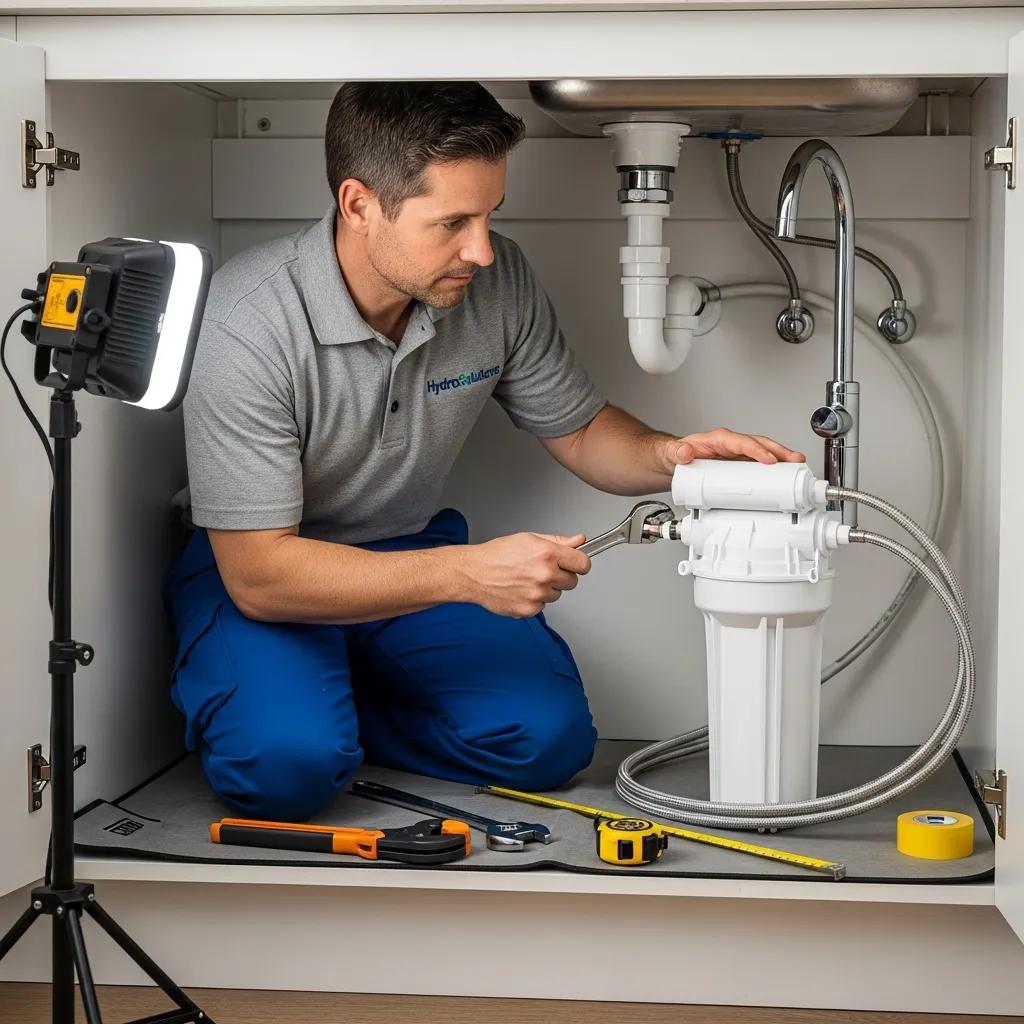
Professional installation starts with an assessment and water test, moves through equipment selection and plumbing work, and ends with performance checks and user instruction. Licensed plumbers make sure fittings are correct, RO systems have proper drain connections, pressure is checked, and a final water-quality test—often a TDS read or targeted contaminant check—confirms the system is working. Hiring a licensed technician lowers the risk of leaks, code issues, and warranty problems. A pro install usually includes guidance on when to change filters and how to maintain the system.
- Assessment and Testing: On-site water sampling pinpoints contaminants and flow needs.
- System Selection & Quoting: The technician recommends a system and provides a clear quote.
- Installation: Plumbing connections, mounting, and any drain or tank lines required for RO systems.
- Commissioning and Testing: Post-install TDS or contaminant checks confirm performance and include homeowner orientation.
These steps explain why professional installation delivers predictable results and long-term reliability for point-of-use systems.
Frost and Kretsch Plumbing’s licensed technicians follow this process, offer transparent pricing, and back their work with a 100 percent satisfaction guarantee and 24/7 emergency service if issues arise. For a quote or to schedule professional under sink water filter installation, call (586) 675-0097 to book an assessment and on-site water testing.
| Cost Factor | Typical Range / Impact | Notes |
|---|---|---|
| Filter Type | $100–$2,000 / Major driver | RO systems sit at the higher end; faucet-mounted at the lower end |
| Labor & Complexity | $100–$500 / Moderate to major | Drain connections, cabinet modifications increase labor |
| Fittings & Accessories | $20–$200 / Minor to moderate | Dedicated faucet, storage tank, valves affect total |
| Water Testing | $0–$200 / Moderate | Professional targeted testing clarifies system choice |
H3: Installation Process and Importance of Licensed Technicians
Professional installation ensures correct plumbing connections, proper system orientation, and pressure management to optimize performance and prevent leaks. Licensed technicians perform water testing, mount systems securely, install dedicated drinking faucets when needed, and verify that pre- and post-filters are seated correctly to avoid bypass. After installation, technicians run checks—like TDS readings and leak tests—and walk homeowners through routine maintenance. Using a licensed professional protects warranties and keeps installations compliant with local plumbing codes.
H3: Typical Installation Costs and Factors Affecting Pricing
Costs depend on filter technology, extra plumbing work, and add-on accessories. Reverse osmosis generally costs more because of drain and tank requirements; faucet-mounted options are less expensive. Labor time, cabinet changes, and a dedicated drinking faucet can raise the total, as can specialty media for PFAS removal. For an accurate price, schedule an on-site assessment and water test so the quote reflects your home’s plumbing and water profile. We provide transparent pricing during quoting to avoid surprises.
What Maintenance and Repair Services Are Available for Point-of-Use Water Filters?
Keeping point-of-use filters working well means replacing cartridges and membranes on schedule, sanitizing the system occasionally, and running performance checks like TDS reads for RO units. Regular maintenance preserves contaminant removal, prevents slow flow, and extends system life. Skipping maintenance can lead to off tastes, bacterial growth in stagnant filters, and loss of protection. Many homeowners prefer scheduled maintenance plans so replacements happen on time and a licensed technician handles swaps and inspections.
- Replace sediment and carbon cartridges per manufacturer guidance to maintain flow and adsorption capacity.
- Flush and sanitize systems during cartridge changes to prevent biological build-up.
- Monitor output quality and book professional checks if performance drops.
A maintenance plan with reminders and technician visits reduces failures, protects warranties, and is especially helpful for keeping RO systems long-lived.
H3: Filter Replacement and System Maintenance Plans
Replacement intervals vary by filter type and use: carbon cartridges typically every 6–12 months; RO pre/post-filters every 6–12 months and membranes every 2–3 years; UF elements often on a 12-month cycle depending on load. Many local plumbers offer scheduled maintenance plans that automate replacements and include performance checks, ensuring consistent water quality and preserving warranties. Signing up for a plan with a licensed technician simplifies upkeep and keeps critical parts replaced on time.
H3: Common Issues and Troubleshooting Tips
Common problems include lower flow, off tastes after cartridge changes, and leaks from fittings or tubing. Many issues have simple fixes: check shut-off valves, flush new cartridges as instructed, and tighten accessible fittings. If flow slows, inspect and replace clogged sediment pre-filters. If taste worsens after a change, flush thoroughly before re-testing. For persistent leaks, unusual odors, or suspected performance loss, shut off the system and call a licensed technician to prevent damage and ensure proper repair.
- If basic troubleshooting doesn’t fix the problem, schedule professional service to avoid further issues.
How Do Local Water Quality Concerns in Macomb, Oakland, and Wayne Counties Affect Filter Choice?
Local water patterns—variable hardness, seasonal chlorine dosing, and occasional instances of lead or PFAS—should guide your filter selection. Testing is the first and most important step: water quality testing Macomb County and neighboring areas identifies what’s in your water so you can match technologies—activated carbon for chlorine and taste, reverse osmosis for PFAS and dissolved solids, or ultrafiltration for particulate and microplastic concerns. Knowing regional trends, such as harder water in certain service areas, also helps decide if pre-treatment (like softening) is needed before some point-of-use systems.
- Check for common local contaminants like chlorine (taste/odor), lead (in older service lines or plumbing), and potential PFAS detections in some places.
- Hard water can cause scaling in appliances; point-of-use solutions focus on drinking taps while whole-house softening addresses distribution-wide scaling.
- Professional testing tells you whether a concentrated point-of-use solution (RO or specialty carbon) is the right choice.
H3: Common Regional Contaminants and Water Hardness Issues
In Macomb, Oakland, and Wayne Counties, municipal systems typically handle microbiological safety, but localized concerns—lead from aging service lines, seasonal chlorine dosing for disinfection, and occasional PFAS findings—call for targeted action. Hardness varies and affects taste and scaling; point-of-use filters aim at drinking water quality rather than whole-house scaling solutions. Testing by a licensed technician or lab is the recommended first step to identify contaminants and hardness levels that determine the right filter mechanism.
H3: Tailored Filtration Solutions for Michigan Residents
A practical decision path is: test the water, identify the target contaminants, and pick a filter technology matched to those contaminants—activated carbon for chlorine and VOCs, reverse osmosis or specialized carbon for PFAS and dissolved solids, and ultrafiltration for particulates and microplastics. Frost and Kretsch Plumbing offers on-site water testing and customized installation recommendations for homeowners across Macomb, Oakland, and Wayne Counties. We combine local know-how with licensed installation, clear pricing, and a 100 percent satisfaction guarantee. For help or to schedule a water quality assessment and point-of-use solution, call (586) 675-0097; our team can advise whether a faucet-mounted water filter, countertop unit, or professional under sink water filter installation is the best fit for your home.
Frequently Asked Questions
1. How do I know which point-of-use water filter is best for my home?
Start with a water quality test to find out what’s in your water—chlorine, lead, PFAS, or other contaminants. Match the results to a filter that targets those issues: activated carbon for chlorine and taste, RO for dissolved solids and many PFAS, and UF for particulates. If you’re unsure, a local expert can recommend the right system for your household and budget.
2. What is the typical lifespan of a point-of-use water filter?
Lifespan depends on filter type and how much water you use. Activated carbon cartridges commonly need changing every 6–12 months. RO membranes typically last 2–3 years, while RO pre/post-filters and many cartridges are 6–12 months. UF elements often need annual replacement. Regular maintenance keeps performance steady and extends the system’s life.
3. Are point-of-use water filters effective against all contaminants?
Point-of-use filters are effective for specific contaminants but not every substance. Activated carbon removes chlorine and many VOCs; RO handles dissolved solids and many heavy metals; UF blocks particles and some microbes where certified. Some bacteria or viruses may need additional treatment, so testing your water and choosing the right filter is essential.
4. Can I install a point-of-use water filter myself?
Some units—like faucet-mounted and many countertop models—are designed for DIY installation. Under-sink systems, especially RO setups, often require professional installation to ensure proper plumbing, drain connections, and code compliance. If you’re unsure about your plumbing, call a licensed technician to avoid leaks and warranty issues.
5. What maintenance is required for point-of-use water filters?
Maintenance usually means replacing cartridges and membranes on schedule—commonly every 6–12 months for cartridges and 2–3 years for RO membranes—plus occasional sanitizing and performance checks such as TDS readings. Many homeowners use scheduled maintenance plans from local plumbers to keep replacements and checks on track.
6. How do local water quality issues affect my choice of filter?
Local water concerns like lead, chlorine, or PFAS will influence your filter choice. Testing identifies the specific contaminants, so you can choose a suitable technology—carbon for chlorine, RO for PFAS, and so on. Understanding regional patterns helps ensure you select the most effective solution for your home.
7. What are the environmental benefits of using point-of-use water filters?
Point-of-use filters reduce bottled-water use by improving tap taste and quality, which lowers single-use plastic and the associated waste and carbon footprint. Because they only treat the water you drink and cook with, they also use less energy than whole-house systems. That targeted approach supports sustainability while making it easier to drink more tap water.
Conclusion
Installing a point-of-use water filter gives you immediate access to cleaner, better-tasting water and reduces exposure to contaminants like lead and PFAS. It’s a focused, cost-effective way to improve the water you drink while cutting plastic waste. For Michigan homeowners, local water testing is the first step to picking the right system. Contact Frost and Kretsch Plumbing today to schedule a water quality assessment and find the best point-of-use solution for your home.