Benefits of Whole-House Water Filtration Systems: Why Install a Whole-Home Water Purification System in Michigan
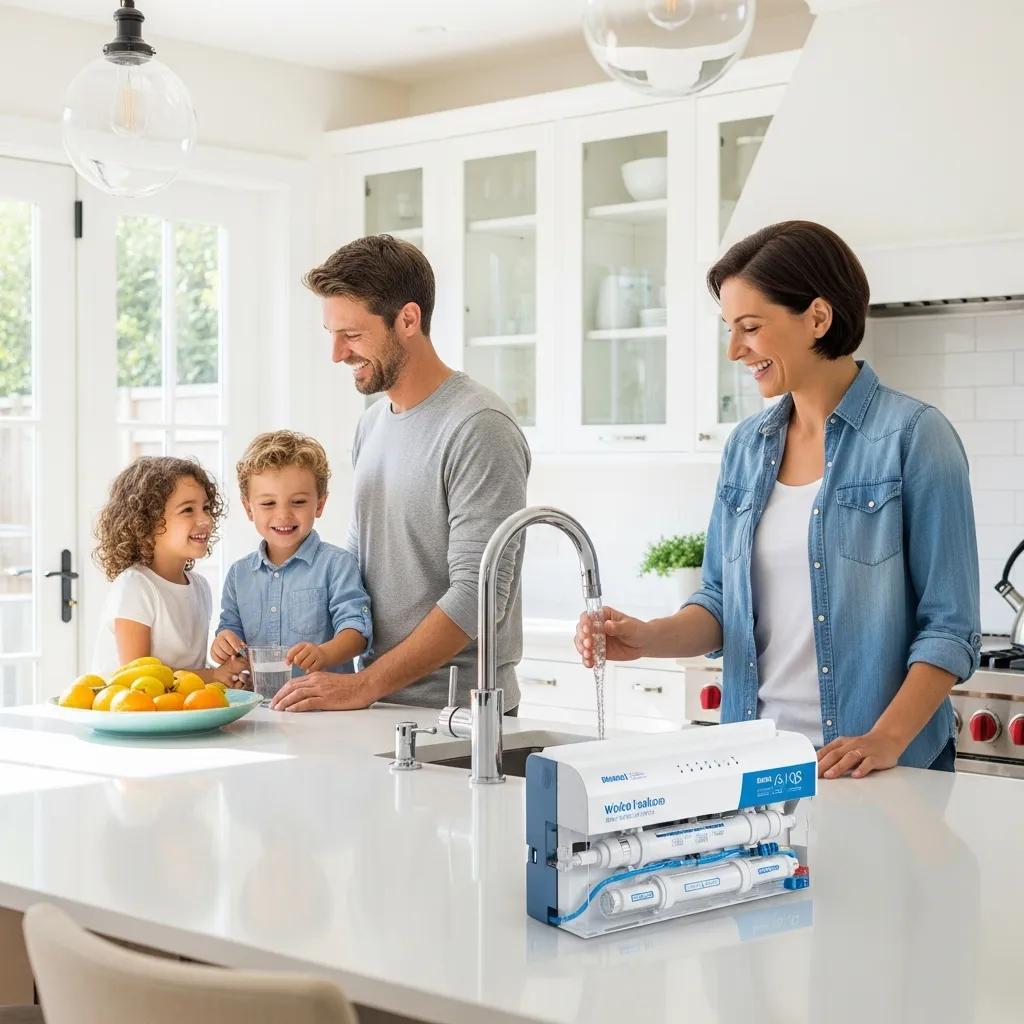
Whole-house water filtration means treating the water where it enters your home so every faucet—kitchen, bathroom, laundry—delivers filtered water. These systems use stages like sediment screens, activated carbon, KDF media, and UV disinfection to cut particulates, chlorine and chloramine taste/odor, some metals, and microbes. The result is safer, better‑tasting water, fewer mineral stains, and less wear on plumbing and appliances. If you live in Michigan and are weighing a whole-home system, this guide walks through the main benefits, filter types that suit municipal and well supplies, installation and permitting in Macomb, Oakland, and Wayne Counties, maintenance needs, likely costs and savings, and tips for choosing a reliable local installer. Read on for practical checklists and clear steps to decide whether a whole-house system makes sense for your home.
What Are the Key Benefits of Whole House Water Filters?
Point-of-entry filtration treats all incoming water so every tap sees the same improvement. Properly sized whole-house systems reduce sediment, remove chlorine taste and odor, cut many volatile organics, and—when designed for it—lower certain metals and microbial risk. That combination protects plumbing and appliances, improves how soaps and shampoos perform, and reduces the need for bottled water. Understanding these practical outcomes helps you choose which technologies matter for your water source.
Whole-house filtration delivers homeowner benefits you can notice right away:
- Cleaner water everywhere: Fewer particles, less chlorine smell and off‑taste at sinks and showers.
- Appliance protection: Less scale and sediment that damage water heaters, dishwashers, and laundry machines.
- Health and safety gains: Targeted stages can reduce exposure to chlorine byproducts, lead, and certain microbes.
- Better skin, hair, and cleaning: Softer-feeling water improves soap lather and cuts skin irritation for many people.
The table below summarizes how those benefits translate into everyday outcomes.
| Benefit | Affects | Practical Outcome |
|---|---|---|
| Cleaner water at taps | Drinking, cooking, bathing | Better taste, clearer glasses, safer food prep |
| Reduced contaminants | Health & safety | Lower chlorine exposure and fewer heavy organics or metals |
| Appliance longevity | Water heaters, dishwashers, laundry | Fewer breakdowns, longer service life, lower maintenance costs |
| Improved skin/hair feel | Personal care | Less dryness and irritation, improved soap lather |
Those real-world improvements are why many homeowners choose whole-house systems: they protect equipment, make daily tasks easier, and can save money over time. The sections that follow explain how different filter types produce these results and what that means for Michigan water.
How Do Whole House Water Filters Improve Water Quality and Safety?
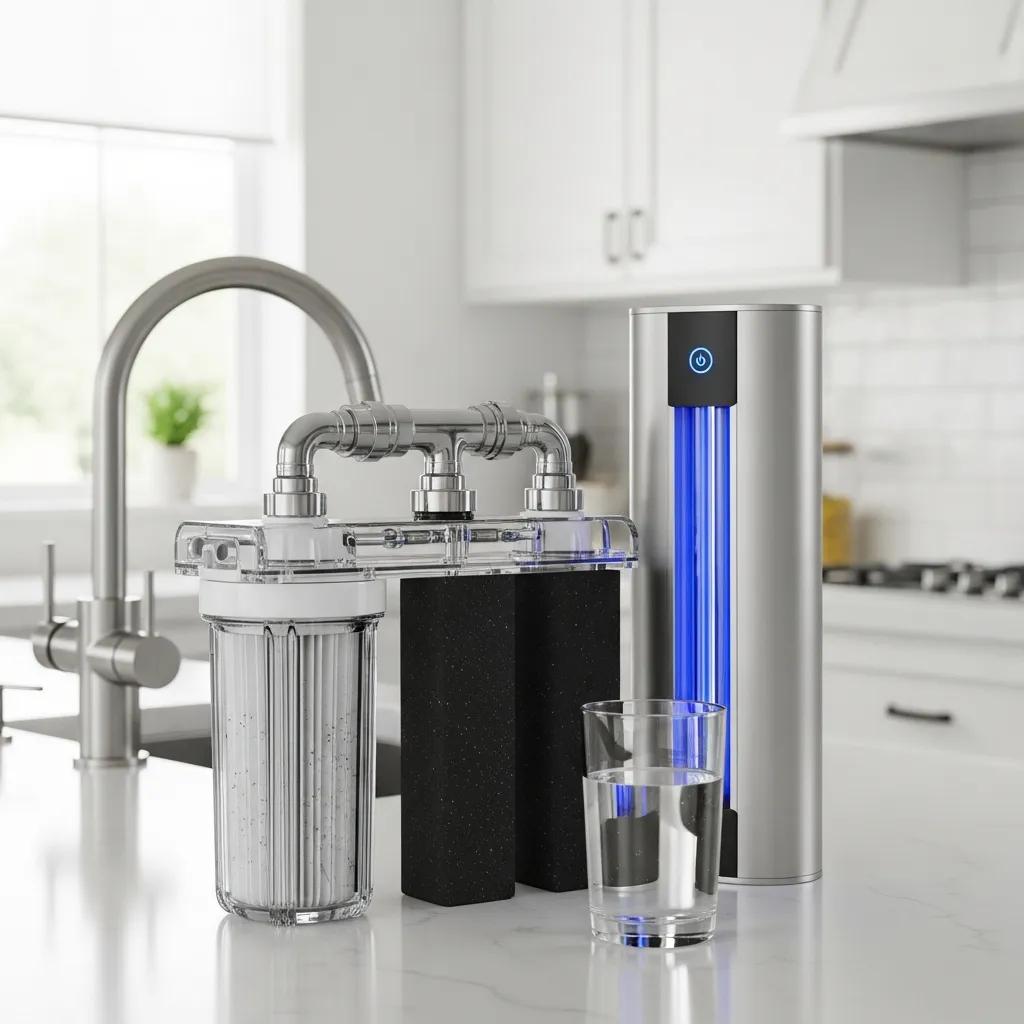
Whole-house solutions use multiple treatment methods so each stage targets specific contaminants. Sediment filters trap sand, rust, and silt. Activated carbon removes chlorine, many organics, and improves taste and odor. KDF media helps control certain metals and biofilm. UV lamps inactivate bacteria and viruses by disrupting their DNA/RNA. When the system is sized correctly, this staged approach treats a broad range of issues without causing large pressure drops. In Michigan, municipal supplies usually bring a chlorine or chloramine residual that carbon handles well; private wells may need sediment pre-filtration and a UV stage to address turbidity and microbial risk. A water test is the first step to choosing the right mix of stages.
Knowing how filtration, adsorption, ion exchange, and UV work helps you match technology to your goals and water source. Next, we cover how these improvements affect skin and hair.
In What Ways Do Whole Home Filters Enhance Skin and Hair Health?
Chlorine and hard-water minerals can dry out skin and make hair look dull. Chlorine oxidizes natural oils, which can increase irritation for people with sensitive skin. Activated carbon removes chlorine, so shower water feels gentler. Hard water minerals—calcium and magnesium—react with soap to leave residues that make hair stiff and skin feel filmy; addressing hardness with a softener or conditioning stage reduces that residue, improves lather, and leaves hair and skin feeling better. Many homeowners notice these cosmetic improvements within days or weeks of installation, and softer water also reduces detergent use and can extend the life of fabrics and linens over time.
Those daily comfort wins are another reason to consider which stages to include in your system.
Which Types of Whole House Water Filtration Systems Are Best for Michigan Homes?
The right system depends on your water source, the contaminants present, and your household flow needs. Common whole-house stages include sediment pre-filters, activated carbon housings, KDF media, UV disinfection, point‑of‑use reverse osmosis for drinking water, and water softeners or salt-free conditioners for hard water. For municipal water with chlorine or chloramine, activated carbon is usually essential. For well water with turbidity or microbial risk, pair sediment, carbon, and UV. In many Michigan homes, a softener or conditioner helps prevent scale and protect appliances, while an under‑sink RO unit can provide very low‑TDS drinking water when desired.
| Filter Type | Removes / Inactivates | Best For |
|---|---|---|
| Sediment filter | Sand, silt, rust, particulate | Homes with cloudy or particulate water |
| Activated carbon | Chlorine, taste/odor, many VOCs, some chloramine types | Municipal water with disinfectant byproducts |
| UV disinfection | Bacteria, viruses, protozoa | Well water or known microbial risk |
| KDF media | Iron reduction, hydrogen sulfide control, biofilm reduction | Water with metals or bacterial growth issues |
| Water softener / conditioner | Calcium, magnesium (scale control) | Hard water areas to prevent scale build-up |
| Reverse osmosis (RO) | Dissolved solids, lead, PFAS (point-of-use) | Under-sink drinking water purification |
Use this matrix with your water quality report to prioritize which stages you need. The next sections compare common stages and explain how softeners and RO fit into a whole-house plan.
What Are the Differences Between Sediment, Carbon, and UV Filters?
Sediment, carbon, and UV each play a specific role in a multi-stage system. Sediment cartridges capture particles to protect downstream media and keep flow steady. Activated carbon adsorbs chlorine, chloramine byproducts, and organic molecules that cause bad taste and odor. UV systems inactivate microorganisms without changing water chemistry. Sediment is rated by micron size and needs more frequent replacement with heavy turbidity. Carbon life depends on chlorine load and flow rate. UV lamps require annual replacement and periodic sleeve cleaning. Used together in the right order, these technologies offer broad protection for quality and safety.
Your water test and household flow demand guide which combination is best.
How Do Water Softeners and Reverse Osmosis Systems Work in Whole House Filtration?
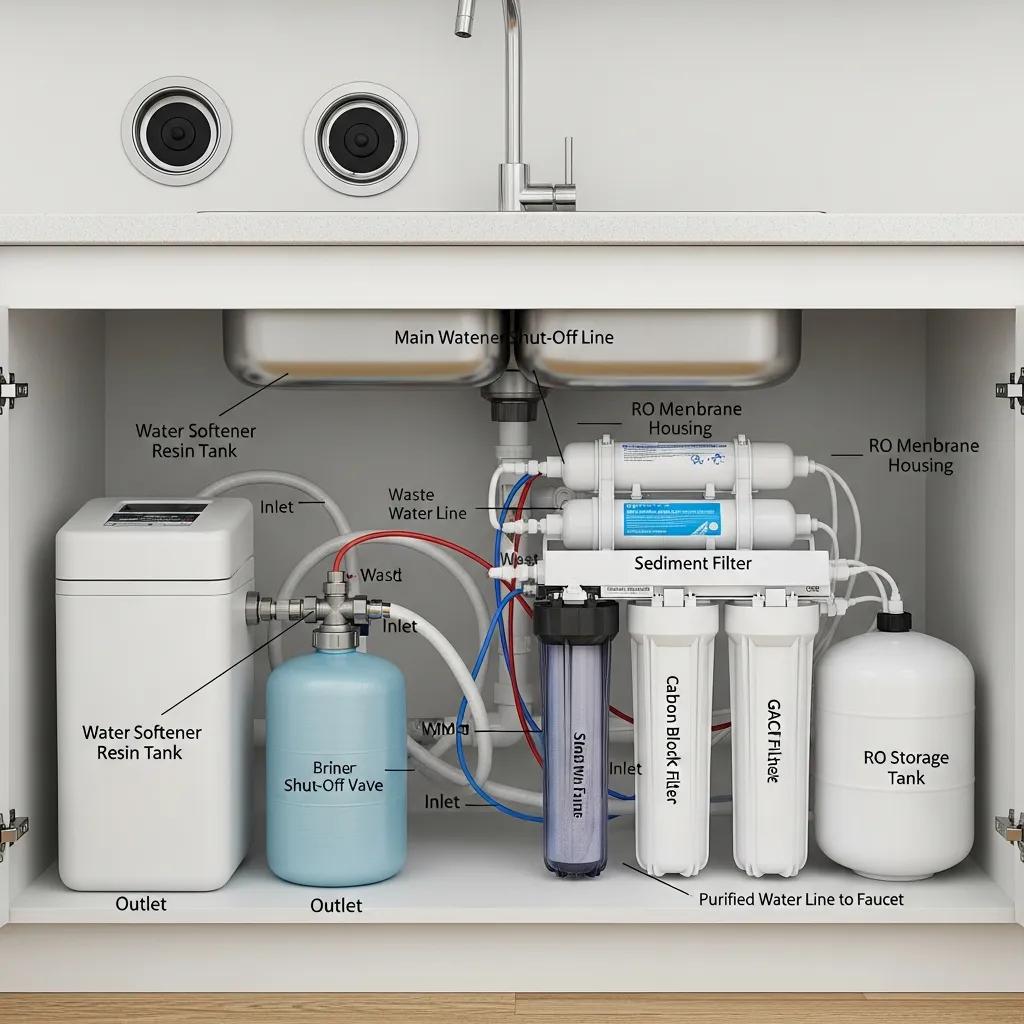
Water softeners use ion exchange to swap calcium and magnesium for sodium or potassium, preventing scale on pipes and appliances. Salt-free conditioners use other media or crystallization methods to reduce scale without ion exchange. Reverse osmosis (RO) uses a semipermeable membrane to remove dissolved solids and is usually installed as an under‑sink, point‑of‑use unit because whole‑house RO is expensive and creates high waste at full flow. In Michigan, pairing a softener upstream of other filters protects media and appliances, while an RO unit at the kitchen sink gives ultra‑clean drinking water. Together, softening and RO are complementary solutions rather than substitutes.
Sizing and placement are decided after flow-rate testing and a site assessment, which professional installers will perform.
How Is Whole House Water Filter Installation Done in Macomb, Oakland, and Wayne Counties?
Installation starts with a site visit that includes a water quality test, peak flow measurement, and a plumbing inspection to pick the best point of entry, bypass setup, and pre/post stages. A typical installation checklist covers the main steps so homeowners know what to expect:
- Run a water quality test and measure peak flow to size equipment correctly.
- Shut off the main, cut in the point‑of‑entry filter, and add a bypass for servicing.
- Mount housings, load media, install pressure gauges and valves, and wire/install UV components if used.
- Pressure‑test, flush per manufacturer specs, and complete any local permit or inspection requirements.
These actions ensure the system meets household demand, keeps water pressure steady, and stays serviceable. Permit rules vary by township, so a licensed installer typically confirms what paperwork and inspections are required before starting work.
If you prefer professional help, Frost and Kretsch Plumbing offers local installation across Macomb, Oakland, and Wayne Counties. Our team performs site assessments and water testing, recommends systems that balance contaminant reduction with flow needs, installs point‑of‑entry housings with bypass valves, and coordinates municipal permitting as needed. We provide 24/7 emergency service, clear pricing, and a 100% satisfaction guarantee. To schedule an on‑site evaluation and installation quote, contact Dave Kretsch at the company phone number or visit our business address for an in‑person consultation. Hiring licensed technicians reduces permit risk, avoids sizing mistakes, and keeps warranties intact.
What Maintenance Is Required to Keep Whole House Water Filtration Systems Effective?
Regular maintenance keeps filtration working and prevents pressure loss, media exhaustion, and biofilm. Typical tasks include scheduled cartridge changes, annual UV lamp and sleeve servicing, and yearly system checks that include pressure testing and a follow-up water sample. Heavy sediment or seasonal water changes can shorten replacement intervals, so track usage and local conditions and keep a maintenance calendar to plan recurring costs and avoid surprises. That calendar also helps you know when to call a pro versus doing a homeowner check.
Common maintenance schedule items:
- Check and replace sediment cartridges every 3–6 months depending on turbidity and use.
- Replace activated carbon every 6–12 months based on chlorine load and household demand.
- Replace UV lamps and clean quartz sleeves annually to keep disinfection effective.
Following these intervals keeps contaminant removal consistent and reduces downstream problems like pressure drops or taste recurrence. Simple troubleshooting—verify bypass valves, check housings for leaks, and watch pressure gauges—fixes many minor issues. If taste, odor, or pressure problems persist, call a licensed technician to test water, inspect media, and adjust the system.
Frost and Kretsch Plumbing offers scheduled filter replacement, annual UV servicing, and yearly system checks to ensure steady performance. Homeowners can book recurring maintenance or emergency visits; our licensed technicians serve Macomb, Oakland, and Wayne Counties with transparent pricing and satisfaction guarantees to simplify long-term care.
How Often Should Filters Be Replaced and Systems Serviced?
Replacement timing varies by filter type, household use, and baseline water quality. Sediment filters usually need changing every 3–6 months. Activated carbon cartridges commonly last 6–12 months. KDF and other specialty media can last multiple years depending on load. UV lamps should be replaced annually and their sleeves cleaned. Heavy turbidity or high chlorine levels shorten media life. The best indicators for replacement are regular testing and watching pressure differentials across housings.
What Are Common Troubleshooting Tips for Whole House Water Filters?
Start with quick homeowner checks: make sure bypass valves are set to route water through the filters, look for visible leaks, and read pressure gauges for drops that signal clogging. If pressure falls, a clogged sediment or carbon cartridge is the likely cause—replace it and flush the system to restore flow. If taste or odor returns after a cartridge change, check cartridge seating and follow the manufacturer’s flushing instructions; sometimes more contact time with carbon is needed. When basic checks don’t fix the problem, call a licensed plumber to test water, inspect media condition, and review installation details that could affect performance.
Knowing when to call a pro helps protect system life and maintain water quality.
How Much Does a Whole House Water Filtration System Cost in Michigan?
Price depends on system complexity, home size, and local labor. A simple single‑stage sediment plus carbon setup has lower upfront cost but needs more frequent cartridge changes. Multi-stage systems with UV, softeners, or specialty media increase equipment and installation costs. Recurring expenses include replacement cartridges, UV lamp changes, and periodic servicing. Long-term savings—fewer bottled-water purchases, fewer appliance repairs, and better water‑heater performance—can offset the initial investment.
| Cost Component | One-time vs Recurring | Estimated Range (Michigan) |
|---|---|---|
| Equipment (single-stage) | One-time | $500–$1,500 |
| Equipment (multi-stage with UV/softener) | One-time | $1,500–$5,000 |
| Installation labor & permits | One-time | $500–$2,000 |
| Replacement cartridges | Recurring | $100–$400/year |
| UV lamp & servicing | Recurring | $75–$200/year |
These ranges show how system choice and home specifics drive overall cost. Include water testing and flow‑rate sizing in your budget—pre‑treatment or larger housings may be needed for high peak flows.
For an accurate estimate for your property, Frost and Kretsch Plumbing offers personalized quotes and on‑site water quality assessments; schedule an evaluation at our business address or by calling the company phone number. An on‑site visit ensures quotes reflect local permitting, pipe access, and the right system capacity for your household.
What Factors Influence the Price of Installation and Operation?
Several variables affect price: how easy pipe access is and your home’s layout determine installation complexity; peak flow rate sets filter sizing and media volume; and water quality (hardness, turbidity, contaminant levels) dictates the number and type of stages required. Larger or multi‑family homes often need bigger housings or parallel staging to keep pressure during simultaneous use. Specialty needs—whole‑house RO or large softeners—raise equipment and labor costs. Simpler single‑stage setups cost less up front but require more frequent maintenance.
Knowing these cost drivers helps you compare bids fairly and ensures estimates are apples‑to‑apples when evaluating local plumbers. The next section explains how long‑term savings can justify an initial investment.
How Do Long-Term Savings Offset Initial Investment?
Whole-house systems can reduce recurring costs for bottled water, cut detergent use thanks to better lathering, and lower repair bills from scale and sediment. For example, a household spending $600/year on bottled water could recoup a $2,400 net investment in about four years when you factor in fewer appliance repairs and ongoing cartridge costs. Non‑monetary savings—health, convenience, and reduced plastic waste—also shorten the perceived payback period and improve quality of life.
When comparing proposals, calculate annualized equipment cost (amortized over expected service life) plus recurring maintenance, then compare that to current bottled-water and repair expenses to estimate payback and ROI. Frost and Kretsch Plumbing can run an ROI assessment during a site visit to show break‑even scenarios for your home.
Why Trust Frost and Kretsch Plumbing for Your Whole House Water Filtration Needs?
Frost and Kretsch Plumbing combines local knowledge of Michigan water with real plumbing experience. Our licensed technicians review water tests, measure flow, and inspect plumbing to recommend systems that balance contaminant reduction with household performance. We offer transparent pricing, a 100% satisfaction guarantee, and 24/7 emergency service so you have support when issues arise. Those service elements—skill plus responsiveness—are critical when you depend on a whole‑house system every day.
What local experience do we bring? We know the region’s common issues—municipal chlorine residuals, hard water scale, and occasional well‑water microbial concerns—and we use that knowledge to pick appropriate media and staging. Our technicians size systems to minimize pressure loss and ensure bypass access for easy maintenance, which lowers long‑term service costs and extends system life.
How does our 24/7 availability and clear pricing help you? Fast emergency response reduces downtime and risk from leaks or failures, and upfront pricing removes surprise invoices so you can plan. To schedule a site assessment, estimate, or maintenance visit, call the company phone number or stop by our office; ask for Dave Kretsch to coordinate installation and quotes.
Our goal is to make whole‑house filtration a predictable, well‑supported investment—not an uncertain retrofit. We pair reliable equipment with ongoing service so homeowners get long‑term value and peace of mind.
Frequently Asked Questions
1. What is the lifespan of a whole house water filtration system?
System lifespan varies by design, water quality, and maintenance. A well‑maintained whole‑house system can last 10–20 years. Consumable parts need regular attention: sediment filters every 3–6 months, activated carbon every 6–12 months, and UV lamps annually. Routine maintenance and timely replacements are key to getting the expected lifespan.
2. Can I install a whole house water filtration system myself?
Some homeowners may attempt DIY, but we usually recommend a licensed professional. Proper installation requires plumbing skills, knowledge of local codes, and correct sizing. A pro will run water tests, size the system for peak flow, and install components so they perform correctly and keep warranties valid.
3. How do I know which filtration system is right for my home?
Start with a water quality test to identify chlorine, hardness, metals, microbes, or other contaminants. Your water source (municipal or well), test results, and household water use determine the best combination of sediment, carbon, UV, softening, or RO stages. If you’d like, we can perform the test and recommend a tailored solution.
4. What are the environmental benefits of using a whole house water filtration system?
Whole‑house filtration reduces the need for bottled water, cutting plastic waste and the carbon footprint of transporting bottles. Filtered water also improves soap performance, potentially lowering the need for harsh cleaners and detergents. Those benefits add up environmentally and save money over time.
5. Are there any health risks associated with not using a water filtration system?
Without filtration, you may be exposed to contaminants present in your supply—chlorine, lead, bacteria, or other pollutants—depending on your source and local treatment. Those contaminants can cause short‑term stomach upset or contribute to long‑term risks. A properly designed whole‑house system reduces many common exposures and improves safety for drinking and bathing.
6. How can I maintain my whole house water filtration system effectively?
Maintain your system by following a schedule: sediment filters every 3–6 months, carbon every 6–12 months, and UV lamps annually with sleeve cleaning. Perform yearly inspections, monitor pressure, and test water periodically. Scheduling recurring maintenance with a licensed provider keeps performance steady and prevents surprises.
7. What should I do if my water filtration system is not working properly?
First, check bypass valves, housings for leaks, and pressure gauges to spot clogs. Replacing a clogged cartridge and flushing often restores flow. If problems persist—continued taste, odor, or low pressure—contact a licensed technician to test the water, inspect media, and diagnose installation issues.
Conclusion
Installing a whole‑house water filtration system can deliver cleaner water, longer‑lasting appliances, and a more comfortable daily experience for your family. By testing your water and choosing the right combination of filtration stages, you can protect health, save on repairs, and reduce bottled water use. Ready to explore options for your Michigan home? Contact Frost and Kretsch Plumbing to schedule a personalized consultation and take the first step toward better water throughout your house.