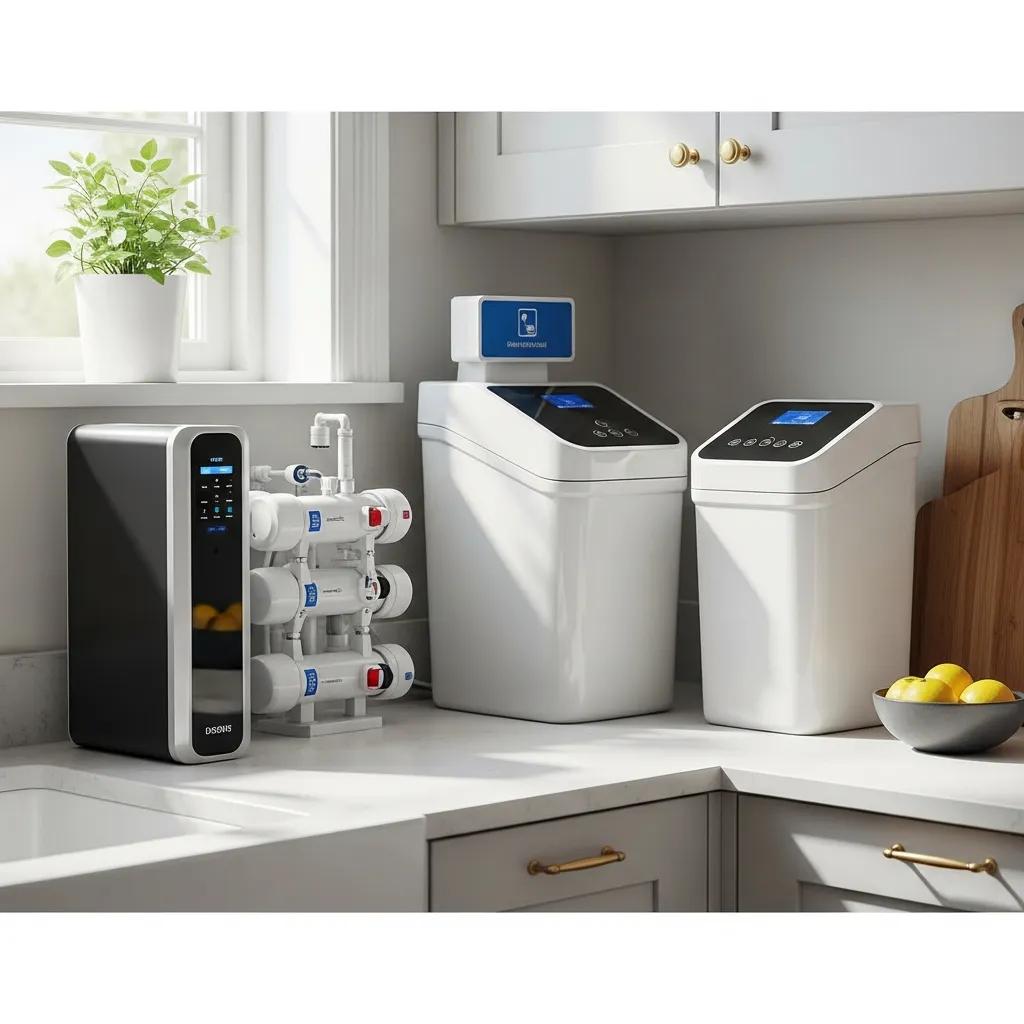
Smart Water Treatment for Your Home: Practical Solutions for Cleaner, Safer Water
Modern water treatment systems combine filtration, ion exchange, membrane separation and disinfection to remove contaminants that affect health, plumbing and appliances. This guide walks through whole-house filtration, water conditioning, reverse osmosis, UV disinfection and specialty media—how each works, what problems they solve, and how they affect taste, fixtures and issues like PFAS or iron. You’ll learn how to match systems to municipal or well water, spot common water-quality symptoms, and plan installations and upkeep so systems perform reliably. We cover practical decision points, comparisons of system types, and local testing and service steps to help you choose whole-house protection or targeted point-of-use solutions. If you want local installation help, we explain how Frost & Kretsch Plumbing can test your water and provide estimates.
What Advanced Water Treatment Systems Do and How They Improve Home Water
Advanced treatment uses several technologies—physical filters, chemical adsorption, ion exchange and membranes—to remove or neutralize contaminants at the point of entry or at the tap. Different technologies target different problems: sediment and carbon filters catch particles and chlorine, ion-exchange softeners remove hardness minerals, reverse osmosis membranes cut dissolved solids (including some PFAS), and UV systems inactivate microbes. These processes reduce scale on appliances, improve drinking-water taste and odor, and lower risks from lead, iron and organic contaminants. Knowing how each method works helps you balance benefits against maintenance, footprint and cost when deciding between whole-house and point-of-use approaches.
Advanced systems deliver clear homeowner benefits that vary with system choice and water chemistry. Below are the main outcomes to weigh when evaluating residential water treatment.
- Health and Safety: Removing microbes and specific chemicals makes drinking water safer and lowers exposure risks.
- Appliance Protection: Softeners and scale-control reduce wear on water heaters, dishwashers and plumbing fixtures.
- Taste and Odor: Carbon and specialty media cut chlorine, VOCs and bad tastes for better drinking and cooking water.
- Lower Maintenance: Proper pre-filtration and correct sizing reduce downstream service needs for appliances and point-of-use units.
Because these benefits depend on what’s actually in your water, testing is the logical first step before choosing equipment—next we look at whole-house filtration and its advantages.
Whole-House Water Filtration: What It Is and Why It Helps
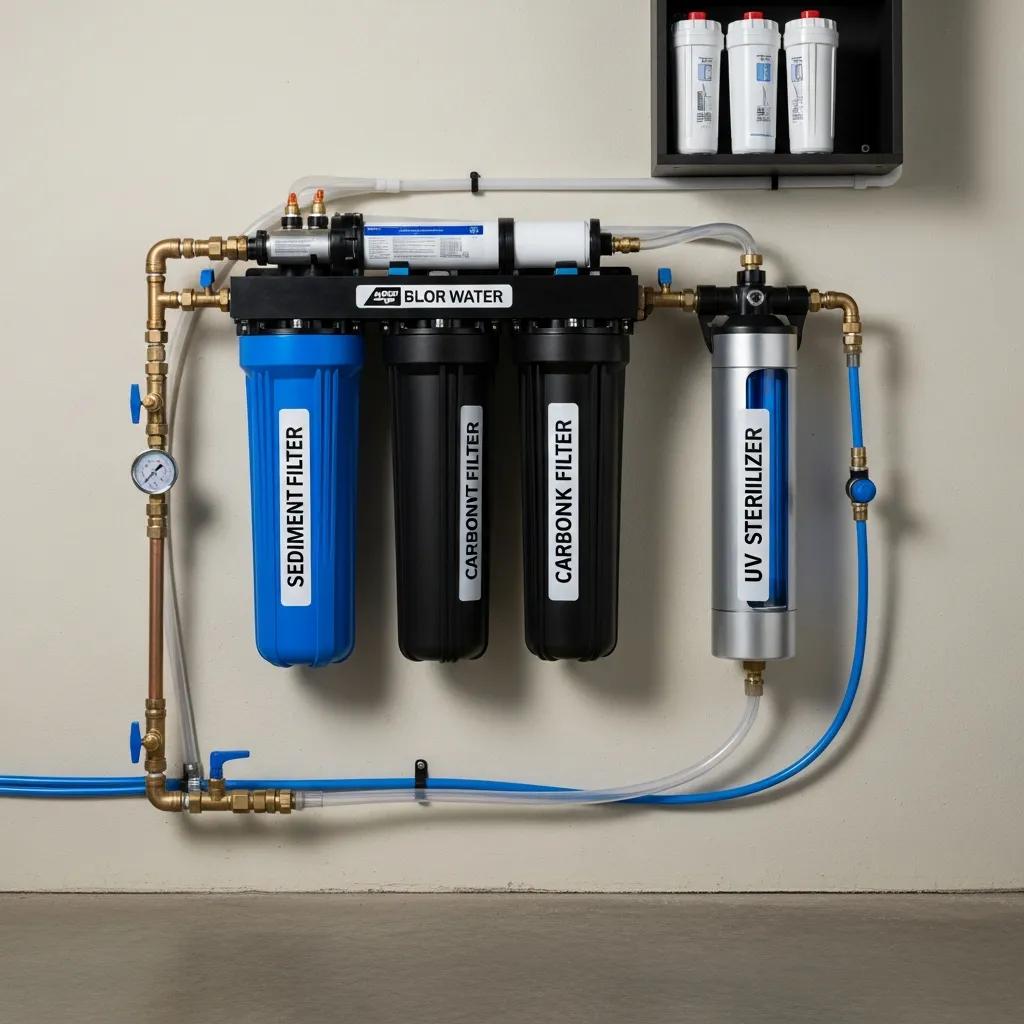
Whole-house, or point-of-entry, systems treat every drop that enters your home using staged media—sediment pre-filters, carbon blocks and optional specialty cartridges—to remove particles, chlorine, VOCs and targeted contaminants. Staged filtration works step by step: a sediment filter catches grit, carbon adsorbs chlorine and organics, and specialty media address iron, manganese or PFAS. This approach protects pipes and appliances from scale and corrosion and gives every tap noticeably better water. Homes on municipal systems with chlorine or older plumbing often benefit from whole-house filtration because it reduces skin and eye irritation during bathing and prevents sediment-related wear on fixtures.
Whole-house systems are a good fit when multiple fixtures need treatment, when staining or widespread taste/odor issues occur, or when protecting appliances is a priority. Choosing the right media and sizing the system correctly is essential—and that decision will determine whether you should add a point-of-use solution like reverse osmosis for drinking water.
How Softeners and Conditioners Tackle Hard Water
Hard water—mainly calcium and magnesium—can be managed by ion-exchange softeners or salt-free conditioning technologies. Ion-exchange softeners swap calcium and magnesium for sodium or potassium on a resin bed, which reduces scale and improves soap performance. Salt-free conditioners use methods like templated crystallization to change how minerals form so they’re less likely to stick to surfaces, preventing scale without adding salt. Both reduce scale and improve cleaning results, but they differ in how they work, maintenance needs and wastewater production.
Owners typically pick ion-exchange softeners when hardness is high and appliances are at risk of scale; salt-free options are chosen when salt discharge is a concern or simplicity is preferred. Ongoing maintenance—resin checks and salt refills for salt-based systems, or periodic media replacement for salt-free units—affects long-term performance and should factor into your decision.
Which Residential Water Purification Systems Fit Your Home?
Choosing the right system depends on your water source (municipal vs. well), the contaminants you need to remove, whether you prioritize appliance protection or drinking-water purity, and your budget. Whole-house filtration covers broad issues like sediment and chlorine; reverse osmosis targets dissolved solids and many contaminants (including some PFAS) for drinking water; UV and specialty media address biological or specific chemical problems. Often the best solution combines point-of-entry filtration to protect plumbing with a point-of-use RO unit for drinking water. Start with test results to match system types—like carbon block, RO membrane and UV—to the contaminants you find.
The table below summarizes common system categories and what to expect from each.
| System Type | Primary Function | Typical Outcome |
|---|---|---|
| Whole house water filtration | Point-of-entry sediment and carbon stages | Reduces sediment, chlorine and VOCs; protects plumbing |
| Salt-based water softener | Ion exchange to remove hardness ions | Eliminates scale and improves detergent performance |
| Salt-free water conditioner | Scale prevention via crystallization | Reduces scale without brine discharge |
| Under-sink reverse osmosis system | Membrane filtration for drinking water | Lowers TDS and many chemical contaminants |
| UV sterilizer | Disinfection of biological contaminants | Inactivates bacteria and viruses without chemicals |
Frost & Kretsch Plumbing installs whole-house filters, conditioners and under-sink RO systems and can translate test results into a practical design and an installation estimate. Homeowners in Grosse Pointe and nearby counties can call (313) 881-2818 to start the conversation.
Salt-Based vs. Salt-Free Softeners: Practical Differences
Salt-based ion-exchange softeners remove hardness by swapping calcium and magnesium for sodium or potassium, giving consistent softness but requiring salt replenishment and occasional resin maintenance. Salt-free conditioners change how minerals crystallize so they don’t cling to surfaces, avoiding salt handling and brine discharge. The trade-offs are straightforward: salt-based systems give measurable softness that helps cleaning and appliance life, while salt-free systems offer lower maintenance and environmental advantages but can be less effective in extremely hard water.
The short comparison below highlights each approach and what it means for homeowners.
| Technology | Removes/Prevents | Homeowner Impact |
|---|---|---|
| Salt-based softener | Removes Ca & Mg via ion exchange | Reliable softness; needs salt and periodic regeneration |
| Salt-free conditioner | Prevents scale by changing crystal formation | Lower maintenance, no brine; variable results in very hard water |
| Template-assisted crystallization (TAC) | Alters mineral behavior without ion exchange | Effective plumbing protection when strict softness isn’t required |
Pick based on measured hardness, environmental preferences and how much maintenance you want to perform. Accurate testing clarifies which option fits your home.
How Reverse Osmosis Systems Deliver Clean Drinking Water
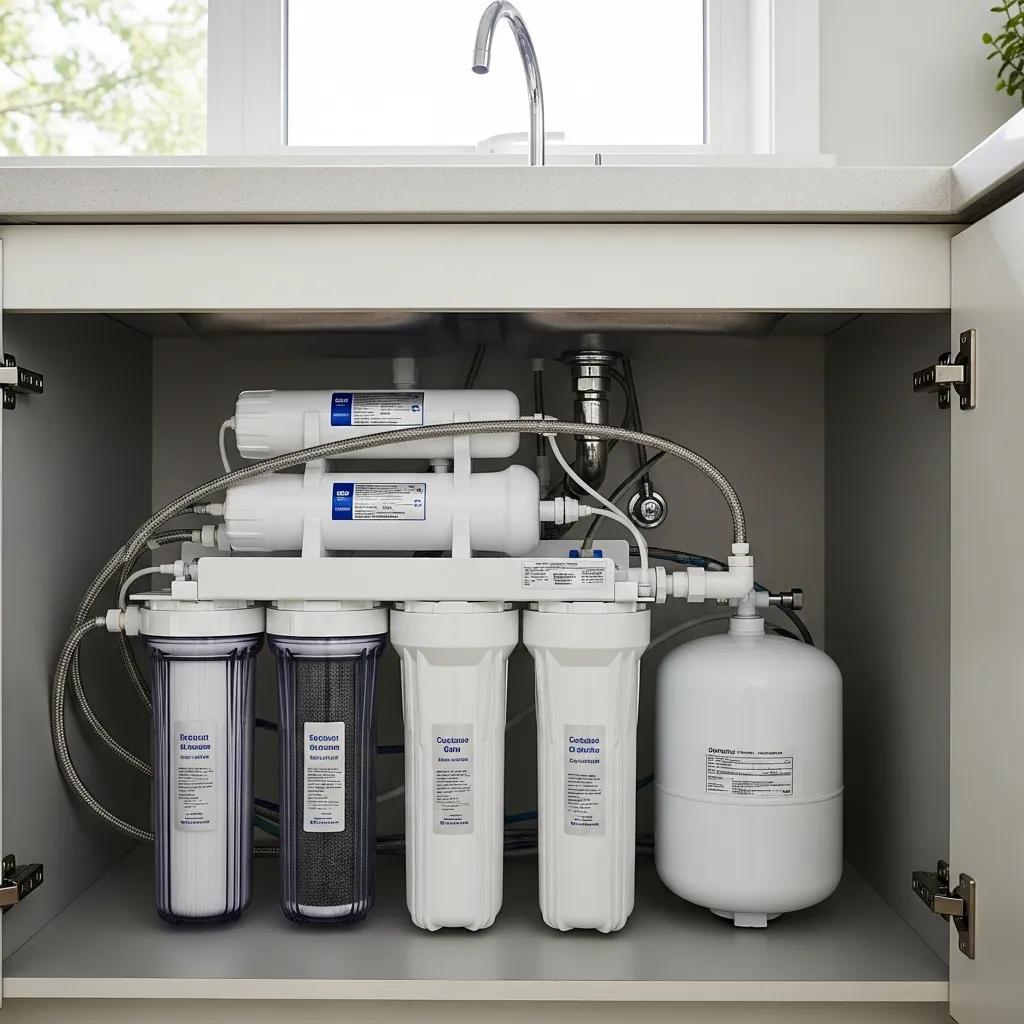
Under-sink reverse osmosis (RO) systems use pre-filters, a membrane and post-carbon polishing to reduce dissolved solids, heavy metals and many organic contaminants—producing low-TDS water for drinking and cooking. The membrane forces water through tiny pores that reject contaminants while pre-filters protect the membrane from sediment and chlorine, which extend membrane life. RO is best as a point-of-use solution when drinking-water purity is the main goal, and it works well with a whole-house carbon stage that eases the load on RO pre-filters.
Maintenance includes replacing pre- and post-filters on schedule and checking the membrane every few years; RO systems do use some wastewater and need space and a drain connection under the sink. For many homes, a point-of-entry carbon stage plus an under-sink RO gives thorough protection without oversizing whole-house equipment.
How to Spot and Fix Common Water Problems in Grosse Pointe Homes
Start by watching for symptoms—unusual taste or odor, staining, cloudiness or scale—and follow targeted tests to identify likely contaminants. Municipal water commonly shows chlorine or chloramine tastes and occasional PFAS concerns, while wells need testing for iron, bacteria and hardness. Combine quick home tests (TDS meters, iron test kits, bacterial checks) with professional lab analysis for metals and PFAS to get a full picture. Early diagnosis protects appliances and addresses health or aesthetic problems before they worsen.
The table below links common contaminants to typical sources and solutions to help prioritize next steps.
| Contaminant | Common Source | Typical Solution |
|---|---|---|
| Chlorine/Chloramine | Municipal disinfection | Whole-house carbon filtration |
| Sediment | Aging pipes or well intrusion | Point-of-entry sediment filters |
| PFAS | Industrial or municipal contamination | Granular activated carbon or specialized media; RO for drinking water |
| Iron | Well water or corroding pipes | Iron removal filters or softening strategies |
Once testing identifies contaminants, solutions usually combine whole-house and point-of-use technologies. Immediate steps may include flushing lines, installing pre-filters and scheduling professional lab testing to confirm the contamination profile.
Recognizing Contaminants: Chlorine, Sediment, PFAS and More
Contaminants show up with familiar signs: chlorine smells or tastes like bleach, sediment makes water cloudy or gritty, iron leaves rust-colored stains, and PFAS are usually odorless and require lab tests to find. Impacts range from taste and staining to longer-term exposure concerns with persistent chemicals. Treatments vary: carbon adsorbs chlorine and many organics, sediment filters trap particulates, iron-specific media handle iron, and RO or specialized media can reduce certain PFAS.
Use sensory clues together with testing to pick targeted solutions instead of one-size-fits-all systems. That lets you address urgent issues quickly while planning a complete treatment strategy.
Why Regular Water Testing Matters
Routine testing establishes a baseline and tracks changes over time, helping you catch microbial contamination, rising TDS or emerging chemicals like PFAS. Common tests measure TDS, pH, bacteria (total coliform and E. coli), metals (lead, iron) and targeted organics where suspected. Wells typically need yearly bacterial and nitrate checks; municipal customers should test when symptoms appear or before major system upgrades. Test results guide choices—membrane selection, carbon type or resin choice—and reveal combined problems like iron plus hardness that need staged solutions.
Schedule baseline testing at move-in, annual checks for wells and symptom-driven testing for municipal systems. Professional testing plus consultative system design reduces the chance of under- or over-specifying equipment. If multiple contaminants are present, a staged approach that pairs whole-house filtration with point-of-use treatment is usually the most reliable path.
Installation and Maintenance: What to Expect
Professional installation starts with a site assessment: incoming water quality, flow needs and available space determine correct sizing and pre-filtration. Typical installation steps include adding a shutoff and bypass, mounting tanks or housings, integrating plumbing with proper pressure and drainage, and commissioning with performance checks. Professional work ensures code-compliant connections, correct brining and regeneration setup for softeners, and verified RO membrane performance. Homeowners typically provide access, follow pre-install recommendations and learn basic maintenance tasks to keep systems running well.
The table below is a quick-reference maintenance schedule for common components to help you plan routine care.
| System Component | Maintenance Task | Recommended Frequency |
|---|---|---|
| Sediment pre-filter | Replace cartridge | Every 3–6 months |
| Carbon block | Replace cartridge | Every 6–12 months |
| RO membrane | Inspect/replace as needed | Every 2–4 years depending on use |
| Softener resin & salt | Replenish salt and inspect resin | Salt as needed (monthly); resin service when required |
Professional Installation: Why It’s Worth It
A professional installer checks flow rates and water chemistry, sizes the system correctly and ties it into your plumbing to meet code and perform as intended. Installers pressure-test connections, set up bypass valves and confirm pre-filters protect membranes and resin beds. They also document what was installed, filter types and recommended service intervals so you know how to care for the system. Proper installation lowers the risk of leaks, poor performance or warranty problems.
Knowing the installation steps and expected outcomes helps you plan maintenance and recognize when to call for service—details we cover in the next section.
Routine Maintenance and Troubleshooting Tips
Typical maintenance includes replacing sediment and carbon filters on schedule, checking softener salt and running backwash/regeneration cycles, and monitoring RO output TDS to spot membrane decline. Troubleshooting starts with checking pre-filters for clogs if pressure drops, verifying UV lamp power and operation, and confirming drain and tank valves on softeners and RO units. Ongoing issues—staining, persistent odors or repeated bacterial detections—usually need a professional because they often indicate incorrect sizing, exhausted media or well intrusion.
A basic homeowner checklist reduces emergency calls: keep spare cartridges, log replacement dates, note changes in taste or pressure, and contact a qualified plumber if simple fixes don’t restore performance. To schedule installation or get an estimate, Frost & Kretsch Plumbing takes service calls at (313) 881-2818.
Why Frost & Kretsch Plumbing Is a Good Choice for Water Conditioning
Frost & Kretsch Plumbing is a family-owned company serving Grosse Pointe and nearby communities with residential and commercial plumbing services that tie directly into water treatment. We handle emergencies, sewer and drain work, and excavation that often complements water treatment projects by addressing source or access issues. Choosing a provider that knows local plumbing and water patterns simplifies system selection and installation.
Homeowners in Macomb, Oakland and Wayne Counties can call (313) 881-2818 to schedule an on-site consultation about water testing, system options and timelines.
Local Experience and Licensed Plumbers Serving Your Area
Local experience means our technicians understand regional water sources, likely contaminant patterns and the practical constraints of older and newer homes. Frost & Kretsch Plumbing coordinates plumbing work with water treatment installations—installing bypasses, integrating softeners or arranging excavation for point-of-entry systems—so you avoid mismatched components or extra rework. Booking an on-site assessment helps ensure correct sizing, code compliance and solutions tailored to your property.
To set up a consultation or request a water-testing recommendation, call (313) 881-2818 to speak with a representative and arrange an evaluation.
Clear Communication, Fair Pricing and Ongoing Support
We focus on straightforward communication about what’s needed, what to expect during installation and the follow-up support that keeps systems working. While exact pricing varies by job and is determined during the assessment, we explain recommended options and the steps involved so homeowners understand investment and maintenance implications before committing. Request an estimate and testing-based recommendations to compare options with confidence.
This service approach helps homeowners make informed, data-driven decisions when investing in whole-house purification or targeted treatment systems.
Frequently Asked Questions
What are the signs that my water quality is poor?
Poor water quality shows up as unpleasant tastes or odors, cloudy water, staining on fixtures, or scale buildup in appliances. A chlorine taste points to municipal disinfection, while rust-colored stains often mean iron. If you see any of these signs, start with water testing to identify the contaminant and the right treatment.
How do I choose between a whole house system and point-of-use solutions?
Choose based on your needs. Whole-house systems treat water for every tap—good for sediment, chlorine and overall protection—while point-of-use systems like RO focus on drinking-water purity. Consider the contaminants present, how many fixtures need treatment and your budget when deciding.
What maintenance is required for reverse osmosis systems?
RO systems need regular maintenance: replace pre- and post-filters every 6–12 months, inspect the membrane every 2–4 years, and check fittings and the drain connection for leaks. Regular care extends system life and keeps drinking water clean.
Can I install a water treatment system myself?
Some homeowners tackle smaller installs, but professional installation is recommended. Proper sizing and code-compliant plumbing are important; installation mistakes can cause leaks, poor performance or warranty issues. A licensed plumber provides a reliable setup and peace of mind.
What should I do if my water quality changes suddenly?
If taste, smell or appearance changes suddenly, test the water right away. For severe issues—bacterial contamination or harmful chemicals—limit water use and call a professional plumber or water-treatment specialist to assess and recommend remedies.
How can I ensure my water treatment system is effective?
Regular testing and maintenance keep systems effective. Follow manufacturer service intervals, replace filters and check components as recommended, and schedule periodic water tests to verify performance. If you notice changes, consult a professional.
How Often Should I Schedule Water Testing and System Maintenance?
Do baseline testing at move-in or before selecting a system, then test annually for wells and whenever symptoms appear for municipal connections. Maintenance intervals vary: sediment pre-filters every 3–6 months, carbon cartridges every 6–12 months, RO membranes every 2–4 years depending on use, and softener salt replenished as needed with periodic resin checks. Watch for higher TDS, lower pressure or renewed staining as signals you need service sooner. Regular testing and maintenance preserve performance and guide upgrades if necessary.
Is a Whole House Water Filtration System a Good Investment?
A whole-house system is a smart investment when you want to protect plumbing and appliances from sediment and scale, remove chlorine or other common contaminants, and improve water quality at every tap. Benefits include longer appliance life, lower cleaning costs and better comfort for bathing and laundry. The value depends on your test results—if you have significant sediment, chlorine or iron, whole-house treatment usually pays off. Pairing whole-house filtration with a point-of-use RO often delivers the best mix of broad protection and high-purity drinking water.
This article ends here after the last required heading and section.
Conclusion
Upgrading your home with advanced water treatment improves safety, taste and appliance longevity. By understanding available technologies and testing your water, you can choose systems that match your needs and local conditions. For personalized advice and professional installation, contact Frost & Kretsch Plumbing. Call us to take the first step toward cleaner, safer water for your home.