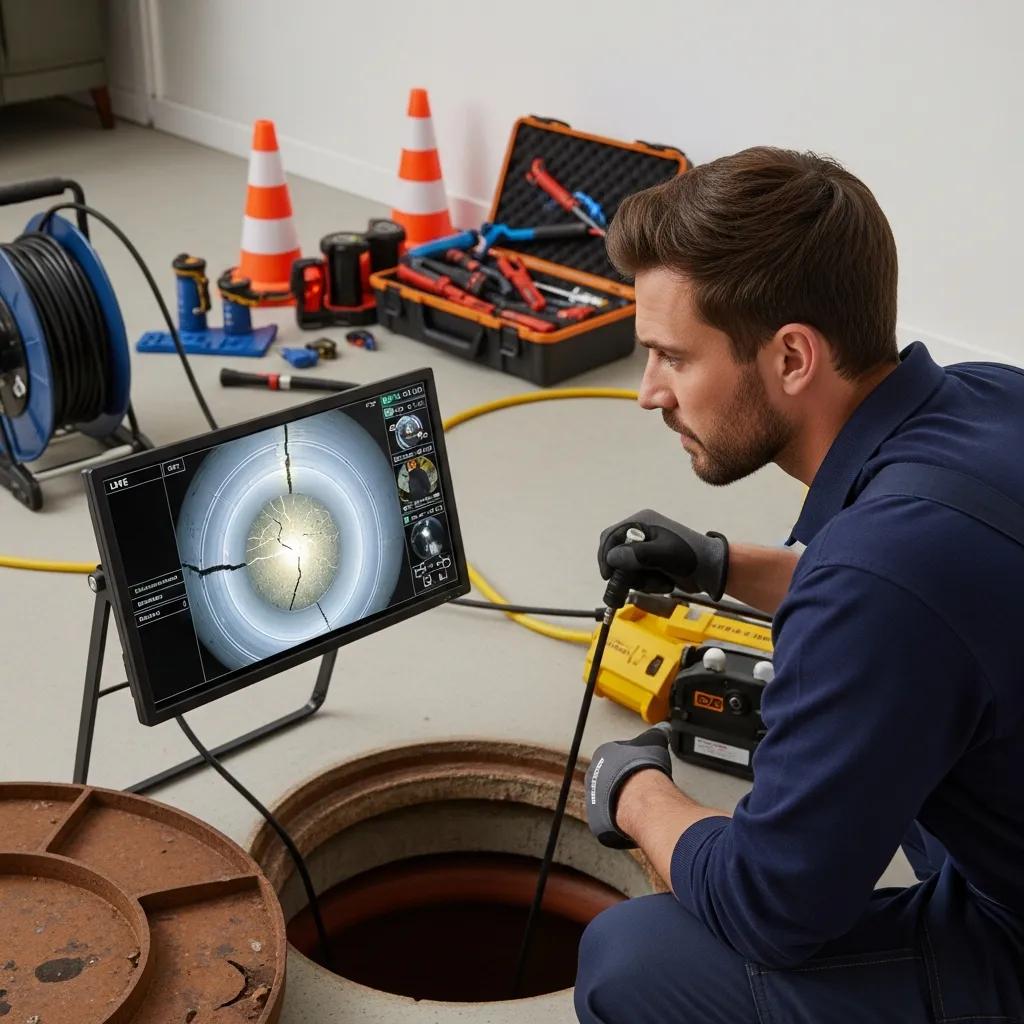
Advanced Sewer Camera Inspection Services — A Practical Guide to Sewer Line Diagnostics and Solutions
Sewer camera inspection is a non‑invasive diagnostic service that uses specialized video equipment to look inside underground sewer lines and drain pipes. It gives clear footage and location data so you don’t have to dig blindly. Homeowners and property managers get precise diagnoses for issues like cracks, root intrusion, misaligned joints, grease build‑up, and bellied pipes — letting crews target repairs and often avoid full-depth excavation. This guide walks through how video inspection works, the camera gear technicians use, common problems uncovered, when to schedule an inspection, what drives cost, where local service is available, and how to book residential or commercial inspections. You’ll also find step‑by‑step workflows for pipe scopes, how technicians read footage and sonde locates, trenchless repair options that scopes enable, typical cost factors, and what to expect from booking through post‑inspection reporting. We’ve included practical checklists and quick-reference tables for homeowners and facility managers across Macomb, Oakland, and Wayne counties to plan effective sewer diagnostics and next steps.
What Is Sewer Camera Inspection and How Does It Work?
A sewer camera inspection inserts a waterproof camera head into a sewer or drain line to record continuous video of the pipe interior while a locator traces the camera’s position above ground. The setup usually includes the camera head on a push‑rod or crawler, a monitor/recorder, and a sonde/locator to map depth and horizontal position. The end result is timestamped video, still images, and a written condition summary that guides repairs. Most inspections start at a cleanout, drain access, or manhole; the technician feeds the camera while watching live video and takes notes tied to footage to support repair quotes or maintenance plans.
That workflow helps technicians decide whether a line needs cleaning, a spot repair, cured‑in‑place lining (CIPP), or full replacement — and it removes much of the guesswork about where to dig. The next section explains how technicians interpret what they see on video to diagnose specific sewer problems and turn footage into action plans.
How Does Video Pipe Inspection Diagnose Sewer Issues?
Video pipe inspection reveals visible signs — root growth, cracks, separated joints, offsets, grease films, and bellied sections — and pairs those visuals with flow behavior and locational data. Technicians look for patterns: roots show as fibrous intrusions at joint gaps; cracks or missing sections appear as linear openings or collapsed material; grease shows up as a sticky film narrowing the pipe bore. Every finding is timestamped, captured as photos, and logged with sonde coordinates to mark exact repair locations.
Reading footage also means judging severity: active infiltration, collapsing sections, or total blockages raise the urgency, while surface corrosion or minor defects may be monitored. Those conclusions point directly to repairs — hydro jetting for grease and debris, spot repairs or CIPP lining for localized defects, or replacement for severely damaged runs — so the inspection becomes the primary tool for efficient remediation.
What Types of Sewer Camera Technology Are Used?
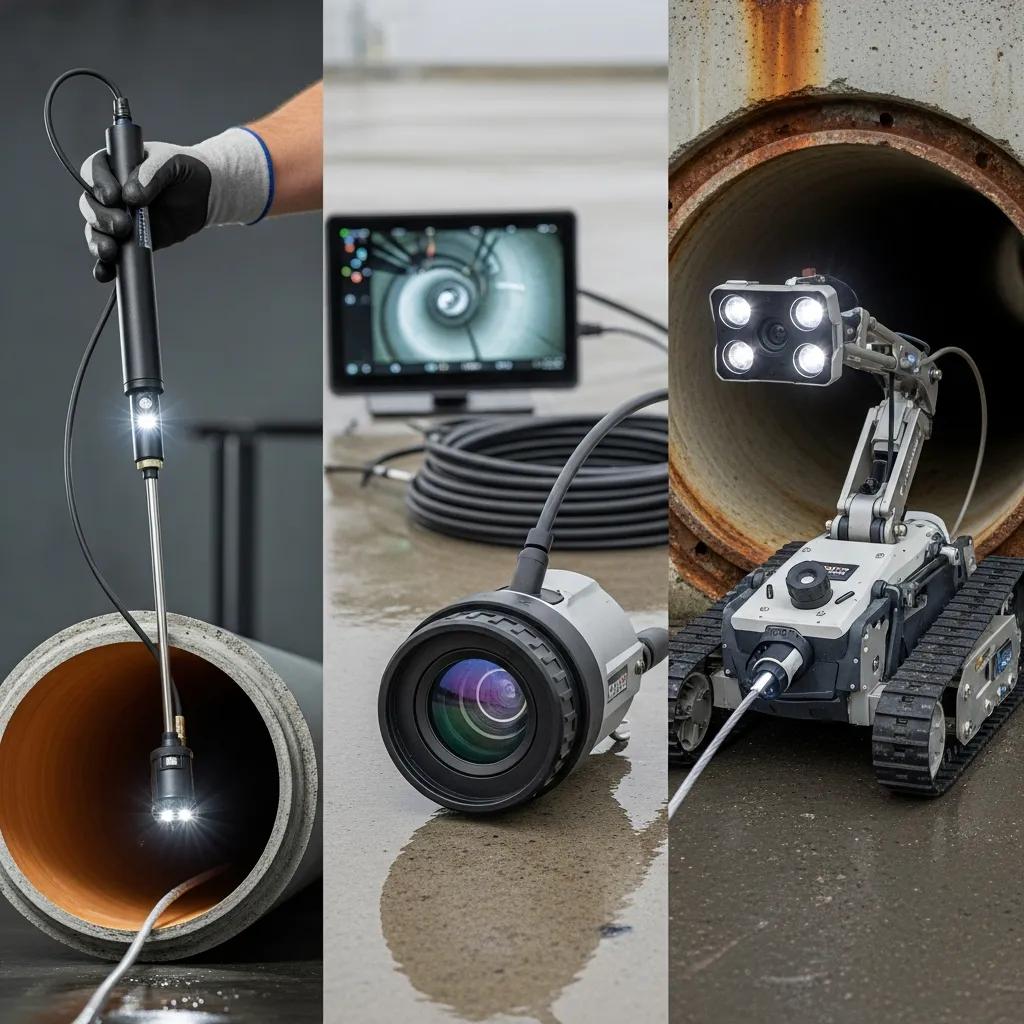
Different camera systems work better for different pipe sizes and access conditions. Typical types include push‑rod cameras for lateral lines, self‑leveling cameras to keep the horizon steady, and crawler units for large mains or long runs. Push‑rod systems are light and cost‑effective for residential laterals up to about 6 inches. Self‑leveling cameras keep orientation consistent so cracks and offsets are easier to read. Crawlers handle long distances and larger diameters with stronger lighting and steadier footage. Technicians also use sonde locators to pinpoint the camera’s position from the surface and high‑resolution recorders to save footage for analysis and client delivery.
| Camera Type | Best Uses | Advantages / Limitations |
|---|---|---|
| Push-rod camera | Residential laterals and short runs | Advantage: flexible and budget‑friendly; Limitation: limited reach and not ideal for large‑diameter mains |
| Self-leveling camera | Detecting cracks, offsets, and orientation issues | Advantage: keeps the horizon steady for clearer defect views; Limitation: modestly higher cost than basic push‑rod units |
| Crawler unit | Large mains and long‑distance surveys | Advantage: travels long distances with strong illumination and stability; Limitation: heavier gear and needs larger access points |
Picking the right camera improves diagnostic accuracy and reduces missed problems. The next section explains why advanced sewer camera inspection is the smart first step for most properties.
Why Choose Advanced Sewer Camera Inspection for Your Property?
Advanced sewer camera inspections give targeted, evidence‑based diagnostics that cut uncertainty, limit invasive digging, and point to cost‑effective, condition‑driven repairs for homes and businesses. Scopes find hidden defects that simple snaking or augering can miss, and they support a maintenance plan that extends pipe life and lowers emergency repairs. You’ll get a condition report useful for insurance, real estate negotiations, or budgeting, and our footage often reveals trenchless rehab opportunities that keep restoration costs down.
Inspecting first improves choices and often uncovers less disruptive trenchless fixes instead of full replacement. The next section lists the common problems inspections find, the urgency for each, and the usual next steps.
What Problems Can Sewer Camera Inspections Identify?
Below is a table listing common sewer problems, the visual or operational signs technicians watch for, and recommended next steps with urgency levels. It helps property owners understand typical failure modes and what to expect on a scope report.
| Problem | Visual/Operational Signs | Recommended Next Steps |
|---|---|---|
| Tree root intrusion | Fibrous material entering joints; recurring clogs | Urgency: Medium–High; Recommend: Mechanical root removal, hydro jetting, evaluate sealing or relining |
| Cracks / fractures | Visible fissures, leaks, or sagging | Urgency: High; Recommend: Spot repair or CIPP lining when localized; replacement if structural collapse |
| Grease blockage | Continuous film narrowing the bore; slow flow | Urgency: Medium; Recommend: Hydro jetting and a grease‑management plan |
| Bellied pipe (sag) | Pooling debris or standing water visible on video | Urgency: High; Recommend: Excavation or trenchless regrading depending on severity |
| Corrosion / material degradation | Pitting or surface loss in metal or clay pipes | Urgency: Medium; Recommend: Monitor, relining, or section replacement depending on extent |
Knowing how each finding maps to remediation helps owners compare quotes and prioritize work. The next part explains how inspection often lets crews avoid unnecessary excavation.
How Does Sewer Camera Inspection Prevent Costly Excavations?
Sewer camera inspection prevents unnecessary digging by locating defects precisely and showing their extent. With video mapping plus sonde locates, crews can dig exactly where needed for a spot repair or choose trenchless relining that avoids open‑trench restoration. In many cases, a targeted spot repair or cured‑in‑place lining requires far less labor, equipment, and surface restoration than a full dig‑and‑replace job.
Avoiding excavation also lowers indirect costs — shorter disruption, fewer permits, and less landscaping repair — so inspection is usually a smart, money‑saving first step. The next section helps you recognize signs that it’s time to schedule a scope before problems escalate.
When Should You Schedule a Sewer Camera Inspection?
Schedule a sewer camera inspection when symptoms appear, as part of pre‑purchase or pre‑renovation checks, or periodically on older systems to manage risk. Inspection frequency depends on property age, nearby trees, and how the plumbing is used; older homes or properties with tree roots nearby typically need checks more often. Acting early when you notice warning signs often allows less invasive solutions and reduces the chance of emergency backups.
Use the checklist below to prioritize scheduling and to describe symptoms clearly to your technician for a faster, more effective diagnostic visit.
- Recurring clogs despite cleaning
- Foul sewage odors inside or around the property
- Slow drainage, gurgling sounds, or backups in multiple fixtures
- Sinkholes, soggy patches, or unusual vegetation over the lateral
This checklist helps homeowners and facility managers decide when to call for diagnostics. The next section covers how sewer scopes factor into real estate transactions and negotiation strategies.
What Are the Signs You Need a Sewer Camera Inspection?
Signs that warrant immediate or near‑term inspection include persistent slow drains, backups affecting multiple fixtures, gurgling toilets, or sewage odors that stay after routine cleaning. Clogs that return quickly after professional cleaning often point to structural issues like roots or collapsed sections rather than removable debris. Outside signs — soggy lawn areas or unexpected plant growth over a lateral — can indicate a leak or break in the line.
Spotting these issues early lets you schedule an inspection before they become an emergency requiring costly replacement. The next subsection explains whether a sewer scope is advisable during a real estate transaction and how buyers and sellers should use the report.
Is Sewer Camera Inspection Necessary for Real Estate Transactions?
A sewer scope during a pre‑purchase inspection gives a clear snapshot of the lateral and accessible lines so buyers and sellers can quantify risk and negotiate repairs or credits based on objective footage and a written condition report. A typical scope documents interior conditions and flags defects like offset joints, root intrusion, or severe corrosion that affect marketability and future maintenance costs. Buyers gain clarity about potential repairs and locations; sellers can choose to fix issues beforehand or disclose them confidently.
If an inspection uncovers major defects, common outcomes include negotiated repairs before closing or escrowed funds for future remediation; for minor issues, routine maintenance or scheduled relining may be enough. Preparing for these possibilities ahead of negotiations reduces surprises and supports transparent transactions.
How Much Does Sewer Camera Inspection Cost Near Me?
Inspection costs vary with line length, access difficulty, pipe material, required equipment, and whether extra services (locating, hydro jetting) are needed. Simple lateral scopes are generally less expensive than long mainline surveys or jobs that require crawler units. Transparent pricing helps clients know what’s included — diagnostic footage, a written condition report, and locational data — so you can compare estimates fairly.
Below is a cost‑factor table outlining primary drivers and how they typically affect price. After the table we explain our transparent pricing and guarantee policies so you can evaluate service offerings with confidence.
What Factors Influence Drain Camera Inspection Cost?
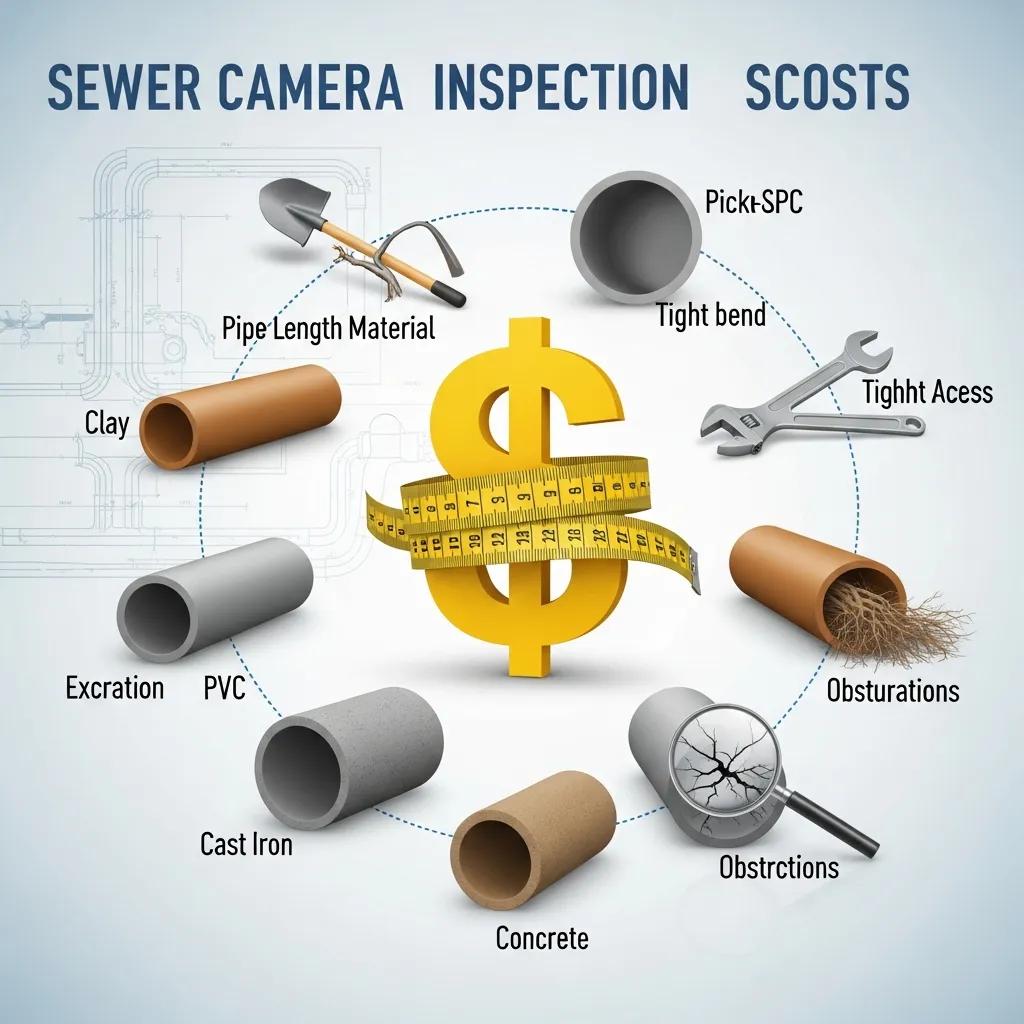
Cost drivers reflect time on site, equipment needs, and labor. The table below clarifies typical factors and what they mean for pricing so you can anticipate extra charges or compare like‑for‑like estimates.
| Factor | Attribute | Pricing Impact / Typical Outcome |
|---|---|---|
| Line length | Distance to be surveyed (ft) | Longer runs take more time and may need crawler units, which raises cost |
| Accessibility | Cleanouts/manholes vs. difficult access | Hard access increases labor and time costs |
| Pipe material & diameter | Clay, cast iron, PVC; pipe size | Larger diameters or fragile materials can require specialized cameras and care |
| Additional services | Sonde locating, hydro jetting, debris removal | These add to the scope and price but are often bundled or itemized separately |
Knowing these drivers helps you evaluate quotes and spot what’s increasing price. Clear estimates separate diagnostic fees from repair costs to avoid surprises.
Does Frost and Kretsch Plumbing Offer Transparent Pricing and Guarantees?
Frost and Kretsch Plumbing emphasizes clear guarantees and professional equipment. Our core promises: 24/7 emergency service; a 100% satisfaction guarantee (or your money back); upfront, transparent pricing with no hidden fees; use of professional camera systems and high‑pressure water jetters; licensed and insured technicians and master plumbers who train continuously; and local service across Macomb, Oakland, and Wayne counties. To get an on‑site estimate or schedule a diagnostic sewer scope, contact Frost and Kretsch Plumbing for a transparent quote that separates inspection fees from any recommended repairs.
That approach makes it easy to understand what’s included — video, images, and a written condition report — and what follow‑up options cost. Knowing our guarantees and equipment helps you choose confidently and compare estimates fairly.
Where Are Advanced Sewer Camera Inspection Services Available?
We provide advanced sewer camera inspection services across Macomb, Oakland, and Wayne counties, with local teams ready for residential and commercial jobs. Local knowledge matters: technicians familiar with regional pipe materials, soil types, and common tree species can better anticipate typical failure modes — like root intrusion or freeze/thaw damage — and adjust inspection procedures accordingly. A local presence also shortens response time for emergencies and speeds follow‑up repairs when needed.
The next section ties county coverage to our 24/7 emergency availability and explains how to request local service.
Which Areas in Macomb, Oakland, and Wayne Counties Do We Serve?
Frost and Kretsch Plumbing serves Macomb, Oakland, and Wayne counties with local crews who understand municipal connection standards and neighborhood issues. That coverage supports fast dispatch for sewer backups and routine inspections, and our regional resources help homeowners and businesses find the right service. With 24/7 emergency availability, we aim to limit the impact of sewer failures by providing prompt diagnostics and fast escalation to repairs when necessary.
If you need an inspection, contact Frost and Kretsch Plumbing to request service in your county and get an itemized estimate. Local expertise shortens diagnosis time and improves accuracy when interpreting footage in the context of local infrastructure.
How Does Local Expertise Enhance Sewer Camera Inspection Quality?
Local expertise improves inspection quality by giving technicians context — recognizing issues tied to common local materials, installation methods, and environmental stressors. Knowing typical joint types and pipe materials speeds defect classification, while experience with regional root species and soil behavior supports better maintenance planning. Local crews also understand municipal connection layouts and can coordinate locates and permits efficiently if excavation is needed.
That context reduces false positives, produces more accurate repair scopes, and shortens the time from diagnosis to effective remediation. The next section explains how to schedule an inspection and what to expect during the visit.
How to Schedule Your Residential or Commercial Sewer Camera Inspection?
To schedule an inspection, provide basic property details, describe symptoms, and pick a convenient appointment window so technicians bring the right camera system and tools. When you call, tell us the property type (residential/commercial), the affected fixtures or areas, and whether multiple fixtures show symptoms. Typical appointments include an on‑site walk‑through to find cleanouts, confirming the scope, running the camera survey, and delivering footage plus a written condition report.
Below are the usual steps for booking and the on‑site process so you know what to expect and how to prepare.
- Prepare property details and a brief description of symptoms so dispatch can select the correct equipment.
- Schedule an on‑site appointment; the technician confirms access points, estimated duration, and arrives with the chosen camera system.
- Technician performs sonde locates, advances the camera through the line, records video and stills, and timestamps findings.
- Client receives digital video, photos, a written condition report, and repair recommendations; follow‑up estimates are provided for any remediation.
These steps keep the visit efficient and transparent. The next subsection describes our company booking process and how we ensure clear quotes and reports.
What Is the Process to Book an Inspection with Frost and Kretsch Plumbing?
To book with Frost and Kretsch Plumbing, contact us to describe the issue and request an on‑site diagnostic. We schedule the visit, dispatch a licensed and insured technician, and perform a thorough camera survey. Booking includes confirming access points, agreeing on an appointment window, and noting any safety concerns. After the inspection you’ll receive the video, a location‑referenced condition report, and transparent pricing for any recommended cleaning or repairs.
Our model emphasizes upfront pricing with no hidden fees, licensed technicians, and itemized estimates that separate diagnostic, locating, and repair costs so you can make an informed decision. That predictability reduces surprises and speeds repairs when work is needed.
What Can Customers Expect During and After the Inspection?
During the inspection, the technician will locate the cleanout or access point, run the appropriate camera while watching live video, and capture images and timestamps for any defects or blockages. Technicians protect property, respect privacy, and explain key observations on site so you understand what we’re seeing. After the inspection you’ll get digital footage, still images, a written condition summary, and depth/locational data from the sonde to guide precise repairs.
Post‑inspection options commonly include hydro jetting for cleaning, spot repairs, trenchless relining when suitable, or a full replacement estimate if necessary. The inspection report supports clear decision‑making and price comparisons so you can plan remediation and budget without guesswork.
- Prepare in advance: Share symptom details and ensure cleanout access before the appointment.
- Expect a clear report: Video and location data arrive with recommended next steps and separate repair pricing.
- Follow‑up options: Choose between cleaning, trenchless rehabilitation, or replacement based on the condition report and your budget.
These final points underscore that a camera inspection is the essential first step to fix sewer problems quickly and with minimal disruption.
Frequently Asked Questions
What are the benefits of using sewer camera inspection over traditional methods?
Camera inspection beats traditional methods like augering or snaking because it shows the problem instead of guessing. It’s non‑invasive, pinpoints issues like cracks, blockages, and roots, and prevents further damage from blind digging. The visual record also helps with maintenance planning and real estate transactions by providing clear, objective evidence of pipe condition.
How often should I schedule a sewer camera inspection?
How often depends on the property: age, nearby trees, and usage patterns matter. Older properties or those with root exposure may need yearly checks. Newer systems can wait several years between inspections. If you see recurring clogs, slow drains, or bad odors, schedule a scope sooner to avoid bigger problems.
Can sewer camera inspections help with insurance claims?
Yes. Video footage and condition reports are objective documentation that can support insurance claims for sewer backups or pipe failures. Clear records make it easier to show what happened and when, which can help with negotiations and coverage decisions.
What should I do if my sewer camera inspection reveals significant issues?
If the inspection finds major problems — severe cracks, heavy root intrusion, or advanced corrosion — act promptly. Discuss the findings with your technician and review recommended options: spot repairs, trenchless relining, or full replacement. Prioritize repairs to avoid backups and higher repair costs later. Your technician will provide a clear estimate and timeline.
Are there any risks associated with sewer camera inspections?
Inspections are generally safe and non‑invasive. The equipment is designed to travel through pipes without causing damage, but if a pipe is already severely compromised, there’s a small risk the inspection could disturb fragile material. That’s why experienced technicians follow safety protocols and assess conditions before advancing equipment.
How can I prepare for a sewer camera inspection?
Make the visit smoother by giving the technician access to cleanouts or manholes and clearing obstacles around those points. Tell us what symptoms you’ve noticed — slow drains, backups, or odors — so we can target likely trouble spots and bring the right tools for a fast, effective inspection.
Conclusion
Advanced sewer camera inspections give property owners clear, actionable diagnostics that minimize digging and direct targeted repairs — saving time and money. Catching hidden issues early supports proactive maintenance and informed decisions for both homes and businesses. Know the condition of your sewer lines to protect property value and avoid costly emergencies. Schedule your inspection with Frost and Kretsch Plumbing today to keep your sewer system running smoothly.