Hard Water and Your Home: What It Does — and What You Can Do
Hard water contains higher-than-normal levels of dissolved minerals — mainly calcium and magnesium — that leave visible deposits and cause hidden wear throughout a home. Over time those minerals build limescale, reduce soap and detergent performance, and speed up wear on plumbing and appliances. In this article we walk you through how limescale forms, why hard water makes soap scum and dull laundry, and what practical steps you can take: testing, routine maintenance, and treatment options. You’ll learn to spot common signs in faucets, showers, and laundry; see how scale narrows pipes and can encourage corrosion; compare salt-based and salt-free softeners; and review whole-house filtration choices. We also include Michigan-focused guidance for homeowners in Macomb, Oakland, and Wayne counties, plus typical professional installation and maintenance workflows. Keep reading for checklists, side-by-side comparisons, appliance impact estimates, and clear maintenance steps to help you prioritize repairs, pick the right system, and lower energy and replacement costs.
What Are the Signs of Hard Water in Your House?
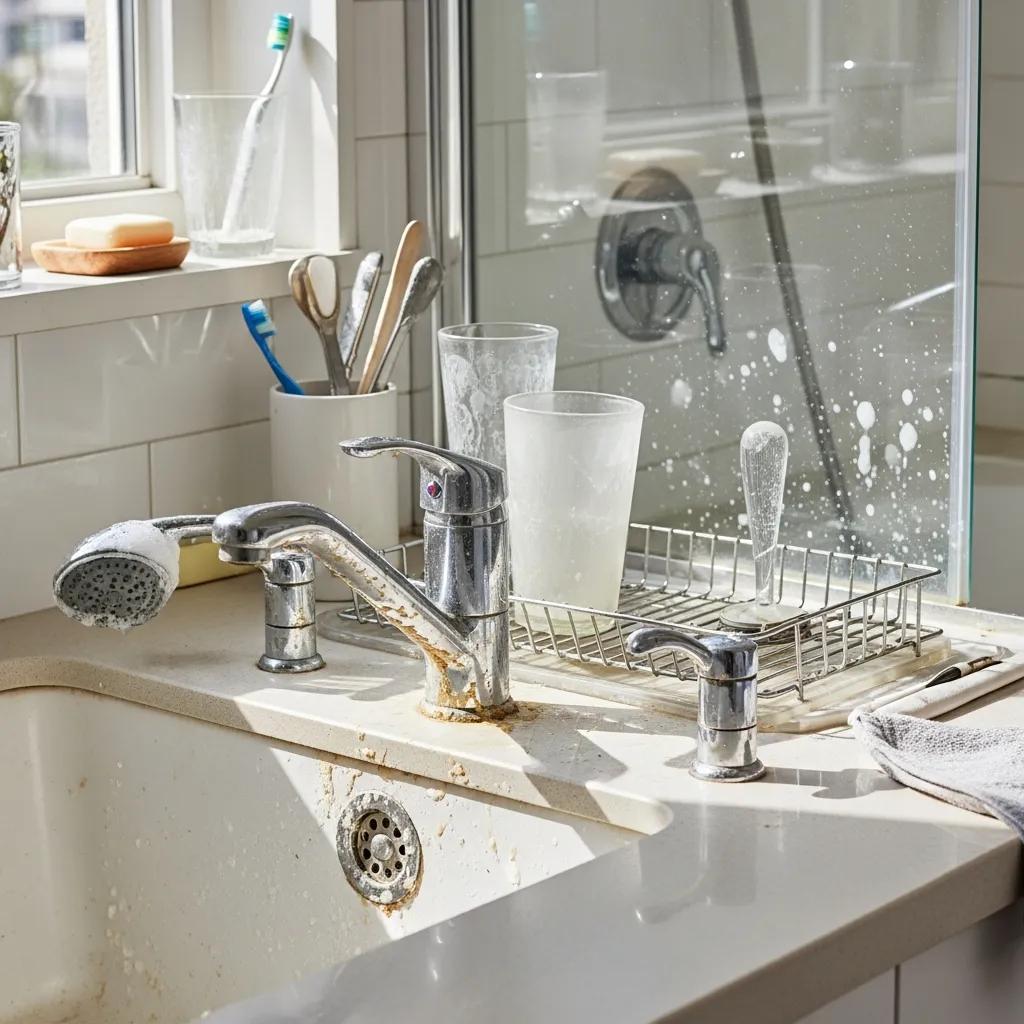
Hard water shows up in a few clear ways: white, chalky deposits on faucets and showerheads, cloudy glassware after dishwashing, and a filmy feeling on skin or dishes after cleaning. Those visible signs mean calcium and magnesium are precipitating out as the water evaporates. Hard water also reacts with soap, cutting lather and leaving soap scum on skin, tiles, and fabrics — which often leads to using more detergent and laundry that feels stiff. Spotting these symptoms early helps you decide whether a quick DIY descaling is enough or if you should test hardness and invest in a whole-house solution. The sections below explain how to identify visible damage and what to expect for skin, hair, and cleaning performance.
How to Identify Visual Indicators of Hard Water Damage
Visual clues are usually the first thing homeowners notice, and they point to which fixtures or lines are affected. Watch for chalky white or gray crust near faucet bases, clogged shower spray pins, streaks on tubs and sinks after drying, and cloudy dishes after a dishwasher cycle. A simple vinegar test — wipe a scale patch and see if it dissolves — confirms mineral deposits rather than metal corrosion. The amount of buildup tells the story: a thin film suggests mild hardness, while thick crusts and blocked aerators suggest moderate to severe hardness that needs treatment. Take photos of recurring buildup and note which fixtures clog most often — that information helps technicians recommend targeted descaling or a whole-house softener. Once you’ve documented the visual signs, you’ll be ready to assess the personal-care and cleaning effects covered next.
What Are the Common Effects on Skin, Hair, and Cleaning?
Hard water changes how soaps and detergents work on skin, hair, and fabrics. Minerals bond with soap to form insoluble soap scum that can leave residue on skin and hair, causing dryness, dullness, and extra effort to rinse shampoo. Laundry washed in hard water can feel stiff and lose brightness because detergents don’t work as effectively. Short-term fixes include chelating cleaners for surfaces and a vinegar rinse or fabric softener for laundry, but ongoing skin or cleaning problems usually mean a whole-house softening solution is needed. Knowing these everyday effects helps you weigh appliance wear and plumbing issues explained in the next sections.
How Does Hard Water Cause Plumbing Damage?
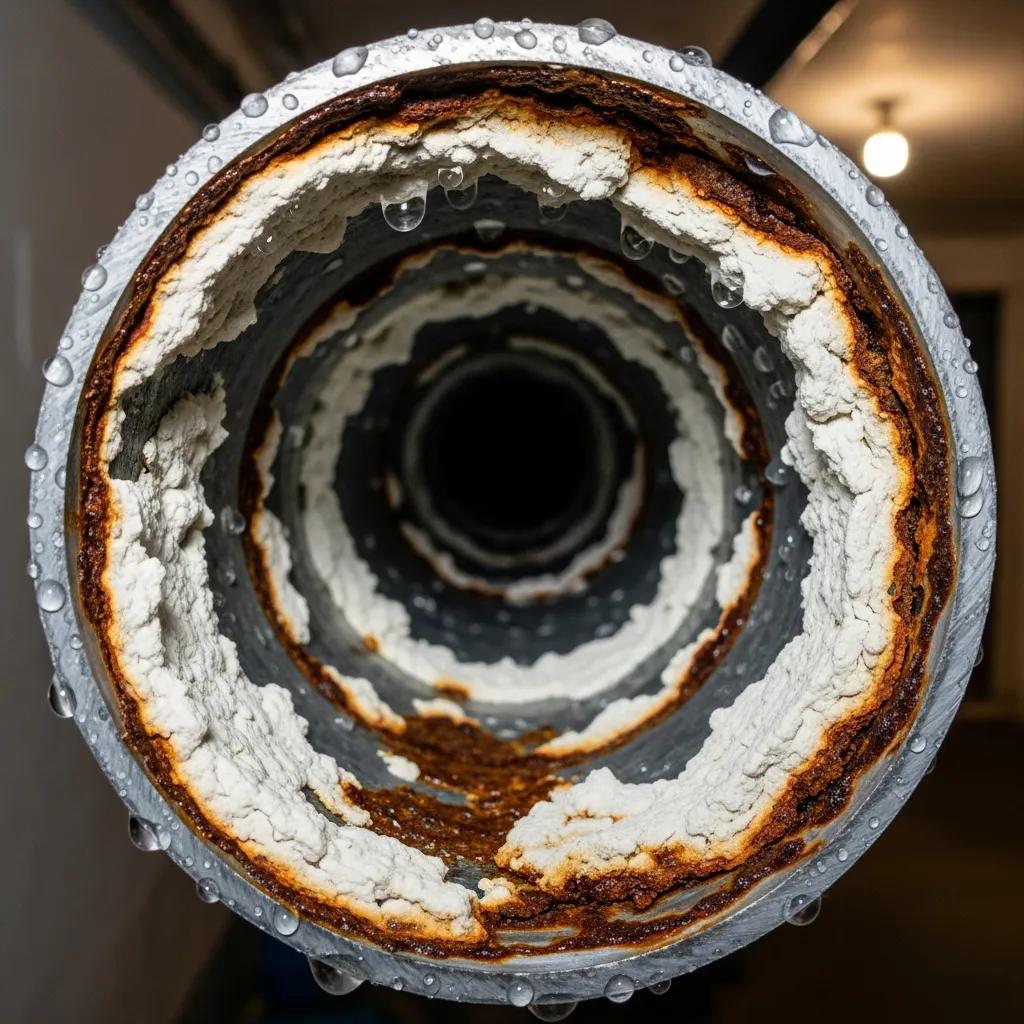
Hard water harms plumbing by depositing minerals and changing the chemistry inside pipes and on fixtures. When temperature or pressure shifts, dissolved calcium and magnesium precipitate out and stick to pipe interiors and heating elements, creating rough scale that narrows the flow path and reduces heat transfer. Over time those deposits increase pump energy use, cause localized stress points, and can lead to leaks or failing joints. Scale can also trap corrosive agents and form environments that accelerate corrosion, making repairs more complex. Understanding these mechanisms explains common problems like low water pressure and uneven flow, and why preventive softening or targeted maintenance often costs less than repeated repairs. The sections below define limescale and explain how it links to corrosion and pressure loss.
What Is Limescale and How Does It Affect Pipes and Fixtures?
Limescale is a hard, adherent deposit made mostly of calcium carbonate and magnesium carbonate that forms when hard water conditions change. Heating or evaporation lowers mineral solubility, so minerals crystallize on hot elements, inside tanks, or along pipe walls. That scale cuts heat transfer efficiency, clogs small openings like aerators and shower jets, and can flake off into downstream blockages or abrasive particles that wear pumps and valves. Heavy encrustation can make fixtures brittle or unreliable. Early descaling and preventive softening slow scale growth, but extensive buildup often requires professional mechanical removal and, in some cases, component replacement.
How Does Hard Water Lead to Corrosion and Reduced Water Pressure?
Scale and corrosion often worsen each other. As deposits build, the effective pipe diameter shrinks and water is forced through smaller channels, which increases friction and lowers pressure at taps. Even modest scale buildup can noticeably reduce flow. At the same time, scale can trap moisture and create oxygen differentials against metal surfaces, forming tiny galvanic cells that encourage pitting and corrosion in materials like older copper or galvanized iron. Homeowners may notice noisy pipes, sputtering taps, or sudden pressure drops when these processes are advanced — signs you should schedule an inspection and consider targeted repair or replacement.
What Impact Does Hard Water Have on Home Appliances?
Hard water speeds up appliance wear by coating heating elements and internal parts with scale, which reduces efficiency, raises energy use, and shortens appliance lifespans. When scale insulates heating surfaces, appliances run longer to reach set temperatures and elements fail earlier. Technicians report more frequent service calls and shorter intervals between part replacements where hardness is unmanaged, so homeowners often face repair-versus-replacement trade-offs. The table below summarizes typical appliance impacts to help you prioritize fixes and decide whether descaling, repair, or replacement is the best value.
| Appliance | Effect | Typical Impact |
|---|---|---|
| Water Heater | Reduced heat transfer and element scaling | Efficiency loss up to 10–20% and lifespan reduced by several years |
| Dishwasher | Spray arm clogging and internal scale | Poor cleaning performance and increased detergent use |
| Washing Machine | Drum and inlet valve deposits | Stiff laundry, higher repair frequency, possible bearing failures |
The table shows how scale raises operating costs and lowers performance, which points toward preventive or corrective measures covered next.
How Does Hard Water Reduce Water Heater Efficiency and Lifespan?
Scale on heating elements and inside tanks forms an insulating layer that slows heat transfer, so water heaters run longer and cycle more often to reach temperature. That extra run time raises energy use and stresses thermostats and elements, contributing to earlier failures. Flushing and descaling restore some efficiency, but they can’t always reverse long-term element damage.
Watch for rumbling noises, reduced hot-water capacity, or cloudy/mineral-streaked hot water — these are indicators that scale has compromised the tank. When you see those signs, a professional can determine whether mechanical descaling, element replacement, or a full water heater replacement makes the most sense economically.
Regular maintenance and proper water treatment lower the risk of early replacement and keep water heaters working reliably longer.
What Are the Effects on Dishwashers, Washing Machines, and Other Appliances?
Hard water clogs spray nozzles, shortens pump life, and leaves mineral films that reduce cleaning in dishwashers, washing machines, and similar appliances. Dishwashers often show spots on glassware and need more detergent or rinse aid; washing machines may suffer worn seals and valves and laundry that feels rough. Small appliances — coffee makers, kettles, humidifiers — collect scale that affects taste, efficiency, and service intervals. DIY steps include regular descaling with manufacturer-recommended products, installing inline filters for sensitive equipment, and calling a pro when performance drops. If repairs become frequent, weigh the cost of replacement against the cost of installing a whole-house softener.
Which Water Softener Systems Are Best for Michigan Homes?
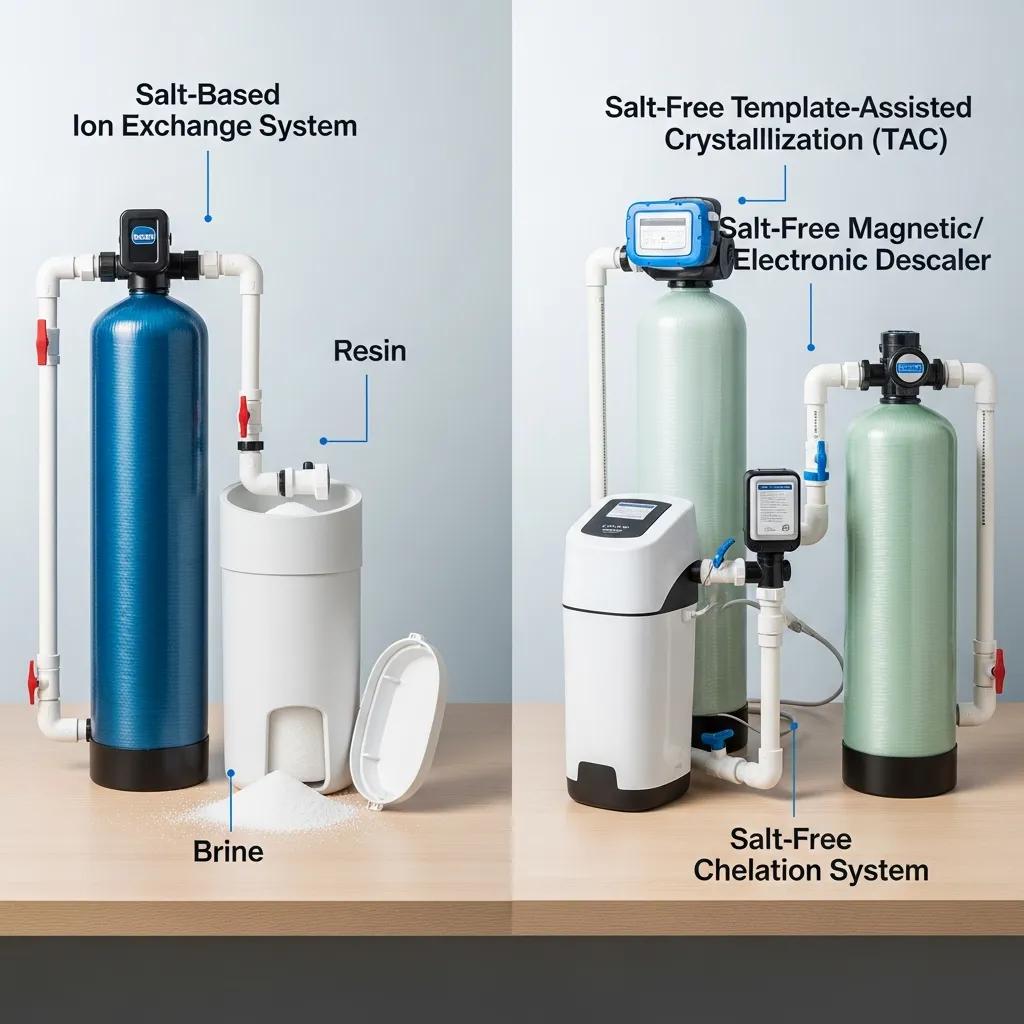
Choosing the right system for Michigan depends on measured hardness, household size, environmental preferences, and how much maintenance you want to do. Options range from salt-based ion-exchange softeners to salt-free conditioners and point-of-use reverse osmosis. Ion-exchange systems swap sodium or potassium for hardness ions and are very effective against limescale — a good fit for severe hardness. Salt-free systems, often using Template Assisted Crystallization (TAC), help prevent scale without ion exchange; they require less upkeep but can be less effective on very hard water. Many homeowners combine whole-house softening with sediment and carbon filtration, plus a point-of-use RO for drinking water, to balance scale prevention and water quality for variable Michigan sources.
The comparison table below outlines how each option works, typical maintenance, pros and cons, and ideal use cases.
| System Type | Mechanism | Maintenance | Ideal Use Case |
|---|---|---|---|
| Salt-Based Water Softener | Ion exchange (resin/brine tanks) | Regular salt replenishment and occasional resin checks | Homes with high hardness that need reliable scale prevention |
| Salt-Free Conditioner (TAC) | Crystal formation to inhibit scale | Low ongoing maintenance; periodic cartridge replacement | Moderate hardness or where salt discharge is a concern |
| Reverse Osmosis (Point-of-use) | Membrane filtration removing dissolved solids | Membrane and filter replacement per schedule | Drinking water purification and point-of-use needs |
Use this comparison to weigh trade-offs and choose the system that fits your budget, local rules, and household needs. A professional test and proper sizing will make any recommendation more accurate.
What Are the Differences Between Salt-Based and Salt-Free Water Softeners?
Salt-based ion-exchange systems replace calcium and magnesium with sodium or potassium using a resin bed, delivering true soft water that prevents scale even at high hardness. Salt-free systems (often TAC) change how minerals crystallize so they’re less likely to form hard scale; they avoid salt discharge and require less upkeep but may struggle in very hard water. Maintenance differs too: salt-based units need salt refills and occasional regeneration checks, while salt-free units usually need media or cartridge changes on a schedule. Local environmental rules and salt-discharge concerns may steer your choice. Understanding those differences helps when estimating water softener cost in Michigan and picking the right approach for your priorities.
How Do Whole-House Filtration Systems Benefit Your Home?
Whole-house filtration protects plumbing and appliances by combining sediment removal, softening, and additional stages for taste and odor. Removing particles and reducing hardness before water reaches appliances lengthens their life, preserves flow rates, and improves soap performance housewide. Adding a point-of-use reverse osmosis unit provides drinking water with low dissolved solids. A typical multi-stage setup would include a sediment pre-filter, softener or conditioner, and carbon filtration — a balanced solution for homeowners with multiple water concerns. Professional testing and correct sizing ensure the system matches household demand and local water hardness.
How Can Professional Hard Water Treatment Services Help in Macomb, Oakland, and Wayne Counties?
Professional services deliver accurate testing, tailored system selection, proper installation, and routine maintenance to protect Michigan homes and businesses over the long term. A standard service call includes hardness testing, system sizing and recommendation, installation of the chosen softener or filter assembly, and commissioning to confirm performance. Technicians will explain maintenance steps like salt top-offs or cartridge changes and set up follow-up visits. In Macomb, Oakland, and Wayne counties, local providers also offer emergency repairs for appliances and water heaters affected by scale. Reputable companies use licensed technicians, clear pricing, and satisfaction guarantees so you know what to expect. If you’re seeing repeated appliance failures or reduced hot-water capacity despite DIY attempts, contact a pro for testing and a specific plan.
What Does Water Softener Installation and Maintenance Involve?
Installation starts with a professional water analysis and system sizing to match your household flow and hardness. Installers place resin and brine tanks, connect to the main supply with a bypass and drain lines, set regeneration cycles, and test the system. Technicians will show you how to add salt and monitor performance. Most residential installs finish in a day, depending on complexity.
Ongoing maintenance includes topping up salt, checking the brine tank for bridging, inspecting control valves, and replacing filters in combined systems. Sticking to recommended intervals protects warranties and keeps systems working efficiently. A well-managed installation and maintenance plan reduces scale-related repairs and extends appliance life — which often makes professional service a smart investment.
When Should You Call a Plumber for Hard Water Damage Repair?
Call a licensed plumber when DIY steps don’t fix the problem or when you see persistent low water pressure, visible pipe damage, frequent appliance breakdowns, or safety issues like leaks or total loss of hot water. Emergency signs include sudden bursts, large leaks, or a failed heating element that leaves you without hot water — these need immediate attention and, where available, 24/7 service. For less urgent but serious issues, schedule a diagnostic visit if you notice ongoing scaling despite descaling, repeated thermostat failures, or a sharp rise in energy bills that points to scale-related inefficiency. A professional diagnosis confirms whether hard water is the cause and lets technicians recommend targeted repairs, descaling, or system upgrades.
What Preventative Plumbing Maintenance Can Protect Your Home from Hard Water Damage?
Regular maintenance and preventive steps are the most cost-effective defense against hard water damage. Key actions include flushing your water heater, descaling fixtures, cleaning aerators, and annual plumbing inspections. Flushing reduces sediment and scale in tanks, improving efficiency and lifespan; descaling showerheads and aerators restores spray and prevents clogs. Replacing worn parts early keeps small problems from becoming big ones. Coordinating inspections with a licensed technician helps detect scale early, confirm hardness with a test kit, and recommend softening or filtration before appliances fail — a proactive approach that usually costs less than reactive repairs.
Use the checklist and table below to plan a preventive maintenance routine.
- Annual professional water hardness testing and system evaluation to confirm treatment is working.
- Flushing and descaling the water heater and accessible fixtures to keep heat transfer and flow in good shape.
- Cleaning aerators and showerheads quarterly to prevent spray-blocking and localized corrosion.
Following this simple cadence cuts emergency calls and extends appliance life, making maintenance a practical investment.
| Service | Frequency | Benefit |
|---|---|---|
| Water heater flush | Annually (more often with severe hardness) | Restores efficiency and reduces element failure risk |
| Fixture descaling | Quarterly to semi-annually | Maintains flow and appearance; prevents clogs |
| Annual plumbing inspection | Once per year | Early detection of scale and corrosion, avoiding costly emergency repairs |
This schedule helps you prioritize tasks and know when to call in professional support.
How Often Should You Flush and Descale Your Water Heater and Fixtures?
Maintenance frequency depends on measured hardness. Mild hardness often needs annual flushing; moderate hardness may require semi-annual attention; severe hardness can call for quarterly service to keep scale under control.
Flushing a water heater means isolating the unit, attaching a hose to the drain, and running until the water runs clear — always follow safety steps to avoid scalding. Descaling fixtures typically uses a diluted acid or vinegar soak for removable parts or manufacturer-approved descalers for internal elements.
For heavy scale or hard-to-reach components, professional mechanical descaling or element replacement is safer and more effective than DIY. Watch for reduced hot water volume, rumbling sounds, or visible scale as triggers to increase maintenance frequency.
What Are the Benefits of Regular Plumbing Inspections for Hard Water Issues?
Regular inspections catch early scale buildup, flag vulnerable fittings, and assess the risk of leaks or appliance failure — all of which reduce costly emergencies and extend system life. Inspections typically include flow and pressure checks, visual assessments for scale and corrosion, water heater efficiency tests, and water hardness sampling. Documenting these findings supports targeted fixes like softener tuning or localized descaling. The return on investment shows up as fewer emergency calls, lower energy bills from more efficient appliances, and delayed major replacements. Scheduling annual inspections and following recommended maintenance creates a proactive plan that limits hard water’s long-term impact.
Frequently Asked Questions
What are the health effects of hard water on skin and hair?
Hard water can dry and irritate skin and make hair look dull or feel rough because minerals build up and reduce how well shampoos and soaps rinse away. People with sensitive skin or eczema may notice more irritation. A water softener or chelating shampoos can reduce mineral buildup and help restore moisture and manageability.
How can I test the hardness of my water?
You can test hardness at home with an inexpensive test kit from a hardware store or online — it usually involves adding a reagent and comparing color to a chart. For a more detailed analysis, send a sample to a local lab. Regular testing tells you how hard your water is and helps you choose the right treatment.
What are the long-term costs associated with hard water?
Long-term costs add up from higher energy bills, more frequent appliance repairs, and earlier replacements. Water heaters, dishwashers, and washing machines use more energy and need service sooner when scale builds. Investing in a water softener often pays for itself over time by extending appliance life and lowering utility bills.
Can hard water affect my home's plumbing system?
Yes. Minerals in hard water form limescale inside pipes, narrowing the passage and restricting flow. That can cause reduced water pressure, higher energy use, and in severe cases, leaks or bursts. Regular maintenance and an appropriate water treatment system help protect plumbing integrity.
What are the environmental impacts of using salt-based water softeners?
Salt-based softeners discharge sodium into wastewater, which can affect local waterways and ecosystems in sensitive areas. Salt production and transport also have environmental costs. If you’re concerned about discharge or local rules, salt-free options or systems designed to limit salt discharge may be better choices.
How often should I schedule professional maintenance for my water softener?
Most systems benefit from an annual professional check to confirm performance, top off salt if needed, and inspect components. If your water is very hard or you notice reduced efficiency, more frequent visits may be helpful. Regular maintenance keeps the system efficient and can avoid costly repairs later.
What should I do if I notice hard water damage in my home?
If you see limescale, reduced pressure, or appliance inefficiency, start by testing water hardness. For mild issues, descaling and targeted fixes may help. For ongoing problems or widespread impact, schedule a professional assessment to get a full diagnosis and recommendations for treatment or repairs. Installing a water softener or filtration system is often the long-term solution.
Conclusion
Hard water is common, but understanding its effects and taking practical steps can protect your plumbing and appliances. Recognize the signs, test your water, and choose the right combination of maintenance and treatment for your home. Whether you try targeted descaling or invest in a whole-house system, proactive steps will reduce repair costs and extend equipment life. Contact our team to get local, professional help and a clear plan to safeguard your home from hard water damage.