Trusted Sewer Line Replacement in Michigan — Clear, Local Solutions for Homes & Businesses
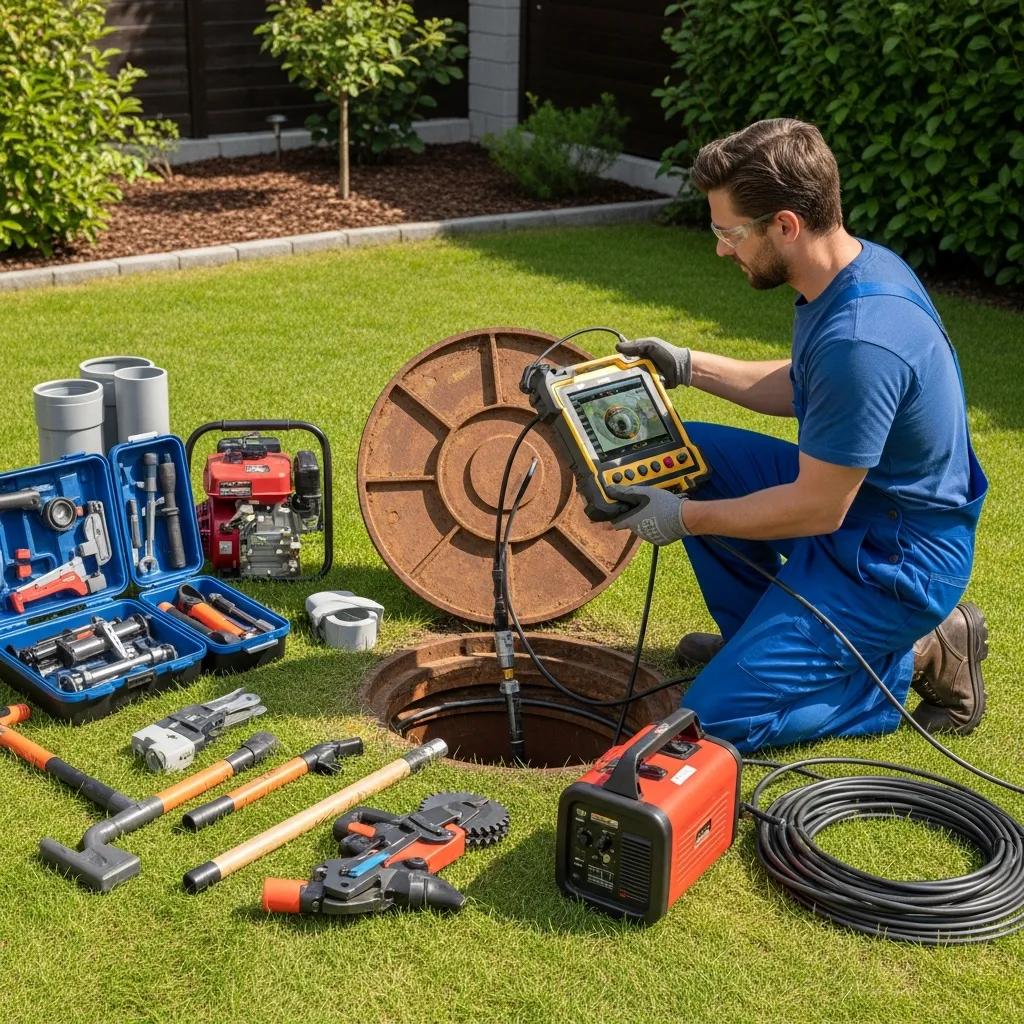
Sewer line replacement fixes major failures in underground pipes serving homes and businesses across Macomb, Oakland, and Wayne counties. This guide walks you through how to spot a damaged main sewer pipe, why sewer camera inspection is a critical first step, the trade‑offs between open excavation and trenchless repairs, and the main cost factors Michigan property owners should expect. Homeowners often first see recurring backups or soggy yard spots — catching problems early and using targeted diagnostics can reduce both scope and cost. We also cover emergency response steps, what to do during a backup, and how modern trenchless methods like pipe bursting and CIPP relining cut disruption. Along the way you’ll find practical checklists, comparison summaries, and clear next steps for arranging an inspection or replacement, including how licensed local crews use video inspection and hydro jetting to plan less invasive repairs. Read on to learn how problems are detected, how repairs work, what drives price, and when to call for immediate help.
What Are the Common Signs of Sewer Line Damage?
Sewer line problems usually show up as smells, slow drains, or recurring clogs across multiple fixtures. Blockages, root intrusion, or a collapsed section reduce pipe capacity and force wastewater into low points, which creates odors and soggy patches above ground. Spotting these signs early lets you schedule a camera inspection and targeted repair before the problem worsens — protecting your home and lowering restoration costs. Watch for the high‑priority symptoms below and report any concerns to a licensed technician for a proper evaluation.
- Persistent sewage smells inside or outside the building, even after airing the space.
- Slow drains or several fixtures backing up at once.
- Unusually lush or soggy grass, sinkholes, or depressions in the yard.
- Gurgling sounds from toilets or drains when water struggles to move.
- Clogs that return after professional snaking or cleaning.
- Visible sewage seepage or standing water near cleanouts or along the property line.
Noticing these signals helps prioritize a camera inspection so crews can find the exact defect and avoid unnecessary digging when possible — which leads into how video inspection improves diagnosis.
How to Detect Broken, Cracked, or Collapsed Sewer Pipes
Major sewer pipe failures usually produce system‑wide symptoms rather than a single slow sink. Before calling a pro, check whether multiple fixtures are affected and inspect the cleanout for discharge or pressure. A simple test — running water into an outdoor drain or tub and watching how the system responds — can help you tell if the issue is local or involves the main line. But don’t push a failing pipe: collapsed sections can release contaminated water and create unsafe conditions. If you see yard depressions, persistent odors, or simultaneous backups, stop DIY attempts and schedule a sewer camera inspection to avoid worsening the damage and to protect health and property. Proper triage here speeds accurate diagnosis and moves you into camera‑based evaluation to pinpoint defects.
What Causes Sewer Line Damage: Tree Roots, Corrosion, and More
Sewer pipes fail for several common reasons: tree roots finding and widening hairline cracks, corrosion and natural material degradation, soil movement from freeze‑thaw cycles, and human factors like flushing inappropriate items. Roots exploit tiny openings for moisture and then expand, fracturing clay, cast iron, and older lines. Metal pipes slowly corrode over decades, and Michigan’s freeze‑thaw soils can shift joints or misalign older mains. Heavy surface loads or poor construction add mechanical stress. Knowing these causes helps you take preventive steps — root management, regular video inspections, and selecting replacement materials suited to local soils and loads — and also explains why a camera inspection is a useful planning tool.
How Does Sewer Camera Inspection Improve Sewer Line Diagnosis?
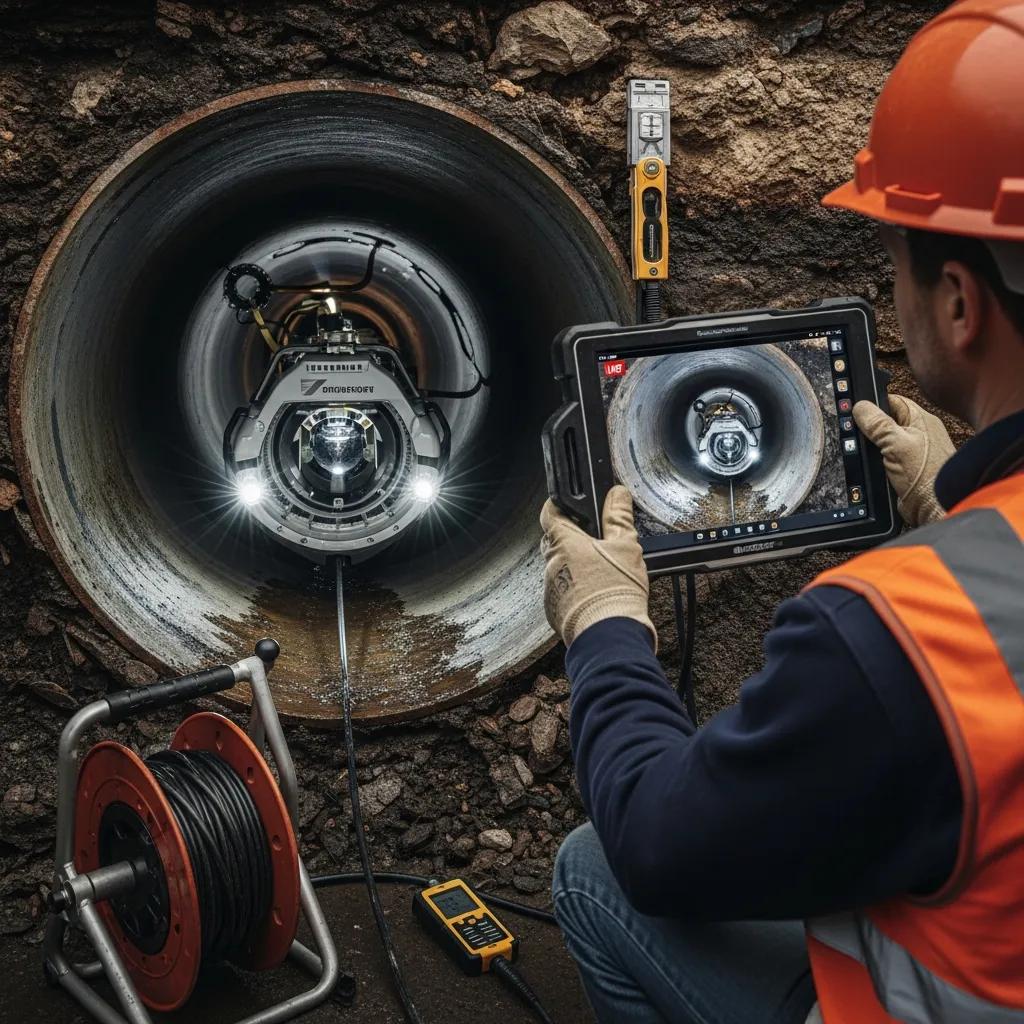
Sewer camera inspection sends a small push camera or robotic crawler through the main line and laterals to visually map the pipe interior. That lets technicians locate cracks, root intrusion, offsets, and blockages without digging up your yard.
The camera delivers real‑time video and location data that show defect type, size, and exact position relative to cleanouts and fixtures. That clarity reduces guesswork and makes targeted repairs possible — often avoiding full excavation.
Better diagnosis leads to smarter repair planning and possible cost savings through minimally invasive options like relining when appropriate. Below are the main benefits that explain why camera inspection is usually the first step when a broken sewer pipe is suspected.
- Precise Defect Location: Shows the exact spot of cracks, breaks, or roots so crews fix only what’s necessary.
- Smarter Cost Planning: Helps differentiate a repair from a full replacement so you avoid needless digging.
- Documented Evidence: Recorded footage supports permit or insurance claims.
- Condition Assessment: Reveals pipe material and degradation level to guide method selection.
Because video inspection clarifies whether trenchless methods can be used, it directly informs decisions about pipe bursting or relining and sets realistic expectations for disruption and schedule. Frost and Kretsch Plumbing uses sewer video inspection to create accurate, transparent estimates and recommend the best solution for your situation.
Benefits of Advanced Sewer Video Camera Inspection
Advanced camera systems provide high‑resolution imagery, precise defect mapping, and inspection reports that cover the full pipe run. That helps technicians spot small issues — pinhole leaks or early root encroachment — before they become major failures and gives homeowners documented evidence for insurance or permitting. Good footage supports evidence‑based choices, such as choosing CIPP relining instead of open trenching when the host pipe’s alignment is sound, and it lowers the risk of misdiagnosis and unnecessary restoration work. Clear, recorded inspections shorten planning and make it easier to choose the right repair method.
When to Schedule a Sewer Camera Inspection in Macomb, Oakland, and Wayne Counties
Book a sewer camera inspection if you have persistent backups, multiple slow fixtures, foul odors, or ground depressions. Consider a proactive inspection when buying or selling property in older neighborhoods with clay or cast‑iron mains. Local factors — tree‑lined lots, freeze‑thaw soils, and older pipe materials — increase the value of early inspections. Inspections are also wise after major storms or nearby construction that might shift underground lines. For older pipes, periodic inspections every few years catch deterioration before it becomes an emergency; for new symptoms, schedule a one‑off inspection to confirm whether repair or replacement is needed. Accurate inspection results guide the choice between excavation, pipe bursting, or relining.
What Are the Best Sewer Line Replacement Methods?
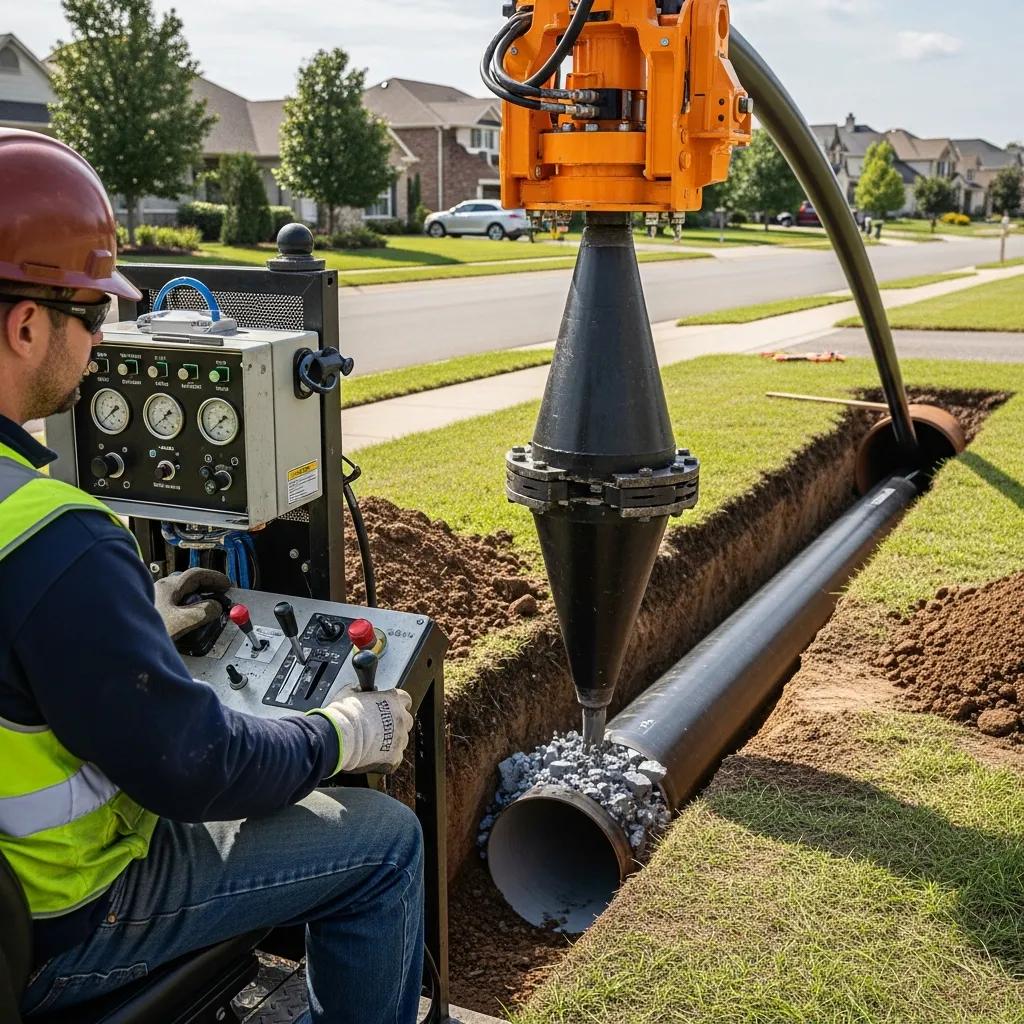
The best replacement method depends on pipe condition, site access, surface restoration needs, and budget. Open trench excavation, trenchless pipe bursting, and CIPP relining each have clear uses. Open excavation is often required for collapsed or badly misaligned pipes or when many lateral connections must be reworked. Trenchless options — pipe bursting and relining — limit landscaping and driveway disruption and can shorten project timelines. The comparison below outlines typical disruption, duration, and best‑use scenarios to help homeowners and businesses decide which approach fits their needs and when Frost and Kretsch Plumbing can perform each method and provide an estimate.
| Method | Typical Disruption | Typical Duration | Best For | Pros / Cons |
|---|---|---|---|---|
| Open trench excavation | High (yard/driveway disturbance) | Several days to a week | Collapsed pipes or complex lateral replacements | Pros: complete replacement; Cons: higher restoration costs |
| Trenchless pipe bursting | Low (small access pits) | 1–3 days | Full‑length replacement without major surface removal | Pros: less disruption; Cons: needs access at both ends and suitable soil |
| CIPP pipe relining | Low (cleanout access) | 1 day to several days | Pipes with cracks, holes, or corrosion but intact alignment | Pros: minimal excavation; Cons: not for severely collapsed pipes |
This comparison clarifies when each method is appropriate and helps prepare homeowners for a discussion with a licensed contractor; next we compare excavation and trenchless techniques in more detail.
Comparing Traditional Excavation and Trenchless Sewer Repair Techniques
Open trench excavation gives full access to the pipe for total replacement, which makes it necessary for severely collapsed mains, major misalignment, or when many laterals must be changed. Its downside is the restoration work — landscaping, driveways, and sidewalks often need repair — so the total project cost includes both the pipe work and surface restoration. Trenchless techniques work from existing access points or small pits to preserve landscaping and shorten restoration time, but they require a host pipe condition that accepts bursting or relining and may involve higher specialized equipment costs. The right choice balances pipe condition, access limits, homeowner priorities, and local permit rules.
How Pipe Bursting and Pipe Relining Work for Sewer Line Replacement
Pipe bursting replaces a pipe by breaking the old line outward while pulling a new pipe into place — a full replacement without continuous open trenching — and works well for long, continuous runs with access pits at each end. CIPP relining installs a resin‑saturated liner inside the existing pipe that cures into a new structural pipe within the old one; it’s ideal for cracks, root intrusion, or corrosion when the host pipe is still round enough to accept a liner. Both trenchless methods shorten job time and limit surface restoration, but each has limits: bursting needs adequate pull and soil conditions, while relining requires a continuous host pipe. Frost and Kretsch Plumbing performs both trenchless and traditional replacements and will recommend the best option for your main after a camera inspection and provide a clear upfront estimate.
| Service Method | Typical Disruption | Ideal Pipe Condition | Expected Longevity |
|---|---|---|---|
| Pipe Bursting | Low (access pits) | Continuous runs; collapsed but pullable pipes | High — new pipe installed |
| CIPP Relining | Minimal (cleanout access) | Cracks, minor offsets, root damage but round pipe | High — liner rated for decades |
| Open Trench | High | Severely collapsed, misaligned, or multiple lateral changes | High — full replacement |
Use this table to compare trenchless workflows; the next section explains cost factors specific to Michigan.
How Much Does Sewer Line Replacement Cost in Michigan?
Costs for sewer line replacement in Michigan vary widely with pipe length, depth, material, chosen method, site access, and restoration needs. A precise quote requires a site‑specific camera inspection and a written estimate.
Generally, trenchless methods often cut landscaping restoration costs but can have higher equipment or liner material fees, while open excavation has more predictable labor and restoration expenses that rise with driveways and hardscape work. Key cost drivers include pipe material, depth, utility conflicts, permit fees, and whether laterals or cleanouts also need replacement. The table below outlines primary cost factors and how they affect price so homeowners know what to expect and can have transparent conversations during on‑site estimates.
| Cost Factor | How it Affects Price | Typical Range / Note |
|---|---|---|
| Pipe length and diameter | More length and bigger diameter increase materials and labor | Longer runs raise cost roughly proportionally |
| Depth and soil conditions | Deep excavation or poor soils increase labor and equipment needs | Deep burial or bedrock raises costs |
| Repair method (trenchless vs. open) | Trenchless reduces surface restoration but may add equipment or material costs | Trenchless can lower total restoration expenses |
| Surface restoration (driveway, landscaping) | Restoration can exceed pipe work cost in urban settings | Paved driveways and hardscape increase total cost significantly |
| Permits and inspections | Local fees and required inspections add administrative cost | Varies by municipality |
Because local factors strongly affect final pricing, request a camera inspection and a written, transparent estimate to compare methods and understand restoration responsibilities. Providers can also document damage for permitting and insurance.
Factors Influencing Main Sewer Pipe Replacement Cost
Costs rise when deep burial requires heavy excavation, long lateral runs must be replaced, multiple service connections are involved, or work sits beneath paved surfaces needing specialized restoration. Material choice — PVC, HDPE, or ductile iron — affects material and handling costs, and nearby trees or utility conflicts can require mitigation like root removal or utility coordination. Soil type and groundwater levels influence excavation complexity and dewatering needs, while permitting timelines and municipal inspections affect scheduling and fees. These variables explain why two neighboring properties can receive different estimates and why a camera inspection plus local assessment produces the most accurate cost projection. If financing or phased repairs are options, discuss those with a licensed provider.
Are Financing Options Available for Sewer Line Repairs?
Financing details vary by provider and over time. Homeowners who want to spread repair costs or explore payment plans should contact a licensed local contractor to learn current options. Alternatives such as prioritizing urgent sections first or performing temporary repairs while planning full replacement may help manage risk. Getting a detailed estimate after a camera inspection lets you compare staged approaches and weigh short‑term fixes against long‑term solutions. To review available options for your property, schedule an on‑site evaluation with a qualified technician.
What Emergency Sewer Repair Services Are Available in Oakland County?
Emergency sewer repair services handle urgent issues like active backups, standing sewage, or a collapsed main that threatens health and safety. These services provide fast response, temporary containment, and expedited diagnostics.
Immediate emergency actions include containment, temporary bypass pumping, hydro jetting for severe blockages, and a camera inspection to decide whether a short‑term repair or full replacement is needed.
Licensed technicians perform triage to stop active discharge, document conditions for insurance, and recommend next steps while minimizing contamination risks and protecting occupants and workers.
The table below helps homeowners triage common emergencies, showing the immediate risk, short‑term fixes, and recommended next steps to stabilize the situation before or while waiting for emergency service.
| Emergency Issue | Immediate Risk | Short-term Fix | Recommended Next Steps |
|---|---|---|---|
| Active sewer backup | Health hazard and property damage | Contain wastewater and stop water use | Schedule emergency camera inspection and repair |
| Standing sewage water | Bacterial contamination | Temporary pumping and isolation | Professional cleaning and disinfection |
| Collapsed main | Loss of service and subsurface instability | Temporary bypass and secure the site | Full assessment and replacement planning |
| Severe blockage (roots/fat) | Recurring backups | Hydro jetting to clear the obstruction | Follow‑up inspection and repair plan |
This quick triage guide clarifies immediate actions and explains how to request emergency response from licensed technicians.
How to Get 24/7 Emergency Sewer Repair from Licensed Technicians
If you’re facing an urgent sewer failure, describe the situation clearly — where backups are, visible sewage, and any health risks — and request immediate dispatch from a licensed, insured service provider that offers 24/7 emergency response. Technicians will triage over the phone, advise safety steps to reduce exposure, and send a crew equipped for containment, hydro jetting, or bypass pumping as needed. Licensing and insurance protect homeowners by ensuring qualified workmanship and liability coverage. Frost and Kretsch Plumbing provides around‑the‑clock emergency service and can be contacted for an onsite assessment, temporary mitigation, and a diagnostic inspection to plan a permanent repair. Fast emergency response stabilizes the situation and prevents further damage while preparing the right long‑term solution.
Steps to Take During a Sewer Backup or Standing Water Issue
During a sewer backup, prioritize safety: avoid skin contact with sewage, keep children and pets away from affected areas, stop using water in the building, and turn off appliances that could circulate contaminated water until a professional evaluates the situation.
Document visible damage and affected areas for insurance, but leave cleanup of contaminated wastewater to licensed remediation pros to avoid health risks and ensure proper sanitation.
If you can safely access it, locate and close the main cleanout to reduce inflow to the building, and follow the technician’s triage guidance while waiting for help. These steps limit damage and improve the effectiveness of the arriving crew.
After immediate mitigation, proceed with a camera inspection and a written repair estimate to determine whether temporary fixes or a full replacement is needed.
Why Choose Frost and Kretsch Plumbing for Residential Sewer Line Replacement?
Frost and Kretsch Plumbing serves Macomb, Oakland, and Wayne counties with licensed, insured technicians and advanced diagnostics to deliver dependable sewer line replacement and repair. We combine local knowledge with modern tools so you get the right fix for your property.
Our commitments include 24/7 emergency response, clear upfront estimates that outline scope and restoration expectations, and a 100% satisfaction guarantee that backs our work.
Technology‑enabled diagnostics — sewer video inspection and high‑pressure hydro jetting — support targeted repairs and limit unnecessary excavation, while licensed technicians follow local codes to protect your family and property.
Need an on‑site camera inspection or a transparent estimate for main sewer line replacement? Contact Frost and Kretsch Plumbing to schedule a diagnostic visit and talk through next steps with a local specialist.
Licensed, Insured Technicians and Satisfaction Guarantee
Working with licensed, insured technicians protects homeowners because trained professionals complete work to code and liability coverage addresses unforeseen damage. That reduces homeowner exposure on complex underground projects.
Our satisfaction guarantee aligns our incentives with yours: if an issue covered by the guarantee arises after completion, we stand ready to make it right within the agreed terms. That builds trust when choosing a contractor for a major job like main sewer replacement.
Having documented licensing and insurance also smooths permit approvals and municipal inspections, which can speed project timelines and reduce administrative uncertainty for property owners.
These protections matter during emergency triage and full replacements and work together with transparent pricing to produce predictable outcomes.
Advanced Technology and Transparent Pricing Benefits
Modern tools — sewer video inspection and hydro jetting — let us diagnose and clean lines more effectively, often preventing unnecessary replacements. Transparent pricing means you get an upfront estimate and a clear explanation of restoration responsibilities so there are no surprise costs.
Camera inspections document pipe condition and guide the most cost‑effective, least disruptive method. Hydro jetting clears buildup without harsh chemicals and usually provides longer‑lasting results than repeated snaking.
Clear pricing from the start helps you compare trenchless and excavation options with full visibility into permits and restoration needs.
Together, these capabilities help homeowners choose the right repair path and reduce the chance of unexpected restoration expenses after underground work is finished.
Frequently Asked Questions
What should I do if I suspect a sewer line issue?
Notice slow drains, foul odors, or soggy yard spots? Stop using water to avoid further backups, document what you see, and call a licensed plumbing professional for a sewer camera inspection. The inspection locates the problem and shows its severity so you can get a targeted repair. Acting early often saves time and money.
How often should I have my sewer lines inspected?
We recommend inspections every few years for older homes, especially those with clay or cast‑iron pipes. Also consider an inspection after strong storms, heavy snowmelt, or nearby construction. If you notice recurring slow drains or backups, schedule an inspection sooner. Regular checks catch small issues before they grow.
What are the environmental impacts of sewer line replacement?
Replacement can affect soil and vegetation if not managed carefully. Traditional excavation is more disruptive, while trenchless methods like pipe bursting and CIPP relining preserve landscaping and reduce waste. Choosing eco‑minded materials and working with licensed pros who follow best practices helps minimize environmental impact.
Can I perform DIY repairs on my sewer line?
Sewer line repairs are complex and can be hazardous. DIY attempts may worsen damage, risk health from sewage exposure, and violate local codes. A licensed professional provides accurate diagnosis, compliant repairs, and safer long‑term results. We advise contacting a pro rather than trying major sewer work yourself.
What are the long-term benefits of trenchless sewer repair methods?
Trenchless repairs like pipe bursting and CIPP relining reduce surface disruption, lower restoration needs, and are often faster than open excavation. They can extend a pipe’s service life by installing durable materials with minimal impact to landscaping. For many properties, trenchless methods provide an efficient, cost‑effective long‑term solution.
How can I prevent sewer line damage in the future?
Preventive steps include routine inspections, avoiding flushing wipes or grease, and managing trees near sewer lines to limit root intrusion. Periodic hydro jetting can remove buildup and help maintain flow. Talk with a licensed technician about root management options and inspection schedules tailored to your property.
What should I expect during a sewer line replacement project?
Your project starts with an assessment and usually a sewer camera inspection to define the problem. Depending on the chosen method — open trench or trenchless — disruption varies. Jobs can take from a day to a week, based on complexity. Licensed technicians will explain the process, give a timeline, and complete restoration to your satisfaction.
Conclusion
Knowing how sewer line replacement works helps you make choices that protect your property and budget. Spotting early signs, using sewer camera inspections, and picking the right repair method — trenchless or traditional — reduces disruption and improves long‑term reliability. For expert guidance, clear estimates, and local service across Macomb, Oakland, and Wayne counties, contact Frost and Kretsch Plumbing today.