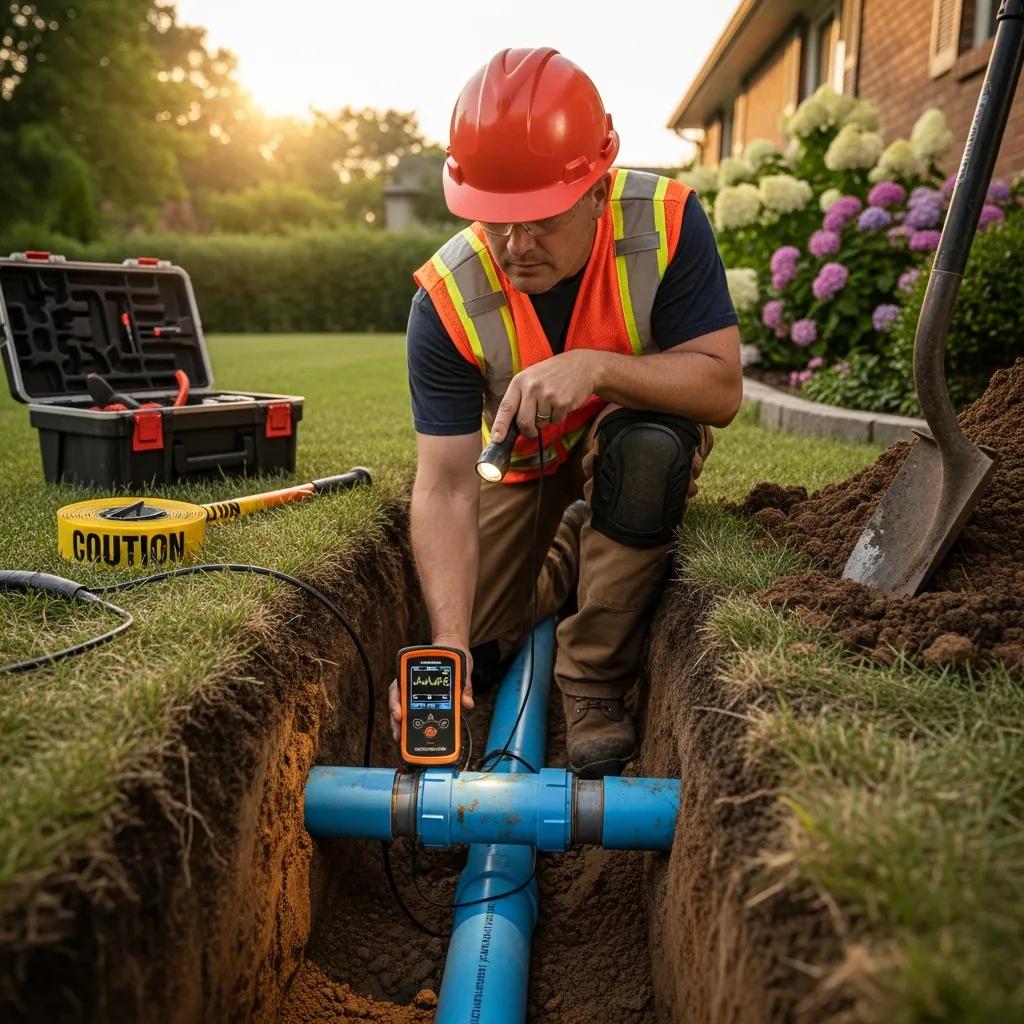
Reliable Water Main Repair & Replacement in Michigan — Clear Solutions for Homes and Businesses
Water main repair or replacement fixes damage to the main supply line that brings drinking water to your property. Quick, accurate diagnosis prevents water damage and service interruptions. This guide shows how to spot a broken water main, explains common causes in Michigan’s climate and infrastructure, and walks through practical repair options — from trenchless techniques to traditional excavation. Whether you own a home or run a business, you’ll get simple diagnostic checks, emergency steps, and the cost factors that affect estimates so you can make informed decisions. We also cover permit responsibilities in Michigan, maintenance tips that lengthen a main’s life, and local considerations for Macomb, Oakland, and Wayne counties. Read on for symptom lists, technology comparisons, cost drivers, permit guidance, and clear next steps for urgent or planned water line work.
Common Signs and Common Causes of Water Main Breaks
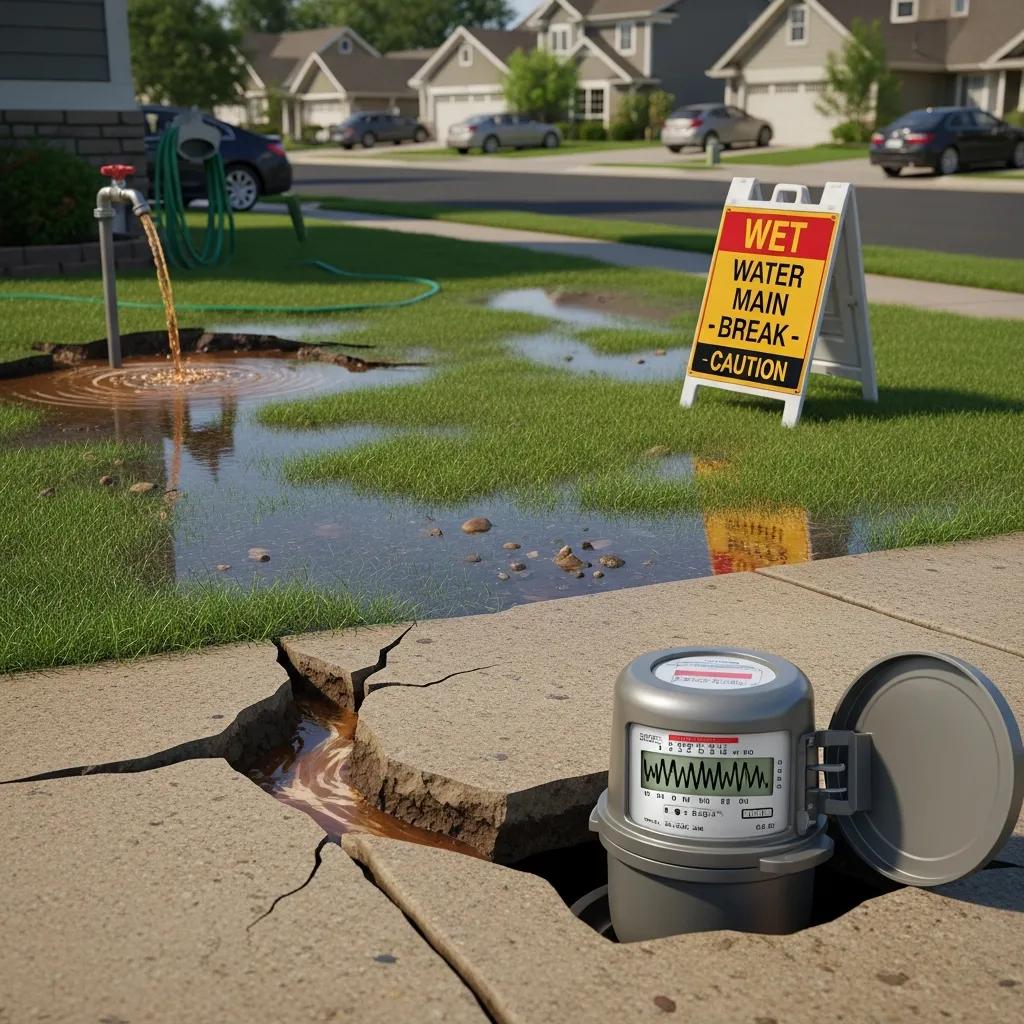
Broken water mains usually show clear, visible signs that point to an underground problem. Spotting issues early saves water, prevents property damage, and helps determine whether you need an emergency repair or a planned replacement. Below are the most common, easy-to-recognize indicators to note before you call a pro.
- Low or fluctuating water pressure: Sudden pressure drops at several fixtures often mean a leak on the main line.
- Discolored or muddy water: Brown, yellow, or rusty water can be a sign of corrosion or a breach in the main.
- Wet or sinking ground, pooling, or sinkholes: Surface wetness or depressions over the service route usually point to underground flow.
- Unusually high water bills: A sharp, unexplained rise in usage typically indicates a hidden leak.
- Hearing running water when everything’s off: A steady flow or hissing sound can mean the main is leaking.
These symptoms often come from aging materials, ground movement, or external stressors. The next sections outline homeowner checks and the environmental and infrastructure causes behind these failures.
How to Spot a Broken Water Main: Practical Checks
Start with a quick meter and fixture check to see if the problem is inside your building or on the service line. Watch the meter when all fixtures are off — continuous movement usually means a leak outside the house. Listen near the meter and any exposed service piping for running water; persistent meter movement plus wet ground points to a main line leak rather than a single faucet issue. Check faucets for discolored water at multiple locations; if more than one tap shows the same discoloration, it’s likely a main issue. Photograph affected areas, note meter readings, and shut off interior valves if flooding is a risk. These steps clarify whether you need emergency water main repair and give useful documentation for the city or your insurer.
What Causes Water Main Failures in Michigan?
Michigan’s freeze-thaw cycles, shifting soils, and invasive roots put repeated stress on older pipe materials and joints. Seasonal frost heave and nearby construction can bend or fracture ductile and cast-iron mains, while roots find and widen weak joints, causing leaks that grow over time. Older materials — including galvanized or lead-bearing connections — corrode faster than modern alternatives like PEX or updated ductile iron. Some breaks happen suddenly; others are slow leaks that worsen over months. Knowing these causes helps choose the right detection methods and the best repair or replacement approach.
How Frost and Kretsch Handles Water Main Repair and Replacement
When licensed professionals handle a water main job, it starts with accurate leak detection and a clear diagnosis of pipe condition. From there we recommend repair or full replacement based on the pipe’s structure and your long-term needs. Typical steps include an on-site inspection, non-invasive testing when possible, agreement on a repair method (trenchless or open cut), and coordinated site restoration so you’re back to normal quickly. Working with licensed, insured technicians ensures code compliance and proper permits, while transparent pricing gives you an upfront estimate with protections against surprise costs. That approach reduces uncertainty, speeds approvals, and limits downtime across Macomb, Oakland, and Wayne counties.
At Frost and Kretsch Plumbing we prioritize fast response and clear communication. For urgent main-line failures we offer 24/7 emergency service, document conditions on arrival, and perform immediate stabilization before full repairs. Call us for an estimate or emergency response — our licensed crews coordinate directly with property owners and municipal contacts to handle permits and reconnections when needed. These assurances — licensed and insured technicians, clear upfront pricing, and a satisfaction guarantee — help you move from diagnosis to repair or emergency intervention with confidence.
24/7 Emergency Water Main Repair: What We Do
Emergency work focuses on safety, stopping water loss, and preventing further property damage while we plan a lasting repair. Typical triage includes isolating the supply (shutting off accessible valves when safe), installing a temporary bypass if feasible, and stabilizing the site to control erosion. Our teams document the scene with photos and meter readings, provide a preliminary scope and estimate where possible, and work with the municipality if the public main is involved. Expect our technicians to explain next steps, likely timelines, and whether a trenchless repair or full replacement will be needed once diagnostics are complete.
How Licensed Technicians Find and Diagnose Water Main Leaks
Good leak detection combines meter checks, acoustic listening, and focused visual inspection to locate breaks with minimal digging. We begin with meter monitoring and pressure tests, then use acoustic equipment to home in on leak noise along the service route. When more detail is needed, camera inspections or ground-penetrating radar can reveal joint failures, blockages, or root intrusions. Those diagnostics tell us whether a targeted repair, pipe lining, pipe bursting, or a full open-cut replacement is the right fix. A clear, evidence-based diagnosis reduces unnecessary excavation and points to the most durable, cost-effective option.
Benefits and Process of Trenchless Water Main Repair and Replacement
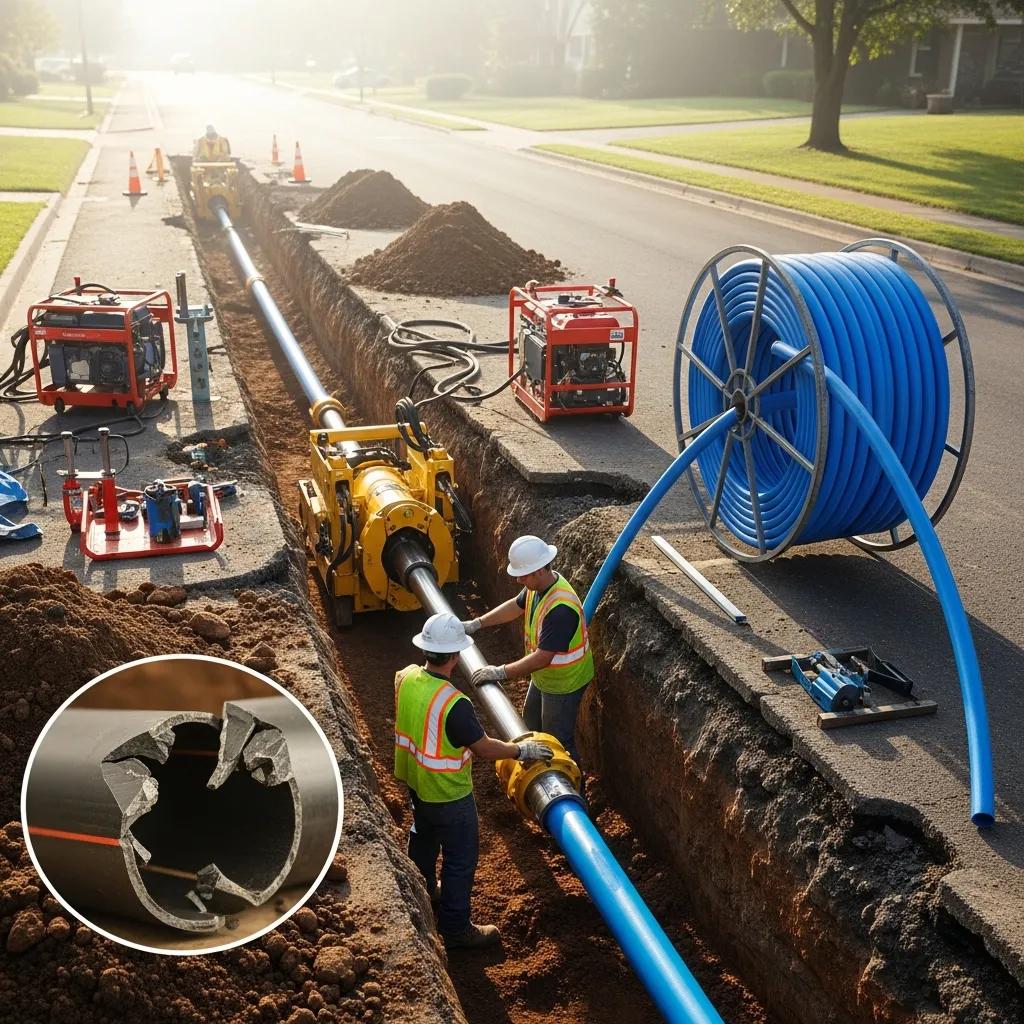
Trenchless repair and replacement let us fix or replace failing lines with far less surface disruption than full excavation. These methods protect landscaping, driveways, and hardscapes while cutting restoration time and cost. Common trenchless approaches include pipe bursting, cured-in-place pipe lining (CIPP), and horizontal directional drilling (HDD) for new runs. Each method works through small access points to rehabilitate or replace the main, shortening schedules and minimizing property impact. Homeowners and businesses typically see less restoration work, quicker return to water service, and lower indirect costs versus traditional excavation.
Trenchless method comparison and use-case summary:
| Trenchless Method | Typical Disruption Level | Typical Timeline | Best-Use Scenario |
|---|---|---|---|
| Pipe bursting | Low surface disruption (access pits only) | 1–2 days for residential runs | Full replacement under driveways or landscaping |
| Cured-in-place lining (CIPP) | Minimal disruption; no pipe removal | 1 day–1 week depending on length | Rehabilitating structurally sound pipes with alignment intact |
| Horizontal directional drilling (HDD) | Low surface cuts; requires staging | 1–3 days for short crossings | Installing a new line under roads or obstacles without trenching |
These options explain why trenchless work is popular when keeping surface features intact and minimizing downtime are priorities. The next section looks at how the technology actually reduces impact and cost.
How Trenchless Technology Reduces Disruption and Cost
Trenchless methods avoid long trenches across yards and pavement, which lowers restoration costs and keeps driveways and landscaping usable. For example, pipe bursting breaks apart the old pipe while pulling a new one into place through the same bore, eliminating the need to replace large sections of surface. Less excavation also shortens project timelines — many residential trenchless jobs finish in days rather than weeks — which cuts indirect costs for homeowners and businesses. When conditions allow, trenchless work delivers a durable replacement with far less upheaval.
When Trenchless Is the Right Choice Versus Traditional Excavation
The best approach depends on pipe condition, alignment, severe offsets or collapse, depth, and nearby utilities. Trenchless methods work well when the existing alignment is mostly intact and access pits are possible, especially under driveways, patios, or mature landscaping. If the line has multiple collapsed sections, severe misalignment, or is tangled with other utilities, open-cut excavation may be necessary to fully replace and regrade the run. Use a quick checklist to decide: check alignment, look for obstructions, assess surface impact, and compare total project cost including restoration before choosing a method.
How Much Does Water Main Repair and Replacement Cost in Michigan?
Costs in Michigan vary by pipe material, run length and depth, access difficulty, and whether the job is an emergency. Trenchless and open-cut approaches have different price profiles. Key cost drivers include pipe material (copper, ductile iron, PEX), excavation and restoration, equipment access, labor rates, and local permit fees. Emergency callouts add after-hours surcharges. A good contractor provides a transparent, itemized estimate that explains these factors and, when scope stays the same, guarantees the price will not be exceeded.
| Cost Factor | How It Affects Price | Example Impact Range |
|---|---|---|
| Pipe material | Better materials cost more up front but last longer | Moderate–High |
| Length and depth | Longer or deeper runs increase labor and equipment needs | Moderate–High |
| Access & restoration | Driveway or landscape replacement adds to the final bill | Moderate |
| Emergency callout | After-hours work increases labor costs | Low–High depending on urgency |
| Permit fees | Local permitting adds administrative costs | Low–Moderate |
Knowing these drivers helps you compare bids and ask the right questions about materials, restoration plans, and permit handling.
What Affects Pricing for Water Main Work?
Quotes depend on linear feet of pipe, pipe diameter and material, soil and depth conditions, nearby utilities, and the amount of surface restoration required. Local labor rates in Macomb, Oakland, and Wayne counties also influence cost, as do the need for specialized equipment such as camera inspection, HDD rigs, or pipe bursting machinery. Permit and inspection fees and whether the work is emergency or scheduled will change totals. For example, a short trenchless replacement under a driveway often costs less overall than an open-cut replacement that requires driveway demolition and full regrading.
Financing and Insurance for Water Main Services
Some homeowner insurance policies cover sudden, accidental water damage from a broken main, but coverage varies. Contact your insurer quickly to confirm whether the service line repair or remediation is covered. Document damage with photos, meter readings, and the contractor’s diagnostic report — that makes claims easier to process. This guide does not provide specific financing plans; check with insurers and local lenders for payment options, and get written estimates from licensed contractors to support any claim.
Who Is Responsible for Water Main Repairs and What Permits Do You Need?
Responsibility depends on where the municipal distribution main ends and the private service line begins. Property owners typically own the pipe from the meter into the building, while the municipality maintains the distribution main up to the curb stop or meter connection. Permit requirements vary by jurisdiction but commonly include excavation, right-of-way, and reconnection permits. Skipping permits can delay work and result in fines.
| Responsible Entity | Typical Responsibility Boundary | Typical Actions / Contacts |
|---|---|---|
| Homeowner | Service line from meter to inside the property | Contact local public works if the main is suspected; obtain private-side repair permits if required |
| Municipality / Utility | Distribution main to meter connection or curb stop | Contact municipal water authority for public main issues and permit rules |
| Licensed Contractor | Perform repairs and coordinate permits | File permit applications on the owner’s behalf when authorized |
Homeowner vs. Municipal Responsibilities
Typically, homeowners maintain and repair the service line from the property boundary or meter into the building, including any pipe replacement and reconnection inside the property. Municipalities handle the public distribution main and the connection at the property line; if the public main fails, the city will arrange repairs and notify affected properties. If you suspect a break, secure interior shutoffs, document the issue, and report suspected public-main problems to your municipal water authority. Knowing the boundary helps you decide whether to hire a private contractor or wait for municipal action.
How to Get Permits for Water Main Work in Michigan
Start by contacting your city or county public works or permitting office to learn specific application steps and timelines. Many jurisdictions require excavation permits, right-of-way permits, and scheduled inspections. You may need to submit site plans, restoration plans, and contractor details. Licensed contractors often file permits for you with authorization, which reduces paperwork and ensures compliance. Permit timelines vary, so planning non-emergency replacements with a licensed, insured contractor helps align approvals and work windows. Frost and Kretsch Plumbing can assist owners who need help obtaining permits or coordinating with local authorities in Macomb, Oakland, and Wayne counties when authorized.
How to Maintain Water Mains and Reduce Future Breaks
Regular maintenance and early detection extend a main’s lifespan and cut the chance of sudden failures. Preventative steps include scheduled inspections, pressure monitoring, root management, and replacing aging or corroded materials before they fail. Set an inspection schedule based on pipe material and site conditions — for example, annual visual and pressure checks for older systems and more frequent monitoring in aggressive soils — so you can prioritize repairs or trenchless upgrades.
Preventative Maintenance That Helps Water Mains Last Longer
Important practices include regular pressure checks to spot slow leaks, camera inspections for buried lines, root control near service routes, and proactively replacing corroded or frequently repaired sections. Seasonal checks before and after Michigan winters catch movement and joint stress, and keeping large trees away from service routes reduces root intrusion risk. Working with licensed local plumbers for routine inspections and replacement planning creates a lifecycle strategy that minimizes emergencies and optimizes long-term cost and reliability.
Recognizing Early Warnings and Scheduling Inspections
Watch for new wet spots, gradual pressure loss, rising water bills, or intermittent discoloration — those signs should trigger a diagnostic inspection. Take photos and meter readings, then call a licensed professional for acoustic detection or camera inspection if needed. Diagnostics determine whether a targeted repair or full replacement is the right next step. You can request emergency assessments for active leaks or plan inspections for slow leaks; tell the scheduler what symptoms you’ve seen so crews arrive with the right tools and equipment.
This guide covered symptom checklists, practical diagnostics, trenchless vs. excavation guidance, cost drivers, permit responsibilities, and maintenance tips to help Michigan homeowners and businesses address main water line issues efficiently and confidently.
Frequently Asked Questions
What should I do if I suspect a water main break?
If you suspect a break, shut off your interior water to reduce flooding risk and document signs like wet spots or discolored water with photos. Report the issue to your municipal water authority so they can confirm whether it’s a public main or private service line. Then contact a licensed plumber for a professional assessment and repair plan.
How can I prepare for a water main repair or replacement?
Prepare by knowing where your water meter and underground utilities are, clearing the work area of obstacles, and discussing timeline and permit expectations with your plumber. Having a plan for temporary water needs and understanding restoration work will help reduce disruption during the project.
What environmental impacts do water main breaks cause?
Breaks can waste large amounts of water, cause soil erosion, and sometimes allow contaminants into the surrounding area. Flooding from a break can damage vegetation and local habitats. Quick repairs and proper maintenance limit these environmental impacts and protect local water resources.
How often should I have my water main inspected?
We recommend at least an annual inspection for older systems or properties in challenging soil conditions. Also schedule checks after severe weather or freeze-thaw cycles that could stress buried pipes. Regular inspections help catch small problems before they become emergencies.
What are the long-term benefits of trenchless repair methods?
Trenchless methods mean less surface disruption, faster completion, and lower restoration costs. They preserve landscaping and hardscapes and often provide a durable solution that reduces future repairs, giving a longer service life for the main.
Can I perform my own water main repairs?
Major water main work requires licensed professionals. These jobs need specialized equipment, knowledge of local codes, and proper permits. DIY attempts can cause more damage, safety risks, and permit violations. Always hire a licensed plumber for main-line repairs.
What should I know about insurance coverage for water main repairs?
Coverage varies by policy. Many homeowner policies cover sudden, accidental water damage, but terms differ. Contact your insurance agent quickly, provide documentation (photos, meter readings, contractor reports), and keep repair estimates to support any claim.
Conclusion
Knowing the signs and causes of water main problems helps homeowners and businesses act quickly and avoid bigger damage. Choosing licensed professionals for repair or replacement ensures code-compliant work, clear pricing, and peace of mind. Regular checks and preventative maintenance reduce emergency repairs and extend system life. Contact Frost and Kretsch Plumbing to discuss your water main concerns and schedule an inspection or repair.