Wayne County Plumbing Standards & Best Practices: Your Practical Guide to Codes, Permits, and Inspections
This guide lays out Wayne County plumbing standards and clear, practical best practices — from local code rules and permit steps to commercial differences, installation tips, and typical inspection pitfalls. We explain how the Wayne County Plumbing Code ties into the Michigan Plumbing Code 2021, walk through permit applications and inspections, and give targeted installation and maintenance advice so homeowners and facility managers can avoid violations and get smooth approvals. If you’re unsure when a permit is needed or which materials meet local expectations, use the checklists, side-by-side tables, and step-by-step procedures here to make confident, inspection-ready decisions.
What are the key requirements of the Wayne County Plumbing Code?
The Wayne County Plumbing Code sets minimum standards for pipe sizing and slope, vent and trap layout, backflow prevention, fixture counts, approved materials, and potable water protection for both homes and businesses. These rules control flow, stop cross-connections, and require listed products and proper installation methods — most of which align with the Michigan Plumbing Code 2021 while allowing local clarifications. The immediate payoff is lower contamination risk, dependable drainage, and clearer inspection results. Knowing these core rules helps homeowners and contractors design systems that pass inspections and work reliably for years.
Below are the most practical code highlights for quick reference.
Wayne County plumbing code highlights:
- Fixture and fixture‑unit minimums set demand and sizing so supply and drainage meet the building’s use.
- Correct trap and vent layouts stop sewer gas and keep trap seals intact for sanitary protection.
- Drain slope and pipe-sizing rules promote self‑cleansing flow to reduce clogs and backups.
- Backflow prevention and cross‑connection controls protect drinking water and usually require approved devices and testing.
- Only approved materials and joining methods are acceptable — inspectors expect listed products and proper techniques.
- Water heater installations must include T&P relief, expansion control, and accessible shutoffs for safety and serviceability.
These points guide project planning and feed directly into permit applications and inspection checklists, which we cover next.
This table summarizes common fixture requirements and quick notes for inspection focus.
| Fixture Type | Minimum Requirement | Notes/References |
|---|---|---|
| Toilet | Approved trap and supply with shutoff | Protect the inlet and ensure correct venting |
| Lavatory sink | Accessible trap arm and vent | Include a supply shutoff and consider backflow risks |
| Shower/tub | Proper trap size and correct drain slope | Shower receptors must meet code slope requirements |
| Water heater | T&P relief valve and expansion control | Keep drain and service clearances accessible |
| Dishwasher | Air gap or branch-waste protection | Prevent backflow into the potable system |
Use this table to quickly scan inspection priorities before you submit plans. Next we explain how county interpretation ties into the statewide Michigan Plumbing Code 2021.
How does the Wayne County Plumbing Code align with the Michigan Plumbing Code 2021?
Wayne County mainly enforces the Michigan Plumbing Code 2021 as its technical baseline. Practically, that means the county applies state code language for materials, sizing, and fixture-unit calculations while sometimes issuing local clarifications on administrative details, product lists, or inspection focus. The benefit is consistency — designers and contractors familiar with the state code will recognize most requirements — but you should always check county guidance during plan prep to avoid rework. Confirming how local rules interpret state code reduces uncertainty when turning code language into a field-ready installation.
What residential plumbing standards must Wayne County homeowners follow?
For homes, standards require correctly sized water and drain piping, properly pitched drains, functional traps and vents, approved fixture installation, and backflow protection where irrigation or auxiliary systems exist. These rules prevent pressure loss, protect trap seals, and eliminate cross‑connections so systems run safely and predictably. Homeowners should plan renovations with clear expectations — proper trap arms, accessible shutoffs, and approved water heater setups are frequent inspection points. Regular maintenance, like checking for leaks, keeping vents clear, and testing backflow devices when present, keeps systems compliant and extends equipment life. Following residential standards makes permit approval smoother and cuts the chance of corrective orders after inspection.
How to obtain and comply with Wayne County Plumbing Permits?

Getting a Wayne County plumbing permit follows a clear sequence: confirm whether a permit is needed, prepare drawings and documentation showing code compliance, submit the application with fees, schedule required inspections, and secure final sign‑off after passing inspections. The permitting process validates that plans and installations meet public health and safety standards — and gives you legal proof the work meets the minimum code.
Complete paperwork and using a licensed contractor typically speed plan review and reduce correction cycles. Below is a straightforward, step-by-step guide to applying for a plumbing permit.
How to apply for a plumbing permit:
- Define the project scope and confirm permit needs with the county building department.
- Prepare application forms, site drawings, a fixture schedule, and a brief code‑compliance narrative if required.
- Submit the application and pay plan‑review and permit fees to start the review.
- Respond to plan‑review comments and schedule inspections for rough and final stages.
- Receive final approval and keep the permit paperwork as proof of compliance.
This sequence clarifies key milestones and typical timelines. The table below compares common permit types and the documentation usually needed.
| Project Type | Permit Required? | Typical Documentation / Steps |
|---|---|---|
| New residential plumbing | Yes | Full plans, fixture schedule, licensed installer info |
| Water heater replacement | Often yes | Equipment specs, location diagram, T&P relief details |
| Fixture replacement (minor) | Sometimes exempt | Manufacturer instructions and no change to piping layout |
| Sewer lateral repair | Yes | Excavation plan, connection details, backflow control as needed |
Use this comparison to self-assess whether you need a permit and what paperwork to prepare. If you’d like help with permit documents, inspection scheduling, or a free estimate for permit-related work, licensed local plumbers can assist — engaging one early often shortens the review and inspection cycle, especially for mains, sewer work, or required backflow devices.
What is the process for applying for plumbing permits in Wayne County?
Start by defining the work and assembling drawings and specs that show compliance with sizing, venting, backflow, and fixture requirements. Plan reviewers check technical conformance before field inspections, so provide complete forms, floor or riser diagrams, equipment specs, and the licensed installer’s information. Review time varies with workload and complexity, but accurate fixture counts, clear material notes, and specified backflow devices reduce review rounds. After the permit issues, schedule inspections at the required milestones and be ready to provide access and documentation so you can get final sign‑off without delays.
Which projects require permits under Wayne County regulations?
Typical permit‑required work includes new plumbing systems, changes to sewage or drainage, water service alterations, water heater installations or replacements involving modifications, and commercial additions like backflow prevention or grease interceptors. Small repairs or simple fixture swaps that don’t change piping layout may be exempt, but exemptions vary — check with the county to be safe. A good rule: assume a permit is needed for work that touches concealed piping, sewer laterals, or poses a cross‑connection risk. When unsure, contact the county building department to avoid retroactive permit orders.
What are the commercial plumbing regulations in Michigan relevant to Wayne County?
For commercial work, Wayne County enforces rules that account for higher fixture counts, specialty equipment like grease interceptors or medical gas systems, formal fixture‑unit calculations, and strict backflow prevention to protect public supplies under heavier use. Plan review for business occupancies is more detailed: designers must apply fixture‑unit tables, choose rated materials and devices, and show grease and wastewater management strategies when needed. The upside for owners and facility managers is systems that perform under load and a lower regulatory risk when plans and installations match the documented standards. Commercial projects often need mechanical engineers and certified contractors to meet the more complex code and inspection demands.
The table below highlights key differences between residential and commercial requirements.
| System Component | Residential Requirement | Commercial Requirement |
|---|---|---|
| Fixture Quantities | Standard household counts | Higher fixture‑unit calculations by occupancy |
| Grease Management | Usually not required | Grease interceptors required for food service |
| Backflow Control | Required where cross‑connections exist | Formal assemblies and regular testing required |
| Water Heater Sizing | Sized for household demand | Larger capacity and redundancy for facilities |
These contrasts show where commercial systems need more detailed design and documentation. Next we cover best practices to meet those expectations.
How do commercial plumbing standards differ from residential ones in Wayne County?
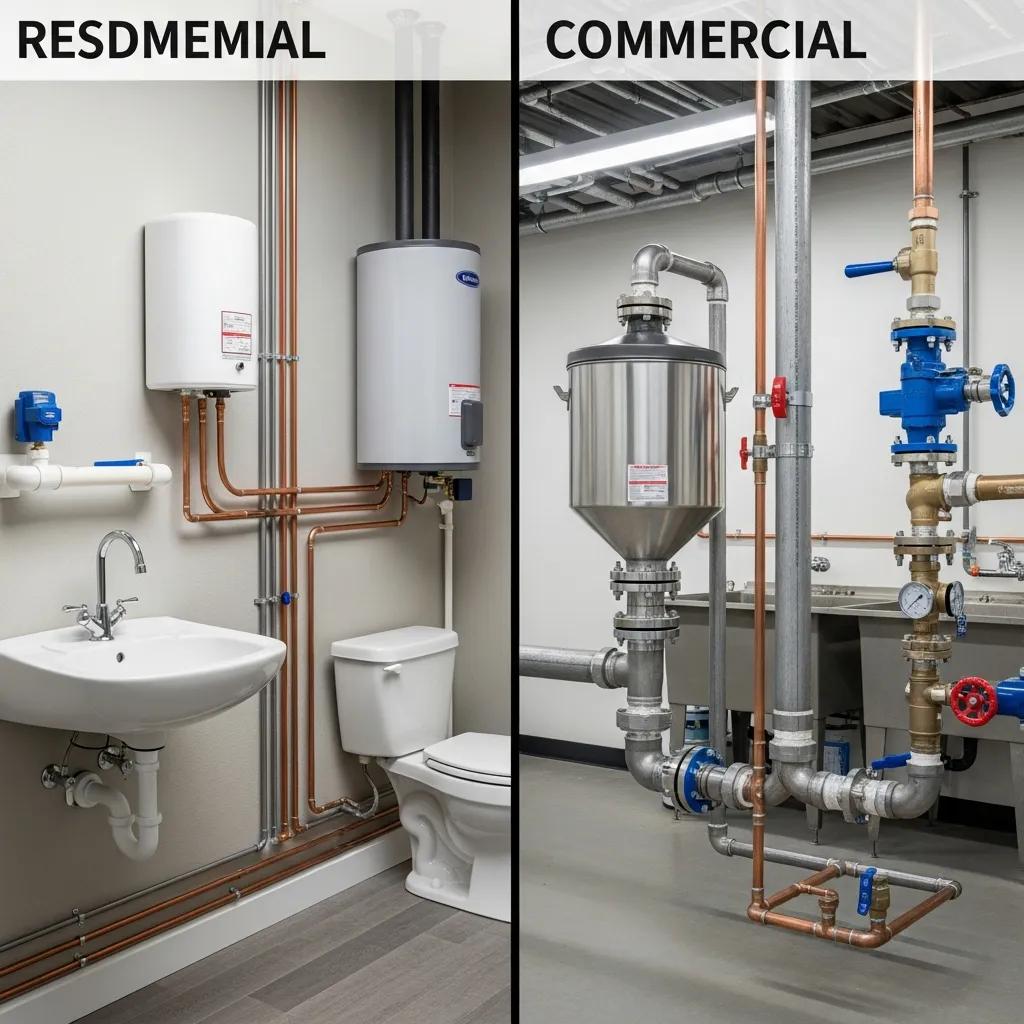
Commercial standards expect fixture‑unit load calculations, dedicated wastewater equipment (like grease interceptors), higher‑rated backflow assemblies, and clear maintenance access because these systems handle larger, varied loads and carry greater public‑health risk. The code scales requirements by occupancy and use, which raises the bar for plan reviews and inspections. Facility managers who involve qualified engineers early produce plans that pass review faster. Recognizing these differences helps you pick the right contractors, equipment, and pre‑inspection checks for predictable approvals.
What best practices ensure compliance with Michigan commercial plumbing codes?
Follow a design review against fixture‑unit calculations, size and document grease interceptors with accessible maintenance, specify tested backflow assemblies with a testing plan, and hire contractors experienced with commercial sealed plans. These steps act as preventive controls, cutting correction orders and costly retrofits. A formal maintenance schedule for interceptors and backflow devices also keeps systems compliant over their life. Managers who adopt these practices see fewer interruptions and a clearer path to final sign‑offs.
How to implement best practices for plumbing installations in Wayne County?
Start by picking code‑listed materials, designing correct venting and slopes, installing accessible isolation valves and cleanouts, and documenting choices to match plan‑review expectations. The principle is simple: use proven products and follow installation rules so inspectors can verify compliance quickly. The result is longer‑lasting systems and lower maintenance costs by avoiding common errors like wrong pitch or inaccessible shutoffs. Below are recommended materials and methods that meet Wayne County standards and practical durability needs.
Recommended materials and methods:
- Use approved potable water piping materials and manufacturer‑approved joining methods recognized by the Michigan Plumbing Code for durability and safety.
- Keep drains at self‑cleansing slopes and size vents correctly to protect trap seals under normal and peak conditions.
- Fit accessible isolation valves, test ports on backflow assemblies, and adequate cleanouts to simplify maintenance and inspections.
These recommendations set a baseline for compliant installations. The table below summarizes common material choices and why they’re preferred.
| Material / Component | Preferred Method | Rationale / Code Note |
|---|---|---|
| Supply piping | Approved potable‑rated piping and fittings | Resists corrosion and meets potable standards |
| Drain piping | Correct slope with proper fittings | Ensures self‑cleansing flow and reduces clogs |
| Venting | Properly sized vent risers and terminations | Preserves trap seals and prevents siphonage |
This table helps contractors and homeowners choose compliant assemblies and prepare for inspection. For hands‑on work, local pros can review plans and provide estimates.
If you need help executing installations, licensed plumbing professionals and permit‑coordination services can review plans, advise on approved materials, and offer free estimates or scheduling through their service portals. A pro review before submission often reduces plan‑review comments and inspection cycles.
What materials and methods meet Wayne County plumbing standards?
Compliant materials include listed potable piping, code‑approved fixtures, and certified backflow assemblies installed with manufacturer clearances and approved joining methods. Compliant methods mean correct slopes, secure supports, and proper venting layouts. Inspectors match field work to listed products and manufacturer instructions, so choosing approved materials and following installation guidance reduces failed inspections. Prioritizing listed products and correct techniques limits rework, shortens timelines, and improves system longevity.
How to ensure safety and efficiency in plumbing system design?
Design for safety and efficiency by integrating backflow prevention, right‑sized vents and drains, energy‑efficient water heaters and low‑flow fixtures, and easy access for maintenance. Perform load calculations, specify efficient fixtures where appropriate, and position components for service access — these choices cut utility costs and reduce emergency repairs. Building these considerations into designs early also smooths permit reviews and inspections, helping deliver compliant, efficient systems.
What are common challenges and solutions in adhering to Wayne County plumbing standards?
Common issues include improper venting and trap layouts, incorrect pipe slopes, use of non‑listed materials, incomplete permit documentation, and missing backflow protection. Most problems have straightforward fixes. Failures often stem from a gap between the design and field work that inspections reveal. Address issues quickly — rework slopes and vents, swap non‑approved materials, or submit clarifying documentation — to resolve violations and prevent repeats. The list below pairs typical problems with practical solutions inspectors commonly request.
Common problems and solutions:
- Improper venting: Re‑route or resize vents per code to protect trap seals and stop sewer gas entry.
- Incorrect drain slope: Restore self‑cleansing slope with proper supports and re‑joints to avoid backups.
- Lack of backflow prevention: Install certified backflow assemblies and schedule required testing to protect potable water.
- Non‑listed materials: Replace with listed products and present manufacturer documentation to the inspector.
This problem‑and‑solution approach helps owners and contractors prioritize fixes. The next section outlines how to handle inspection failures step by step.
How to address frequent inspection issues and code violations?
Start with the inspector’s deficiency list, then take targeted actions: correct vent sizing, restore trap seals, replace non‑approved materials, or install required backflow devices. A successful remediation follows a clear plan: identify deficiencies, schedule the corrective work with a licensed tradesperson, complete repairs using listed materials, and request re‑inspection once fixes are done. If the remedy changes the design, update your plan submissions so subsequent reviews and inspections match the in‑field configuration. This documented approach shows inspectors your commitment to lasting compliance.
What resources are available for plumbers and homeowners in Wayne County?
Consult the Michigan Plumbing Code 2021 for the technical baseline and contact the Wayne County building department for local interpretations, permit forms, and inspection schedules. Industry trade groups and certified contractor directories also help you find qualified professionals and continuing education. These official resources reduce guesswork — use them for authoritative code text, administrative steps, and approved device listings. For project‑specific questions, reach out to the county building department or hire a licensed plumber experienced with Wayne County permits and inspections.
This guide combines checklists, comparison tables, and remediation steps so you can plan compliant work, prepare permit submissions, and troubleshoot inspection issues. For help preparing documents, coordinating inspections, or getting a free estimate for permit work or corrective actions, local plumbing professionals can provide consultations and scheduling through their service portals to support timely compliance and final approvals.
Frequently Asked Questions
What types of plumbing projects typically require permits in Wayne County?
Permits are usually required for major plumbing work: new installations, changes to sewage or drainage, water service changes, and water heater installations that alter piping. Commercial work involving backflow devices or grease interceptors also requires permits. Small repairs or simple fixture swaps that don’t change piping layout may be exempt, but check with the county building department to be sure.
How can homeowners ensure their plumbing installations meet Wayne County standards?
Use approved materials, follow correct installation practices, and keep clear documentation. Key steps: pick code‑listed piping and fixtures, maintain proper drain slopes and venting, and install accessible shutoffs. Regular maintenance checks and hiring licensed pros for installations help avoid common inspection failures and keep systems operating safely and efficiently.
What are the consequences of failing to comply with plumbing codes in Wayne County?
Noncompliance can lead to fines, required corrective work, and potential legal exposure. Unapproved installations may need costly rework and can complicate property sales, since inspections are common in real estate transactions. Complying from the start saves time, money, and future headaches.
Are there specific plumbing materials that are prohibited in Wayne County?
Wayne County restricts materials that don’t meet safety or durability standards. Non‑listed piping not approved for potable use is not allowed, and materials prone to corrosion — including some older galvanized products — may be restricted. Always check the county building department or the Michigan Plumbing Code for current approved material lists.
What resources are available for homeowners to understand plumbing codes better?
Homeowners can read the Michigan Plumbing Code 2021 for technical guidance and contact the Wayne County building department for local rules, permit forms, and inspection info. Trade associations and certified contractor directories also point to qualified professionals and educational materials to help you navigate compliance.
How can property managers ensure compliance with commercial plumbing regulations?
Property managers should perform fixture‑unit calculations, install proper grease management systems, and use certified backflow assemblies with scheduled testing. Work with licensed engineers and experienced commercial contractors to produce sealed plans and clear documentation. Regular maintenance — including interceptor and backflow testing — reduces inspection failures and supports reliable facility operation.
Conclusion
Knowing Wayne County plumbing standards and following best practices keeps projects moving and reduces costly fixes. This guide gives homeowners and contractors practical steps to navigate local codes, permits, and inspections with confidence. When projects get complex or you want to speed approvals, contact a local licensed plumbing professional — they can help with plan reviews, permit paperwork, and inspection scheduling to get your job done right.